Category: Uncategorized

  • Balloons that Cool the Earth: Resilience and Moonshots with Andrew Song of Make Sunsets

    I’ve always been interested in those taking the bold step – people with big ideas who are trying to solve big problems. And there’s nobody bolder than Andrew Song, co-founder of Make Sunsets, a controversial climatetech startup that is launching balloons filled with sulfur dioxide into the stratosphere to cool the earth. 

    Yes, that’s right.

    It’s a fascinating idea, a true moonshot, and an idea that Andrew Song believes provides the stopgap between rising temperatures and a more resilient future. 

    Andrew and I go in depth on what his company does, the science behind it, the idea of “moonshot thinking,” and the power of just getting started. 

    If you’d like to learn more, check out Andrew on his LinkedIn and Make Sunsets on their website

    I’m primarily interested in the concept of resilience, whether personal, communal, or societal. What does resilience mean to you?

    I think it’s just getting back up after you fall down. That’s pretty much it. Don’t be afraid of failure, because I think that fear actually stops people from being resilient.

    Resilience, to me, is really just the ability to bounce back. I learned that at a very early age; my parents instilled it in me. I was a swimmer and started competing when I was eight. I’ve never been the biggest guy in the room, so I had to learn how to lose, a lot, before I figured out how to win.

    I was racing guys who were four to six inches taller than me, and in swimming, that matters. But I learned that if you can develop your technique and use your body efficiently, you can still be fast. That’s what really taught me: I don’t have to be the biggest. I don’t have to be the smartest. I just have to work hard and iterate faster.

    That’s interesting. In a lot of these conversations, resilience comes up almost like a muscle – you have to work hard at it in order to actually grow in resilience. It sounds like your background in swimming gave you that repetition, that practice in losing before winning. 

    Do you think those early experiences shaped how you move through life now?

    Oh, absolutely. I don’t know how you gain that kind of resiliency or agency without actually doing it. You can read all the books you want about resilience, but until you put it into practice, it’s really hard to overcome that psychological fear of failure.

    You and your co-founder have a lot of experience in Silicon Valley and tech. Can you talk about the switch from tech to green technology and whether it feels like a natural fit?

    Sure. I think for me, it was always a kind of parallel process. Actually, the first company I ever wanted to start, back in 2010, was sustainability-related.

    I grew up in a family with four kids, all athletes, and we ate a lot of food – but we also wasted a lot of it. My poor mom had to cook for four hungry kids all the time. Sometimes we’d eat everything, sometimes we wouldn’t, so she always overcooked just in case.

    That experience inspired an idea I had. You’d take a picture of your grocery receipt, use OCR (optical character recognition) to identify what you bought, and then get recipe recommendations to help use up any leftovers. That was my first real concept, during the early App Store days. I just wanted to reduce food waste because about 30% of all food ends up in landfills.

    But I quickly learned that most people don’t actually care about saving food! Still, I learned a lot from that experience, and I discovered I had a knack for selling. That eventually led me into Silicon Valley. I grew up here, so I was very familiar with the tech scene and its cycles. It was a natural fit, and I just thought, “I want to try this.”

    So when the opportunity to start Make Sunsets came along, it really felt like a coming home moment. I’d spent ten years learning, and this was my chance to put it to use. I wasn’t just going to sell SaaS or hardware, but to take the skills I’d built up and return to the problem I actually cared about from the beginning.
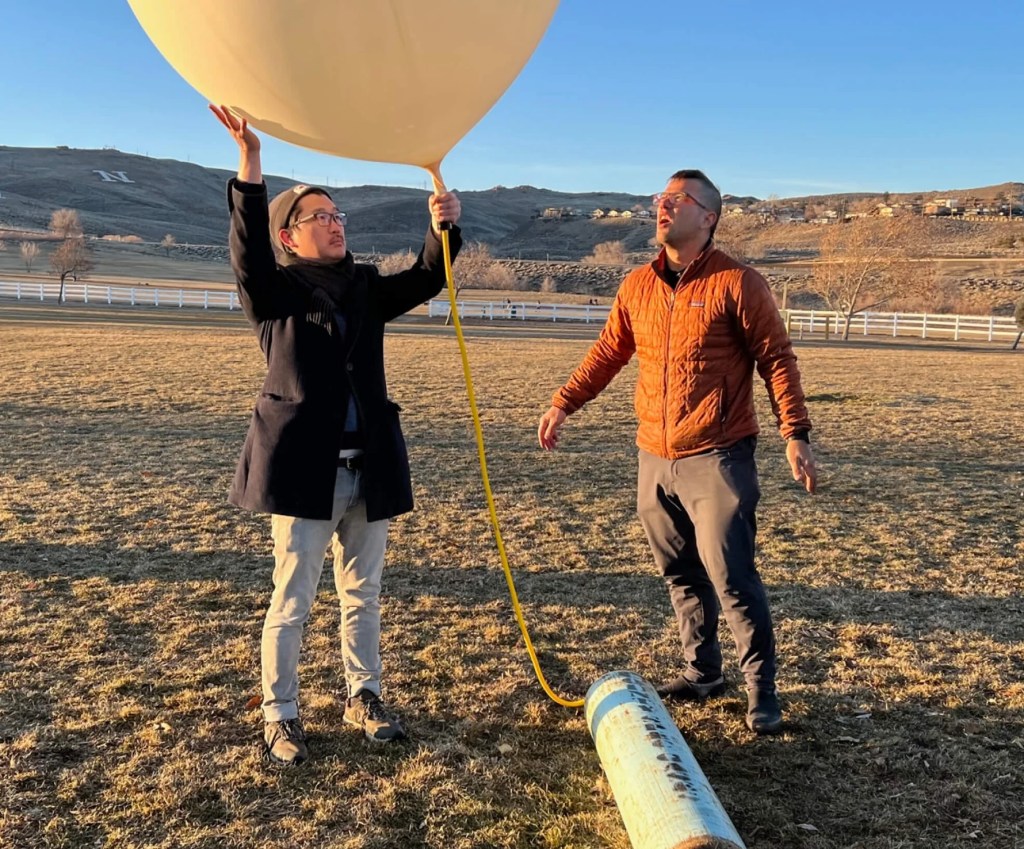
    Andrew Song (left) and Luke Iseman (right) readying a weather balloon.

    She sounds like a good mom! 

    Make Sunsets uses balloons to launch reflective clouds into the stratosphere to combat the greenhouse effect. Can you talk a bit more about what exactly it is that you’re doing? 

    Make Sunsets is using stratospheric aerosol injection. That’s the technique we’re using to reflect some of the sun’s energy away from Earth. As you probably know, greenhouse gases trap heat. A lot of really smart people are working on removing greenhouse gases so they don’t keep building up and heating the planet. But right now, we’re putting more in than we’re removing.

    As you trap more energy, more bad things happen, like higher variance in global weather events, things like that. But what we discovered was that there was this volcanic eruption in 1991 called Mount Pinatubo that injected about 20 million tons of sulfur dioxide into the stratosphere, and it cooled the Earth by 0.5 degrees Celsius.

    And more recently, there was the Hunga Tonga eruption in the Pacific (look it up, I’m not making up that name!) that happened in 2022. It injected about 400,000 to 700,000 tons of sulfur dioxide, and that actually cooled the Earth by 0.1 degrees Celsius.

    So yeah, at first glance, that sounds like a lot of sulfur dioxide going up into the atmosphere. But actually, we all live in the troposphere. That’s where all living species are and where 99% of weather happens. And Make Sunsets is going one level up, into the stratosphere. That’s where these volcanic eruptions are really effective at reflecting the sun’s energy.

    So, to put it in context, a volcano’s 20 million tons sounds like a huge amount, but humans currently emit about 70 million tons of sulfur dioxide every year into the air we breathe. That comes from coal plants, diesel emissions, industrial processes, ships. Basically anything that burns fuel with sulfur in it.

    Sulfur dioxide is actually pretty effective. Even in the troposphere, it reflects some sunlight. But if you put it higher, into the stratosphere, it’s like 20 times more effective. That’s because of two things: one, the winds up there are really fast, so it disperses quickly. And two, since there’s not a lot of weather up there, so it doesn’t rain out.

    Interesting. 

    This is a great example of moonshot thinking – an out-of-the-box solution that aims to boldly solve a major challenge. 

    We’ve talked about the volcanic aspect and the science behind it, but can you talk about how you personally developed this concept? What helped you build the momentum to take action and actually start this project?

    The concept of stratospheric aerosol injection has actually been around since the 1970s. There have been over 2,000 academic papers written about it! It’s very well modeled.

    You’ll see a lot of papers that focus on the potential downsides, and there have been academic institutions that have tried to move toward actual deployment, but they’ve usually been blocked. Often, it’s by well-intentioned people saying, “Hey, we shouldn’t be doing this.” And to be honest, academics aren’t necessarily the right people to push this forward anyways.

    So a lot of the inspiration came from that logjam of really great ideas that just hadn’t been implemented. 

    The reason we’re pursuing this is because stratospheric aerosol injection hasn’t been well explored at the deployment level. We’re just getting started. We’re still a two-man company, but we’ve already gotten a lot of attention.

    I think the reason we’ve gotten so much attention is because it’s such a novel idea. Like you said, it’s a moonshot, and I agree, it’s kind of crazy. Instead of removing something from the atmosphere, like greenhouse gases, we’re actually adding something to it. That’s a foreign concept to most people.

    The simplest way to describe what we’re doing is sunscreen for Earth. So all we’re saying is, instead of applying it to the troposphere, apply it to the stratosphere, where it’s more effective.

    That’s so interesting. 

    And the fact that there’s such a long academic tradition behind this is surprising. 

    I recently read a study on AI in the environmental space, and while there’s a lot of bold innovation happening there, the market doesn’t always value it like other types of AI. A lot of it ends up in academia or NGOs because of the tragedy of the commons, you know, things everyone agrees we should do, like protecting biodiversity or cleaning plastic out of the ocean, but no one wants to pay for. 

    Can you talk about how you’ve approached this differently as a for-profit company tackling a global environmental issue?

    Yeah, people ask us all the time, “Why aren’t you a nonprofit or an NGO?” But we believe the only way this will ever be widely accepted is if it works within a capitalist system and if people vote with their wallets.

    The beauty of what we’re doing, compared to other sustainability efforts, is that it’s extremely cheap. We did the math recently, and to offset all manmade global warming since the 1850s, it would cost about $3 per American per year. That’s one cup of coffee.

    To give some context, the Smithsonian costs about $3 per American per year. And the Smithsonian is awesome. It educates people and preserves our history. But for the same price, you could have a more livable planet.

    Other climate solutions often come with political baggage. You’ve got people saying we need to degrow the economy, stop eating meat, give up trucks. But a lot of Americans don’t want to change their lifestyle. What’s different here is that you don’t have to!

    I want capitalism to win. I want people to have access to meat that doesn’t emit so much CO₂ and maybe lab-grown meat will get us there. But right now it’s too expensive. Same with EVs. Telling someone to give up their Ford F-150 for an electric vehicle? It’s a non-starter for a lot of folks. And it doesn’t help when the people pushing these ideas are still living lives full of fossil fuel consumption themselves.

    Our solution doesn’t require lifestyle changes. One, because it’s cheap. Two, because it’s deployable pretty much anywhere. We can do this in the ocean or in remote areas. California lets us do it now, which is where we’re from, so that’s where we’re deploying.

    I totally agree. Capitalism has to be part of the solution if we want lasting change. But environmental work is a long game, often measured in decades, while startups are typically built around short timelines. How do you reconcile that?

    Honestly, I don’t want Make Sunsets to be a 100-year company. I want us to shut down as soon as possible. This is a stopgap solution.

    The best analogy I can give you is that we’re Ozempic for the climate. Ozempic doesn’t cure obesity, but it buys time and reduces the worst effects while people try to get healthier. Climate change is the same. The real danger is the heat. CO₂ itself isn’t going to kill us, at least not directly, but the rising temperatures it causes will. Until we scale carbon removal, plant more trees, and shift to sustainable fuels, we need something like this to buy time.

    You’ve been getting a lot of media attention. What would you say is your biggest success so far? And on the flip side, your biggest failure or challenge?

    That’s a good question. In terms of success, I mean, we’re literally the first company in the world trying to commercialize stratospheric aerosol injection as a service. There’s a startup analogy where you’re building the car while you’re driving it. For us, we’re building the car and the road at the same time.

    It’s hard to say we’ve failed yet. I mean, we’re not dead. When we started in October 2022, we thought we’d get shut down immediately. Like, “Wait, you’re copying volcanoes? You’re using sulfur dioxide? Isn’t that acid rain?” But we’re still here.

    Now, are we profitable? No. So technically we’re what startups call “default dead” since we’re burning more money than we’re making. But we’re about halfway to default alive. That’s when your revenue outpaces your burn. So we’re making progress.

    We’re transparent about this. Every month we post how much money we have in the bank, what we spent, our sales, what we failed at, and what we’re working on. This is all about trying to figure out how to become a profitable company. We’re not there yet, but we’re closer than I expected.

    Going back to bold thinking – has anything influenced your appetite for that? Or have you always been that way?

    I think it comes down to how I was raised. I’m the middle child. The youngest is the baby, the oldest is the golden child, my sister’s the only girl, and then there’s me. So growing up, I was kind of the wild card. 

    But really, I’ve always had a safety net. I’m fortunate. My parents came to Silicon Valley in the late ’70s. If they had stayed in South Korea, I probably wouldn’t be doing any of this. A lot of it comes down to luck, and I try not to forget that.

    You mentioned that safety net – and in a previous interview, someone told me they think resilience comes from that. Like, having a partner or family who loves you even if you fail. That safety makes risk-taking possible. Sounds like that applies to you.

    You’ve talked about a long academic tradition behind this idea. Are there any other climate tech concepts you came across that you think deserve more attention?

    Yeah, actually. Space mirrors are pretty cool. It’s another form of solar geoengineering. The problem right now is the launch cost. But as the space market grows and prices drop, I think that’s something we’ll pursue ourselves.

    The idea is to put a constellation of mirrors at the Lagrange point, halfway between the Earth and the sun, so you can basically dial down the sunlight. I want to live in a world where we can control the weather the way we control the A/C in our cars. But right now the material science and economics aren’t there yet. 

    Eventually, though? I think it’ll happen.

    10 years ago, 99% of the space industry was government funded. But today, it’s something like only 20%. Private industry makes up the vast majority now. Feels like we’re on the edge of something big.

    So what’s next for you and Make Sunsets?

    Right now, the next big milestone is doing a large enough deployment that it’s detectable by satellite. We already have people buying what we call “cooling credits.” One credit offsets the warming of one ton of CO₂ for a year. It’s like a carbon credit, but instead of removing CO₂, we apply aerosol. 

    Eventually, we want to scale enough to trigger satellite detection. These are the same satellites that detect volcanic eruptions. It’s third-party verification, and the data is public. Anyone can ping the satellite and pull the data themselves.

    We’re not talking about 20 million tons like Pinatubo. Scientists say 100 to 1,000 tons might be enough for detection. That’s our next big step, and we’ve got about two years of runway to get there.

    If you’re curious, read more about the science. And when people bring up concerns, always ask: “How much would it take for that bad thing to happen?” Because people will say, “This could cause acid rain.” But how much sulfur would it take? It’s not 1 ton. It’s not 69 million tons, and we tolerate that amount right now from other sources. That context matters.

    What’s the best way for someone to contact you?

    You can reach us at info@makesunsets.com, or through our website. We’re also really active on Twitter. Our handle is @makesunsets.

    Anything else you want to share?

    Just something for your readers. If you have an idea, just do it. People get so hung up on what might go wrong. Start small. We did. Our first balloon had just one gram of sulfur dioxide in it. That’s the weight of a dollar bill. And Time Magazine covered it. 

    That one gram? It didn’t do anything. It wasn’t dangerous. But we started. And once you start, maybe someone notices. Maybe someone cares. And you go from there.

    A lot of people think 100 steps ahead, start thinking early about how could this fail? But you really don’t know until you try. Until you start talking to people. That’s what agency looks like. And look, we thought we’d be shut down in the first six months. We’re still here. I’m talking to you two years later.

    That’s all I can say. Just start.

    Want to learn more? Go more in depth here:
    Andrew Song LinkedIn

    Make Sunsets Website

    Make Sunsets FAQ

    The DIY Climate Fix No One Wants… But We Might Need

    Make Sunsets in NPR

  • What a rush

    I recently came across the Black Flag accelerator put on by Harpoon, and I honestly can’t stop thinking about the companies on there.

    The energy and drive these companies have is palpable. I don’t even care that half of them will probably go out of business just due to the brutal nature of the startup game. These are folks at the helm that are taking moonshots to drive humanity forward. What a rush to witness people that are doing things like automating mining robots, or carbon negative chemical manufacturing, or weather-independent solar delivery, or underwater robots, or… or… or.

    I love the energy in the innovation sector. I love that feeling of summoning the future out of nothing. I love the idea of aiming big, fast. It’s honestly what gets me out of bed in the morning to go to work – that someone, somewhere, has a huge solution to a giant problem, and I get a front row seat to see someone’s imagination become real.

    Wow.

  • Knowledge, Reason, and What It Means to Be Human: Revolutionizing AI and Life Science with Dr. Khai Minh Pham of ThinkingNode Life

    Knowledge, Reason, and What It Means to Be Human: Revolutionizing AI and Life Science with Dr. Khai Minh Pham of ThinkingNode Life

    I recently had the pleasure of sitting down with Dr. Khai Minh Pham, a visionary at the intersection of life science and artificial intelligence. While AI has only recently entered the public conscious, Khai has been a trailblazer in the AI space, starting with growing and exiting a groundbreaking AI company, DataMind/RightPoint, in the early 2000s.

    His latest company, ThinkingNode Life Science, is both truly innovative and terribly interesting – he’s working on revolutionizing the way we approach healthcare and drug development by running both through the lens of AI-generated digital cell clones.

    We went in-depth on a number of subjects ranging from Philosophy to biology, covering topics like the types of knowledge, reasoning vs pattern recognition (and what that means for AI), how Khai started his first company without even a computer or money in France, and, in the end, how technology has the capacity to allow us to truly become more human.

    If you’d like to learn more, you can reach Khai on his LinkedIn.

    I’m primarily interested in the concept of resilience – whether personal, communal, or societal. What does the concept of resilience mean to you?

    In the business world, people often say that entrepreneurs take more risks. I don’t see it that way – or, I guess I don’t see risk the same way as most people. If I did, I don’t think I would do anything! I’m not even sure that you have to do anything specific to be resilient – you just do things, and let other people qualify you as resilient. It’s more about the end result, and the process of getting to that end result, than anything specific that you’re doing.

    I find that business, and entrepreneurship, is like a long journey. You take it one step at a time. You just have to be motivated to get to the very next step. And then, at the end, you look back and realize, wow, I’ve done all that?

    Perhaps continuously finding that motivation to just get to that next step over and over is what you would call resilience.

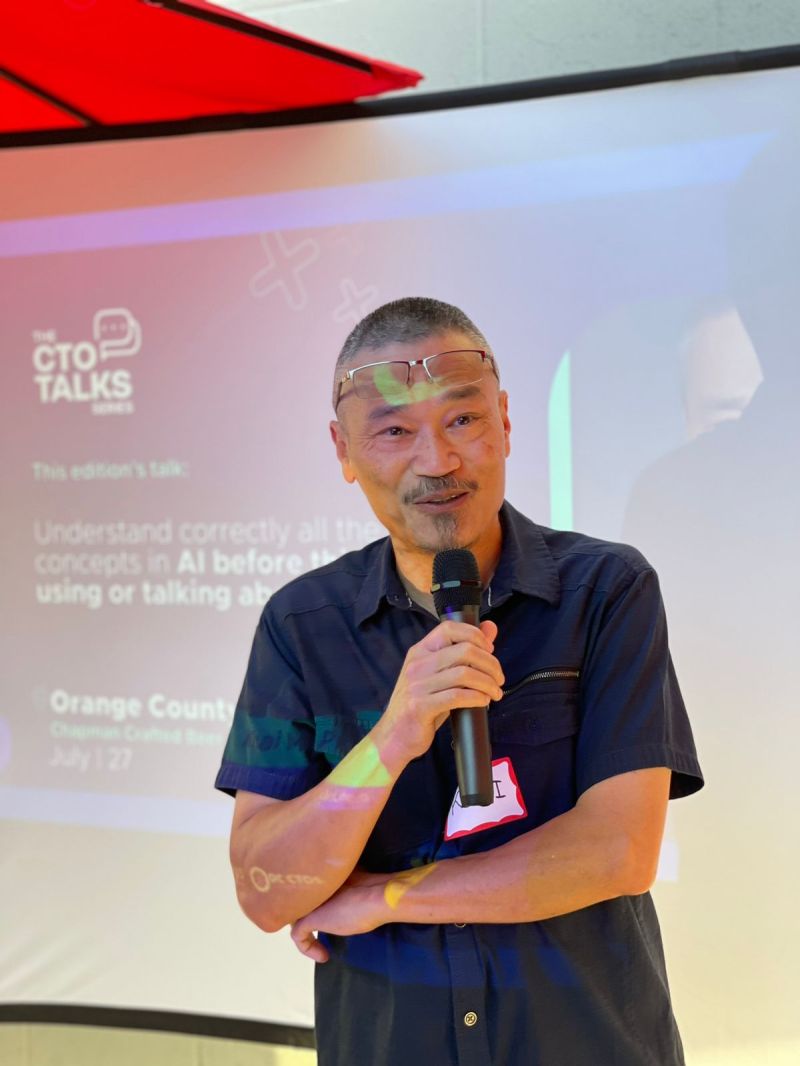
    Dr. Khai Minh Pham giving a talk about AI as part of the CTO Talks series.

    You’ve had an interesting career journey – while a buzzword as of late, you’ve actually been at the forefront of AI for 30 years. In the 90s, you founded the company DataMind, which was an AI platform for the Fintech/CRM industry, and guided it to a $630 million exit. Can you talk about your journey as an entrepreneur?

    My mom is Vietnamese, so I always say I didn’t have a choice on what I would be when I grew up – I had to be a physician!

    I entered medical school in France, but in my second year of the program, I realized that there was no way that I could remember all of this information. I couldn’t be sure that I wouldn’t forget anything when I diagnose or treat a patient – but I wondered if AI could do it. But when I talked to the AI people, their explanations of what AI was actually capable of was not very satisfying – so I decided to work out for myself the way AI could solve my problem.

    Most people in AI would design a formal system, and then try and fit the way we think into that system. I did the opposite. I had a problem, which was how to handle the different types of thinking that you find in medicine, and I worked to design a system that could reason. So, in the mornings, I would head to the hospital, but in the afternoons, I would go do computer science, and in the evening I would catch up on my medical studies. I was a real nerd already teaching AI and working for the company.

    Once I did my PhD in AI, I started to publish in main peer-review systems, such as IEEE. It was frustrating since I realized that once I got my grants, that was it – there weren’t enough resources to develop the type of AI I actually wanted to develop. I decided then to start my first company in order to have get enough resources to do what I wanted to do. I didn’t have money, I didn’t have a computer. But I decided just to go for it since I had such a desire to do this research.  It started simply because I wasn’t satisfied with what existed.

    Wait a minute, so you started your first company without a computer?

    Well, I didn’t have a computer and I didn’t have any money either! Actually, it was the other way around – I didn’t have money, so I couldn’t afford a computer!

    So my first goal was to get a computer. At that time, Sony was providing workstations if you had an interesting project. I went in there, gave my pitch, and they gave me two! But then I had a different problem, because now I had two workstations but I didn’t have a desk. So I went to a meeting in France for entrepreneurs and I met a few of them. I told them that AI was going to be important one day – and if you give me a desk to work out of, I can explain to you what I’m doing and maybe it will be interesting and helpful for your business down the road. One of them eventually accepted, and I had a desk! So now I have a computer and a desk, but I don’t have people working with me – so I had to head to the bank!

    Imagine walking into a French bank at the time to explain AI. Nobody knew what it was. But I believed in my passion so strongly and had such a great technology that eventually I walked out with a credit line, and I was able to hire an engineer and an assistant. I then took my savings and went to a big conference in Silicon Valley. There, I ended up meeting the President of Microsoft Europe. I told him that he had nothing left to prove at Microsoft and asked him to come join me! Again, I don’t think I’d have done things like that today!

    Something I learned very quickly was that people at the top level of business have more freedom to do what they want, while the intermediate level has to produce – because a few months later that Microsoft exec was in my office and we were talking about the technology!

    Then, one day, I was out to lunch and when I came back, my assistant said that I had missed a call from a “Mr. Gatess.” (with two s, since she is Portuguese and had not been in the computer business). I didn’t know who that was – but then I realized that it was actually “Mr. Gates!” She didn’t take his phone number down, so I was really hoping that he would call back – luckily, he did! So I had a meeting with Bill and we talked about AI and the tech.

    The main thing that you realize when you work with a big corporation is that their time is not the same as your time. They have all the time in the world, and they want to use it to understand everything they can. After the meeting with Gates, he set up a meeting with the CTO of Microsoft at the time, Nathan Myhrvold. But I realized that I didn’t have the resources to do what they wanted yet, so I had to decline. They even offered me to join Microsoft and work on the research I wanted and wouldn’t need to think about the budget.

    Then, somehow, IBM learned about my company and they wanted to invest. But they were too big for me. Then the VCs found out about my company, and that’s how I ended up really starting my own company in Silicon Valley. After that, everything went very quickly!

    I learned too, just how important culture is. When I arrived, I didn’t speak English well at all. I had to translate everything that was said in every meeting into French in my mind. It was exhausting! The way people worked over here was different too – so I had to learn that as well.

    So I don’t necessarily think that I’m resilient, but I just kept going and hanging in there. I was just so motivated by this project that it kept the engine going.

    That’s an incredible story!

    Well, now that I look back on it, I would never do it that way today! For example, when I started, I had never even heard of the term business plan! But I just never stopped. It was really based on an inner motivation. I don’t really feel resilient internally, but from an external viewpoint…maybe I am.

    You’ve been at the forefront of AI for decades, at a time when most people are just becoming aware of AI and its capabilities. Can you talk about your own philosophy of AI learning and how that might differ from some of the major players, like ChatGPT?

    We could spend hours and days talking about this!

    The first thing you have to understand is the difference between data and knowledge. Humans don’t process data. We’re actually extremely bad at it! We process knowledge instead. Data is an isolated fact, but if you relate that fact to other facts, that becomes knowledge. And there are actually two steps for knowledge – information and knowledge. Things move from information to knowledge once it becomes an internal asset for your brain. For example, books are full of information. But that information becomes knowledge once you read, digest, and understand them. This is actually a very important distinction, because as soon as something becomes knowledge, then you can apply reasoning to it.

    Most of the time when people talk about knowledge, they actually talk more about information that’s available – and there’s a lot of it. But that’s totally useless until someone acquires it and can reason with it. So that’s the first thing.

    The second thing is that correlation is not causation. Correlation allows us to narrow down what’s going on, but causation is what we’re looking for. It’s what science is about, understanding cause and effect, right? For example, I can tell you that there’s a big correlation between people who see a doctor and people who die, but what does that mean?

    In most of the AI that people focus on today, it’s about correlation. It’s based on statistical analysis that extracts patterns from large amounts of data.

    Why we process data is to generate that knowledge, like I said earlier. Knowledge is the most powerful way to compress data because it lets us do reasoning afterwards.

    So when people think about this, you have pattern recognition, which is data driven, and we have reasoning, which is knowledge driven. In AI, most of the AI today is Machine Learning (ML) – detecting and recognizing patterns. And it’s amazing what pattern recognition can do. It’s surprised a lot of people, including me, but it still doesn’t reason the way that humans reason. It’s missing an internal representation of the world that allows it to reason. It’s missing a mental model. ChatGPT makes associations of words, and the result is impressive when you read the results, but can present hallucinations because it doesn’t reason at all.

    This last point is crucial. We don’t have access to the real world – we only see the world through our different mental models, and we have different types. The most powerful model, though, is our reasoning model. People studying science are essentially working to build reasoning models for their specific domains. So today, when we use machine learning for science applications, it’s fantastic because it can crunch so much data to narrow down and recognize patterns. But your ultimate goal should be to have a reasoning model at scale because no one can have all the available knowledge – except AI.

    This brings us to what we do at ThinkingNode Life Science. We use distributed reasoning AI to generate reasoning models that we call reasoning networks. So we don’t generate text, or images, or videos like ChatGPT – we generate reasoning models for life science. We generate digital cell clones. Another important term is that we use “distributed reasoning,” meaning that we have more than one reasoning engine. For example, our AI reasons by analogy, by constraint, by case, by probability, and so on. If you only have one reasoning engine, if you’re centralized reasoning, it’s not possible to represent all these different types of reasoning. And this distributed reasoning AI is what I’ve been working on for decades now.

    So we take our distributed reasoning AI and we use generative AI to generate these digital cell clones. We generate about 50 million additional data points for each digital clone using reason and not pattern recognition. Why do we do that? Well, most AI drug companies and pharma companies are focused on developing and designing new drugs. We don’t do anything related to that. We design and generate the digital cell clone of the patient or the disease to understand the impact of the drug on the cell. We are focused on cell response. I think that’s what matters most at the end of the day – the interaction between a drug and a cell. So we’re not in competition with any AI drug discovery company. We focus on biology, which is the cell – and how cells respond to drugs. We have a patent for digital cell differentiation that allows these cells to scale, and we use the gene expression data of the cell. We inject that into our human cell reasoning foundation model, and it differentiates the stem cells and things for us. So today, in about two hours, we can generate any type of human cell digitally.

    ThinkingNode Life Science sponsoring the AI4 conference in Las Vegas.

    Wow. So, just to restate this in a sentence, ThinkingNodeLife creates digital clones of human cells. You then use those clones, and artificial intelligence, to test and to explore drug interactions on the human body without using a live person. Is that correct?

    Yes! It takes about 10 years and $2.6 billion to test a drug, and you still only have about a 4% chance of putting it on the market. There are lots of reasons why, but one of the main reasons is that there is no testing simulation.

    In other industries, say the car or airplane industry, you don’t build the car or plane right away. You build a digital model and do simulations. We don’t have that in pharma.

    The term clone is important here too – it’s not a digital twin. Digital twins, you have to build one by one. With our clones, it’s totally scalable since we digitally mimic the cell differentiation process.  We have a foundation model, and differentiate based on that.

    So it seems that ThinkingNodeLife has resilience baked into it – helping the healthcare and biotech spheres shorten drug times, understanding the interactions between cells, and allow companies to help people much faster than before. Can you talk more about how you help these companies build resilience in their workflows?

    So we work with different types of companies. At a recent event at JP Morgan, we announced a strategic partnership with Debiopharm. It’s a Swiss pharma company, well established and well respected. They’re going to use our digital cell clone for cancer drug development. So this is one type of customer and partner – the biotech pharma that develops the drug.

    With those companies, we can help them at the very beginning – finding new targets for the drug. Usually, this is done by the academics since it takes lots of time. Then, if you already have the drug, even before preclinical testing, we can simulate the drug’s impact on the human cell that you’re interested in. Then, if you’re already in phase 1 or phase 2 testing, we can use a patient’s data to generate their own clones to help companies select the next patient for their clinical trial.

    And we can use all that to do different things. We can do drug comparison – comparing your drug to a competitor’s drug – which is normally pretty difficult, because you normally don’t have your competitor’s patient data. We can do drug repurposing and drug response prediction. Once you have all that, you can really help a company become first class, since we provide targets and can simulate all the phases for testing.

    Then, we have a different type of company partner – AI drug companies. We don’t develop anything related to the drug, but we do know the cells that drug will impact – so there’s a complementarity there. We’re currently in discussions with a number of them. 

    We also work with CRO companies outsourcing the research for pharma biotech companies. We bring them Digital Cell Labs, so they can provide research services in preclinical or after clinical, so they can give more insight to their customers about the drug when it’s in development.

    I think any company that develops a drug should do a simulation. And we help them do that.

    That makes sense. So, you cut your teeth with your first company in Silicon Valley, but you recently moved to San Diego to be closer to our strong life sciences community. Can you talk about the differences between Silicon Valley and San Diego, especially for startups like yours?

    Maybe it’s different today, but when I moved here about 10 years ago, Silicon Valley was much more focused on technology and San Diego was much more focused on science. I was lucky to work with the J. Craig Venter Institute down here, and this helped me really test my idea and work on different concepts. So this is a major pro, I think – the scientific community is extremely strong.

    The other thing I found is that people are very collaborative in San Diego. I don’t know what it’s like today, but when I was up in Silicon Valley, it was very competitive. Here, we don’t hesitate to work together.

    The last thing is that there are over 100 microbreweries! That’s a great part of San Diego.

    Can you talk a little bit about the emerging field of digital biology? What is it? How do you see it contributing to building resilience in the fields of life sciences and healthcare?

    Digital biology is a difficult definition, in the sense that as soon as you use a computer to understand biology, it can be considered to be digital biology. But what I have in mind is more about getting to a simulation of biology. There are different ways to do simulations, from mathematical models and so on. The one I’m focusing on is AI simulation, and, in particular, reasoning AI simulation.

    This is an important concept but isn’t always easy to explain. It starts from realizing that we interact with the world only through our own mental models – only through our own reasoning model that we acquired at school, through our experiences, whatever. Our reasoning model is how we make sense of the world. Scientific education is essentially about building different reasoning models for different disciplines.

    The approach that I have is not a pure mathematical simulation, for example, because humans don’t think through mathematical equations. We think through concepts. We think through conceptual mental models. And the way I approach digital biology is to generate the reasoning models for biology. One of the most important entities in biology is the cell – and that’s why we are focusing on providing and generating a reasoning foundation model of the cell.

    What does this mean in terms of application? Well, today there are about 800 AI drug discovery companies, and designing drugs is very important. But what may be even more important at the end is the cell’s response to that drug.

    In designing a drug, you try to see how the molecule you’ve designed binds to a target, which is usually a protein in or on the surface of the cell. This binding is very important. You see how well it binds, how specifically it binds.

    Then, what’s important to us, is seeing the impact from this drug’s binding – you see the cell’s response. Typically digital biology is about simulating the binding itself in order to understand and design the drug. What we are focusing on is not about the drug – it’s about the cell’s response to the drug.

    Interesting.

    It’s a multidisciplinary team field, and it’s pretty involved – there are different aspects from computer biology, system biology, AI, and so on. The field is working on things like natural biological phenomena or synthesizing new artificial biological entities. In fact, ultimately, the far vision for our company is to simulate evolution.

    Digital biology, the way I see it, gives us the technology to accelerate and even be active in the evolutionary process.

    Let’s continue talking about how you see the future. While AI has been around for a while, it’s recently come to the forefront of public consciousness with the emergence of ChatGPT – and it’s changed a lot of people’s relationships with technology. What do you see for the field of AI going forward?

    Well, first of all, we have to understand what the term “intelligence” means, since it’s artificial intelligence. I used to mention [Swiss psychologist] Jean Piaget’s definition – intelligence is not what you know, it’s what you do when you don’t know. And I’d add to that – getting to a rational outcome when you don’t know. Since, for example, ChatGPT will provide you an answer, but it cannot explain the why behind the answer. It has answers based on the association of words and not on the rational reasoning process that usually is based on causality and not correlation. It can give a very convincing explanation but ultimately can go wrong with hallucination. It’s not rational.

    When we talk about AI, we have two understand two different aspects of it. Daniel Kahneman talks about these aspects in his famous book Thinking, Fast and Slow. The first aspect is System 1 thinking, or pattern recognition. It’s what you do when you recognize a face or a piece of music. It’s very fast. There’s no reasoning.

    The second aspect is System 2 thinking. That’s slower. It’s when you have to think rationally, have some hypotheses, deduce things, and so on.

    The AI that is known today by the public is pattern recognition, based on Big Data, and it’s amazing what can be done at scale. The other AI that you don’t hear much about is reasoning AI, and that’s because most of existing reasoning AI is based on just one reasoning engine. But there are different types of reasoning. It’s why I worked for decades on that topic, called distributed reasoning AI, where each piece of knowledge is a mini-reasoning engine in itself, and you throw those mini-engines into any logic you want.

    The future of AI is the combination of the two types, as we are, right? We do pattern recognition and we do reasoning – but it’s very important that people realize that AI is not just machine learning. It’s not just pattern recognition. It’s not just ChatGPT. It’s much more than that. When we see what we can do with pattern recognition at scale, well, imagine what we can do with reasoning at scale.

    Reasoning is important, too. It’s the way that humans make decisions. We don’t process data, we process knowledge. When you think about how AI can potentially interact with humans, yeah, it can be easy to interact with based on pattern recognition and lots of text, that’s certainly one way. But if we want to interact with AI and have it be close to how we think and reason, that’s reasoning AI.

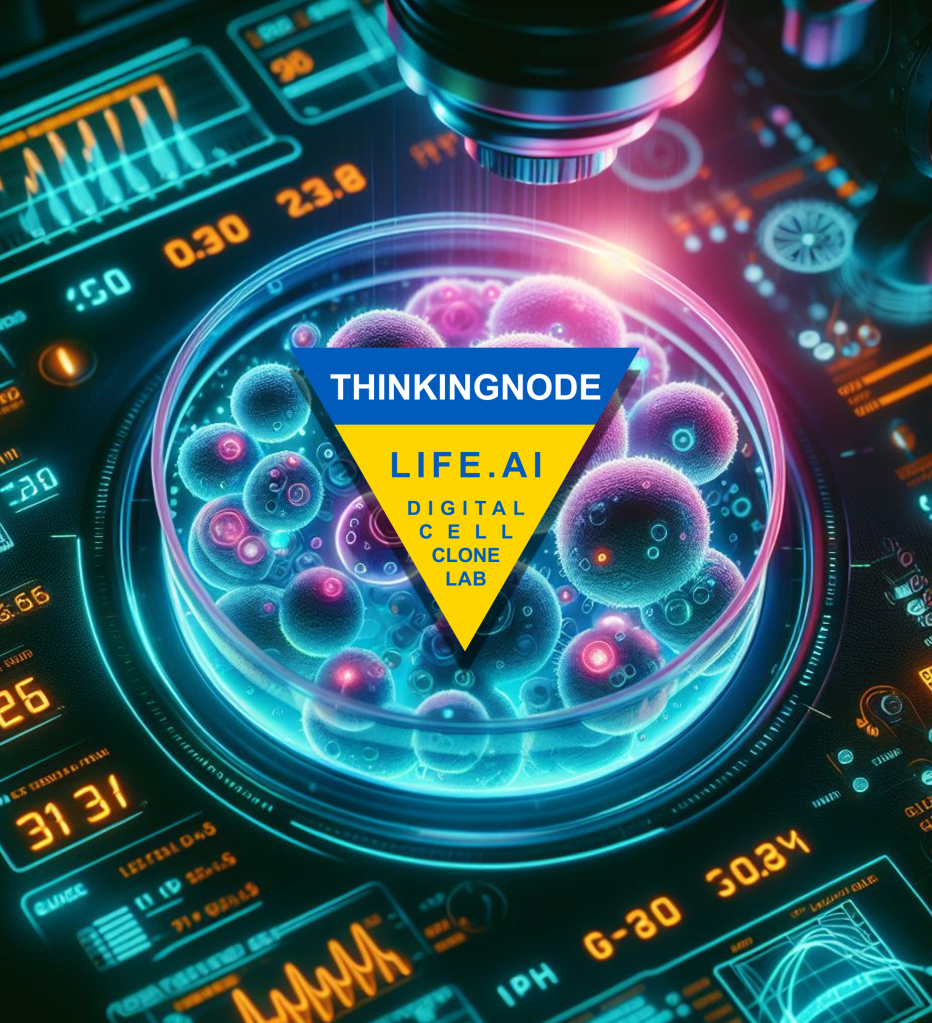
    While AI based on pattern recognition can generate cool images like the above, it is unable to reason.

    What advice would you give aspiring entrepreneurs and professionals on developing a resilient mindset and making a meaningful impact in the world of AI and life sciences?

    As I mentioned at the very beginning of the interview, I don’t know if it’s worth focusing on becoming resilient. What I mean is, resilience is a consequence – it’s a consequence of passion and a consequence of your actions. When you have a passion, you will be resilient. Your goal isn’t to become resilient, your goal was to achieve your passion – but resilience was found on the way.

    So I don’t have any tips for resilience, but I have tips about being passionate. It’s about looking backward in your childhood, looking for what is meaningful, and focusing on that. Find your life’s purpose. Applying it to life science now, well, what can be more interesting than life itself? And when combined with AI, what’s more interesting than working on how we reason and understand? When you combine the two, it’s incredible. That’s why I’m so passionate about both. It’s how to understand reasoning, and applying that to improve life.

    What’s next for ThinkingNodeLife, and how could somebody who’s reading this blog potentially help you?

    We’re currently in the middle of Series A fundraising, and we’re looking for people who are passionate. It’s nice to be smart, but it’s not enough. I want people who are interested and are going to enjoy the journey, because, if you enjoy the journey, you can go very far. We’re looking for people who are open-minded, not people who only want to prove that they’re really smart. We want people who both really understand the mission and are on mission.

    So, the next concrete step we’re taking is finding funding, but we’re also focused on finding customers. We have some events coming up, like at the BIO International Conference in June. We’re looking at partnerships too – we just partnered up with Debiopharm, a pharmaceutical company in Switzerland.

    And finally, if you’re passionate about AI and life sciences, I’d be happy to meet.

    What’s the best way for somebody to contact you, or your company, if they’d like to learn more?

    The best way would be LinkedIn. I’d be happy to connect. You can also find my company on LinkedIn too.

    Any final thoughts before we go?

    People talk a lot about technology, and sometimes people focus too much on the technology side of things. I think what we need to focus on instead is how technology can allow us to be human. I almost don’t consider us to be human yet. When I see what’s going on in the world, we’re pre-human. How can we use our technology to allow us to have more time, to be less greedy, to create abundance?

    And what do you think it means to be a human?

    Well, that’s a huge question of course. People talk about consciousness and so on, but I think being human is thinking of others, not about yourself. Being human is the ability to contemplate, the ability to appreciate things. Being able to sit and contemplate the beauty of a tree, for example. Animals don’t have the luxury or capacity to do that – they can only think about survival.

    Humans though, by thinking of others, have the ability to appreciate, to protect, to build. And leaning into these gifts is what makes us human.

    Want to go more in depth? Learn more here:

    Khai Pham LinkedIn

    ThinkingNode Life Science Website

    ThinkingNode Life Science LinkedIn

    ThinkingNode Life Science – Debiopharm Partnership

    Interview with Khai Pham in AIMed

    J. Craig Venter Institute

    Thinking, Fast and Slow by Daniel Kahneman

    Jean Piaget

  • A 21st Century Solution to a 20th Century Problem: Talking Bioplastics and Early Stage Startups with Ravi Chawla

    A 21st Century Solution to a 20th Century Problem: Talking Bioplastics and Early Stage Startups with Ravi Chawla

    I recently had the opportunity to sit down with Ravi Chawla, a postdoctoral fellow at Scripps Research, who is currently in the very early stages of forming ChakraTech (formerly known as WheelBio). This company is dedicated to using microbes to make completely and naturally degradable bioplastics from greenhouse gases, potentially solving the problem of plastic pollution! He recently took third place in a pitch competition through Aquillius, and will be utilizing their lab space as he forms his company.

    Over the course of our wide-ranging conversation, we covered topics like the risks associated with forming a startup, pushing through difficulties with commercializing this product, and building a resilient industrial biotech scene in San Diego.

    It was a fascinating conversation, and a great opportunity to talk to someone at the forefront of both science and business, working to get a brand-new, innovative company off the ground.

    If you’d like to learn more, you can reach Ravi on his LinkedIn.

    I’m primarily interested in the concept of resilience – whether personal, communal, or societal. What does the concept of resilience mean to you?

    That’s an interesting question!

    The word resilience to me refers to the spirit of persevering in the presence of difficulty. To be resilient, therefore, means to prevail or succeed despite all the odds!

    Resilience is a profound concept in philosophy and psychology, embodying a character marked by persistence in responding to challenges or hardships. Often, individuals are not immediately aware of their own resilience; it becomes apparent through their actions and reactions over time. I am deeply inspired by individuals who exhibit perseverance and courage. Their stories of overcoming adversity not only resonate with me, but also fuel my own aspirations and strengthen my own commitment to face challenges with similar bravery.

    Achieving anything significant, particularly when it involves paradigm-shifting innovations, demands immense determination. And interestingly, resilience extends beyond personal tenacity; it is deeply rooted in the collective strength drawn from one’s support network and community. Therefore, it’s crucial to be in the company of people who offer unwavering support and encouragement during challenging times. This belief forms the cornerstone of my philosophy on resilience.

    Overall, resilience is a harmonious interplay between personal commitment and communal support, underpinned by strategic thinking, persistent action, and reliable execution, all directed towards a common goal.

    So seeing a vision, and then doing whatever it takes to get there.

    Yes, by going full force!

    I attended an Anglo-Vedic middle school in India, where I drew much inspiration from ancient Indian texts. I am often reminded of a powerful quote by the late 19th-century Indian Hindu monk Swami Vivekananda, “Arise, awake, and stop not till the goal is reached.”

    This quote, which was inspired by a shloka from the Katha Upanishad, continues to resonate with me.

    Startup San Diego Pitch Competition Ravi Chawla, ChakraTech
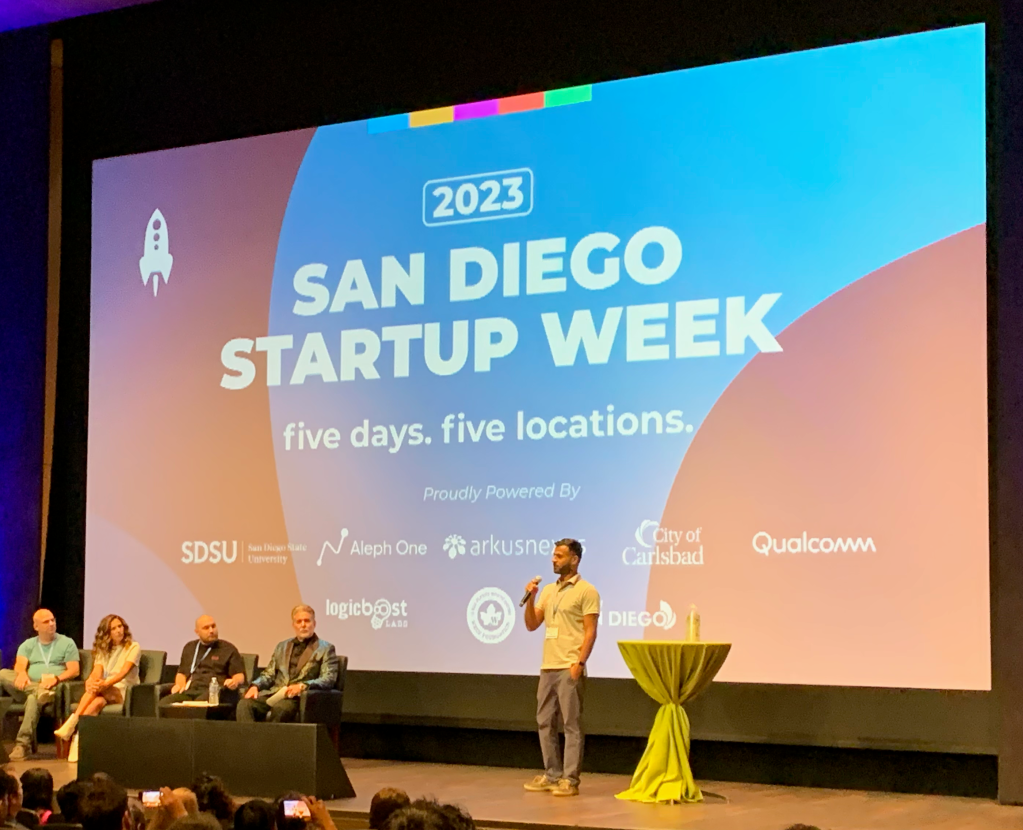
    Ravi Chawla pitches ChakraTech’s innovative technology at San Diego Startup Week

    Your background is an interesting one. You’re from a small town in India but became a chemical engineer. How has this background influenced your career?

    Growing up in a small town was a formative experience for me. Limited opportunities translate into limited expectations and limited aspirations. My dad was just happy that I finished 10th grade.

    When I finished 10th grade, my dad brought me a job he saw in the newspaper for a position as a constable. I was like, “do I look like someone who could do that? I’m the biggest nerd that exists!” But I, somehow, have always had a determination to challenge the status quo and defy the norm. Perhaps, I get this trait from my mom, who I’ve always thought to be both fearless and a force of nature, and has always been a tremendous source of inspiration for me! Anyway, this drive led me to successfully persuade my family to relocate to a larger city, Chandigarh, that opened the door to more educational opportunities.

    After relocating to Chandigarh, I completed 12th grade and appeared for the engineering school entrance exams. My interests primarily lay in physics, chemistry, and mathematics. However, when someone suggested a career in chemical engineering, I was initially distraught. Even though I was preparing for engineering school, I had no understanding of what any of the engineering fields entailed. Among my peers, the prevailing belief was that chemical engineering involved extensive chemistry and rote memorization, with limited career prospects. This perception made me hesitant to pursue it.

    By a fortunate coincidence, Panjab University in Chandigarh had an outstanding chemical engineering program. Financial constraints led me to choose this path over the then-popular computer science or other engineering majors. Thanks to the program’s affordability and the scholarships I received, I could pursue my education. Surprisingly, I fell in love with the chemical engineering curriculum and education. It quickly became apparent that this was my true calling. I thoroughly enjoyed every aspect of it, and it continues to shape my approach to solving scientific and technical problems. In retrospect, my initial concerns were unfounded, as I stumbled upon my passion in a field I had chosen by chance!

    In my opinion, “success” is a delicate balance between determination and destiny. One has to attempt to create their own destiny, but then let nature take its own course. It’s actually a philosophy from a Hindu scripture, the Bhagavad Gita – you only have the rights to your efforts, and not the rewards or fruits of it. I think that is something that fundamentally governs me. Give it your best attempt, and then everything else is out of your control.

    Your biotech startup, ChakraTech, is still currently in stealth mode, but you have recently begun to pitch for fundraising, coming in third place at a recent pitch competition in San Diego. What can you tell me about your company so far?

    We are in early stages of our journey, and I can tell you in very broad terms about what we are doing and how we got here.

    The biggest thing that came out of the Industrial Revolution in the 20th century was the introduction of plastics. Plastics fundamentally changed the paradigm. It actually totally moved our society to where it is today – without them, we would not be here! Imagine life without milk containers, shoes, everything – everything has plastics.

    However, what was a boon for the 20th century is a bane for the 21st century. They’ve served an incredible purpose, but the truth is, these plastics are accumulating in our environment at an incredible pace.

    Growing up, my mom was always concerned about plastics entering our food chain through contact with food, and she preferred to use reusable containers made from materials such as steel, glass, and ceramic. It turns out her hunch was spot-on. Recent studies suggest that an average person is ingesting up to a credit card worth of microplastics every week! The full extent of how these micro- and nano-plastics affect our health and environment is still not completely understood, posing a concerning and largely unexplored risk.

    What we do at ChakraTech is emulate ancient microbial processes to create biodegradable plastics. Over billions of years, certain microbes have figured out a way to make a degradable plastic, or polyester. It’s actually a fat reserve for them! Similar to how we get fat and have love handles, for bacteria, they’ll end up making their own version of fat reserves – bioplastics. These bioplastics degrade completely in a short time, typically a year or less, and have the power to totally change the 21st century.

    Wow, that’s incredible. Is this a new discovery?

    No, this polymer is not a new discovery. The earliest reported sighting of this bioplastic polymer was actually from 1890 in a German textbook! Efforts to commercialize it since 1980s have faltered, struggling to compete with the economics of petrochemical plastics. Yet, the potential for scientific and technological advancement is vast — a direction I planned to explore in academica as a tenure-track faculty member. When faculty search committees didn’t embrace this vision, I remained steadfast and decided to pursue this opportunity through my own startup venture.

    Anyway, at ChakraTech, we are taking an innovative approach to make this bioplastic. To understand how, you need to understand what plastic is – a polymer is a chain of monomers, basic repeating units. How does a microbe or bacteria turn monomers into the polymers we want? They transform carbon from food source into “fat stores”. Historically, expensive carbon source such as vegetable oils have been used as carbon source, not only elevating expenses but also threatening food security in low-income countries. This approach renders the technology unaffordable and inaccessible to much of the world.

    Well, what else could serve as a great source of carbon? Greenhouse gases. That’s where we come in –  we’re going to take these microbes in giant vats, feed them greenhouse gases and get them to create bioplastics. What’s interesting about this is that it solves two problems at once. First, we can repurpose the carbon emissions, namely the excess carbon dioxide or methane that is emitted into the atmosphere, for manufacturing various types of materials and chemicals. Second, the bioplastics degrade naturally! This positions us to bridge two historically very different industry segments – biotech and cleantech/climatetech.

    The reality is that plastics aren’t going anywhere. Neither are the carbon emissions for the foreseeable future. But perhaps our technology can help to solve two huge environmental challenges at once!

    Marrying science and engineering, Ravi hopes to scale bioplastics in a cost-effective way.

    And no one else is working on this?

    Various companies, some for over a decade, have concentrated on solving different aspects of the technology and challenges. While they have achieved some progress, most of them are yet to realize their full potential. This, I believe, is largely due to an insufficient integration of science and engineering.

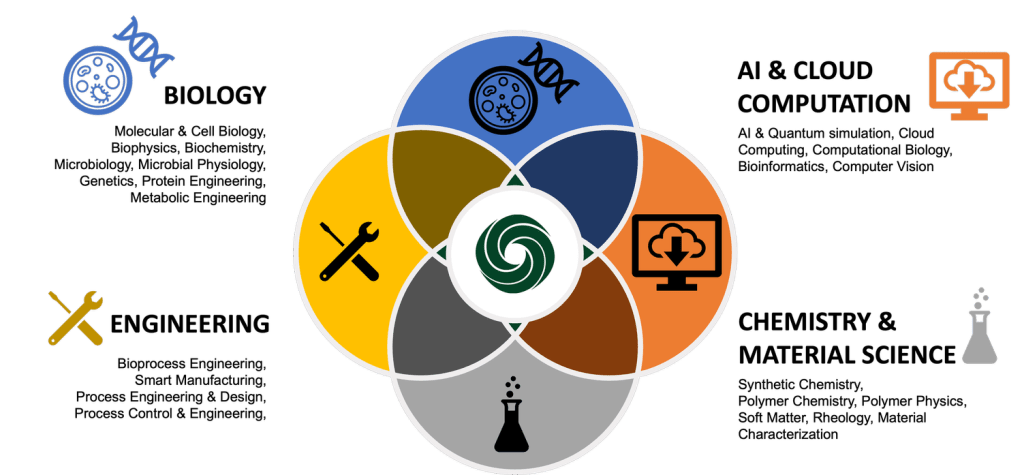
    In my experience, the distinct training backgrounds of engineers and scientists often lead to communication barriers, which translates into insufficient technological advancement. Bridging this gap between basis sciences and engineering is therefore vital for effective collaboration on complex projects. Particularly in the case of bioplastics, biological systems don’t necessarily conform to engineering constraints in terms of scalability. This underscores the fundamental need for an integrated approach, combining process engineering with biology and chemistry, to develop bioplastics in a cost-effective manner.

    Fascinating. I don’t know too much about microbes, but I’ve seen a few companies lately using microbes in incredible ways. One such company is up in Escondido, Aquacycl, and they use microbial fuel cells to treat wastewater. The microbes generate electricity and clean water as part of that process.

    Is microbial engineering an emerging field? Or has the science simply progressed enough that companies can begin reaping the rewards from microbes in a cost-effective way at scale?

    Microbial engineering and biomanufacturing have been around for some time, but they are far from a mature industry, and have a unique set of challenges – including a capital-intensive research and development budget. While still in its infancy compared to the petrochemical sector, it is the future of next generation of sustainable manufacturing!

    If you really want to put a start date on it, things started when Alexander Fleming discovered penicillin in 1928. And if you want to be even looser with it, people have been fermenting things pretty much forever! The biotech industry, however, really took off in its current form in the late 1970s with the advent of molecular biology tools, notably when Genentech produced insulin using recombinant DNA technology.

    There are different kinds of microbes. There are fungi, bacteria, archaea…and companies have been using them at scale for a while now. One of the well-established companies in this field, Genomatica, based in San Diego, utilizes E. coli to manufacture the precursors for nylon and various other products. The tools and the technology to scale them have actually been available for a while now!

    So the tools exist, and companies are using them.

    Yes, but there are still significant challenges.

    Microbes are natural – they exist in nature. But how do you engineer them to perform their best? How do we get it to do what we want it to do, not what they want to do? We want them to produce the maximum amounts of our product, whatever that might be, not what the microbes wants to produce. Microbes have billions of years in their favor. It simply boils down to finding a way to get your microbes to do what you want them to do.

    Yet another challenge has been to build a robust scale-up framework, so that the microbes behave in the same way at an industrial scale as they do in the lab.

    Ravi works to scale the microbes from the lab to an industrial setting.

    You mentioned the environmental pushback with plastics, and how a biodegradable plastic can help solve that problem. But there’s another issue with plastics, which is that they’re endocrine disruptors. Does bioplastic solve this problem?

    Great question!

    Honestly, I think that bioplastic is our best shot at solving this problem. Based on the 2018 EPA statistics, less than 8% of things get recycled. The plastic itself isn’t getting recycled like we think it is! Moreover, recycling itself generates microplastics, which end up in the soil or in the ocean. If you eat a fish that’s has consumed microplastics in the ocean, these microplastics will enter into your body. Same thing when you drink soda out of a plastic bottle. Plastics used in food packaging are a source of microplastic contamination, gradually leaching tiny particles into our food.

    Our truly degradable bioplastics breaks down into its simplest, harmless form (technical term is monomers) in a relatively short time span and our bodies are able to tolerate this! It’s not like the plastic in a soda bottle which our bodies don’t make. Our bioplastics are biocompatible, since our bodies already make the base unit that make the bioplastic. Interestingly, there are already implants and sutures made out of this bioplastic since it’s not foreign to our body!

    As an extremely early stage startup, you are prone to lots of risk. What are some obstacles you are currently navigating, and what are you doing to create resilience in this fledgling company?

    That’s a good question! Transformative endeavors inherently carry risks, yet it is these very ventures that redefine our world.

    In the realm of hardtech start-ups, we typically encounter three broad risk categories: scientific/technical, team/execution, and market dynamics.

    Firstly, the bioplastics technology we’re focusing on, initially commercialized in the 1980s, has evolved significantly. Earlier, its adoption was limited due to high production costs. Our current objective is to refine this technology scientifically and technically to make it more cost-effective, thereby unlocking new opportunities.

    Next, regarding team and execution, we’re consciously assembling an interdisciplinary team with deep expertise in science, engineering, material science, and business development. It’s essential to achieve a harmony between scientific rigor and robust business strategy.

    Lastly, market risks can’t be overlooked. Past instances in this industry reveal that premature scaling in absence of market demand or acceptance can lead to failure. Over 40% of start-ups fail due to inadequate product-market fit, a trend even more frequent in our particular field. Hence, we’re prioritizing product development and forging key partnerships to ensure our product meets market needs.

    What is next for you, personally, workwise, and otherwise?

    I’m looking into transitioning into doing this full time – if you work on ideas part-time, the company will stay part-time.

    There is burgeoning start-up scene in India, and I have considered moving back to India to pursue a startup related to bioplastics or other independent ideas. But there are currently other bottlenecks in India which would take longer to resolve. Certain tasks might take five years to accomplish there, tasks that would only require a year or two in the US, especially the research and development (R&D) part. Consequently, I’ve learned to exercise patience in these situations. US has an excellent ecosystem for supporting tech start-ups, so it is a great place to pursue innovation and works out favorably for us.

    At this early ideation stage, our focus is on establishing a strong foundation that encompasses both technical and business aspects, as well as assembling an interdisciplinary team. We have an impressive global team of scientists and engineers working on this idea already. Friends and former colleagues in the US, Europe and India who have decades of professional science and engineering experience are helping us too. We are actively working to get advisors on-board with a diverse range of experience, spanning science and technology, government and international policy, business, and finance.

    You mentioned deciding on the United States vs India for some of this, and have people all around the globe who want to help. Can you talk about why you’re in San Diego, and any pros or cons that you see in this community?

    I think there’s a very big spirit of kindness and generosity in the greater San Diego area, which resonates deeply with me. Furthermore, people are really environment conscious and there is a great ecosystem to support the startups.

    San Diego is one of the top three cities in the US to pursue startups, especially in technology and biotech sectors. However, it appears to me that compared to other major hubs such as the Bay Area, NYC, or Boston, we are still lagging in terms of the overall support and funding opportunities for hardtech startups. In addition, there are not many startups in the field of industrial biotech, but I am hoping the success of companies like Genomatica will pave the path for others to follow.

    Well Ravi, I hope that you do succeed. What is the best way for someone to contact you if they’d like to learn more?

    Thank you. You can find me on LinkedIn! I check it pretty often, so I will be responsive.

    Want to learn more? Go more in depth here:
    Ravi Chalwa LinkedIn

    Scripps Research Profile on Ravi Chawla

    ChakraTech Website

    ChakraTech LinkedIn