Blog

  • Finding Civility: Community Resilience with Sam Dettmann

    Finding Civility: Community Resilience with Sam Dettmann

    I had the pleasure of sitting down with Sam Dettmann, a friend of mine since college. Sam is currently running for a Village Trustee position in his town of Whitefish Bay, Wisconsin. While many of my previous blog posts had a tangential relationship to the greater San Diego area, this one takes a peek behind the curtain of a close-knit southeastern Wisconsin community, and the high-level resilience insights we can glean from someone involved in the local political sphere there. It’s a slightly different angle than normal, but one that I found interesting – and still highly relevant.

    We covered a number of topics, ranging from what makes a resilient community, how a town’s design can contribute to its character, how to network, meet people, and the importance of listening, and the lost art of civility. It was a nice surprise – this catch-up with my friend turned into a really revealing discussion on the communities and institutions that we all make up, and the role that we play in strengthening them.

    If you’re in the community of Whitefish Bay, I hope you choose Sam on April 2nd! And if you’re not, I hope that you enjoy this discussion on what makes a local community strong.

    To learn more or reach out to Sam, you can contact him here.

    Editor’s note: Sam won! Congrats Sam!

    I’m primarily interested in the concept of resilience – whether personal, communal, or societal. What does the concept of resilience mean to you?

    That’s a good, tough question.

    I think for me it’s the idea of being comfortable with who you are, even if that sometimes means being okay with not being liked or not being able to please everyone.  As a candidate and a person, I am learning this as I go, and it’s a work in progress every day. In the campaign, I try to keep things even and I am always open to collaboration with anyone who reaches out to me, but it’s still important to realize that you’re never going to be able to please everyone. The way that I work on that and on being comfortable with it really starts with making sure that I have strong connections, with my family and my personal network, who I can rely on to help provide guidance and grounding.

    Being comfortable with who you are, while not necessarily being liked. Is that something that you started working on as a result of this campaign? Or is it something you’ve been working on longer?

    Something I’m always working on is my sense of self. What do I bring to the table, and how can I do it in a way that makes an impact?

    The campaign has been a great learning experience for this. It’s a lot of work even just running in a local race for a smaller town, but you learn a lot about yourself, what you do well, what you can work on, what your strengths and weaknesses are. And then you also get much more connected to your community and the people in it. If you’re reading this and interested in running for something, I think you should do it but be prepared to be challenged. At times, a campaign can also be a bit lonely, which is a strange paradox as running for office in an inherently connective experience but there’s an element of self-reliance that can be humbling at times.
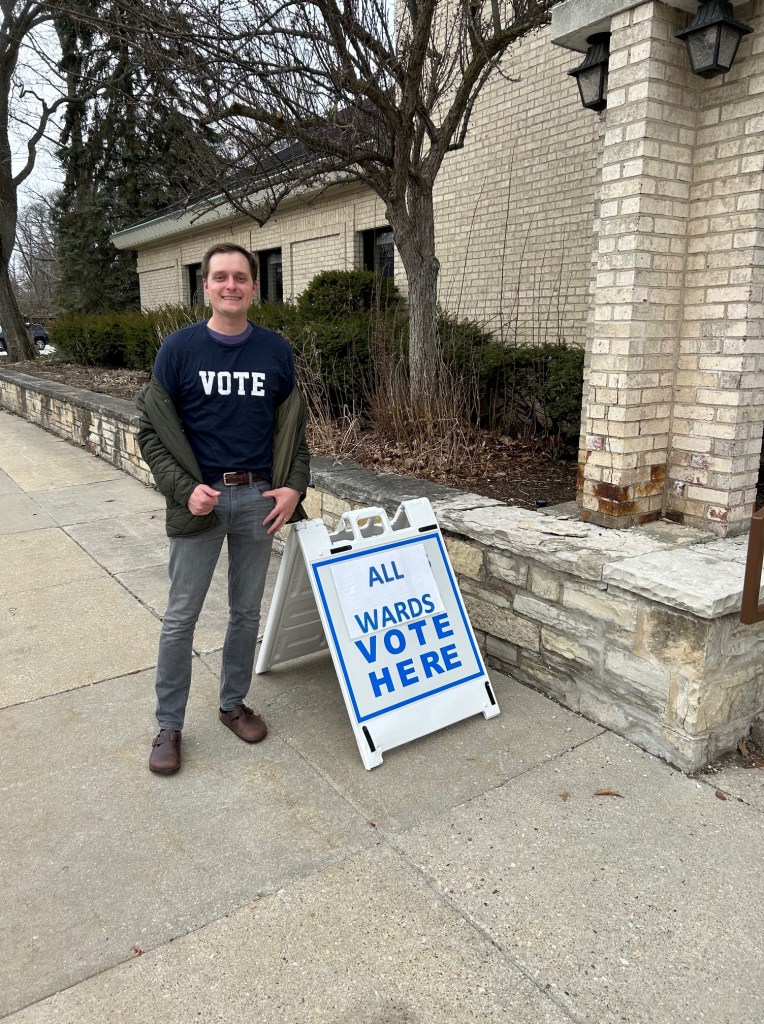
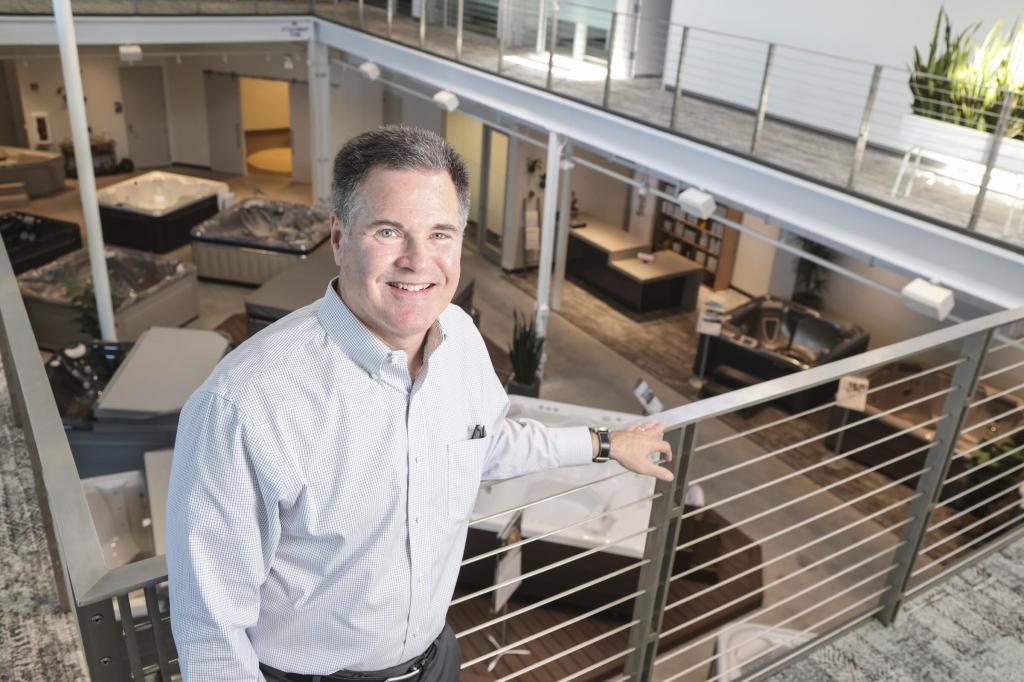
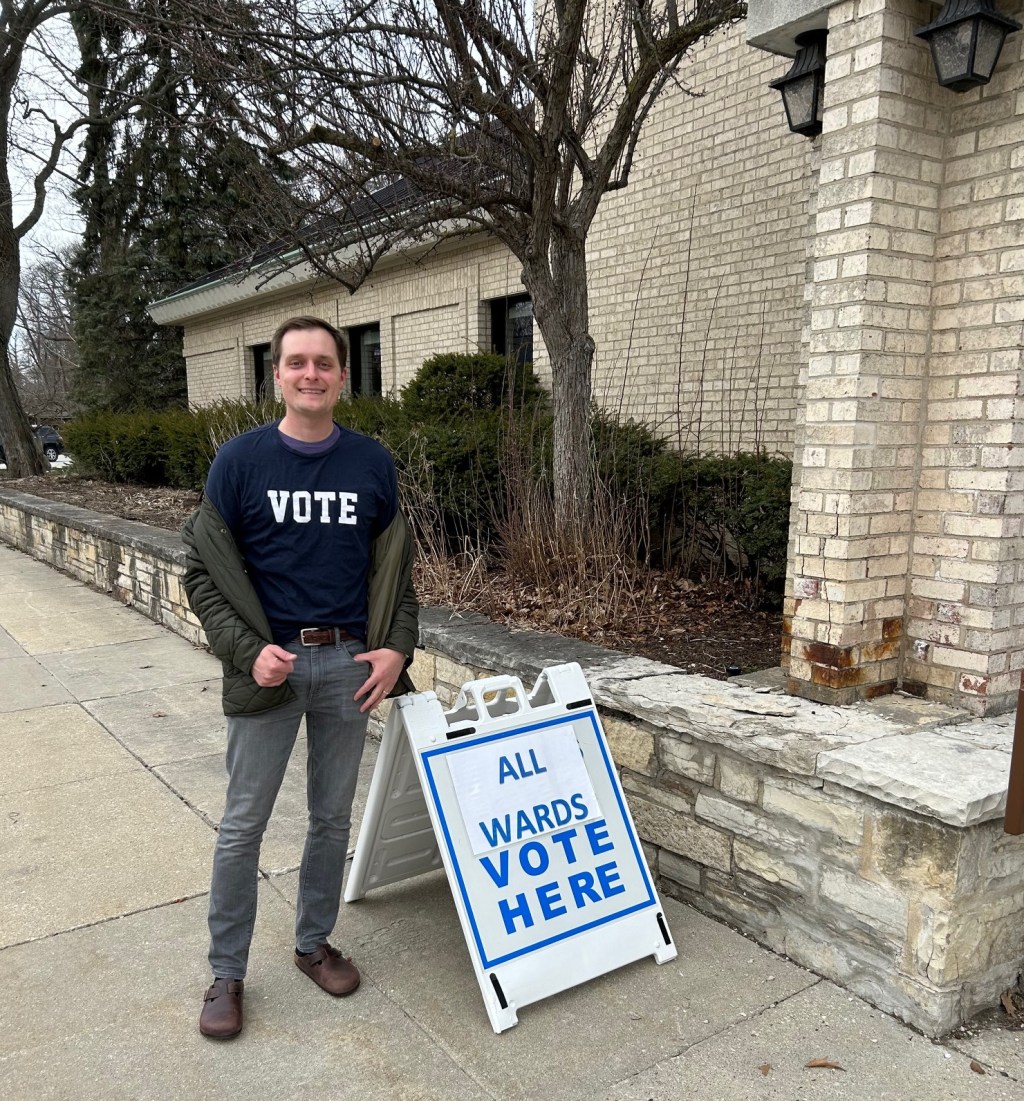
    Sam Dettmann is running for Village Trustee.

    What originally attracted you to the Whitefish Bay community? Would you classify it as a resilient community?

    My wife actually grew up here, so we were familiar with it. I grew up nearby in the Milwaukee area, so I also knew the area but when we were looking for somewhere to set down roots we both knew Whitefish Bay was the right place.

    One of the things I like about living here is the nice blend of urban and suburban feel. We live about ten minutes from downtown Milwaukee, and can get there from our house by bike on well-maintained trails, but Whitefish Bay maintains this great neighborhood feel. It’s the second most densely populated community in Wisconsin, so you know your neighbors and it’s walkable.

    We also have phenomenal schools and phenomenal services. Those were big attractors for us, and that’s something I want to do my part to maintain over time. I have two kids, one who just started in the school system, and I want to make sure that I’m doing what I can to help build the community for them and the future.

    The other piece that’s really cool about Whitefish Bay is the geography, which is really unique. You are never far from Lake Michigan in Whitefish Bay and it’s a great place for walking, biking, running…there are just some really nice opportunities to get outdoors here and our residents take advantage of it.
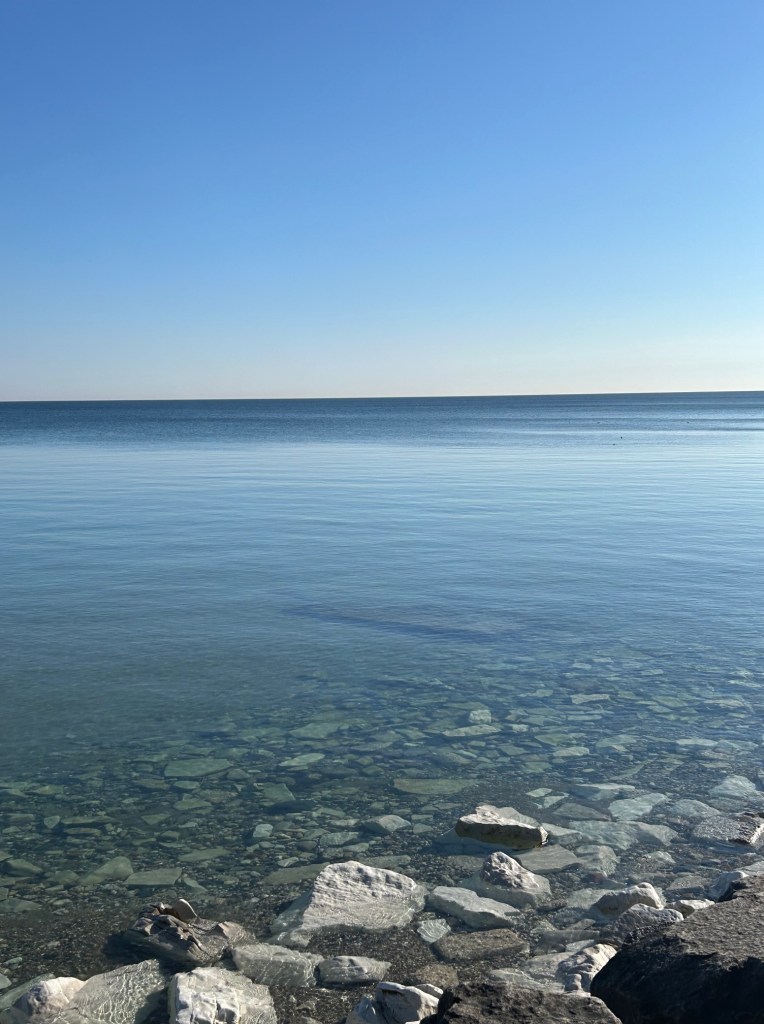
    The shoreline in Whitefish Bay, Wisconsin.

    It seems like a lot of what you’re saying is that resilience can be built into a city’s very design – the urban (or suburban) character, but also the interplay between nature and the built environment.

    I think the last piece is community as well. People contribute to the resiliency of an area, and we have very strong neighborhoods. Even individual blocks are really close knit with a mix of residents who have lived here for decades and new ones connecting and helping each other out. Throughout the summer, we have block parties, and the energy and attendance of that is really refreshing.

    Of course there are the city design elements, the geography, the interplay between nature and that design, but also the people who inhabit the community and how they contribute to it.

    We have some challenges though. One of the big issues we face here is maintaining and restoring our shorelines from erosion. They need a lot of maintenance, and our parks need maintenance as well – although both provide great opportunities to gather outside. So I’d consider this to be a resilient community, but we need to continue to improve it.

    Shoreline erosion is something that we’re intimately familiar with in Southern California!

    Where do you see the local government’s role in fostering community resilience? Is that even something that the local government should be involved in?

    I think it is. Something I’ve learned through this whole process, and it can be challenging both in a campaign and personally, is that it’s really easy to have huge aspirations and we need to think strategically about the future, about how we develop as a community. But when you start to realize what the day-to-day roles or the week-to-week roles of the local government are, and what they’re actually focused on, it’s not always the things you think about. There is a wide variety of boards and municipal departments that handle different things. And I think people often think that when things get done, it’s the seven people on the board who are pulling those strings, and there’s generally a lot more to it than that. We are lucky to have a great municipal staff who make life here safe and enjoyable for residents.

    A lot of what the local government gets down to doing is detail – it’s decision making, it’s pragmatism, it’s planning for the future in a strategic, concise way that is aligned to what our residents want. How do we take a year of our budget and make sure we’re investing for the future while controlling our tax burden? This type of balance is something I work on a lot in my day job and I hope to bring it here as well. I am a CPA and work with budgets and financial plans every day and I want to lend those skills to our local government

    So it’s important to have both – the aspirations and the basics. Effective leaders take aspirations and make sure they are achievable and make a positive impact on those they serve.

    So in summary, it often comes down to services. It’s the things you don’t notice – the sewers are working, the streets are shoveled, the parks are maintained. It’s all of those things. But of course, it’s critical to plan for the future too and I want to contribute to that discussion with an open-mind. What should we focus on knowing that we have limited resources, what will drive the most positive outcomes for our community? That’s part of where I think resilience fits in – we have various plans and initiatives that inform our vision and the goal is to implement them, but sometimes those plans are daunting, they’re long, they cover decades, and the world changes, so it’s also important to be nimble.

    Let’s go back to some of your comments about community, which you mentioned was one of Whitefish Bay’s strengths.

    In his book Bowling Alone, which you and I have talked about, Robert Putnam talks about community building almost as a paradox of being both in decline, but also more important than ever. Can you talk about the importance of community, not just at the local level, but the personal level? Then, do you have any tips for building community, not just within an urban environment, but also as part of a personal network?

    Yes, I agree wholeheartedly with that. I know you and I have talked about it in the past – this is one of my favorite books!

    When we think about what a society should look like, Putnam talks about a concept of social capital, which is basically the social and personal connections that make for a strong, productive and united community. It’s a really important idea, and for me it’s one of the biggest factors for increasing personal resilience – finding out how to increase and then effectively use your social capital. Because no matter what happens, if you have social capital, you have a community around you to help solve problems.

    In terms of building community, this has always been important to me, but I think that really came into focus during the pandemic. We had so much technology at our fingertips, but what people seemed to want more than anything was to connect in a meaningful way. And honestly, I think that we lost something at that time, and maybe we had been losing it for a while and COVID accelerated it, but I am concerned about our capacity to connect with one another. I think technology may be a part of that, since it can allow people to retreat into their bubbles but it’s really nice to get out there and connect in person with the community. That is one of the things I love about working with our town Civic Foundation – it forces you to connect.

    A little more about our Civic Foundation, it’s a private organization but it partners in many ways with our local government, and we put on a lot of the most loved community events around town. Many of these events have been going on in Whitefish Bay for decades and the Civic Foundation has been a great steward of them over time. They are attended by a huge portion of the community and residents of surrounding communities and they are always free to attend. I joined the Civic Foundation board coming out of COVID and it’s been a great way to build community and meet other residents. It’s really part of the fabric of our town. When I help with the Civic Foundation events, I feel like I am building social capital and contributing to a resilient community, and it is refreshing to be part of something positive and local.  

    Through this campaign, I have also enjoyed the nonpartisan approach of local politics, which is so different from partisan national politics. I think this really helps us focus on issues that matter to our residents.

    Let’s talk about that difference. When people normally think about politics, they often think about things from a long, drawn out, partisan national level. What has been your experience thus far with politics on a local scale?

    I think it’s quite different!

    The office I’m running for is nonpartisan, so it really forces you to think about issues and not categorize yourself into a specific camp and that helps remove some of the clear delineations you’d have in a national race. I mean when you think about a national race, you have 90% of the voters accounted for regardless of who is running or what the issues are. That’s a big challenge because you end up fighting over a tiny sliver of voters on a huge range of issues.

    On the local level, I’ve found it to be much more about networking, much more about visible things you can impact in a tangible way, and then also about your tone, your philosophy, and your resume. All of those matter in a different way than they would in a national election where there’s a partisan letter after your name that’s going to get you most of the way there. So that’s been nice.

    It also forces you to talk to people and really connect with them in a nonpolitical way. I’ve been able to connect with people who have politics coming from all different angles. And sometimes their politics come up, sometimes they don’t, but it’s never the central area of focus and that’s really nice.

    A lot of what you’ve mentioned has involved those most basic aspects of community building – talking one-on-one with people and networking. Can you talk more about the importance of that for strengthening the local community?

    I think it’s the single most important thing you can do, honestly. What I’ve found is that when you talk to one person, at least when you’re running for something or working for a civic foundation, they’ll usually connect you with like five more people and from there you’ll keep connecting and encountering new perspectives. It’s important that you’re willing to be outgoing, you have to be willing to pick up the phone, and you have to be ready to have a lot of coffee!

    I think it’s also really important to remind yourself to listen. I think everybody, myself included, loves to talk. But you learn a lot by listening and you start to figure out common themes. When you talk to one person, you get an individual opinion, but when you talk to 50 people, you start to see common themes emerge. That’s really what you’re working towards – bigger themes and once you’ve identified them you can focus on the details around how to make that happen.

    Again, it’s refreshing to see that a lot of times those themes cut across political lines. What people are looking for often isn’t that complicated. And at the end of the day, people want to be part of a community that’s respectful and willing to interact and engage back with them.

    So the major themes you hear while out and about center on respect and engagement?

    I think those are two big themes, in addition to others that are more specific to our town. Civility is so important, and we’re lucky that we have it in this community. Like any community, we’ve had divisions in the past and I think we’ve maybe been a bit more divided recently than is typical, but overall, it’s an extremely collaborative community that really does prize civility.

    Part of what pushed me to run in a concern about civility more broadly in our society. Our ability to be civil in our disagreements, well, it’s eroding at least as fast as any shoreline and that makes me afraid for the world that my kids will inherit. If we can’t have a coherent civil conversation where we might not agree, we are going to struggle to solve the many challenges we face. In Whitefish Bay, we are good at solving problems with civility, so I am going to do what I can to preserve that here in my town and improve it more broadly.  

    What made you want to get involved in local issues? What tips would you give to others looking to get involved in their own community?

    Since moving here I’ve been pretty involved in the community, from helping with reviews of people’s tax assessments, which I did for about six years, to now getting more involved in our Civic Foundation and Library Foundation. It turns out groups like that really like you if you’re a CPA and have budget and financial strategy skills and I’ve always looked for ways to use my skills and background to give back to the town. I mean, I’m probably not going to be the most creative event planner, but I can definitely make sure we have the funds to pay for it!

    At this point in our local government, I think my skills align with what we need, so that’s why I chose to run. It’s really for three reasons, which are themes of my campaign, community, consensus, and sound fiscal planning. There are a wide range of details underneath those themes, but they are the guiding principles for my campaign.

    As far as tips for running for local office, if you’re interested, first make sure there are five or ten people who are well connected in the community that you can talk with about your ideas and campaign approach. Ask them, does your case make sense? Who can they connect you to? What tips do they have and how do they perceive you? It’s always interesting to learn more about how you are perceived compared to how you perceive yourself and I think good leaders adapt and grow based on this feedback. These first connections are incredibly valuable in the early part of a campaign.

    When I think about a local community, I like to think about how it’s made up of building blocks of individuals, who make up individual families, who come together and form the culture of a town. So I want to talk about your own building block – your own family. Are you taking things you’ve learned from the community back to your own family? Are you taking lessons from your family out to the broader community?

    Yeah, I think it goes both ways. When I think about my own family, my two kids and my wife, they’ve done so much to instill into me the importance of listening, kindness, stability – I definitely learn much more in my house that I take outside.

    And then even though the kids are a little young to participate in the campaign, they like to be part of things when they can. They take pictures, they ask why there are signs up around town with my name on it, that sort of thing. I hope to make them proud! They may not know it now, but someday when they look back, hopefully they’ll think this was good no matter what happens.
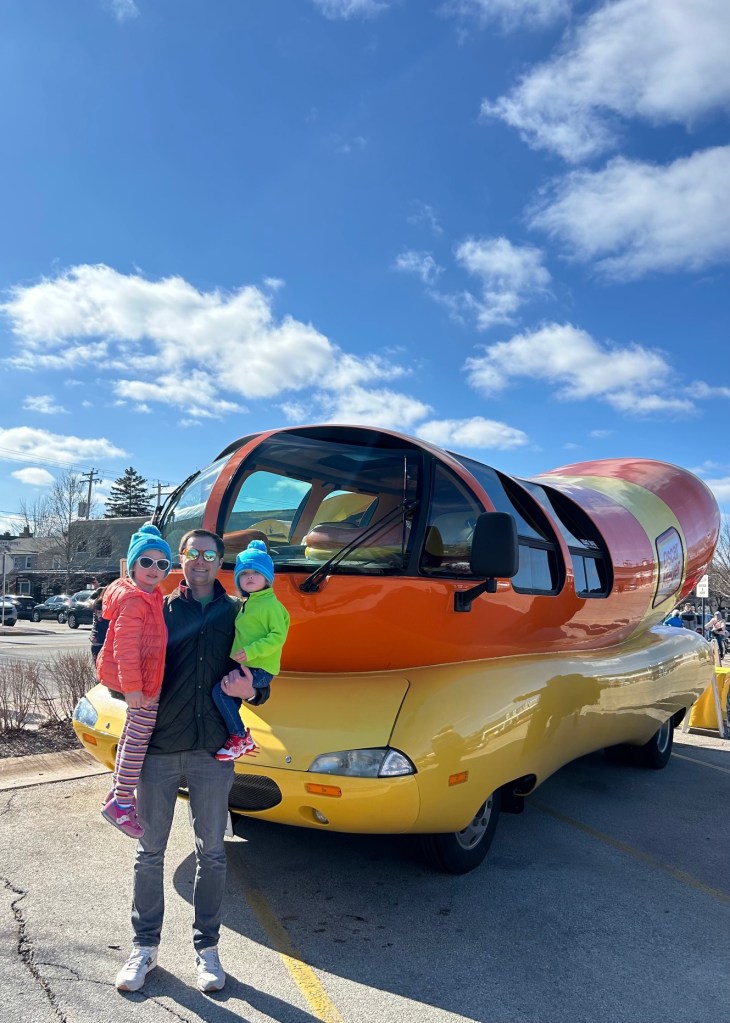
    Even though the kids are a little young to participate in the campaign, they like to be part of things when they can.

    What are the best ways for someone to learn more about you or contact you?

    Our election is coming up on April 2nd, you can check out my website, and you can also use one of the various contact forms on that site to connect with me via email. I’m not taking donations for this campaign, but if someone wants to contact me and learn more, whether they live in Wisconsin, California, or anywhere really, then feel free, I’d be happy to talk with them.

    Is there anything else you’d like to talk about or highlight before we go?

    The first thing is that I’d really just like to encourage people that if they’re on the fence about running for a local office or getting involved in your local community, I’d say you should go for it! It’s a really great personal and professional experience. It will be uncomfortable at times and it will challenge you in ways you wouldn’t expect, but it will also connect you to really interesting people you wouldn’t have met any other way. And you never know where those connections and learning experiences will take you. Whether you win or lose, you’ll have a good experience, and you’ll be glad you did.

    The other thing I want to highlight is on that theme of civility that we talked about. I think the more you get out and talk to people, the more people will surprise you. They’re going to be more reasonable than you expect, going to have more complex views than you’d think. It’s so easy, at a national level, to classify people based on their political leanings, but underneath it, there is so much complexity that those parties gloss over. And that’s something that’s really harming our ability to be civil at a local level.

    There’s a scene in the show Ted Lasso where Lasso is playing darts and references a quote, “Be curious, not judgmental.” If you are curious about people, you are going to learn something – and I think that’s a pretty good takeaway for anything you want to do.

    Want to go more in depth? Learn more here:

    Sam Dettmann’s Village Trustee Website

    Sam Dettmann’s Village Trustee Instagram
    Sam Dettmann’s Village Trustee Facebook

    Sam Dettmann LinkedIn

    Whitefish Bay, Wisconsin

  • Knowledge, Reason, and What It Means to Be Human: Revolutionizing AI and Life Science with Dr. Khai Minh Pham of ThinkingNode Life

    Knowledge, Reason, and What It Means to Be Human: Revolutionizing AI and Life Science with Dr. Khai Minh Pham of ThinkingNode Life

    I recently had the pleasure of sitting down with Dr. Khai Minh Pham, a visionary at the intersection of life science and artificial intelligence. While AI has only recently entered the public conscious, Khai has been a trailblazer in the AI space, starting with growing and exiting a groundbreaking AI company, DataMind/RightPoint, in the early 2000s.

    His latest company, ThinkingNode Life Science, is both truly innovative and terribly interesting – he’s working on revolutionizing the way we approach healthcare and drug development by running both through the lens of AI-generated digital cell clones.

    We went in-depth on a number of subjects ranging from Philosophy to biology, covering topics like the types of knowledge, reasoning vs pattern recognition (and what that means for AI), how Khai started his first company without even a computer or money in France, and, in the end, how technology has the capacity to allow us to truly become more human.

    If you’d like to learn more, you can reach Khai on his LinkedIn.

    I’m primarily interested in the concept of resilience – whether personal, communal, or societal. What does the concept of resilience mean to you?

    In the business world, people often say that entrepreneurs take more risks. I don’t see it that way – or, I guess I don’t see risk the same way as most people. If I did, I don’t think I would do anything! I’m not even sure that you have to do anything specific to be resilient – you just do things, and let other people qualify you as resilient. It’s more about the end result, and the process of getting to that end result, than anything specific that you’re doing.

    I find that business, and entrepreneurship, is like a long journey. You take it one step at a time. You just have to be motivated to get to the very next step. And then, at the end, you look back and realize, wow, I’ve done all that?

    Perhaps continuously finding that motivation to just get to that next step over and over is what you would call resilience.

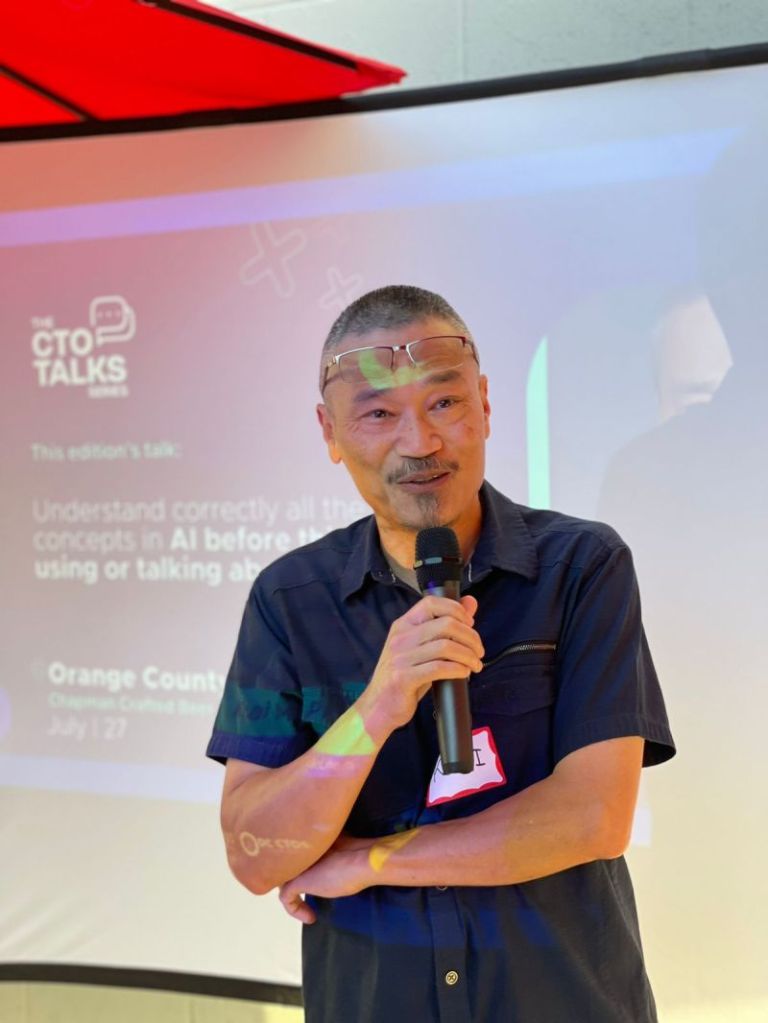
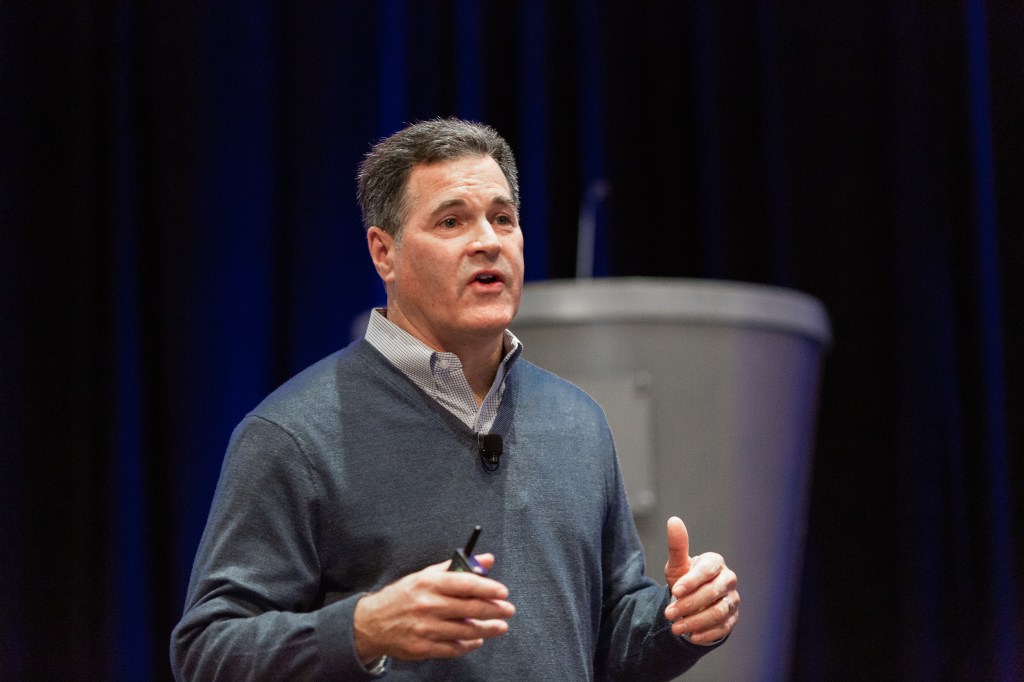
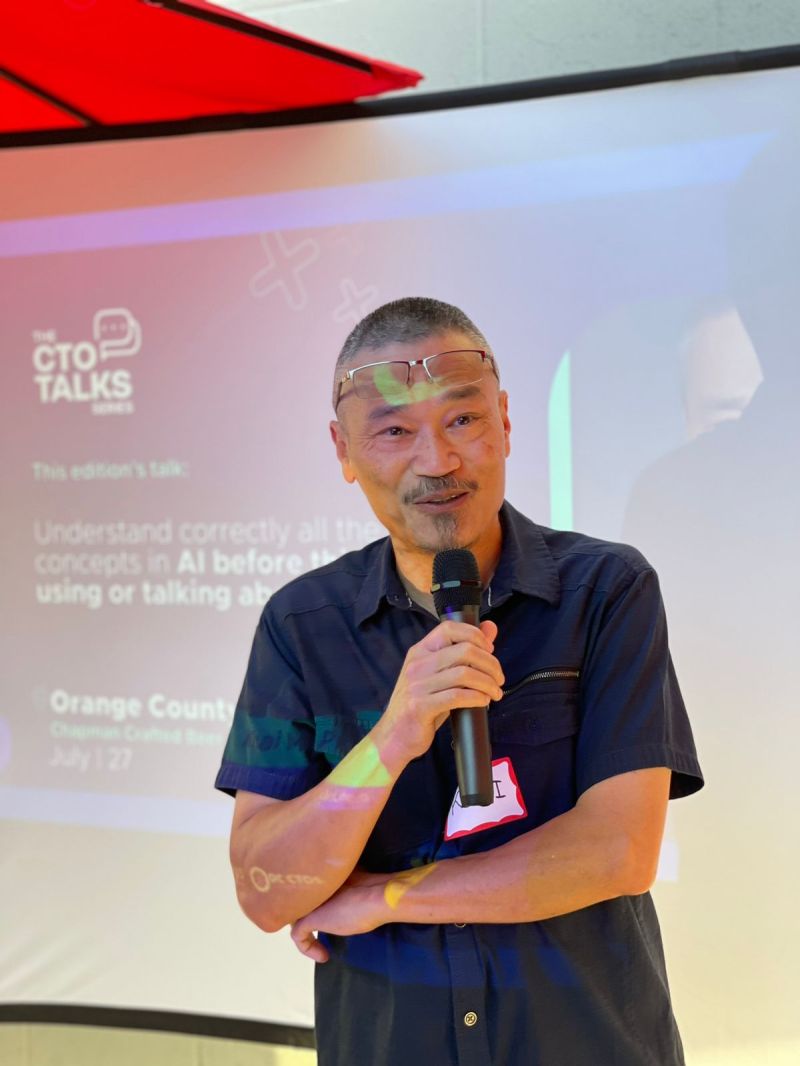
    Dr. Khai Minh Pham giving a talk about AI as part of the CTO Talks series.

    You’ve had an interesting career journey – while a buzzword as of late, you’ve actually been at the forefront of AI for 30 years. In the 90s, you founded the company DataMind, which was an AI platform for the Fintech/CRM industry, and guided it to a $630 million exit. Can you talk about your journey as an entrepreneur?

    My mom is Vietnamese, so I always say I didn’t have a choice on what I would be when I grew up – I had to be a physician!

    I entered medical school in France, but in my second year of the program, I realized that there was no way that I could remember all of this information. I couldn’t be sure that I wouldn’t forget anything when I diagnose or treat a patient – but I wondered if AI could do it. But when I talked to the AI people, their explanations of what AI was actually capable of was not very satisfying – so I decided to work out for myself the way AI could solve my problem.

    Most people in AI would design a formal system, and then try and fit the way we think into that system. I did the opposite. I had a problem, which was how to handle the different types of thinking that you find in medicine, and I worked to design a system that could reason. So, in the mornings, I would head to the hospital, but in the afternoons, I would go do computer science, and in the evening I would catch up on my medical studies. I was a real nerd already teaching AI and working for the company.

    Once I did my PhD in AI, I started to publish in main peer-review systems, such as IEEE. It was frustrating since I realized that once I got my grants, that was it – there weren’t enough resources to develop the type of AI I actually wanted to develop. I decided then to start my first company in order to have get enough resources to do what I wanted to do. I didn’t have money, I didn’t have a computer. But I decided just to go for it since I had such a desire to do this research.  It started simply because I wasn’t satisfied with what existed.

    Wait a minute, so you started your first company without a computer?

    Well, I didn’t have a computer and I didn’t have any money either! Actually, it was the other way around – I didn’t have money, so I couldn’t afford a computer!

    So my first goal was to get a computer. At that time, Sony was providing workstations if you had an interesting project. I went in there, gave my pitch, and they gave me two! But then I had a different problem, because now I had two workstations but I didn’t have a desk. So I went to a meeting in France for entrepreneurs and I met a few of them. I told them that AI was going to be important one day – and if you give me a desk to work out of, I can explain to you what I’m doing and maybe it will be interesting and helpful for your business down the road. One of them eventually accepted, and I had a desk! So now I have a computer and a desk, but I don’t have people working with me – so I had to head to the bank!

    Imagine walking into a French bank at the time to explain AI. Nobody knew what it was. But I believed in my passion so strongly and had such a great technology that eventually I walked out with a credit line, and I was able to hire an engineer and an assistant. I then took my savings and went to a big conference in Silicon Valley. There, I ended up meeting the President of Microsoft Europe. I told him that he had nothing left to prove at Microsoft and asked him to come join me! Again, I don’t think I’d have done things like that today!

    Something I learned very quickly was that people at the top level of business have more freedom to do what they want, while the intermediate level has to produce – because a few months later that Microsoft exec was in my office and we were talking about the technology!

    Then, one day, I was out to lunch and when I came back, my assistant said that I had missed a call from a “Mr. Gatess.” (with two s, since she is Portuguese and had not been in the computer business). I didn’t know who that was – but then I realized that it was actually “Mr. Gates!” She didn’t take his phone number down, so I was really hoping that he would call back – luckily, he did! So I had a meeting with Bill and we talked about AI and the tech.

    The main thing that you realize when you work with a big corporation is that their time is not the same as your time. They have all the time in the world, and they want to use it to understand everything they can. After the meeting with Gates, he set up a meeting with the CTO of Microsoft at the time, Nathan Myhrvold. But I realized that I didn’t have the resources to do what they wanted yet, so I had to decline. They even offered me to join Microsoft and work on the research I wanted and wouldn’t need to think about the budget.

    Then, somehow, IBM learned about my company and they wanted to invest. But they were too big for me. Then the VCs found out about my company, and that’s how I ended up really starting my own company in Silicon Valley. After that, everything went very quickly!

    I learned too, just how important culture is. When I arrived, I didn’t speak English well at all. I had to translate everything that was said in every meeting into French in my mind. It was exhausting! The way people worked over here was different too – so I had to learn that as well.

    So I don’t necessarily think that I’m resilient, but I just kept going and hanging in there. I was just so motivated by this project that it kept the engine going.

    That’s an incredible story!

    Well, now that I look back on it, I would never do it that way today! For example, when I started, I had never even heard of the term business plan! But I just never stopped. It was really based on an inner motivation. I don’t really feel resilient internally, but from an external viewpoint…maybe I am.

    You’ve been at the forefront of AI for decades, at a time when most people are just becoming aware of AI and its capabilities. Can you talk about your own philosophy of AI learning and how that might differ from some of the major players, like ChatGPT?

    We could spend hours and days talking about this!

    The first thing you have to understand is the difference between data and knowledge. Humans don’t process data. We’re actually extremely bad at it! We process knowledge instead. Data is an isolated fact, but if you relate that fact to other facts, that becomes knowledge. And there are actually two steps for knowledge – information and knowledge. Things move from information to knowledge once it becomes an internal asset for your brain. For example, books are full of information. But that information becomes knowledge once you read, digest, and understand them. This is actually a very important distinction, because as soon as something becomes knowledge, then you can apply reasoning to it.

    Most of the time when people talk about knowledge, they actually talk more about information that’s available – and there’s a lot of it. But that’s totally useless until someone acquires it and can reason with it. So that’s the first thing.

    The second thing is that correlation is not causation. Correlation allows us to narrow down what’s going on, but causation is what we’re looking for. It’s what science is about, understanding cause and effect, right? For example, I can tell you that there’s a big correlation between people who see a doctor and people who die, but what does that mean?

    In most of the AI that people focus on today, it’s about correlation. It’s based on statistical analysis that extracts patterns from large amounts of data.

    Why we process data is to generate that knowledge, like I said earlier. Knowledge is the most powerful way to compress data because it lets us do reasoning afterwards.

    So when people think about this, you have pattern recognition, which is data driven, and we have reasoning, which is knowledge driven. In AI, most of the AI today is Machine Learning (ML) – detecting and recognizing patterns. And it’s amazing what pattern recognition can do. It’s surprised a lot of people, including me, but it still doesn’t reason the way that humans reason. It’s missing an internal representation of the world that allows it to reason. It’s missing a mental model. ChatGPT makes associations of words, and the result is impressive when you read the results, but can present hallucinations because it doesn’t reason at all.

    This last point is crucial. We don’t have access to the real world – we only see the world through our different mental models, and we have different types. The most powerful model, though, is our reasoning model. People studying science are essentially working to build reasoning models for their specific domains. So today, when we use machine learning for science applications, it’s fantastic because it can crunch so much data to narrow down and recognize patterns. But your ultimate goal should be to have a reasoning model at scale because no one can have all the available knowledge – except AI.

    This brings us to what we do at ThinkingNode Life Science. We use distributed reasoning AI to generate reasoning models that we call reasoning networks. So we don’t generate text, or images, or videos like ChatGPT – we generate reasoning models for life science. We generate digital cell clones. Another important term is that we use “distributed reasoning,” meaning that we have more than one reasoning engine. For example, our AI reasons by analogy, by constraint, by case, by probability, and so on. If you only have one reasoning engine, if you’re centralized reasoning, it’s not possible to represent all these different types of reasoning. And this distributed reasoning AI is what I’ve been working on for decades now.

    So we take our distributed reasoning AI and we use generative AI to generate these digital cell clones. We generate about 50 million additional data points for each digital clone using reason and not pattern recognition. Why do we do that? Well, most AI drug companies and pharma companies are focused on developing and designing new drugs. We don’t do anything related to that. We design and generate the digital cell clone of the patient or the disease to understand the impact of the drug on the cell. We are focused on cell response. I think that’s what matters most at the end of the day – the interaction between a drug and a cell. So we’re not in competition with any AI drug discovery company. We focus on biology, which is the cell – and how cells respond to drugs. We have a patent for digital cell differentiation that allows these cells to scale, and we use the gene expression data of the cell. We inject that into our human cell reasoning foundation model, and it differentiates the stem cells and things for us. So today, in about two hours, we can generate any type of human cell digitally.

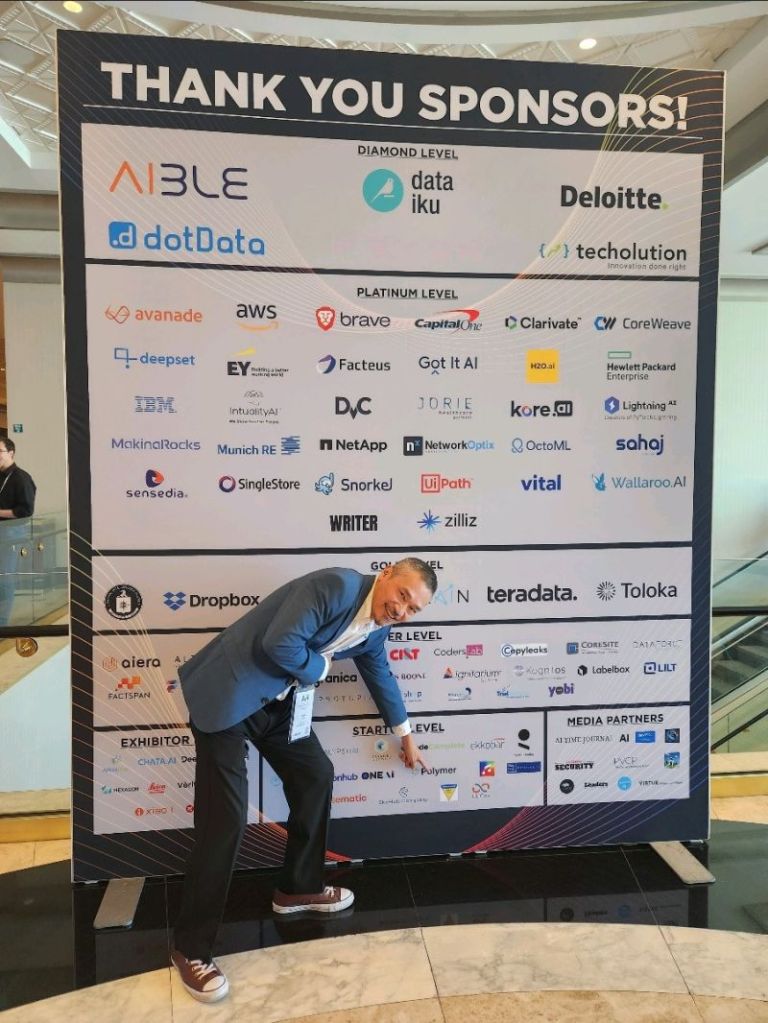
    ThinkingNode Life Science sponsoring the AI4 conference in Las Vegas.

    Wow. So, just to restate this in a sentence, ThinkingNodeLife creates digital clones of human cells. You then use those clones, and artificial intelligence, to test and to explore drug interactions on the human body without using a live person. Is that correct?

    Yes! It takes about 10 years and $2.6 billion to test a drug, and you still only have about a 4% chance of putting it on the market. There are lots of reasons why, but one of the main reasons is that there is no testing simulation.

    In other industries, say the car or airplane industry, you don’t build the car or plane right away. You build a digital model and do simulations. We don’t have that in pharma.

    The term clone is important here too – it’s not a digital twin. Digital twins, you have to build one by one. With our clones, it’s totally scalable since we digitally mimic the cell differentiation process.  We have a foundation model, and differentiate based on that.

    So it seems that ThinkingNodeLife has resilience baked into it – helping the healthcare and biotech spheres shorten drug times, understanding the interactions between cells, and allow companies to help people much faster than before. Can you talk more about how you help these companies build resilience in their workflows?

    So we work with different types of companies. At a recent event at JP Morgan, we announced a strategic partnership with Debiopharm. It’s a Swiss pharma company, well established and well respected. They’re going to use our digital cell clone for cancer drug development. So this is one type of customer and partner – the biotech pharma that develops the drug.

    With those companies, we can help them at the very beginning – finding new targets for the drug. Usually, this is done by the academics since it takes lots of time. Then, if you already have the drug, even before preclinical testing, we can simulate the drug’s impact on the human cell that you’re interested in. Then, if you’re already in phase 1 or phase 2 testing, we can use a patient’s data to generate their own clones to help companies select the next patient for their clinical trial.

    And we can use all that to do different things. We can do drug comparison – comparing your drug to a competitor’s drug – which is normally pretty difficult, because you normally don’t have your competitor’s patient data. We can do drug repurposing and drug response prediction. Once you have all that, you can really help a company become first class, since we provide targets and can simulate all the phases for testing.

    Then, we have a different type of company partner – AI drug companies. We don’t develop anything related to the drug, but we do know the cells that drug will impact – so there’s a complementarity there. We’re currently in discussions with a number of them. 

    We also work with CRO companies outsourcing the research for pharma biotech companies. We bring them Digital Cell Labs, so they can provide research services in preclinical or after clinical, so they can give more insight to their customers about the drug when it’s in development.

    I think any company that develops a drug should do a simulation. And we help them do that.

    That makes sense. So, you cut your teeth with your first company in Silicon Valley, but you recently moved to San Diego to be closer to our strong life sciences community. Can you talk about the differences between Silicon Valley and San Diego, especially for startups like yours?

    Maybe it’s different today, but when I moved here about 10 years ago, Silicon Valley was much more focused on technology and San Diego was much more focused on science. I was lucky to work with the J. Craig Venter Institute down here, and this helped me really test my idea and work on different concepts. So this is a major pro, I think – the scientific community is extremely strong.

    The other thing I found is that people are very collaborative in San Diego. I don’t know what it’s like today, but when I was up in Silicon Valley, it was very competitive. Here, we don’t hesitate to work together.

    The last thing is that there are over 100 microbreweries! That’s a great part of San Diego.

    Can you talk a little bit about the emerging field of digital biology? What is it? How do you see it contributing to building resilience in the fields of life sciences and healthcare?

    Digital biology is a difficult definition, in the sense that as soon as you use a computer to understand biology, it can be considered to be digital biology. But what I have in mind is more about getting to a simulation of biology. There are different ways to do simulations, from mathematical models and so on. The one I’m focusing on is AI simulation, and, in particular, reasoning AI simulation.

    This is an important concept but isn’t always easy to explain. It starts from realizing that we interact with the world only through our own mental models – only through our own reasoning model that we acquired at school, through our experiences, whatever. Our reasoning model is how we make sense of the world. Scientific education is essentially about building different reasoning models for different disciplines.

    The approach that I have is not a pure mathematical simulation, for example, because humans don’t think through mathematical equations. We think through concepts. We think through conceptual mental models. And the way I approach digital biology is to generate the reasoning models for biology. One of the most important entities in biology is the cell – and that’s why we are focusing on providing and generating a reasoning foundation model of the cell.

    What does this mean in terms of application? Well, today there are about 800 AI drug discovery companies, and designing drugs is very important. But what may be even more important at the end is the cell’s response to that drug.

    In designing a drug, you try to see how the molecule you’ve designed binds to a target, which is usually a protein in or on the surface of the cell. This binding is very important. You see how well it binds, how specifically it binds.

    Then, what’s important to us, is seeing the impact from this drug’s binding – you see the cell’s response. Typically digital biology is about simulating the binding itself in order to understand and design the drug. What we are focusing on is not about the drug – it’s about the cell’s response to the drug.

    Interesting.

    It’s a multidisciplinary team field, and it’s pretty involved – there are different aspects from computer biology, system biology, AI, and so on. The field is working on things like natural biological phenomena or synthesizing new artificial biological entities. In fact, ultimately, the far vision for our company is to simulate evolution.

    Digital biology, the way I see it, gives us the technology to accelerate and even be active in the evolutionary process.

    Let’s continue talking about how you see the future. While AI has been around for a while, it’s recently come to the forefront of public consciousness with the emergence of ChatGPT – and it’s changed a lot of people’s relationships with technology. What do you see for the field of AI going forward?

    Well, first of all, we have to understand what the term “intelligence” means, since it’s artificial intelligence. I used to mention [Swiss psychologist] Jean Piaget’s definition – intelligence is not what you know, it’s what you do when you don’t know. And I’d add to that – getting to a rational outcome when you don’t know. Since, for example, ChatGPT will provide you an answer, but it cannot explain the why behind the answer. It has answers based on the association of words and not on the rational reasoning process that usually is based on causality and not correlation. It can give a very convincing explanation but ultimately can go wrong with hallucination. It’s not rational.

    When we talk about AI, we have two understand two different aspects of it. Daniel Kahneman talks about these aspects in his famous book Thinking, Fast and Slow. The first aspect is System 1 thinking, or pattern recognition. It’s what you do when you recognize a face or a piece of music. It’s very fast. There’s no reasoning.

    The second aspect is System 2 thinking. That’s slower. It’s when you have to think rationally, have some hypotheses, deduce things, and so on.

    The AI that is known today by the public is pattern recognition, based on Big Data, and it’s amazing what can be done at scale. The other AI that you don’t hear much about is reasoning AI, and that’s because most of existing reasoning AI is based on just one reasoning engine. But there are different types of reasoning. It’s why I worked for decades on that topic, called distributed reasoning AI, where each piece of knowledge is a mini-reasoning engine in itself, and you throw those mini-engines into any logic you want.

    The future of AI is the combination of the two types, as we are, right? We do pattern recognition and we do reasoning – but it’s very important that people realize that AI is not just machine learning. It’s not just pattern recognition. It’s not just ChatGPT. It’s much more than that. When we see what we can do with pattern recognition at scale, well, imagine what we can do with reasoning at scale.

    Reasoning is important, too. It’s the way that humans make decisions. We don’t process data, we process knowledge. When you think about how AI can potentially interact with humans, yeah, it can be easy to interact with based on pattern recognition and lots of text, that’s certainly one way. But if we want to interact with AI and have it be close to how we think and reason, that’s reasoning AI.

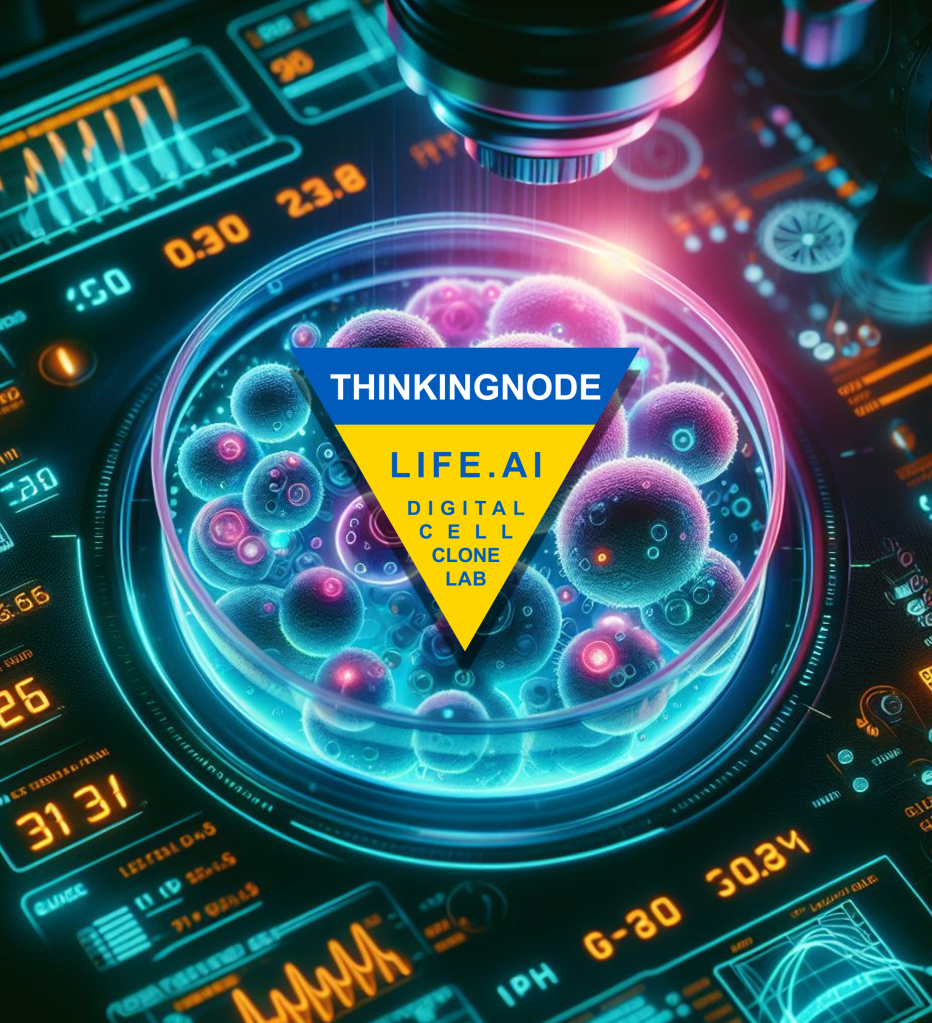
    While AI based on pattern recognition can generate cool images like the above, it is unable to reason.

    What advice would you give aspiring entrepreneurs and professionals on developing a resilient mindset and making a meaningful impact in the world of AI and life sciences?

    As I mentioned at the very beginning of the interview, I don’t know if it’s worth focusing on becoming resilient. What I mean is, resilience is a consequence – it’s a consequence of passion and a consequence of your actions. When you have a passion, you will be resilient. Your goal isn’t to become resilient, your goal was to achieve your passion – but resilience was found on the way.

    So I don’t have any tips for resilience, but I have tips about being passionate. It’s about looking backward in your childhood, looking for what is meaningful, and focusing on that. Find your life’s purpose. Applying it to life science now, well, what can be more interesting than life itself? And when combined with AI, what’s more interesting than working on how we reason and understand? When you combine the two, it’s incredible. That’s why I’m so passionate about both. It’s how to understand reasoning, and applying that to improve life.

    What’s next for ThinkingNodeLife, and how could somebody who’s reading this blog potentially help you?

    We’re currently in the middle of Series A fundraising, and we’re looking for people who are passionate. It’s nice to be smart, but it’s not enough. I want people who are interested and are going to enjoy the journey, because, if you enjoy the journey, you can go very far. We’re looking for people who are open-minded, not people who only want to prove that they’re really smart. We want people who both really understand the mission and are on mission.

    So, the next concrete step we’re taking is finding funding, but we’re also focused on finding customers. We have some events coming up, like at the BIO International Conference in June. We’re looking at partnerships too – we just partnered up with Debiopharm, a pharmaceutical company in Switzerland.

    And finally, if you’re passionate about AI and life sciences, I’d be happy to meet.

    What’s the best way for somebody to contact you, or your company, if they’d like to learn more?

    The best way would be LinkedIn. I’d be happy to connect. You can also find my company on LinkedIn too.

    Any final thoughts before we go?

    People talk a lot about technology, and sometimes people focus too much on the technology side of things. I think what we need to focus on instead is how technology can allow us to be human. I almost don’t consider us to be human yet. When I see what’s going on in the world, we’re pre-human. How can we use our technology to allow us to have more time, to be less greedy, to create abundance?

    And what do you think it means to be a human?

    Well, that’s a huge question of course. People talk about consciousness and so on, but I think being human is thinking of others, not about yourself. Being human is the ability to contemplate, the ability to appreciate things. Being able to sit and contemplate the beauty of a tree, for example. Animals don’t have the luxury or capacity to do that – they can only think about survival.

    Humans though, by thinking of others, have the ability to appreciate, to protect, to build. And leaning into these gifts is what makes us human.

    Want to go more in depth? Learn more here:

    Khai Pham LinkedIn

    ThinkingNode Life Science Website

    ThinkingNode Life Science LinkedIn

    ThinkingNode Life Science – Debiopharm Partnership

    Interview with Khai Pham in AIMed

    J. Craig Venter Institute

    Thinking, Fast and Slow by Daniel Kahneman

    Jean Piaget

  • The Social Coyote: Getting Out of Your Den and Finding Your Pack with Jonah Peake

    The Social Coyote: Getting Out of Your Den and Finding Your Pack with Jonah Peake

    I recently had the chance to sit down with Jonah Peake to talk about the go-to source he created for all of San Diego’s tech and entrepreneurship events, (and perhaps what could be called his alter ego), The Social Coyote

    More than just a mere event newsletter, The Social Coyote is one man’s mission to get 1000 San Diegans out of their dens and into the tech and entrepreneurship community. Sprinkled throughout the weekly calendar are a healthy doses of coyotes wearing sunglasses and a fur-rocious amount of puns. It’s great fun, sure, but The Social Coyote is also a case study on building community and connection in an increasingly digital age. And honestly, it’s working – it really does get people excited for these events! Who would have thought that such a simple concept, a curated event email newsletter, would be so much fun? Jonah would, that’s who. 

    We talked about a number of topics, including using change to propel yourself forward, his thoughts on San Diego’s tech culture, how to build and see a community’s web, how to be comfortable at unfamiliar events, and how to finally find your pack. 

    If you’d like to learn more, you can reach Jonah on his LinkedIn – or sign up for his newsletter here to stay abreast on all that’s happening in the San Diego tech scene. (Just make sure to use this link so I can get the coveted CoyoTee). 

    Howl yeah! 

    Ah-wooooo!

    I’m primarily interested in the concept of resilience – whether personal, communal, or societal. What does the concept of resilience mean to you? 

    I like this question – I’ve actually been thinking about it all week! Resilience, to me, means going through something challenging, coming out different, and then finding a way to use that difference to move forward. 

    I have a bit of a personal story with this. When I was 27, I went through a health crisis. I went into a coma, was taken into the hospital by my girlfriend (who is now my wife!), and it turned out that I had ketoacidosis, which is what happens when you have Type 1 Diabetes. Basically, your body turns acidic because you can’t get sugar into your cells. 

    It was crazy because, after a few days in the hospital and many IVs, I was released from the hospital – but I had an entirely new lens to view the world. If I eat a certain way, I have to think about it differently. If I exercise a certain way, I have to think about it differently. Even something like leaving the house is different. And it was a total shift in how I lived my life. 

    So in a weird way, going through that experience shifted who I was completely, and refocused how I thought about everything – and I do see that as finding a bit of resilience in an extremely challenging situation. I could have easily said “This sucks” and felt sorry for myself, (although you sometimes do), but that’s not the way you want to go through something like that. 

    I think if we think about it, most of us have had an experience that totally shifted us, but that health crisis was a really strong one that taught me a lot. 

    So going through something, and coming out on the other side differently as a result – but resilience is found when you use that difference to propel yourself forward.

    I mean, you never go back to being the person that you were a year ago – or even the person you were yesterday. Propelling yourself through change with a new context is how I like to think about it. 

    You are heavily involved in the San Diego startup and entrepreneurship community. Can you briefly give some background on your career/areas of focus so far? 

    The start of my career in San Diego was teaching surf lessons and handing out Monster Energy drinks. These ended up being dead end jobs and I needed to find something I could grow into. So I went searching for a startup, and what I found was basically on-demand tech. I found my way to a company I found on Craigslist called Handy, which was a home cleaning startup, in the era where people were trying to build the next “Uber for ….” They eventually were purchased by Angie’s List.

    Handy shared coworking space with Postmates – so we battled for conference room space with them to onboard our people!Then, I worked on a project that would eventually automate my job entirely at Handy, and, seeing the writing on the wall and having connections at Postmates, I jumped over. Plus, food delivery felt cooler than home cleaning!

    What I started to notice, though, is that when a company (like a Postmates) gets massive quickly, they start to dial in certain processes. There’s less “We don’t know how to solve this, go figure it out,” and more “Here’s the playbook, run it and do the same thing every day,” which isn’t necessarily how I tend to think. 

    I really enjoy trying things and being creative, and that doesn’t always lend itself as well to the big machine that companies eventually grow into. I realized that I wanted to go earlier and see what companies that were far younger were doing. And so I started to seek out the San Diego tech scene, see who was active here, and see who was building things here. That’s how I started to plug into what was happening in the scene. 

    I started offering to volunteer at organizations that I thought were cool, like Startup San Diego, which was looking for an entrepreneur in residence in 2020. I ended up spending a year with them and putting on the Startup Month conference. It was actually a month, not a week, at that point!

    Cool.

    And there were a few others as well – the San Diego Angel Conference was going online, and when I talked to some of the people involved, it seemed super interesting. So I volunteered there, and tried to meet people and see who was operating in that space. 

    What ends up happening with many communities is that the same faces start showing up at different events. You start recognizing people from all over the place, and you start to put these webs together. 

    I had enough time working in and hopping between these different ecosystems and realized that we have a pretty intimate web in San Diego. Even though it’s large, there’s lots of overlap and crossover. And that got me really excited. 

    Before we move on to The Social Coyote, let’s keep talking about the idea of a San Diego ecosystem. What do you believe are some unique strengths in the San Diego scene? A common topic of discussion is that the San Diego tech scene is great at starting and growing mid-sized companies, but with a few exceptions, tech companies here seem to have a hard time crossing the chasm to become giant household names. 

    There’s a lot of debate on what makes San Diego what it is and why it’s the way that it is. Some people say that we’re the little underdog brother to some of the bigger scenes, and others disagree. Other groups don’t count biotech as part of the tech scene, even though I think it’s really a massive part! It could be partly due to the fact that there are so many transplants here. I’m one. 

    One thing I’ve thought about, and I don’t know if this is the real reason, is that some of the biggest industries and most influential groups in San Diego aren’t necessarily in the news. For example, they provide infrastructure or something to the military and it’s literally top secret so you can’t talk about it. 

    Biotech is also interesting. They don’t like to share what they do unless it’s already successful. Then, a company like Qualcomm is huge, but their technology powers other technology – and most people are just more familiar with Apple than the technology inside an iPhone.

    So I think there’s a feeling that we don’t have as much going on here as we truly do, just due to the nature of some of the biggest tech businesses we have here – but again, this is something that people like to debate. 

    The other thing though is that we have this culture here that is a touch more relaxed. You might have noticed this if you’ve asked for an intro to someone. It’s somehow easier to acquire than other tech scenes or tech communities. 

    I also think there’s just something about the way the city is structured. It’s very laid back. It doesn’t have the intensity of New York or San Francisco, and I think that changes how other people view it. But I think that’s a good thing! I really like how we have this energy and how we, for example, like to just take advantage of when it’s nice out! 

    So, I don’t know. I do think the friendliness and interconnectedness are a bit more vibrant here. We also shouldn’t forget that we’re 1.5 million people with 2 million more just south of the border who are very engaged with what’s going on up here – in effect, we’re nearly 4 million people in a very small area. That counts for something. 

    The man behind the coyote – Jonah Peake!

    Totally. And so that’s where you come in! Your current project, or perhaps your alias, is The Social Coyote, and helping push these connections and the culture. Can you talk about that? Why a coyote?

    I guess I was looking for some creative fulfillment. I was feeling disconnected from, let’s say, community in general, for a number of reasons. There was the pandemic, and I had a young child which also limits your schedule. But a few cool tools started to come online right around then – AI started to come out and people are generating amazing images with it, and there’s this new platform, Beehiiv, which allows you to make newsletters in a really effective and efficient way. All of these things kind of came together for me – I know I want to do a project, I want it to be creative, I want it to be helpful, and I want it to have some sort of cool impact on San Diego. And I also know that I have a limited schedule, and there’s lots of cool stuff going on. 

     Meanwhile, people would shoot me a text and ask me if I was going to something that night that I didn’t even know was happening. I had to decline all the time because I couldn’t get out of the house that quickly, so it started to get a little frustrating. So I first thought that, if I could learn how to code a web scraper, I could pull every event into one big database, and then I could know who is doing what and then I choose what fits in my schedule. I used as many tools as I could and banged my head against a wall, because that turned out to be a really bad plan! I realized that curation is what makes The Coyote special, not aggregation.

    I told a friend about this and he told me just to do it manually – just make a list and put it out there. See if anyone cares. That was a good point, because I was really overthinking what I wanted to do, and he pushed me to just go for it. 

    So at that point, I had to figure out what I really wanted to highlight. I knew some people in the tech community and really respected the events they were putting on, and I could share their events without having to attend each one. So then it all started coming together, but I couldn’t put out a brand that was something like OnlyTechEvents, or something,  but that’s a little too basic – or a little too much like OnlyFans. But maybe my SEO would have been great! 

    Then I thought of some other names, like Songbird Soirees. But songbirds didn’t make sense, and soirees are too fancy. So then I started to think about what we have in San Diego. What’s a San Diego animal? Could be a pelican, but then everyone who reads my list is a pelican too. So then I thought, what do I really want this to be? And I wanted it to be groups, packs of people. I wanted it to be a clever animal. I wanted it to have the feeling of something that is always present, but you might not always see. That’s when I thought about coyotes, which you sometimes see in our canyons or trotting around our neighborhoods, and I’m certain that they know a hell of a lot about us, even if we don’t see them at all! 

    And all of these things together felt really right. Packs and families, groups coming together. It felt like something I wanted to embody – bringing groups of people together and having them meet each other. My thesis became, the more people got out into the community, then the more opportunity they’d have to meet someone new who can open a door for them. We just needed the initial catalyst to get people out of their dens. And then the puns started showing up, and that’s what I built the brand around. It just felt right.

    That sort of hearkens back to your original comment about resilience – using the change from a transformative event to propel you forward. You felt disconnected from a community, then acted on that feeling to build something new. And you acting on that feeling has allowed other people to access that community too. 

    I think that’s really true. When I started talking to people, I realized that most of the comments I got back were things like, “My events pop up in my feed,” or “Someone told me about it,” or some other way of getting lucky. I didn’t want luck to be the barrier that prevented people from getting out there.

    The more interactions we have, the better we get at them, so I wanted to make it easy for someone to grab my list, make it unbelievably simple to find what they’re looking for, and encourage them to go to it. And I wanted to make Mondays something to look forward to!

    But really, I see this as a way to bring more eyes and more people into the tech community. If we can get more people in more easily, I’d consider that to be a success. 

    You mentioned that the genesis for The Social Coyote was that you felt disconnected. It was during COVID, you had a young child at home. Now that you’re connecting with the business community at large, does that fill that personal need for connection? Are you experiencing more community? 

    I think it does! 

    I think what ends up happening, and maybe this happens by accident, is you just start to go out more. You start to notice more connections. You start to see more people doing things you appreciate, and you absorb that. 

    Speaking of resilience, I remember going to a couple of events in the very beginning to test my thesis, and I knew no one. It was so hard to be at one of those events with something so small. The Social Coyote was tiny, and I wasn’t even sure I was allowed to talk about it yet. No one had heard of it. I didn’t even know if I had anything yet. But what I realized was, the more you went, the more you started to see similar people. The same people were now at a different event. And so you started to feel a bit more comfortable, and by being more comfortable, you felt more confident in going out and trying something new. 

    The other thing I noticed throughout this process is that every event starts out and hasn’t warmed up yet. So a lot of times you show up and get into a room and think, “This is uncomfortable. I am uncomfortable. I shouldn’t be here.” But what I realized is, after a certain amount of time, everyone warms up and loosens up, and so does the event itself. A lot of people associate that with having a drink or whatever, which can be a good strategy, but the event itself takes time to warm up too. 

    Sometimes just giving it time, being observant, and finding someone that you recognize is all it takes to get to that point. Then, when you get out more, you run into more people. You follow their journeys, and you see them grow as well. That’s kind of how I think about it, anyways.

    To continue down the coyote theme, you’ll start to find your pack and this will help you get more comfortable! 

    Go through something challenging, come out different, and then find a way to use that difference to move forward. – The Coyote

    What are some tips that you have for people who want to get involved in a new community, perhaps the San Diego business scene, who don’t have much experience in these types of events and don’t know where to start?  

    One thing I learned from the early stages, before I was comfortable, was that I didn’t actually have to say anything. I didn’t have to come to the table and start to pitch what I was doing, or tell everyone everything that is really cool about me, or whatever.

    This strategy lets me ease into events a little more. After a few times, you start to recognize people, and now it becomes easier to chat with someone or even just show up at an event. Like I said earlier, it takes time to warm up. It will always feel weird at the beginning. And if you do have something you want to chat about, have that prepared a little bit so you don’t hit someone with a really long winded story! Wait for some questions to come in after you give a little elevator pitch. 

    The other thing is to just ask questions. Care about what other people are doing. That makes the thing a whole hell of a lot more fun if you’re curious and truly want to learn what other people are up to. 

    I used to do this when I was uncomfortable. I would be in my own mind a little bit and pretend I was hosting a podcast. Just ask some questions and don’t feel like you have to talk about yourself, because sometimes that can be a bit uncomfortable. Sometimes just being curious as to what other people are doing can be super helpful, and can take the spotlight off yourself too. 

    I like that podcast host tip – that’s unique! A fun little mental trick.

    It actually works! Although it sometimes backfires, because I’ve had conversations end and the other person says, “I feel horrible! I didn’t ask you anything about yourself!” 

    In my mind though, I’m like, “I loved our conversation, I learned so much!”

    Can you share some success stories from The Social Coyote? Have there been any connections or communities built that you have been especially proud of? 

    There are a few examples! I can’t take credit for either of these events, but I love that I can help elevate newer events.

    One of my favorites is the North County Tech Meetup. This isn’t my group, but I love helping to promote it. Hussein is the best! 

    Rick Moy’s product group is another group that I love to promote. 

    Both groups are under a year old but are gaining steam. Everyone knows about the big San Diego events, but it’s these up start groups by talented people that really get me going.  

    So it really doesn’t take much to get me excited. Someone gave me a “Howl Yeah!” in Costco the other day and it made my week! I can’t take credit for much of this really, everyone else is working so hard – I just collected a few things that I thought looked awesome and wrapped them in some coyote puns.

    The branding of The Social Coyote is so unique – and fun! I especially love the “Howl Yeah” shout out. Despite being a relatively small niche (San Diego tech events), you have such a strong brand voice. Can you talk about the importance of branding? What, in your opinion, goes into making a strong and memorable brand? 

    I don’t have a background in branding or anything, but I just like things that flow together and sort of fit. The Social Coyote has a lot of elements that are kind of weird, or funny, but together feel like they make sense for some reason. It’s important to listen to what other people are saying too. They like coyotes wearing sunglasses. They say things like “Howl yeah.” And you’re like, “Oh man, that works. You’re right.”

    I think maybe the advice is, for something like this, you don’t have to create the entire brand, but set the foundation and put it out there, and you’ll get good feedback. The hard part can be, and part of this is from the tech background that says to always innovate and move forward, is knowing when to keep things simple. I put out a couple questions asking what I can do better and what to do next, and someone replied, “Don’t.” And that made me realize that something cool can be simple.

    Totally. What’s next for the Social Coyote?

    I’m trying to figure that out right now. There are lots of really interesting ideas! For the brand, it could be events. It could be promoting events. I’d love to help founders make connections if I can, and of course I’d like to be a little more connected myself. 

    I’ve even been pitched a Coyote Accelerator, a program that helps founders. I like all these ideas, so I think it’s now just finding out how to look through the lens and see what’s next. 

    I wish I had a grand master plan, but I’m having so much fun meeting people that, just the fact that this is out there and people are noticing it, is considered a win. I think there could be more down the road, but we’ll have to see. 

    What is the best way for someone to follow you (or get in touch!) if they’d like to learn more or get involved? How can someone reading this blog help out? 

    I’m mostly on LinkedIn. I have a pretty simple rule for connecting there – if you’re in San Diego, I’ll accept. I just love to meet people in San Diego.

    I think the best way to help is to just come out and support event organizers! People put a lot of work into these events, and getting out of our dens makes an even more connected San Diego. Oh, and loop in folks who’ve just moved here with The Social Coyote so we can bring them out too. 

    That’s kind of the origin of all of this anyways. How can we build a bigger network, a bigger group, a bigger pack of people who care about San Diego Tech and Entrepreneurship?

    The other thing too is, there’s always room for more awesome events. If you’re eager to get a pack of people together and start something, go for it. Nothing should slow you down. Even just getting people together for coffee is valuable, and I like promoting that stuff too.

    Get out there and check things out!

    Want to go more in depth? Learn more here: 

    Sign up for The Social Coyote Newsletter

    The Social Coyote LinkedIn

    Jonah Peake’s LinkedIn

    Startup San Diego Events Calendar – Powered by The Social Coyote

  • A 21st Century Solution to a 20th Century Problem: Talking Bioplastics and Early Stage Startups with Ravi Chawla

    A 21st Century Solution to a 20th Century Problem: Talking Bioplastics and Early Stage Startups with Ravi Chawla

    I recently had the opportunity to sit down with Ravi Chawla, a postdoctoral fellow at Scripps Research, who is currently in the very early stages of forming ChakraTech (formerly known as WheelBio). This company is dedicated to using microbes to make completely and naturally degradable bioplastics from greenhouse gases, potentially solving the problem of plastic pollution! He recently took third place in a pitch competition through Aquillius, and will be utilizing their lab space as he forms his company.

    Over the course of our wide-ranging conversation, we covered topics like the risks associated with forming a startup, pushing through difficulties with commercializing this product, and building a resilient industrial biotech scene in San Diego.

    It was a fascinating conversation, and a great opportunity to talk to someone at the forefront of both science and business, working to get a brand-new, innovative company off the ground.

    If you’d like to learn more, you can reach Ravi on his LinkedIn.

    I’m primarily interested in the concept of resilience – whether personal, communal, or societal. What does the concept of resilience mean to you?

    That’s an interesting question!

    The word resilience to me refers to the spirit of persevering in the presence of difficulty. To be resilient, therefore, means to prevail or succeed despite all the odds!

    Resilience is a profound concept in philosophy and psychology, embodying a character marked by persistence in responding to challenges or hardships. Often, individuals are not immediately aware of their own resilience; it becomes apparent through their actions and reactions over time. I am deeply inspired by individuals who exhibit perseverance and courage. Their stories of overcoming adversity not only resonate with me, but also fuel my own aspirations and strengthen my own commitment to face challenges with similar bravery.

    Achieving anything significant, particularly when it involves paradigm-shifting innovations, demands immense determination. And interestingly, resilience extends beyond personal tenacity; it is deeply rooted in the collective strength drawn from one’s support network and community. Therefore, it’s crucial to be in the company of people who offer unwavering support and encouragement during challenging times. This belief forms the cornerstone of my philosophy on resilience.

    Overall, resilience is a harmonious interplay between personal commitment and communal support, underpinned by strategic thinking, persistent action, and reliable execution, all directed towards a common goal.

    So seeing a vision, and then doing whatever it takes to get there.

    Yes, by going full force!

    I attended an Anglo-Vedic middle school in India, where I drew much inspiration from ancient Indian texts. I am often reminded of a powerful quote by the late 19th-century Indian Hindu monk Swami Vivekananda, “Arise, awake, and stop not till the goal is reached.”

    This quote, which was inspired by a shloka from the Katha Upanishad, continues to resonate with me.

    Startup San Diego Pitch Competition Ravi Chawla, ChakraTech
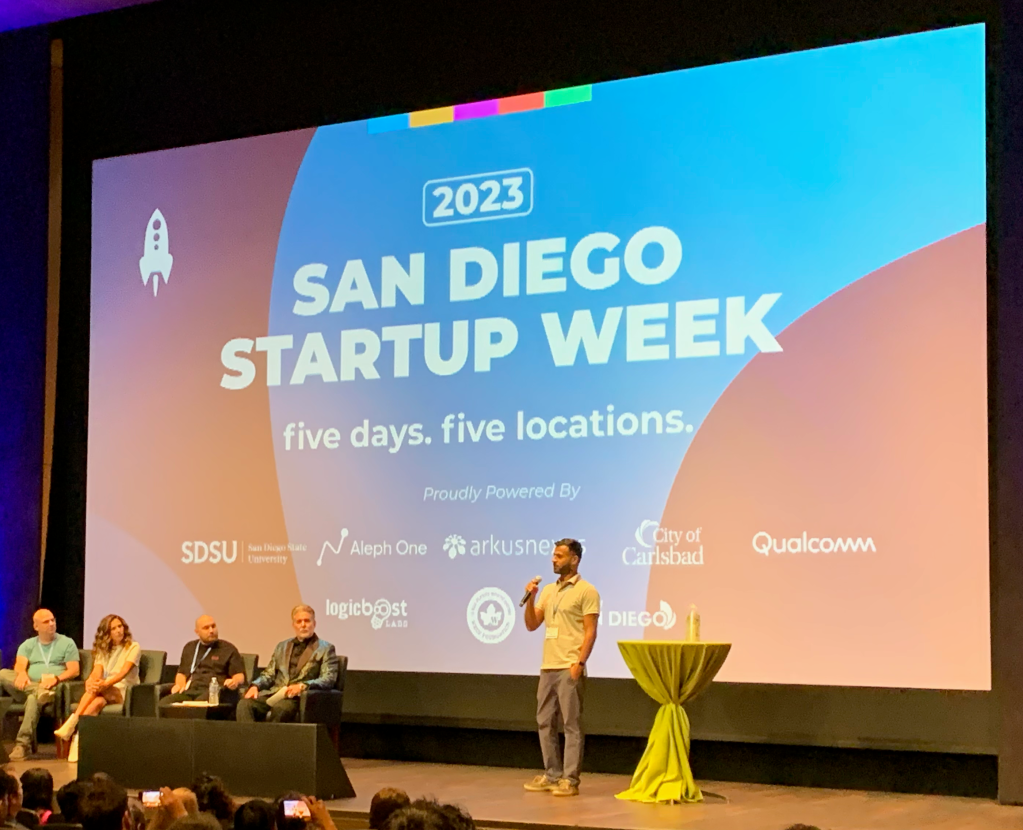
    Ravi Chawla pitches ChakraTech’s innovative technology at San Diego Startup Week

    Your background is an interesting one. You’re from a small town in India but became a chemical engineer. How has this background influenced your career?

    Growing up in a small town was a formative experience for me. Limited opportunities translate into limited expectations and limited aspirations. My dad was just happy that I finished 10th grade.

    When I finished 10th grade, my dad brought me a job he saw in the newspaper for a position as a constable. I was like, “do I look like someone who could do that? I’m the biggest nerd that exists!” But I, somehow, have always had a determination to challenge the status quo and defy the norm. Perhaps, I get this trait from my mom, who I’ve always thought to be both fearless and a force of nature, and has always been a tremendous source of inspiration for me! Anyway, this drive led me to successfully persuade my family to relocate to a larger city, Chandigarh, that opened the door to more educational opportunities.

    After relocating to Chandigarh, I completed 12th grade and appeared for the engineering school entrance exams. My interests primarily lay in physics, chemistry, and mathematics. However, when someone suggested a career in chemical engineering, I was initially distraught. Even though I was preparing for engineering school, I had no understanding of what any of the engineering fields entailed. Among my peers, the prevailing belief was that chemical engineering involved extensive chemistry and rote memorization, with limited career prospects. This perception made me hesitant to pursue it.

    By a fortunate coincidence, Panjab University in Chandigarh had an outstanding chemical engineering program. Financial constraints led me to choose this path over the then-popular computer science or other engineering majors. Thanks to the program’s affordability and the scholarships I received, I could pursue my education. Surprisingly, I fell in love with the chemical engineering curriculum and education. It quickly became apparent that this was my true calling. I thoroughly enjoyed every aspect of it, and it continues to shape my approach to solving scientific and technical problems. In retrospect, my initial concerns were unfounded, as I stumbled upon my passion in a field I had chosen by chance!

    In my opinion, “success” is a delicate balance between determination and destiny. One has to attempt to create their own destiny, but then let nature take its own course. It’s actually a philosophy from a Hindu scripture, the Bhagavad Gita – you only have the rights to your efforts, and not the rewards or fruits of it. I think that is something that fundamentally governs me. Give it your best attempt, and then everything else is out of your control.

    Your biotech startup, ChakraTech, is still currently in stealth mode, but you have recently begun to pitch for fundraising, coming in third place at a recent pitch competition in San Diego. What can you tell me about your company so far?

    We are in early stages of our journey, and I can tell you in very broad terms about what we are doing and how we got here.

    The biggest thing that came out of the Industrial Revolution in the 20th century was the introduction of plastics. Plastics fundamentally changed the paradigm. It actually totally moved our society to where it is today – without them, we would not be here! Imagine life without milk containers, shoes, everything – everything has plastics.

    However, what was a boon for the 20th century is a bane for the 21st century. They’ve served an incredible purpose, but the truth is, these plastics are accumulating in our environment at an incredible pace.

    Growing up, my mom was always concerned about plastics entering our food chain through contact with food, and she preferred to use reusable containers made from materials such as steel, glass, and ceramic. It turns out her hunch was spot-on. Recent studies suggest that an average person is ingesting up to a credit card worth of microplastics every week! The full extent of how these micro- and nano-plastics affect our health and environment is still not completely understood, posing a concerning and largely unexplored risk.

    What we do at ChakraTech is emulate ancient microbial processes to create biodegradable plastics. Over billions of years, certain microbes have figured out a way to make a degradable plastic, or polyester. It’s actually a fat reserve for them! Similar to how we get fat and have love handles, for bacteria, they’ll end up making their own version of fat reserves – bioplastics. These bioplastics degrade completely in a short time, typically a year or less, and have the power to totally change the 21st century.

    Wow, that’s incredible. Is this a new discovery?

    No, this polymer is not a new discovery. The earliest reported sighting of this bioplastic polymer was actually from 1890 in a German textbook! Efforts to commercialize it since 1980s have faltered, struggling to compete with the economics of petrochemical plastics. Yet, the potential for scientific and technological advancement is vast — a direction I planned to explore in academica as a tenure-track faculty member. When faculty search committees didn’t embrace this vision, I remained steadfast and decided to pursue this opportunity through my own startup venture.

    Anyway, at ChakraTech, we are taking an innovative approach to make this bioplastic. To understand how, you need to understand what plastic is – a polymer is a chain of monomers, basic repeating units. How does a microbe or bacteria turn monomers into the polymers we want? They transform carbon from food source into “fat stores”. Historically, expensive carbon source such as vegetable oils have been used as carbon source, not only elevating expenses but also threatening food security in low-income countries. This approach renders the technology unaffordable and inaccessible to much of the world.

    Well, what else could serve as a great source of carbon? Greenhouse gases. That’s where we come in –  we’re going to take these microbes in giant vats, feed them greenhouse gases and get them to create bioplastics. What’s interesting about this is that it solves two problems at once. First, we can repurpose the carbon emissions, namely the excess carbon dioxide or methane that is emitted into the atmosphere, for manufacturing various types of materials and chemicals. Second, the bioplastics degrade naturally! This positions us to bridge two historically very different industry segments – biotech and cleantech/climatetech.

    The reality is that plastics aren’t going anywhere. Neither are the carbon emissions for the foreseeable future. But perhaps our technology can help to solve two huge environmental challenges at once!

    Marrying science and engineering, Ravi hopes to scale bioplastics in a cost-effective way.

    And no one else is working on this?

    Various companies, some for over a decade, have concentrated on solving different aspects of the technology and challenges. While they have achieved some progress, most of them are yet to realize their full potential. This, I believe, is largely due to an insufficient integration of science and engineering.

    In my experience, the distinct training backgrounds of engineers and scientists often lead to communication barriers, which translates into insufficient technological advancement. Bridging this gap between basis sciences and engineering is therefore vital for effective collaboration on complex projects. Particularly in the case of bioplastics, biological systems don’t necessarily conform to engineering constraints in terms of scalability. This underscores the fundamental need for an integrated approach, combining process engineering with biology and chemistry, to develop bioplastics in a cost-effective manner.

    Fascinating. I don’t know too much about microbes, but I’ve seen a few companies lately using microbes in incredible ways. One such company is up in Escondido, Aquacycl, and they use microbial fuel cells to treat wastewater. The microbes generate electricity and clean water as part of that process.

    Is microbial engineering an emerging field? Or has the science simply progressed enough that companies can begin reaping the rewards from microbes in a cost-effective way at scale?

    Microbial engineering and biomanufacturing have been around for some time, but they are far from a mature industry, and have a unique set of challenges – including a capital-intensive research and development budget. While still in its infancy compared to the petrochemical sector, it is the future of next generation of sustainable manufacturing!

    If you really want to put a start date on it, things started when Alexander Fleming discovered penicillin in 1928. And if you want to be even looser with it, people have been fermenting things pretty much forever! The biotech industry, however, really took off in its current form in the late 1970s with the advent of molecular biology tools, notably when Genentech produced insulin using recombinant DNA technology.

    There are different kinds of microbes. There are fungi, bacteria, archaea…and companies have been using them at scale for a while now. One of the well-established companies in this field, Genomatica, based in San Diego, utilizes E. coli to manufacture the precursors for nylon and various other products. The tools and the technology to scale them have actually been available for a while now!

    So the tools exist, and companies are using them.

    Yes, but there are still significant challenges.

    Microbes are natural – they exist in nature. But how do you engineer them to perform their best? How do we get it to do what we want it to do, not what they want to do? We want them to produce the maximum amounts of our product, whatever that might be, not what the microbes wants to produce. Microbes have billions of years in their favor. It simply boils down to finding a way to get your microbes to do what you want them to do.

    Yet another challenge has been to build a robust scale-up framework, so that the microbes behave in the same way at an industrial scale as they do in the lab.

    Ravi works to scale the microbes from the lab to an industrial setting.

    You mentioned the environmental pushback with plastics, and how a biodegradable plastic can help solve that problem. But there’s another issue with plastics, which is that they’re endocrine disruptors. Does bioplastic solve this problem?

    Great question!

    Honestly, I think that bioplastic is our best shot at solving this problem. Based on the 2018 EPA statistics, less than 8% of things get recycled. The plastic itself isn’t getting recycled like we think it is! Moreover, recycling itself generates microplastics, which end up in the soil or in the ocean. If you eat a fish that’s has consumed microplastics in the ocean, these microplastics will enter into your body. Same thing when you drink soda out of a plastic bottle. Plastics used in food packaging are a source of microplastic contamination, gradually leaching tiny particles into our food.

    Our truly degradable bioplastics breaks down into its simplest, harmless form (technical term is monomers) in a relatively short time span and our bodies are able to tolerate this! It’s not like the plastic in a soda bottle which our bodies don’t make. Our bioplastics are biocompatible, since our bodies already make the base unit that make the bioplastic. Interestingly, there are already implants and sutures made out of this bioplastic since it’s not foreign to our body!

    As an extremely early stage startup, you are prone to lots of risk. What are some obstacles you are currently navigating, and what are you doing to create resilience in this fledgling company?

    That’s a good question! Transformative endeavors inherently carry risks, yet it is these very ventures that redefine our world.

    In the realm of hardtech start-ups, we typically encounter three broad risk categories: scientific/technical, team/execution, and market dynamics.

    Firstly, the bioplastics technology we’re focusing on, initially commercialized in the 1980s, has evolved significantly. Earlier, its adoption was limited due to high production costs. Our current objective is to refine this technology scientifically and technically to make it more cost-effective, thereby unlocking new opportunities.

    Next, regarding team and execution, we’re consciously assembling an interdisciplinary team with deep expertise in science, engineering, material science, and business development. It’s essential to achieve a harmony between scientific rigor and robust business strategy.

    Lastly, market risks can’t be overlooked. Past instances in this industry reveal that premature scaling in absence of market demand or acceptance can lead to failure. Over 40% of start-ups fail due to inadequate product-market fit, a trend even more frequent in our particular field. Hence, we’re prioritizing product development and forging key partnerships to ensure our product meets market needs.

    What is next for you, personally, workwise, and otherwise?

    I’m looking into transitioning into doing this full time – if you work on ideas part-time, the company will stay part-time.

    There is burgeoning start-up scene in India, and I have considered moving back to India to pursue a startup related to bioplastics or other independent ideas. But there are currently other bottlenecks in India which would take longer to resolve. Certain tasks might take five years to accomplish there, tasks that would only require a year or two in the US, especially the research and development (R&D) part. Consequently, I’ve learned to exercise patience in these situations. US has an excellent ecosystem for supporting tech start-ups, so it is a great place to pursue innovation and works out favorably for us.

    At this early ideation stage, our focus is on establishing a strong foundation that encompasses both technical and business aspects, as well as assembling an interdisciplinary team. We have an impressive global team of scientists and engineers working on this idea already. Friends and former colleagues in the US, Europe and India who have decades of professional science and engineering experience are helping us too. We are actively working to get advisors on-board with a diverse range of experience, spanning science and technology, government and international policy, business, and finance.

    You mentioned deciding on the United States vs India for some of this, and have people all around the globe who want to help. Can you talk about why you’re in San Diego, and any pros or cons that you see in this community?

    I think there’s a very big spirit of kindness and generosity in the greater San Diego area, which resonates deeply with me. Furthermore, people are really environment conscious and there is a great ecosystem to support the startups.

    San Diego is one of the top three cities in the US to pursue startups, especially in technology and biotech sectors. However, it appears to me that compared to other major hubs such as the Bay Area, NYC, or Boston, we are still lagging in terms of the overall support and funding opportunities for hardtech startups. In addition, there are not many startups in the field of industrial biotech, but I am hoping the success of companies like Genomatica will pave the path for others to follow.

    Well Ravi, I hope that you do succeed. What is the best way for someone to contact you if they’d like to learn more?

    Thank you. You can find me on LinkedIn! I check it pretty often, so I will be responsive.

    Want to learn more? Go more in depth here:

    Ravi Chalwa LinkedIn

    Scripps Research Profile on Ravi Chawla

    ChakraTech Website

    ChakraTech LinkedIn


  • Resilience on the Road: An Interview with Patrick Firlik of Well Traveled

    Resilience on the Road: An Interview with Patrick Firlik of Well Traveled

    I had the pleasure of sitting down with Patrick Firlik, the founder of Well Traveled, a healthier and more effective alternative to other immunity boosters like Airborne and Emergen-C. Resilience is all over this company – Patrick is a first time entrepreneur, learning the supplement space, bringing a new product to market, and using that product to build resilience in his customer base! A resilient mind is critical to entrepreneurship, and I enjoyed talking to Patrick about his journey.

    In this interview, you’ll learn about the mindset you’ll need to just pull the trigger and start a company, how an idea for a product takes shape, and you’ll get a great primer on the world of naturally derived health supplements – and you’ll learn how most supplements aren’t always what they seem.

    If you enjoyed this interview and you’d like to contact Patrick (or try Well Traveled!), you can contact him here.

    I’m chiefly interested in the concept of resilience – personal, communal, and societal. What does the concept of resilience mean to you and Well Traveled?

    I’ll start by talking about the business. With Well Traveled, our whole value proposition centers on resilience. From a scientific standpoint, the product actually helps your immune system adapt more quickly and fend off infections better. In terms of lifestyle, it’s about building resilience against the various challenges encountered from frequent travel or just a busy life. Whether it’s physical fatigue, stress, germs – all sorts of things that can run you down.

    You don’t even need to be traveling a lot – it can happen when you have a young kid going to daycare and picking up every bug, or when it’s cold and flu season like it is right now. There are so many things that can knock us off our game. So Well Traveled aims to help people withstand those pitfalls and be their best selves. It’s about resilience from a big picture view, so that you can thrive. That’s the business side of things, anyway.

    Personally, I also think resilience is massively important in life. As an entrepreneur, I’ve had to stretch into new territory. As an entrepreneur, you have to learn to deal with “no” a lot! Retailers say no, potential partners say no. I didn’t have sales expertise before this, so building resilience through the process of “constant no” has been huge.

    More broadly, as with all startups, it has ups and downs – you need to have resilience if you want to make it work. Honestly, I’d guess any truly successful company relied on resilience at key points to power through tough situations. And outside of work, resilience helps us weather difficult patches in relationships, personal crises, all kinds of life events that can really hit hard. But being resilient enables us to bounce back and make the absolute most of things.

    Creating Well Traveled is a bit of a career switch for you. Can you talk about the process of becoming an entrepreneur?

    I was a management consultant for seven years, and spent a lot of time traveling on the road to clients. I never really ever felt like I was my best on the road, and that’s where the idea for Well Traveled came from.

    I had good routines at home for eating, sleeping, exercise, everything, but when you get on the road, those are hard to maintain. Your life gets disrupted too; you work late in the night, you’re stressed, and your immune system gets run down. You just get sick way too often!

    I tried to take Emergen-C and Airborne, but I really hated how sugary and artificial they are. They’re not that much different than a multivitamin, really.

    So I always had this idea in the back of my head like, there has to be a better alternative. Something cleaner, something more effective. And then, after seven years consulting, I knew it was time to leave and do something new, and I decided to just go for this!

    I will say, though, in 2022, I worked on Well Traveled on nights and weekends while I was still doing consulting. I was working to get the foundation in place. Then, at the start of 2023, I went full time. So that’s how I “became an entrepreneur,” so to speak. It’s not a one size fits all process, but that’s how it happened to me.

    Yum!

    You didn’t have much of a background in supplement manufacturing. Can you talk about that process? What have you learned?

    I actually don’t have any background in science or supplements!

    When I came up with this idea and I decided I really want to test and pursue it, I did some research and I found a nutrition consultant who had few decades of experience in the vitamin and supplement space. He does personal consulting for businesses that are launching and growing. He was just absolutely instrumental in getting this off the ground because he helped me formulate it from a scientific standpoint – like what are the innovative new ingredients on the market that we should consider using? What are the dosages we should use?

    He connected me to the ingredient suppliers, the manufacturer that I use, all of that. So I owe a lot to him. He was kind of really my connection into the industry and space.

    What has been the biggest obstacle you’ve overcome? The biggest success you’ve celebrated?

    I think it’s a challenging time for consumer packaged goods companies in general. Obviously, the economy’s not the greatest, and we have high inflation, so people aren’t buying stuff like they used to, especially if it’s something they see as discretionary.

    Five years ago, it was also a bit easier for startups to raise money. I raised a little bit from family and friends to get started, but a lot of that was used on our first production run and getting the business set up, so we’ve been working with a pretty limited budget. And I’d say that’s been the biggest obstacle so far.

    Luckily though, immunity is top of mind for consumers, especially after COVID. Immunity boosting products are expected to grow. Natural products are expected to grow. Travel’s on the rise. So there are some good tailwinds I would say.

    Our biggest success, on the other hand, is getting an approval to get our product into Vitacost. Vitacost is owned by Kroger, and is one of the biggest, if not the biggest, online retailer of vitamins and supplements. And we’ve also gotten into a couple retailers in San Diego. But getting into a pretty big name brand like Vitacost is pretty big – and hopefully we can expand into getting into other brands, other physical stores, and beyond.

    How are you working to build resilience into Well Traveled?

    I think this kind of goes back to what I talked about in the beginning! Our slogan is, “Stay Well on the Road.” We’re all about helping travelers and other busy people be more resilient with their lives – overcoming environments that challenge their health, and making the most of it.

    Part of the value proposition of Well Traveled is that there is no added sugar or artificial additives. Do you see Well Traveled as fitting in as part of an overall larger trend towards realistic supplements? Or is that space still being defined?

    I think in general, consumers are looking for better, cleaner, healthier products. People are starting to become more aware and savvier about what is inside of different products. I think in general, consumers are looking for cleaner products with no added sugar and no artificial additives, and that’s what we are trying to provide, and I think that’s a good thing!

    However, even though customers are getting wiser, I still find there’s a bit of education on things like synthetic vitamins versus real vitamins. Honestly, even I didn’t know this until I was working on this business, but I would say 99% of supplements out there, the vitamins are synthetically made in a lab! They derive these things using chemicals like petroleum because it’s cheaper to go that way, versus sourcing the vitamin C from an orange or cherry or something.

    Most people don’t realize that – but your body does. Your body wants natural vitamins that are real, from whole foods, because the chemical structure actually makes it more easily absorbed by your body, in turn making it more effective. If you can’t absorb it, you can’t utilize it. So when you take a synthetically derived vitamin instead of a naturally derived one, the vitamin won’t be absorbed as well and some of it will be wasted, and I don’t think most people realize that!

    I guess my point is, even though customers are getting smarter about where their food comes from, there is still some education to be done in the space – and I hope that over the next five or ten years, people will become more aware.

    So, naturally derived supplements solve the poor absorption problem that most multivitamins have?

    Absolutely. Synthetic is just harder to absorb. We talk actually talk a lot about plant-based, whole food-based vitamins, and how they are better than synthetic vitamins because of an absorption issue. There have been studies that indicate that synthetic vitamins might even be harmful to your health! There’s no conclusions about that, but there is some evidence that suggests that – so it’s definitely something to consider and be aware of if you’re a consumer.

    For example, for certain types of commercially available magnesium supplements, your body won’t absorb about 90% of it. So if you’re taking a 1000mg pill of magnesium, you’re only going to get about 100mg of it! Your body will excrete the rest because it can’t break it down or process it! You’re not getting anywhere near what you think you’re getting, because it’s a really cheap, synthetic form.

    Before I started this company, I didn’t really know a lot of this stuff. I just thought you buy a magnesium pill and it worked – but that’s not really the case. And I don’t think many consumers are truly aware of that yet.

    We really worked hard to get away from that problem. For example, our Vitamin C is directly sourced from Acerola cherry. Our zinc comes from a guava leaf. Our bodies are built to break these down efficiently, much more than the synthetic varieties.

    Interesting. So consumer education is a big part of what you’re trying to do. What other trends in your space do you see?

    I think that people are starting to really realize more about the importance of gut health! Your gut is like your second brain – and 80% of your immune cells are in your gut! So we really wanted to create a product that would capitalize on this and support a healthy gut as well.

    We use a prebiotic product called BeniCaros and a postbiotic called IMMUSE. They’re really interesting products – they’re both patented branded ingredients and have been clinically studied in a bunch of clinical trials. They’ve won awards for their effects on immune and gut health. They’re incredible, really. Normal vitamins and minerals can’t train your immune cells to be smarter and faster, but our prebiotic BeniCaros does. Not only does it help build healthy gut bacteria, but it actually teaches your immune cells to be faster, stronger, smarter, and more resilient. And I think customers are looking for something like this.

    Similarly, IMMUSE activates parts of your immune system that coordinate all the other cells. It’s a really comprehensive way of supporting your immune system. So these are very cool breakthrough scientific discoveries in the last few years that are present in our ingredients, just based on the fact that we, and consumers, know that gut health is important – and most importantly, they make the product more effective.

    Do you have any advice for people looking to start their own company?

    Sure! I think the first would be simply that it’s going to seem daunting at first. There’s just a ton to do in order to bring a product to market and have it succeed. But I think that breaking down that process into tangible steps and starting slowly helps get you through the hardest part – and the hardest part is just getting started! So I’d recommend just thinking about the first few things that you need to do in order to advance your business, for your idea to take just the tiniest next step beyond being just an idea, and work at each step at a time. Slowly you’ll build momentum, like a ball rolling down a hill – you just have to start somewhere!

    I also found it helpful to start and test my business on the side while I had a full-time job. Everyone’s situation is a little different, but if you have that luxury, even if it costs you some nights and weekends, it can really help you get over that initial hurdle. I don’t think in most situations you want to jump full time into something just because you have an idea. So it was nice that I kept my salary for a little while until I felt like there was enough traction to go full time with Well Traveled.

    The last piece, I’d say, is just getting to the MVP – the minimum viable product. Build a prototype and test it out. Get feedback from your customers before you invest too much money or time into it. That part is huge too.

    Patrick wanted to create a product that would help keep you at your best on the road.

    What is your ultimate goal with this company?

    My vision is to be more than just immune support!

    Right now, we’re branded for travelers and we’re going after that niche, but anyone can take it! I think, just like Emergen-C, it’s not just a travel thing – people can and should take it at home or when they have the sniffles – really it’s for everything. So yes, ultimately I want to expand in the immunity category and be front of mind for people that aren’t just thinking of it for the travel use case.

    However, the vision for the overall company is, I want to serve all the needs travelers. I’m not just thinking about immunity; I think there are things like energy, sleep, hydration, and other needs that travelers have, beyond just making sure that they aren’t sick. Down the road, I’d love to launch more products that fulfill those needs, and Well Traveled would become your go-to brand that someone thinks about when they’re packing and throwing their toiletries in their bag. Clean and science-based products that keep you feeling your best.

    That’s obviously a much longer term play. We’re starting with immunity, which I think is the biggest pain point for a lot of people – and we’ll see what happens from there.

    What are the best ways for people to learn more about, or get involved with, Well Traveled?

    Well, first of all, purchase it and try it for yourself – you can head to our website, gowelltraveled.com, or find us on Amazon. Follow us on Instagram too at @gowelltraveled!

    The second thing is that if you like our product and it resonates with you, we’re always looking for brand ambassadors to help promote it. You can sign up through a page on our website to receive cash commission for anyone that purchases the product using your code.

    We want people who believe in the product and represent the brand well of course, but it could be a nice way to make a little bit of money if you think you have friends or family who would be interested. That’s something we encourage and are actively looking for.

    Interested in becoming a brand ambassador for Well Traveled or talking more to Patrick Firlik? Contact him here.

    If you enjoyed this post, please share this post, or comment your thoughts below. In addition, if you have ideas for my next feature, please drop me a line here.

    Want to learn more? Go more in depth here:

    Well Traveled

    Well Traveled Instagram

    Become a brand ambassador

    Interview with Patrick Firlik in NutraIngredients

  • Building the Culture: Lessons on Business and Family with Steve Hammock

    Building the Culture: Lessons on Business and Family with Steve Hammock

    This latest interview is a special one with a special guest – my father, Steve Hammock!

    An accomplished business professional, he was president of Watkins Wellness, the leader in the worldwide hot tub and swim spa industry, for over 25 years. While growing that company into the hundreds of millions in revenue, he was also highly accomplished on the personal side as well – raising 5 kids and maintaining his marriage of nearly 35 years.

    As a newly minted parent of a six-month old, I find myself constantly thinking about the lessons I learned in my own childhood from my own father. And as someone who is always working to grow and expand his career, the business lessons that my dad imparted to me are also invaluable.

    In a way, then, this is a post on the ground zero of where I developed a sense of resilience – watching my dad work to provide for his family, develop a loving relationship with his wife and kids, and grow a successful company.

    In this interview, you’ll learn about building a strong and resilient, company culture, how culture pays dividends in challenging economic times, the critical importance of keeping your customer at the center of your target, the parallels of business and family, and what my dad learned from his own father.

    If you enjoyed this interview and would like to contact Steve Hammock, you can contact him here.

    Steve Hammock giving an address.

    I’m primarily interested in the concept of resilience – personal, communal, and societal. What does resilience mean to you?

    Well, we certainly all know what the definition of resilience is. We know too, that life is hard, business is hard, parenting is hard, and relationships are hard. Resilience is about navigating your way through all that. But for me, resilience has primarily been about growth.

    I’ve always believed that you’re either growing or you’re shrinking. You’re moving forward, or you’re moving backwards. In a business sense, we really don’t have the ability to stand still!

    If you think about it in a business context, the primary reason companies go out of business is that they can’t figure out a way to grow. To me, that fails the resilience test. In business, there’s going to be a lot coming at you, and the way to win is to grow your way out of it.

    Can you take us through a cliff notes of your career journey?

    I’ve sort of had a different type of career by modern standards. I only worked for two companies after leaving college – one for a relatively short time, and then the other for over 40 years.

    I joined what was a rather small, very young, consumer products manufacturing business in the early 1980s. I started in a low level, sort of an entry level marketing job. I grew my career with that company as it grew along a sales and marketing track. After a couple years I became the Marketing Manager, then National Sales Manager, Director of Sales and Marketing, the Executive Vice President, and lastly, I had the privilege to serve as company president for the past 25 years.

    Steve Hammock was president of Watkins Wellness for 25 years.

    You were the President of Watkins Wellness for a number of years. The company grew and transformed an incredible amount during your tenure. What were you most proud of?

    Gosh, a lot of things!

    First of all, our growth was phenomenal over a very long period of time. We grew to the point where we became the number one company in our industry, and maintained that leadership position for at least the last 30 years in a row. You’d be hard-pressed to think of another company in any industry that has ever done that.

    We navigated our way through the public company space, which is difficult in its own right. We also had tremendous success after emerging from the Great Recession, which was very difficult.

    I am certainly, too, proud of the way we handled COVID. We were a company that got shut down for 16 weeks, so restarting all our factories was a huge task.

    But I think if I had to pick one thing, it was the culture that we built at our company. We did a great job, I think, of inculcating a growth mindset, giving our people purpose, and creating a culture where everybody pulled on the same oar.

    In fact, we won top workplace here in San Diego County multiple times, and that’s an award that is voted on by your employees. So, while I think hitting all of our business milestones was rewarding, it was really the culture of the company that we built that was “that one thing” I’m most proud of.

    Was a strong company culture something that you had always set out to create? Or did you notice it happening organically, and you worked to incubate it? Was it a byproduct of the growth and success Watkins was having?

    Well, I think cultures are developed off the personalities of your leaders. Certainly, I had a personality, and I think over the years we did a great job of hiring the right people to get us where we needed to go. We always walked our own talk, if you will, and challenged everyone to call us out when we didn’t! But many years ago, maybe over 20 years ago, we took a good look at our company, why we had been successful, why our employees were happy, what made us unique and special, and why our employees rated us so highly, and we formalized our value system. That gave us a roadmap to stay on as we grew.

    As you know, the more you grow and the bigger you get, the harder it is to hang on to those unique things that make you, you. By formalizing our culture, making it a centerpiece of what we talked about on an ongoing basis, and then hiring people that were motivated by who we were and wanted to be a part of it, it helped us maintain our guiding principles as we got bigger.

    You also were president during a number of challenging times and recessions. Can you discuss a major obstacle that you overcame, and how you overcame it? Does culture help build resilience to navigate challenging times?

    Culture absolutely helps you – if you take care of your people when times are good, they will be there for you when the times get tough. We saw that play out in our business time and time again over the four decades. For example, everyone talks about the Great Recession starting in 2008. But in our particular category, since we were so tied to the housing market, it really started in July of 2005 and extended all the way through 2009! It was a very long, very tough time.

    We made expensive products that oftentimes needed to be financed, and during that period all the funding sources were wiped out. There was no home equity for people to borrow against and your traditional lenders weren’t lending. It was a pretty desperate time. Since we were a discretionary product, we produced the kind of things people defer when times get tough. As a result, we lost half of our top line over that period. But we still made a profit, even at the very bottom, which obviously is the goal of business. That was a reflection on how our people battled.

    We made money because we always had our customers in the center of our target. If you have your customer in the center of your target, you’re going to do fine. Most companies, I think, and most people, have someone or something in the center of their target, other than their customer. In my opinion, that’s when companies run into trouble.

    We also were very tough to compete against. We were an extremely agile group, and we weren’t wedded to any specific products.  If it sold, we kept it, if it didn’t, we moved on. We knew that when we got into those tough times, our traditional retail customer was going to be out of the market for a very long time. We had to do something different. So, we pivoted to different products, different customer segments, different channels, and things like that. So agility, I’d say, would be another component to answering your resilience question.

    Being last one standing in a space that is being wiped out doesn’t help you! The inclination often, is to hang on to what you have, and ride it down. We didn’t do that. We were conscious enough of what was going on to say, “Hey, you know what? That’s not going to work anymore, we have to do something else.” And we did. Again, since our people were all-in on our mission, we did a lot of something-else’s, and it ended up paying dividends.

    You’ve told me that one of the most important qualities a leader can have is the ability to decide. Can you expand on that? What other qualities are important for a leader (or in general, a businessman) to have?

    Well, obviously a business is made up of a lot of leaders, so really the decision-making comment I think applies mostly to the person at the top. Not everybody is built to be a number one. There are a lot of great number twos out there that really aren’t the right people to be number ones. I think in my experience, the primary thing that separates someone at the top of a business, who does well there, from otherwise really smart people who don’t, is the ability to make a decision on time. On time always means before it’s obvious to everyone else.

    As an example – I always looked at growth as the main thing. No matter the environment, you’ve got to grow. Growing requires rolling the dice. You’ve got to take some chances. But once the right direction becomes obvious to everybody else, the move has already happened! So you have to move before having all the information, and that requires a certain amount of fortitude that a lot people don’t possess. In the business that I was involved in, we made a lot of really impactful decisions before it was obvious to everyone else, and that made us very tough to compete against.

    So there’s a certain appetite for risk that must be there as well.

    It’s absolutely required, absolutely required!

    I mean, honestly, if you want to be a “me-too” business, that’ll last for a while, but again, companies go out of business because they can’t figure out how to grow or how to innovate. So, in your parlance, that means they fail the resilience test. But in order to grow, you must be “first” a lot of times! Yes, you almost always have to be better, but you also have to be first.

    First means that you have to come out of the box before your competitor is ready to move. That’s risk. So, it’s classic risk and reward. And you won’t always be right. I sure wasn’t. We made plenty of mistakes, but over the long haul, we were right way more than we were wrong.

    Not just a businessman, but a father to five as well.

    Not only did you find success in business, but you were (and are) a great dad to five kids! Can you talk about how you worked to build resilience in your family life? What, in your opinion, makes a resilient family?

    I think there are a lot of business parallels!

    You have to stand for something, you have to have values. I think the greatest virtue to have in business is transparency. I’m going to skip around on you here a little bit, but communication is always key, and transparency is the most important part of good communication.

    When you think about a company, literally everyone working there is doing it for a living. That means that everybody is equally vested. Therefore, the more people understand what you’re trying to do, where you’re trying to go, and how you’re doing along the way, the better off they are, right? All employees really need to know four things – Where are we now? Where are we going? What role do I play? And what do I get if we get there?

     It’s my belief that, in order to do the best job possible, a person needs to know everything he/she thinks they need to know. It’s a simple concept.  If you think you need to know something, then you probably do.

    In our business, we would say, “If there’s something you think you need to know in order to do your best job, please tell us what it is, and we’ll get the answer for you.” That’s how you empower your people. We spent an awful lot of time teaching our teams about the company, why we do what we do, why we don’t do what we don’t do, how our profits are made, how we go to market, what our channels are all about. The more that teammates understand about the entirety of the business, even if it doesn’t relate to their specific function, the more valuable their opinion becomes. Since we are all equally vested, all opinions mattered.

    When you’re running a big business, you got to be listening to everybody, because nobody has all the answers. It’s the basic philosophy of “everybody is in it together”.

    All of that is to say – many of the tools required to build a winning culture in business, and are the same ones needed to build resilient families!

    You have to stand for something, you have to have a certain set of principles, you have to walk the talk, you have to impress upon your own children that you’re actually the kind of person you say you are. If you want to be a good dad, start by being a good husband.  Respect your partner, treat them well.

    Similar to my previous comment, in our family, our kids were in the center of our target. If the kids are in the center of your target, then that’s where you’ll spend your time. If you walk that talk, you end up with some pretty good kids.

    Heck, even though you and the rest of our kids are all grown up, I think the five of you are still in the center of our target.

    Is ensuring that the kids are at the “center of the target” how you are able to find the balance between work and family life? How did you find that balance?

    Yeah, it’s funny you bring up balance. I don’t know if I did find the balance!

    I mean, I tried to do what I could, but there’s a lot of ways to do it. In our family, we were very traditional. I went to work, I made money so we could pay for things, and your mother spent her career raising you kids. My job when I was home, was to be present, to show up for things, and to inculcate the gifts of hard work, integrity, humility, and those other personal qualities that you want your children to have.

    The goals we set were mostly ensuring that each of you was reaching high. We told each of you that if you reached super high and attained something great, we would be there to support you. And I think that’s how it worked out. We had a plan, and we executed that plan. Of course, in our family, staying close to God and being a faith-filled family also played a major role.

    What would you consider your greatest success on the family side to be? Were there any significant obstacles?

    Well, we live here in Southern California, and we had five kids. It’s an expensive proposition! Everybody worked really hard in school and earned their way into really top colleges. That cost a lot of money, so these were obstacles that required us to make decisions. Again, we prioritized our children over ourselves.

    That said, I think in any family that’s going to work, the parents have to take care of their relationship first. In our case, a strong marriage has been, and is, key. When you do have kids, you’re undoubtedly going to say no to things a lot – but you have to explain the whys behind the reasoning. This is the transparency part! You communicate from within values and the principles we established for our own family, and the understanding is there.

    Our goal was to raise five great citizens, and I believe that we’ve done that.

    Your own father was a colonel in the Air Force. What lessons did he impart to you about business or family?

    Well, he was a man of integrity and a man of humility. He was a pretty simple guy, a man of few words. But first and foremost, his main lesson was always, “Be honest”. Adjacent to that was, “Do the right thing”. That’s it really. Pretty simple. If you’re honest with the people that you love, be honest with the people who love you, honest with those who work for you, and mostly, be honest with yourself, you’ll go far. He would also always say, after do the right thing, “And you know what that is.”

    That second rejoinder is not unimportant! The right thing can change in the moment! But he would always say, “And you know what that is.” Again, one of my goals in life is to live guilt-free, because guilt is so debilitating. If you do the right thing because you know what it is and you’re honest with yourself, you can live a guilt-free life.

    What’s better than that?

    Col. Rex Hammock
    Steve Hammock’s father, Col. Rex Hammock, receiving the Silver Star from Gen. Westmorland, circa 1968.

    How has the transition to retirement been? Was there anything unexpected? Anything easier or more difficult than expected?

    What’s been the most interesting is that I don’t miss work – and I thought I would. I do miss talking about business and talking about work, and I do know that I’ve got more to give. Right now, I’m trying to think through how I’m going to do that going forward.

    I certainly have more aches and pains than I was expecting to have, ha! All this golf and tennis comes with a downside, I guess. But retirement’s been pretty smooth so far.

    I’ve always been a person that worked off lists, and I write out a list every day of some things that I want to accomplish. I move through that list, and get a lot done, so it definitely hasn’t been boring.

    How’s the transition been to grandfather?

    Well, it’s been pretty easy for me, because I’m not doing that much! I think my opportunity will come after the baby stage. Our little grandson is still a baby, so it’s grandma’s time to shine right now.

    But I think the most rewarding part, not that we don’t have a beautiful boy there, has just been watching you as a parent and watching your relationship with your wife grow. Just seeing the two of you and how you’re taking care of your child and maturing, and again, doing the right thing has been so impressive to watch. So, I think that’s been the most rewarding part of being a grandfather thus far.

    Wow, thank you! So, what’s next for Steve Hammock?

    I don’t know. Like I said, I’ve always been somebody that had a plan and I don’t really have a plan right now, and I think I’m good with that. But I do have some talent and I do have some gifts, and I still have a lot of energy. I wanted to take some time and just sort of live life, which we’ve been doing right now, but I’m starting to contemplate how I want to channel my professional energies going forward.

    Have a proposition for what Steve Hammock should do with his free time? Want to reach out to him to learn more? Contact him here.

    If you enjoyed this post, please share this post, or comment your thoughts below. In addition, if you have ideas for my next feature, please drop me a line here.

    Want to learn more? Go more in depth here:

    Watkins Wellness website

    San Diego Union-Tribune Interview with Steve Hammock on Leadership

    San Diego 500 Profile on Steve Hammock

    Contact Steve Hammock