I recently sat down with Alexandra Vidyuk, a venture capitalist, venture builder, and blogger passionate about a topic that has fascinated me since childhood – space!
Currently living in Singapore, but with professional experience in London and Hong Kong, I first found Alexandra through her weekly newsletter, Space Ambition, an 11,000+ subscriber strong weekly missive that highlights topics in the space, deep tech, and venture communities. If you’re interested in current space developments, it’s a must-read. She also runs a spacetech investment syndicate on AngelList, a venture builder Beyond Earth Tech Venture Builder, and is a venture partner at Aloniq.
We went in-depth on a number of topics, including her quest to show that space is more than just rockets, how she wants to bridge the gap between space entrepreneurs and investors, how space enables other industries, and, of course, how the work we do in space in this generation will build a more resilient future for humanity. Alexandra was an engaging interview, and it was a great opportunity to talk to and learn from someone who is truly reaching for the stars.
If you’d like to learn more, you can reach Alexandra on her LinkedIn.
I’m primarily interested in the concept of resilience, whether it’s personal resilience, communal, societal. What does the concept of resilience mean to you?
To me, resilience is the ability to continually adapt to new circumstances. I believe it is an essential quality for every entrepreneur and founder. They constantly face failures but rise again and persist. They learn from their mistakes and continue working, even if it means completely reinventing themselves.
This perspective might be influenced by my professional background, but I see resilience as a defining trait of successful founders and venture capitalists.

You’re currently a venture partner at Aloniq, a venture firm that invests in early stage deep technology as well run a spacetech investment syndicate on Angelist and Beyond Earth Tech Venture Builders. You also founded Space Ambition, which is an organization aimed at bridging the gap between space startups and investors. Can you give me a little background as to your career journey, and then what led you towards starting a space research and consulting firm?
Yes, sure!
As you mentioned, I am currently involved in several projects: a venture capital role, an investment syndicate, a venture builder, and Space Ambition, which includes a blog, media, and consultancy services. I’ve been engaged in these activities for about two years now.
I graduated with a degree in physics, but like many of my classmates, I initially pursued a career in banking. About ten years into my banking career, I had an epiphany and thought, “What am I doing here?” While banking is a great and intellectually stimulating job that I enjoyed throughout my twenties, it didn’t provide the impactful experience I was seeking.
I briefly ran a FinTech startup, which was rewarding in its own way, but I still felt I wasn’t making a significant difference. I wasn’t contributing to curing cancer, solving the energy crisis, or addressing climate change. Although bankers do contribute, their impact is often indirect and multilayered. I wanted to pursue something with a more direct and substantial impact.
As a child, I was passionate about space, science, and sci-fi movies. This passion led me to study physics with the dream of becoming a scientist. Over time, I realized I wanted to do something that aligned more closely with my childhood dreams. I wanted to combine my passion, education, and experience in finance and entrepreneurship, making deep tech and space a natural fit.
It’s an exciting time, as many investors are now shifting their investment theses towards deep tech, which requires unique expertise. There’s a growing belief that deep tech will drive the next big wave of startups and investments, spearheaded by a new generation of PhDs and postdocs who are seeking opportunities outside academia. This burgeoning field presents numerous opportunities, and I was eager to explore something in space.
I originally started my blog at the suggestion of a friend who noticed how much I read and thought I should write about it weekly. Initially, I was trying to get my footing and understand the existing research. I began summarizing my readings on space technology and deep tech in plain English, essentially creating executive summaries. Now, the blog has grown to over 11,000 subscribers on Substack, making it the largest blog for space tech investors.
My other projects emerged because I didn’t want to be a pure venture capitalist. Having been a founder myself, I knew that achieving success in that role often meant sacrificing other aspects of life. I sought a balance and found it in the venture builder model, which allows me to go deep on three to five projects in different areas while maintaining a broader scope.
One of my current projects, for example, involves laser beaming energy, which is highly technical. Another focuses on CO2 capture using algae, which addresses climate change. These diverse projects give me different perspectives and areas of focus, making my work both challenging and rewarding.
I still feel like I’m in transition and might be doing something different five years from now. But for now, this combination is perfect, and I am thoroughly enjoying my work.
So it’s almost nice being able to branch out and have different projects in sort of under arching this main umbrella, space and deep tech. By doing some of the venture builder and Space Ambition and things like that, you’re able to learn and get involved in multiple areas still under one roof, which you didn’t have before. Would that be right?
Yes, exactly! I think that’s the perfect summary.
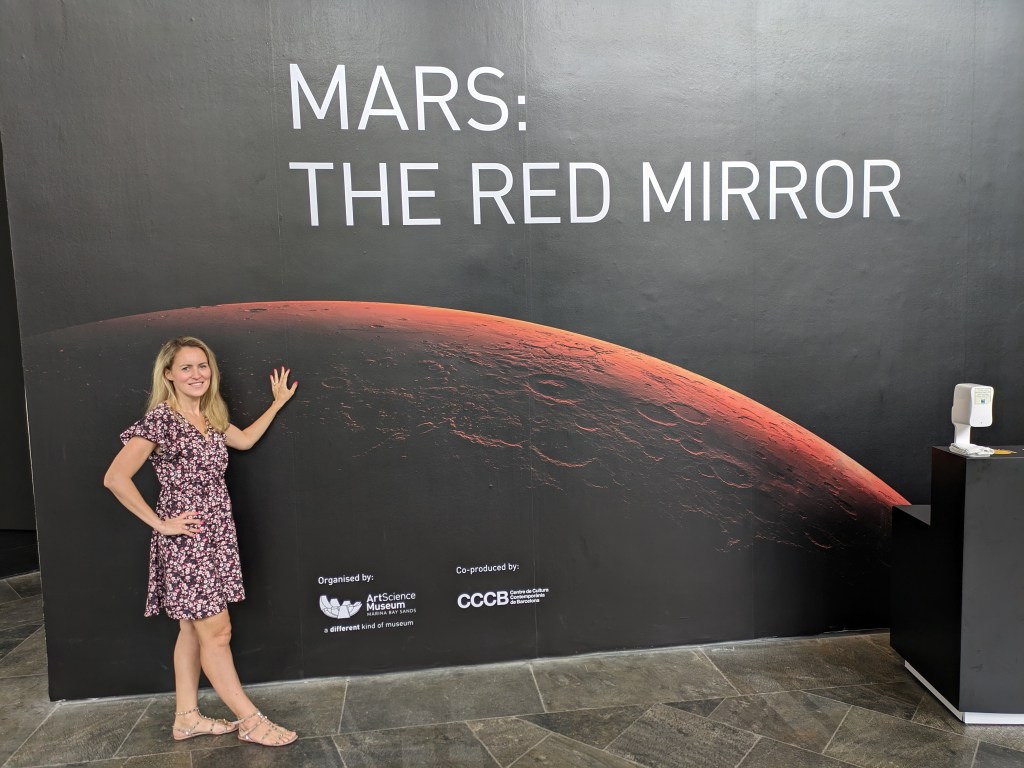
Cool. How in your opinion, would space contribute towards a more resilient future for humanity?
I really appreciate the growing recognition that the answers to some of Earth’s most pressing questions may lie in space. While Elon Musk’s idea of Mars as a Plan B for Earth is a bit of a PR statement, there are genuinely compelling examples of how space can address critical issues.
For instance, climate monitoring heavily relies on data from satellites to track greenhouse gases and emissions. Ground-level measurements alone are insufficient; satellites provide the comprehensive data needed to monitor our climate effectively.
Energy production is another area where space offers significant advantages. Semiconductors produced in space, due to zero gravity and the deep vacuum, are purer, longer, and consume 50% less energy. This innovation could help address the energy crisis. Similarly, space-based solar power projects are underway, with large solar stations in orbit collecting and either storing or transmitting energy back to Earth. These stations can harvest sunlight continuously without the interference of the atmosphere or clouds.
There are also opportunities to move toxic or energy-intensive production, such as data centers, into orbit. The conditions in space can be more favorable for certain processes, though this would require substantial engineering efforts.
Pharmaceutical research is particularly exciting. One of our current investments focuses on producing antibodies for cancer treatment in orbit. These complex protein molecules tend to collapse under Earth’s gravity, but in microgravity, they can grow larger, more symmetrical, and more complex. This means more effective antibodies, potentially transforming cancer treatment from hospital drips to at-home injections.
Space is not just an industry; it is an enabler for advancements across various sectors. This cross-industry impact is what excites me most about the potential of space exploration and technology.
I like that last point, that space is an enabler for other industries. That leads me to one of the questions I was most interested in – in the United States, when someone thinks about space, they are generally thinking about NASA or another government funded entity. However, it seems like we’re now seeing the private sector finally get involved and pouring capital into the space industry. Can you talk about the private sector’s role in the space industry going forward? Are there any unique use cases where the private sector is particularly poised to make a difference?
There are many misconceptions about space, and I believe we are not doing enough, PR-wise, to address them. While NASA remains a leading organization in the field, the landscape has significantly changed over the past decade. Ten years ago, nearly 99%, if not the entirety, of the space industry was government-funded. Today, only about 20% of the industry is funded by the government, reflecting a major shift towards private investment and commercial ventures.
Wow.
75% or 80% is funded through private organizations and private investors. So it’s actually a private industry now!
NASA is fundamentally a research organization focused on conducting experiments rather than executing business projects directly. Over the past 24 years, since the ISS was launched into orbit, around 3,000 experiments have been conducted there. These experiments cover a wide range of topics, including semiconductors and proteins. The results of these experiments are available in an open database, providing valuable insights into their outcomes.
When a skilled entrepreneur leverages these insights, assembles a capable team, conducts further research, and identifies viable use cases, a private company can emerge from this foundation.
I believe the opportunities in the space industry are now more accessible than ever. Elon Musk’s SpaceX is continuously driving down the cost of launching payloads into orbit. Currently, it costs about $1,700 per kilogram, but with the advent of Starship, this cost could drop to less than $100 per kilogram. This means that even children could potentially use their pocket money to send something into space!
This dramatic reduction in costs has fundamentally changed the business model and unit economics of space ventures. What was once difficult or unthinkable a decade ago is now feasible and can be economically viable. New products and business models are becoming more practical and attractive.
Moreover, the space industry is experiencing a shift similar to what the internet industry saw in the 1990s. Initially, engineers and programmers were the primary entrepreneurs, but soon others realized the potential to make money online. Generalist entrepreneurs entered the scene and began building internet companies. A similar trend is now happening in the space sector, with individuals from various backgrounds bringing fresh perspectives and innovative ideas. This influx of diverse talent is invigorating the industry, and I believe this trend will continue for the next couple of decades.

Let’s talk about some of the work you’ve done with some of these companies. Could you talk about any potential challenges that you’ve worked through, and any successes you’ve seen?
I’ll share some general issues I’ve observed. Previously, as a FinTech founder, I noticed that most of my peers and co-founders came from backgrounds in banking or finance. They were commercially driven, fluent in investor language, and aggressive in a positive sense. They excelled at networking and understood how to navigate the investor landscape.
In the space industry, however, many founders come from academia or engineering. They often lack the same level of commercial polish and investor communication skills, even though they are dealing with the same investors. Investors expect a clean presentation, an outstanding pitch, and a polished founder. A significant part of our daily work involves helping these founders refine their presentations and pitches. While it might seem like a small task to us, it can make a huge difference for them.
This issue ties back to resilience. During my fundraising days, I had a spreadsheet with 500 investors, including VCs and individual investors. Out of those 500, only three invested. You go through the entire list, contacting everyone, and in the end, you might get just a few term sheets. Many people give up at this stage. But by developing a mindset of persistence and determination, focusing on the 1% that work, you keep pushing forward. It requires immense self-awareness and resilience.
To address these challenges, we built the venture builder. Our goal is to make space technology more mainstream, turning it into a normal startup and investment case. We want to eliminate the notion that you need to be a rocket scientist or a billionaire to get involved. We bridge the gap between investors and startups, helping them meet in the middle.
Investors often look for polished presentations and immediate revenue, but most deep tech startups have zero revenue for the first five years. This scares off many traditional investors who ask, “Where is the traction?” My response is, “It takes three years to build a satellite!”
Changing this mindset is crucial. Many investors are eager to invest in deep tech and space tech but don’t fully understand what it entails. We are helping to educate them, sharing the vision that this is the next big wave of innovation and investment.
Right. Yeah, so investors need to be educated as well. So that’s the gap.
Yes, I think they should be somewhere in the middle.
You’ve talked a little bit about some of the space adjacent technologies that you’re excited about – for example superconductors and pharmaceutical development. Are there any other space technologies that you’re really excited about that you’re seeing, other than something like a rocket?
Earlier, I discussed space manufacturing, including the production of drugs, semiconductors, and other materials, as well as energy and climate-related applications. One particularly exciting area is Earth observation, which involves the use of satellite images. These images are now employed across a wide range of industries, including commodity trading, disaster recovery, insurance, and mortgages, among others. The breadth of their application is truly exciting.
Another fascinating prospect is mining on the moon and asteroids. This might sound like science fiction, but considering the depletion of Earth’s resources, it’s a concept we need to take seriously. As our economies and consumption continue to grow, we will eventually need to look beyond our planet to meet resource demands. I believe that seeking rare earth metals on asteroids and the moon will become necessary. While we are not ready for this yet, and significant developments may not occur for the next decade, the advent of stable and affordable technologies like Starship will gradually make this a major industry.
I often hear the prediction that the industry beyond Earth will surpass the one on our planet, and I believe this will indeed be the case.
Yeah.
And that would probably be driven by mining.
Cool. What advice would you give somebody who’s interested in a career in the space industry?
You should leverage your skills and network. Changing your entire career can be challenging. For example, transitioning from being an accountant for ten years to becoming a rocket scientist requires immense effort. However, space companies now need a variety of professionals beyond engineers and scientists—they require HR managers, accountants, PR experts, marketers, and more.
Look for recruiting agencies specializing in the space industry, as they hire a diverse range of professionals. Attending networking events, conferences, and webinars is an excellent way to stay informed about industry developments.
I work with many investors and startups, and it’s an exciting time to be involved in the space sector. Take the time to explore what’s happening, and you might discover a gap or an opportunity that aligns with your expertise. Be curious and proactive—there are still plenty of untapped opportunities in this emerging field.
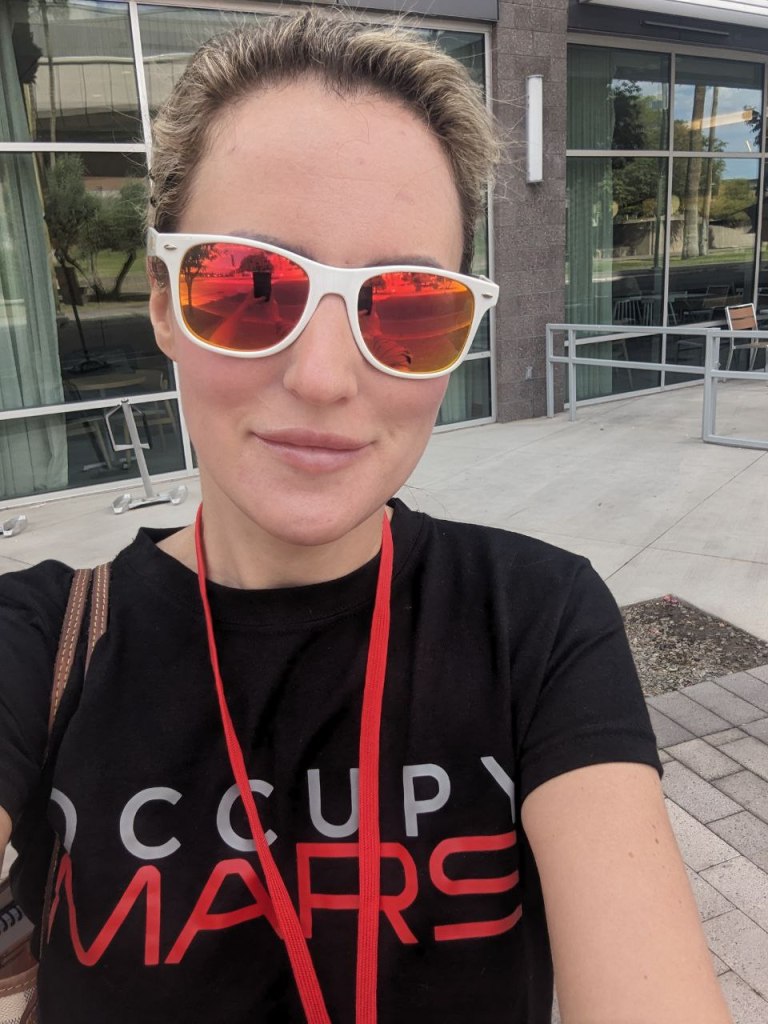
The United States and EU lead the charge in terms of an innovative startup economy and culture. Does that hold true with the space industry too? Or do you see other countries with a robust government funded space industry, like India or China, in the mix as well?
The startup industry is still predominantly led by the US, and the space sector is no exception. Many companies founded outside the US eventually need to establish US headquarters for joint ventures and other strategic reasons. The space industry is unique due to its strong ties to national security, prompting countries to develop their own satellite manufacturing and launch capabilities within their borders to avoid dependency on foreign entities. However, it’s challenging to create a large unicorn by serving only a small domestic market.
India is experiencing significant growth, boasting a wealth of engineering talent. The successful landing of a moon rover was a monumental achievement, which led to an influx of Indian subscribers to Space Ambition that same night.
Europe is also making strides, supported by the European Space Agency, which offers numerous incubators and grant programs to foster the local space ecosystem. Israel is another notable player with strong space technology capabilities. However, the majority of the activity remains centered in the US.
China presents an interesting case, with a more government-led approach. While the US is known for NASA’s role as a central hub and grant distributor, along with a robust network of private companies like SpaceX, China’s space sector is growing rapidly in its own way. Although I am not deeply familiar with the Chinese ecosystem, its rapid development is undeniable.
Sure. What’s next for you?
I’m happy where I am now; every day feels like a school day! I’m constantly learning and growing. Despite having been in the industry for only a couple of years, I still experience some imposter syndrome. I try to absorb as much information as possible while maintaining a fresh perspective to avoid bias.
The venture builder is my main focus for now, and I’m eager to see where it leads me. As part of the venture builder, we also run the investment syndicate, which I view as more of a democratization effort—a bit like a philanthropic project. It’s not about making immediate cash but about bringing space investment opportunities to a wider audience.
There wasn’t a dedicated space tech syndicate on AngelList yet, and I see this as a gap and an opportunity. I want to build something that fills this niche.
My ultimate goal is to contribute to the advancement of our civilization. I want to maximize my impact during my lifetime, leveraging my skills and energy. I’m not interested in creating an NFT collection or a fizzy water brand. Instead, I want to help develop technologies, whether as an investor, venture builder, or startup founder, that can propel us forward. We are responsible for what our generation can achieve. While we’re not ready to build a Mars mining company yet, we can certainly take steps that push us in that direction.
Right!
How do we maximize the impact of our generation today?
In a Jeff Bezos interview with Lex Fridman, he discusses building the general infrastructure for space. He compares it to building Amazon, where he benefited from existing infrastructure like the post office, the internet, and electricity. He simply added an online shop to sell books. Similarly, what we are doing now with space is laying the groundwork—developing launchers, robots, satellites, and non-return capsules. These foundational elements might be fully utilized by the next generation, but they are essential for future progress. Future generations will be able to build their business products on the infrastructure we are establishing today.
Currently, our focus is on Low Earth Orbit (LEO). There are numerous business opportunities in LEO. The next steps could involve mining on the moon and capturing helium, a resource that is extremely scarce on Earth but abundant on the moon. After that, the natural progression could be moving towards Mars.
For me, it all comes down to pushing the boundaries as much as possible. By developing the infrastructure and technologies today, we are paving the way for future advancements and possibilities in space exploration and utilization.
I like it. What’s the best way for somebody to get in touch if they’d like to learn more, or get involved with Space Ambition – or any of your other projects?
I’m very approachable! You can find me on LinkedIn. I always try to respond personally to everyone and am even open to having a call to see how I can help. I’m happy to review projects, answer questions, or provide guidance.
In terms of how others can contribute, I would love to see more talent, capital, and attention directed towards the space industry. If anyone is considering starting a space-related venture, we recently launched a program called Fellowship. This four-week program is designed for aspiring entrepreneurs, offering them ideas, advice, and connections. It helps participants choose the right idea, find co-founders, and get a solid start.
Additionally, we need to lower the barriers to entry for the space industry. There are numerous obstacles and misconceptions, often perpetuated by mainstream media. The space media, on the other hand, tends to be quite insular.
What we really need is great storytelling. I am eager to collaborate with others on this front. Let’s work together to share the exciting possibilities and opportunities in space.
It sounds like you want the space industry as a whole to be demystified.
Yes, demystified! I think that’s the perfect word.
Want to learn more? Go more in depth here:



 Mick Hammock
Leave a reply to Balloons that Cool the Earth: Resilience and Moonshots with Andrew Song of Make Sunsets – Mick Hammock Cancel reply