Tag: climate

  • Balloons that Cool the Earth: Resilience and Moonshots with Andrew Song of Make Sunsets

    I’ve always been interested in those taking the bold step – people with big ideas who are trying to solve big problems. And there’s nobody bolder than Andrew Song, co-founder of Make Sunsets, a controversial climatetech startup that is launching balloons filled with sulfur dioxide into the stratosphere to cool the earth. 

    Yes, that’s right.

    It’s a fascinating idea, a true moonshot, and an idea that Andrew Song believes provides the stopgap between rising temperatures and a more resilient future. 

    Andrew and I go in depth on what his company does, the science behind it, the idea of “moonshot thinking,” and the power of just getting started. 

    If you’d like to learn more, check out Andrew on his LinkedIn and Make Sunsets on their website

    I’m primarily interested in the concept of resilience, whether personal, communal, or societal. What does resilience mean to you?

    I think it’s just getting back up after you fall down. That’s pretty much it. Don’t be afraid of failure, because I think that fear actually stops people from being resilient.

    Resilience, to me, is really just the ability to bounce back. I learned that at a very early age; my parents instilled it in me. I was a swimmer and started competing when I was eight. I’ve never been the biggest guy in the room, so I had to learn how to lose, a lot, before I figured out how to win.

    I was racing guys who were four to six inches taller than me, and in swimming, that matters. But I learned that if you can develop your technique and use your body efficiently, you can still be fast. That’s what really taught me: I don’t have to be the biggest. I don’t have to be the smartest. I just have to work hard and iterate faster.

    That’s interesting. In a lot of these conversations, resilience comes up almost like a muscle – you have to work hard at it in order to actually grow in resilience. It sounds like your background in swimming gave you that repetition, that practice in losing before winning. 

    Do you think those early experiences shaped how you move through life now?

    Oh, absolutely. I don’t know how you gain that kind of resiliency or agency without actually doing it. You can read all the books you want about resilience, but until you put it into practice, it’s really hard to overcome that psychological fear of failure.

    You and your co-founder have a lot of experience in Silicon Valley and tech. Can you talk about the switch from tech to green technology and whether it feels like a natural fit?

    Sure. I think for me, it was always a kind of parallel process. Actually, the first company I ever wanted to start, back in 2010, was sustainability-related.

    I grew up in a family with four kids, all athletes, and we ate a lot of food – but we also wasted a lot of it. My poor mom had to cook for four hungry kids all the time. Sometimes we’d eat everything, sometimes we wouldn’t, so she always overcooked just in case.

    That experience inspired an idea I had. You’d take a picture of your grocery receipt, use OCR (optical character recognition) to identify what you bought, and then get recipe recommendations to help use up any leftovers. That was my first real concept, during the early App Store days. I just wanted to reduce food waste because about 30% of all food ends up in landfills.

    But I quickly learned that most people don’t actually care about saving food! Still, I learned a lot from that experience, and I discovered I had a knack for selling. That eventually led me into Silicon Valley. I grew up here, so I was very familiar with the tech scene and its cycles. It was a natural fit, and I just thought, “I want to try this.”

    So when the opportunity to start Make Sunsets came along, it really felt like a coming home moment. I’d spent ten years learning, and this was my chance to put it to use. I wasn’t just going to sell SaaS or hardware, but to take the skills I’d built up and return to the problem I actually cared about from the beginning.
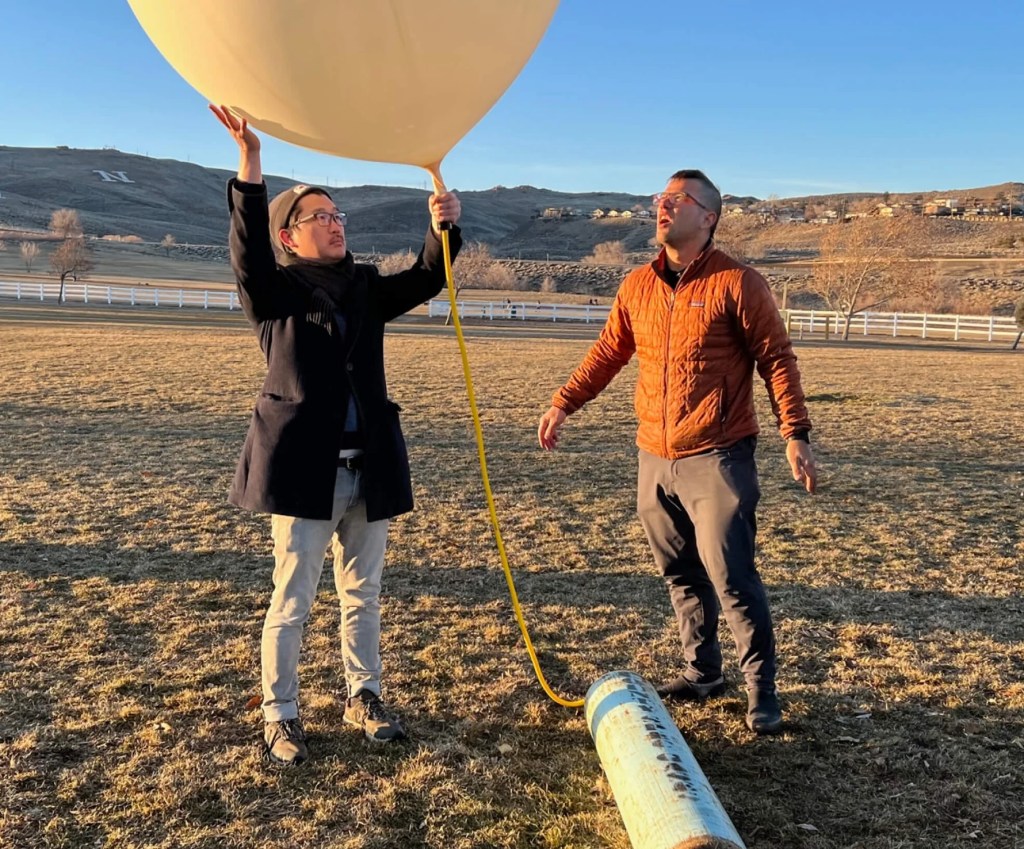
    Andrew Song (left) and Luke Iseman (right) readying a weather balloon.

    She sounds like a good mom! 

    Make Sunsets uses balloons to launch reflective clouds into the stratosphere to combat the greenhouse effect. Can you talk a bit more about what exactly it is that you’re doing? 

    Make Sunsets is using stratospheric aerosol injection. That’s the technique we’re using to reflect some of the sun’s energy away from Earth. As you probably know, greenhouse gases trap heat. A lot of really smart people are working on removing greenhouse gases so they don’t keep building up and heating the planet. But right now, we’re putting more in than we’re removing.

    As you trap more energy, more bad things happen, like higher variance in global weather events, things like that. But what we discovered was that there was this volcanic eruption in 1991 called Mount Pinatubo that injected about 20 million tons of sulfur dioxide into the stratosphere, and it cooled the Earth by 0.5 degrees Celsius.

    And more recently, there was the Hunga Tonga eruption in the Pacific (look it up, I’m not making up that name!) that happened in 2022. It injected about 400,000 to 700,000 tons of sulfur dioxide, and that actually cooled the Earth by 0.1 degrees Celsius.

    So yeah, at first glance, that sounds like a lot of sulfur dioxide going up into the atmosphere. But actually, we all live in the troposphere. That’s where all living species are and where 99% of weather happens. And Make Sunsets is going one level up, into the stratosphere. That’s where these volcanic eruptions are really effective at reflecting the sun’s energy.

    So, to put it in context, a volcano’s 20 million tons sounds like a huge amount, but humans currently emit about 70 million tons of sulfur dioxide every year into the air we breathe. That comes from coal plants, diesel emissions, industrial processes, ships. Basically anything that burns fuel with sulfur in it.

    Sulfur dioxide is actually pretty effective. Even in the troposphere, it reflects some sunlight. But if you put it higher, into the stratosphere, it’s like 20 times more effective. That’s because of two things: one, the winds up there are really fast, so it disperses quickly. And two, since there’s not a lot of weather up there, so it doesn’t rain out.

    Interesting. 

    This is a great example of moonshot thinking – an out-of-the-box solution that aims to boldly solve a major challenge. 

    We’ve talked about the volcanic aspect and the science behind it, but can you talk about how you personally developed this concept? What helped you build the momentum to take action and actually start this project?

    The concept of stratospheric aerosol injection has actually been around since the 1970s. There have been over 2,000 academic papers written about it! It’s very well modeled.

    You’ll see a lot of papers that focus on the potential downsides, and there have been academic institutions that have tried to move toward actual deployment, but they’ve usually been blocked. Often, it’s by well-intentioned people saying, “Hey, we shouldn’t be doing this.” And to be honest, academics aren’t necessarily the right people to push this forward anyways.

    So a lot of the inspiration came from that logjam of really great ideas that just hadn’t been implemented. 

    The reason we’re pursuing this is because stratospheric aerosol injection hasn’t been well explored at the deployment level. We’re just getting started. We’re still a two-man company, but we’ve already gotten a lot of attention.

    I think the reason we’ve gotten so much attention is because it’s such a novel idea. Like you said, it’s a moonshot, and I agree, it’s kind of crazy. Instead of removing something from the atmosphere, like greenhouse gases, we’re actually adding something to it. That’s a foreign concept to most people.

    The simplest way to describe what we’re doing is sunscreen for Earth. So all we’re saying is, instead of applying it to the troposphere, apply it to the stratosphere, where it’s more effective.

    That’s so interesting. 

    And the fact that there’s such a long academic tradition behind this is surprising. 

    I recently read a study on AI in the environmental space, and while there’s a lot of bold innovation happening there, the market doesn’t always value it like other types of AI. A lot of it ends up in academia or NGOs because of the tragedy of the commons, you know, things everyone agrees we should do, like protecting biodiversity or cleaning plastic out of the ocean, but no one wants to pay for. 

    Can you talk about how you’ve approached this differently as a for-profit company tackling a global environmental issue?

    Yeah, people ask us all the time, “Why aren’t you a nonprofit or an NGO?” But we believe the only way this will ever be widely accepted is if it works within a capitalist system and if people vote with their wallets.

    The beauty of what we’re doing, compared to other sustainability efforts, is that it’s extremely cheap. We did the math recently, and to offset all manmade global warming since the 1850s, it would cost about $3 per American per year. That’s one cup of coffee.

    To give some context, the Smithsonian costs about $3 per American per year. And the Smithsonian is awesome. It educates people and preserves our history. But for the same price, you could have a more livable planet.

    Other climate solutions often come with political baggage. You’ve got people saying we need to degrow the economy, stop eating meat, give up trucks. But a lot of Americans don’t want to change their lifestyle. What’s different here is that you don’t have to!

    I want capitalism to win. I want people to have access to meat that doesn’t emit so much CO₂ and maybe lab-grown meat will get us there. But right now it’s too expensive. Same with EVs. Telling someone to give up their Ford F-150 for an electric vehicle? It’s a non-starter for a lot of folks. And it doesn’t help when the people pushing these ideas are still living lives full of fossil fuel consumption themselves.

    Our solution doesn’t require lifestyle changes. One, because it’s cheap. Two, because it’s deployable pretty much anywhere. We can do this in the ocean or in remote areas. California lets us do it now, which is where we’re from, so that’s where we’re deploying.

    I totally agree. Capitalism has to be part of the solution if we want lasting change. But environmental work is a long game, often measured in decades, while startups are typically built around short timelines. How do you reconcile that?

    Honestly, I don’t want Make Sunsets to be a 100-year company. I want us to shut down as soon as possible. This is a stopgap solution.

    The best analogy I can give you is that we’re Ozempic for the climate. Ozempic doesn’t cure obesity, but it buys time and reduces the worst effects while people try to get healthier. Climate change is the same. The real danger is the heat. CO₂ itself isn’t going to kill us, at least not directly, but the rising temperatures it causes will. Until we scale carbon removal, plant more trees, and shift to sustainable fuels, we need something like this to buy time.

    You’ve been getting a lot of media attention. What would you say is your biggest success so far? And on the flip side, your biggest failure or challenge?

    That’s a good question. In terms of success, I mean, we’re literally the first company in the world trying to commercialize stratospheric aerosol injection as a service. There’s a startup analogy where you’re building the car while you’re driving it. For us, we’re building the car and the road at the same time.

    It’s hard to say we’ve failed yet. I mean, we’re not dead. When we started in October 2022, we thought we’d get shut down immediately. Like, “Wait, you’re copying volcanoes? You’re using sulfur dioxide? Isn’t that acid rain?” But we’re still here.

    Now, are we profitable? No. So technically we’re what startups call “default dead” since we’re burning more money than we’re making. But we’re about halfway to default alive. That’s when your revenue outpaces your burn. So we’re making progress.

    We’re transparent about this. Every month we post how much money we have in the bank, what we spent, our sales, what we failed at, and what we’re working on. This is all about trying to figure out how to become a profitable company. We’re not there yet, but we’re closer than I expected.

    Going back to bold thinking – has anything influenced your appetite for that? Or have you always been that way?

    I think it comes down to how I was raised. I’m the middle child. The youngest is the baby, the oldest is the golden child, my sister’s the only girl, and then there’s me. So growing up, I was kind of the wild card. 

    But really, I’ve always had a safety net. I’m fortunate. My parents came to Silicon Valley in the late ’70s. If they had stayed in South Korea, I probably wouldn’t be doing any of this. A lot of it comes down to luck, and I try not to forget that.

    You mentioned that safety net – and in a previous interview, someone told me they think resilience comes from that. Like, having a partner or family who loves you even if you fail. That safety makes risk-taking possible. Sounds like that applies to you.

    You’ve talked about a long academic tradition behind this idea. Are there any other climate tech concepts you came across that you think deserve more attention?

    Yeah, actually. Space mirrors are pretty cool. It’s another form of solar geoengineering. The problem right now is the launch cost. But as the space market grows and prices drop, I think that’s something we’ll pursue ourselves.

    The idea is to put a constellation of mirrors at the Lagrange point, halfway between the Earth and the sun, so you can basically dial down the sunlight. I want to live in a world where we can control the weather the way we control the A/C in our cars. But right now the material science and economics aren’t there yet. 

    Eventually, though? I think it’ll happen.

    10 years ago, 99% of the space industry was government funded. But today, it’s something like only 20%. Private industry makes up the vast majority now. Feels like we’re on the edge of something big.

    So what’s next for you and Make Sunsets?

    Right now, the next big milestone is doing a large enough deployment that it’s detectable by satellite. We already have people buying what we call “cooling credits.” One credit offsets the warming of one ton of CO₂ for a year. It’s like a carbon credit, but instead of removing CO₂, we apply aerosol. 

    Eventually, we want to scale enough to trigger satellite detection. These are the same satellites that detect volcanic eruptions. It’s third-party verification, and the data is public. Anyone can ping the satellite and pull the data themselves.

    We’re not talking about 20 million tons like Pinatubo. Scientists say 100 to 1,000 tons might be enough for detection. That’s our next big step, and we’ve got about two years of runway to get there.

    If you’re curious, read more about the science. And when people bring up concerns, always ask: “How much would it take for that bad thing to happen?” Because people will say, “This could cause acid rain.” But how much sulfur would it take? It’s not 1 ton. It’s not 69 million tons, and we tolerate that amount right now from other sources. That context matters.

    What’s the best way for someone to contact you?

    You can reach us at info@makesunsets.com, or through our website. We’re also really active on Twitter. Our handle is @makesunsets.

    Anything else you want to share?

    Just something for your readers. If you have an idea, just do it. People get so hung up on what might go wrong. Start small. We did. Our first balloon had just one gram of sulfur dioxide in it. That’s the weight of a dollar bill. And Time Magazine covered it. 

    That one gram? It didn’t do anything. It wasn’t dangerous. But we started. And once you start, maybe someone notices. Maybe someone cares. And you go from there.

    A lot of people think 100 steps ahead, start thinking early about how could this fail? But you really don’t know until you try. Until you start talking to people. That’s what agency looks like. And look, we thought we’d be shut down in the first six months. We’re still here. I’m talking to you two years later.

    That’s all I can say. Just start.

    Want to learn more? Go more in depth here:
    Andrew Song LinkedIn

    Make Sunsets Website

    Make Sunsets FAQ

    The DIY Climate Fix No One Wants… But We Might Need

    Make Sunsets in NPR

  • Resilience in the Final Frontier: Space Entrepreneurs and Humanity’s Future with Alexandra Vidyuk

    Resilience in the Final Frontier: Space Entrepreneurs and Humanity’s Future with Alexandra Vidyuk

    I recently sat down with Alexandra Vidyuk, a venture capitalist, venture builder, and blogger passionate about a topic that has fascinated me since childhood – space!

    Currently living in Singapore, but with professional experience in London and Hong Kong, I first found Alexandra through her weekly newsletter, Space Ambition, an 11,000+ subscriber strong weekly missive that highlights topics in the space, deep tech, and venture communities. If you’re interested in current space developments, it’s a must-read. She also runs a spacetech investment syndicate on AngelList, a venture builder Beyond Earth Tech Venture Builder, and is a venture partner at Aloniq.

    We went in-depth on a number of topics, including her quest to show that space is more than just rockets, how she wants to bridge the gap between space entrepreneurs and investors, how space enables other industries, and, of course, how the work we do in space in this generation will build a more resilient future for humanity. Alexandra was an engaging interview, and it was a great opportunity to talk to and learn from someone who is truly reaching for the stars.

    If you’d like to learn more, you can reach Alexandra on her LinkedIn.

    I’m primarily interested in the concept of resilience, whether it’s personal resilience, communal, societal. What does the concept of resilience mean to you?

    To me, resilience is the ability to continually adapt to new circumstances. I believe it is an essential quality for every entrepreneur and founder. They constantly face failures but rise again and persist. They learn from their mistakes and continue working, even if it means completely reinventing themselves.

    This perspective might be influenced by my professional background, but I see resilience as a defining trait of successful founders and venture capitalists.

    Alexandra Vidyuk, working to demystify the space industry.

    You’re currently a venture partner at Aloniq, a venture firm that invests in early stage deep technology as well run a spacetech investment syndicate on Angelist and Beyond Earth Tech Venture Builders. You also founded Space Ambition, which is an organization aimed at bridging the gap between space startups and investors. Can you give me a little background as to your career journey, and then what led you towards starting a space research and consulting firm?

    Yes, sure!

    As you mentioned, I am currently involved in several projects: a venture capital role, an investment syndicate, a venture builder, and Space Ambition, which includes a blog, media, and consultancy services. I’ve been engaged in these activities for about two years now.

    I graduated with a degree in physics, but like many of my classmates, I initially pursued a career in banking. About ten years into my banking career, I had an epiphany and thought, “What am I doing here?” While banking is a great and intellectually stimulating job that I enjoyed throughout my twenties, it didn’t provide the impactful experience I was seeking.

    I briefly ran a FinTech startup, which was rewarding in its own way, but I still felt I wasn’t making a significant difference. I wasn’t contributing to curing cancer, solving the energy crisis, or addressing climate change. Although bankers do contribute, their impact is often indirect and multilayered. I wanted to pursue something with a more direct and substantial impact.

    As a child, I was passionate about space, science, and sci-fi movies. This passion led me to study physics with the dream of becoming a scientist. Over time, I realized I wanted to do something that aligned more closely with my childhood dreams. I wanted to combine my passion, education, and experience in finance and entrepreneurship, making deep tech and space a natural fit.

    It’s an exciting time, as many investors are now shifting their investment theses towards deep tech, which requires unique expertise. There’s a growing belief that deep tech will drive the next big wave of startups and investments, spearheaded by a new generation of PhDs and postdocs who are seeking opportunities outside academia. This burgeoning field presents numerous opportunities, and I was eager to explore something in space.

    I originally started my blog at the suggestion of a friend who noticed how much I read and thought I should write about it weekly. Initially, I was trying to get my footing and understand the existing research. I began summarizing my readings on space technology and deep tech in plain English, essentially creating executive summaries. Now, the blog has grown to over 11,000 subscribers on Substack, making it the largest blog for space tech investors.

    My other projects emerged because I didn’t want to be a pure venture capitalist. Having been a founder myself, I knew that achieving success in that role often meant sacrificing other aspects of life. I sought a balance and found it in the venture builder model, which allows me to go deep on three to five projects in different areas while maintaining a broader scope.

    One of my current projects, for example, involves laser beaming energy, which is highly technical. Another focuses on CO2 capture using algae, which addresses climate change. These diverse projects give me different perspectives and areas of focus, making my work both challenging and rewarding.

    I still feel like I’m in transition and might be doing something different five years from now. But for now, this combination is perfect, and I am thoroughly enjoying my work.

    So it’s almost nice being able to branch out and have different projects in sort of under arching this main umbrella, space and deep tech. By doing some of the venture builder and Space Ambition and things like that, you’re able to learn and get involved in multiple areas still under one roof, which you didn’t have before. Would that be right?

    Yes, exactly! I think that’s the perfect summary.

    Space is not just an industry; it is an enabler for advancements across various sectors. This cross-industry impact is what excites me most about the potential of space exploration and technology.

    Cool. How in your opinion, would space contribute towards a more resilient future for humanity?

    I really appreciate the growing recognition that the answers to some of Earth’s most pressing questions may lie in space. While Elon Musk’s idea of Mars as a Plan B for Earth is a bit of a PR statement, there are genuinely compelling examples of how space can address critical issues.

    For instance, climate monitoring heavily relies on data from satellites to track greenhouse gases and emissions. Ground-level measurements alone are insufficient; satellites provide the comprehensive data needed to monitor our climate effectively.

    Energy production is another area where space offers significant advantages. Semiconductors produced in space, due to zero gravity and the deep vacuum, are purer, longer, and consume 50% less energy. This innovation could help address the energy crisis. Similarly, space-based solar power projects are underway, with large solar stations in orbit collecting and either storing or transmitting energy back to Earth. These stations can harvest sunlight continuously without the interference of the atmosphere or clouds.

    There are also opportunities to move toxic or energy-intensive production, such as data centers, into orbit. The conditions in space can be more favorable for certain processes, though this would require substantial engineering efforts.

    Pharmaceutical research is particularly exciting. One of our current investments focuses on producing antibodies for cancer treatment in orbit. These complex protein molecules tend to collapse under Earth’s gravity, but in microgravity, they can grow larger, more symmetrical, and more complex. This means more effective antibodies, potentially transforming cancer treatment from hospital drips to at-home injections.

    Space is not just an industry; it is an enabler for advancements across various sectors. This cross-industry impact is what excites me most about the potential of space exploration and technology.

    I like that last point, that space is an enabler for other industries. That leads me to one of the questions I was most interested in – in the United States, when someone thinks about space, they are generally thinking about NASA or another government funded entity. However, it seems like we’re now seeing the private sector finally get involved and pouring capital into the space industry. Can you talk about the private sector’s role in the space industry going forward? Are there any unique use cases where the private sector is particularly poised to make a difference?

    There are many misconceptions about space, and I believe we are not doing enough, PR-wise, to address them. While NASA remains a leading organization in the field, the landscape has significantly changed over the past decade. Ten years ago, nearly 99%, if not the entirety, of the space industry was government-funded. Today, only about 20% of the industry is funded by the government, reflecting a major shift towards private investment and commercial ventures.

    Wow.

    75% or 80% is funded through private organizations and private investors. So it’s actually a private industry now!

    NASA is fundamentally a research organization focused on conducting experiments rather than executing business projects directly. Over the past 24 years, since the ISS was launched into orbit, around 3,000 experiments have been conducted there. These experiments cover a wide range of topics, including semiconductors and proteins. The results of these experiments are available in an open database, providing valuable insights into their outcomes.

    When a skilled entrepreneur leverages these insights, assembles a capable team, conducts further research, and identifies viable use cases, a private company can emerge from this foundation.

    I believe the opportunities in the space industry are now more accessible than ever. Elon Musk’s SpaceX is continuously driving down the cost of launching payloads into orbit. Currently, it costs about $1,700 per kilogram, but with the advent of Starship, this cost could drop to less than $100 per kilogram. This means that even children could potentially use their pocket money to send something into space!

    This dramatic reduction in costs has fundamentally changed the business model and unit economics of space ventures. What was once difficult or unthinkable a decade ago is now feasible and can be economically viable. New products and business models are becoming more practical and attractive.

    Moreover, the space industry is experiencing a shift similar to what the internet industry saw in the 1990s. Initially, engineers and programmers were the primary entrepreneurs, but soon others realized the potential to make money online. Generalist entrepreneurs entered the scene and began building internet companies. A similar trend is now happening in the space sector, with individuals from various backgrounds bringing fresh perspectives and innovative ideas. This influx of diverse talent is invigorating the industry, and I believe this trend will continue for the next couple of decades.

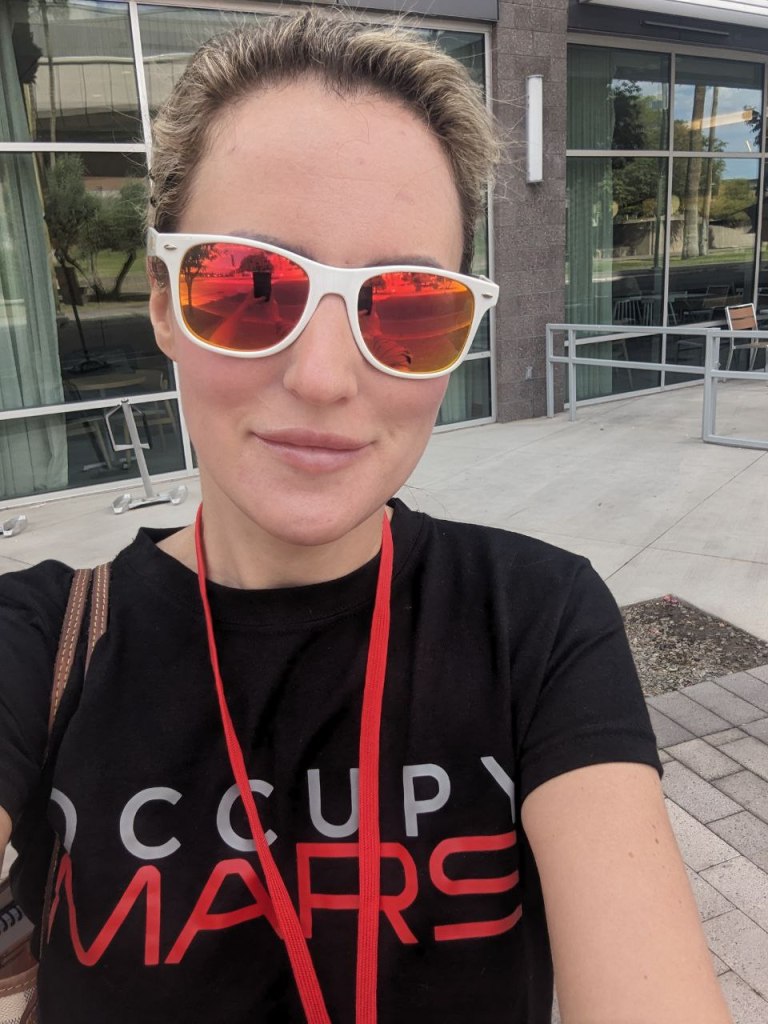
    Alexandra Vidyuk and the Mars Rover

    Let’s talk about some of the work you’ve done with some of these companies. Could you talk about any potential challenges that you’ve worked through, and any successes you’ve seen?

    I’ll share some general issues I’ve observed. Previously, as a FinTech founder, I noticed that most of my peers and co-founders came from backgrounds in banking or finance. They were commercially driven, fluent in investor language, and aggressive in a positive sense. They excelled at networking and understood how to navigate the investor landscape.

    In the space industry, however, many founders come from academia or engineering. They often lack the same level of commercial polish and investor communication skills, even though they are dealing with the same investors. Investors expect a clean presentation, an outstanding pitch, and a polished founder. A significant part of our daily work involves helping these founders refine their presentations and pitches. While it might seem like a small task to us, it can make a huge difference for them.

    This issue ties back to resilience. During my fundraising days, I had a spreadsheet with 500 investors, including VCs and individual investors. Out of those 500, only three invested. You go through the entire list, contacting everyone, and in the end, you might get just a few term sheets. Many people give up at this stage. But by developing a mindset of persistence and determination, focusing on the 1% that work, you keep pushing forward. It requires immense self-awareness and resilience.

    To address these challenges, we built the venture builder. Our goal is to make space technology more mainstream, turning it into a normal startup and investment case. We want to eliminate the notion that you need to be a rocket scientist or a billionaire to get involved. We bridge the gap between investors and startups, helping them meet in the middle.

    Investors often look for polished presentations and immediate revenue, but most deep tech startups have zero revenue for the first five years. This scares off many traditional investors who ask, “Where is the traction?” My response is, “It takes three years to build a satellite!”

    Changing this mindset is crucial. Many investors are eager to invest in deep tech and space tech but don’t fully understand what it entails. We are helping to educate them, sharing the vision that this is the next big wave of innovation and investment.

    Right. Yeah, so investors need to be educated as well. So that’s the gap.

    Yes, I think they should be somewhere in the middle.

    You’ve talked a little bit about some of the space adjacent technologies that you’re excited about – for example superconductors and pharmaceutical development. Are there any other space technologies that you’re really excited about that you’re seeing, other than something like a rocket?

    Earlier, I discussed space manufacturing, including the production of drugs, semiconductors, and other materials, as well as energy and climate-related applications. One particularly exciting area is Earth observation, which involves the use of satellite images. These images are now employed across a wide range of industries, including commodity trading, disaster recovery, insurance, and mortgages, among others. The breadth of their application is truly exciting.

    Another fascinating prospect is mining on the moon and asteroids. This might sound like science fiction, but considering the depletion of Earth’s resources, it’s a concept we need to take seriously. As our economies and consumption continue to grow, we will eventually need to look beyond our planet to meet resource demands. I believe that seeking rare earth metals on asteroids and the moon will become necessary. While we are not ready for this yet, and significant developments may not occur for the next decade, the advent of stable and affordable technologies like Starship will gradually make this a major industry.

    I often hear the prediction that the industry beyond Earth will surpass the one on our planet, and I believe this will indeed be the case.

    Yeah.

    And that would probably be driven by mining.

    Cool. What advice would you give somebody who’s interested in a career in the space industry?

    You should leverage your skills and network. Changing your entire career can be challenging. For example, transitioning from being an accountant for ten years to becoming a rocket scientist requires immense effort. However, space companies now need a variety of professionals beyond engineers and scientists—they require HR managers, accountants, PR experts, marketers, and more.

    Look for recruiting agencies specializing in the space industry, as they hire a diverse range of professionals. Attending networking events, conferences, and webinars is an excellent way to stay informed about industry developments.

    I work with many investors and startups, and it’s an exciting time to be involved in the space sector. Take the time to explore what’s happening, and you might discover a gap or an opportunity that aligns with your expertise. Be curious and proactive—there are still plenty of untapped opportunities in this emerging field.

    “The space industry is experiencing a shift similar to what the internet industry saw in the 1990s.”

    The United States and EU lead the charge in terms of an innovative startup economy and culture. Does that hold true with the space industry too? Or do you see other countries with a robust government funded space industry, like India or China, in the mix as well?

    The startup industry is still predominantly led by the US, and the space sector is no exception. Many companies founded outside the US eventually need to establish US headquarters for joint ventures and other strategic reasons. The space industry is unique due to its strong ties to national security, prompting countries to develop their own satellite manufacturing and launch capabilities within their borders to avoid dependency on foreign entities. However, it’s challenging to create a large unicorn by serving only a small domestic market.

    India is experiencing significant growth, boasting a wealth of engineering talent. The successful landing of a moon rover was a monumental achievement, which led to an influx of Indian subscribers to Space Ambition that same night.

    Europe is also making strides, supported by the European Space Agency, which offers numerous incubators and grant programs to foster the local space ecosystem. Israel is another notable player with strong space technology capabilities. However, the majority of the activity remains centered in the US.

    China presents an interesting case, with a more government-led approach. While the US is known for NASA’s role as a central hub and grant distributor, along with a robust network of private companies like SpaceX, China’s space sector is growing rapidly in its own way. Although I am not deeply familiar with the Chinese ecosystem, its rapid development is undeniable.

    Sure. What’s next for you?

    I’m happy where I am now; every day feels like a school day! I’m constantly learning and growing. Despite having been in the industry for only a couple of years, I still experience some imposter syndrome. I try to absorb as much information as possible while maintaining a fresh perspective to avoid bias.

    The venture builder is my main focus for now, and I’m eager to see where it leads me. As part of the venture builder, we also run the investment syndicate, which I view as more of a democratization effort—a bit like a philanthropic project. It’s not about making immediate cash but about bringing space investment opportunities to a wider audience.

    There wasn’t a dedicated space tech syndicate on AngelList yet, and I see this as a gap and an opportunity. I want to build something that fills this niche.

    My ultimate goal is to contribute to the advancement of our civilization. I want to maximize my impact during my lifetime, leveraging my skills and energy. I’m not interested in creating an NFT collection or a fizzy water brand. Instead, I want to help develop technologies, whether as an investor, venture builder, or startup founder, that can propel us forward. We are responsible for what our generation can achieve. While we’re not ready to build a Mars mining company yet, we can certainly take steps that push us in that direction.

    Right!

    How do we maximize the impact of our generation today?

    In a Jeff Bezos interview with Lex Fridman, he discusses building the general infrastructure for space. He compares it to building Amazon, where he benefited from existing infrastructure like the post office, the internet, and electricity. He simply added an online shop to sell books. Similarly, what we are doing now with space is laying the groundwork—developing launchers, robots, satellites, and non-return capsules. These foundational elements might be fully utilized by the next generation, but they are essential for future progress. Future generations will be able to build their business products on the infrastructure we are establishing today.

    Currently, our focus is on Low Earth Orbit (LEO). There are numerous business opportunities in LEO. The next steps could involve mining on the moon and capturing helium, a resource that is extremely scarce on Earth but abundant on the moon. After that, the natural progression could be moving towards Mars.

    For me, it all comes down to pushing the boundaries as much as possible. By developing the infrastructure and technologies today, we are paving the way for future advancements and possibilities in space exploration and utilization.

    I like it. What’s the best way for somebody to get in touch if they’d like to learn more, or get involved with Space Ambition – or any of your other projects?

    I’m very approachable! You can find me on LinkedIn. I always try to respond personally to everyone and am even open to having a call to see how I can help. I’m happy to review projects, answer questions, or provide guidance.

    In terms of how others can contribute, I would love to see more talent, capital, and attention directed towards the space industry. If anyone is considering starting a space-related venture, we recently launched a program called Fellowship. This four-week program is designed for aspiring entrepreneurs, offering them ideas, advice, and connections. It helps participants choose the right idea, find co-founders, and get a solid start.

    Additionally, we need to lower the barriers to entry for the space industry. There are numerous obstacles and misconceptions, often perpetuated by mainstream media. The space media, on the other hand, tends to be quite insular.

    What we really need is great storytelling. I am eager to collaborate with others on this front. Let’s work together to share the exciting possibilities and opportunities in space.

    It sounds like you want the space industry as a whole to be demystified.

    Yes, demystified! I think that’s the perfect word.

    Want to learn more? Go more in depth here:
    Alexandra Vidyuk LinkedIn

    Space Tech Syndicate On AngelList

    Space Ambition

    Space Ambition Newsletter

    Beyond Earth Technologies Venture Builder

  • From Rugby to Resilience: Breaking Big Things Into Small Things with Daniel Palmer

    From Rugby to Resilience: Breaking Big Things Into Small Things with Daniel Palmer

    For this interview, I spoke to my friend Daniel Palmer, an experienced innovation manager currently working for Upstream Tech and former rugby player for the University of Notre Dame. Dan has a diverse background, having worked in consulting, local government, and startups, where he has gained valuable insights into problem-solving across all three sectors. Dan shares with us his thoughts on building a resilient mindset through his time playing rugby, using technology to help companies manage their water use, and the importance of taking things just one step at a time and focusing on small milestones to accomplish big things, whether at work or at home.

    If you’d like to learn more and connect with Daniel, you can find him here on LinkedIn.

    I’m chiefly interesting in the concepts of resilience — personal, communal, and societal. What does the concept of resilience mean to you?

    For me, resilience is experiencing challenges, hardships, or change, and coming out on the other side of that. Whether that means surviving or just coming out stronger — but really being able to withstand challenges and thriving on the other side of those.

    You played rugby at Notre Dame. Did playing a highly physical sport influence your definition at all or influence this mindset?

    When I played rugby, the focus was heavily on mental toughness and persevering through tough situations. One of our favorite coaches was a former military and high-level rugby player from Scotland. He would organize sessions dedicated to building our mental fortitude, which he called Harden the F*** Up sessions. The goal was to train our ability to face challenges and persist despite difficulty — and these drills were tough. One session was held after a blizzard in January, where we did stretcher carries across the field, and, in between events, got quizzed about math and history to keep our brains engaged!

    These sessions taught us about breaking down a difficult situation into small steps and focusing on reaching each milestone. It helped us build this ability to say that even if something was really hard right now, we knew we could make it to the next step, and then the next step after that. This mentality of not being overwhelmed and taking things step by step is transferable beyond just rugby. Even after the times we played against bigger and stronger opponents and they just beat us down terribly, I feel like the mental aspect of the sport has been most applicable to other areas of my life.

    Then perhaps the most helpful mental trick you learned would be the ability to take a large problem and break it up into smaller, more manageable steps?

    I often notice this in my life now. Personally, one of the most significant adjustments I’ve had to make, as we were discussing earlier, is transitioning from a young adult in my twenties and thirties with complete freedom to being a parent and finding my place in a larger family unit. During difficult times, I remind myself to take it one step at a time — whether that means focusing on the next five minutes or the next ten minutes. Or, simply making it to bedtime tonight and using that as an opportunity to reset. This approach has been really helpful for me.

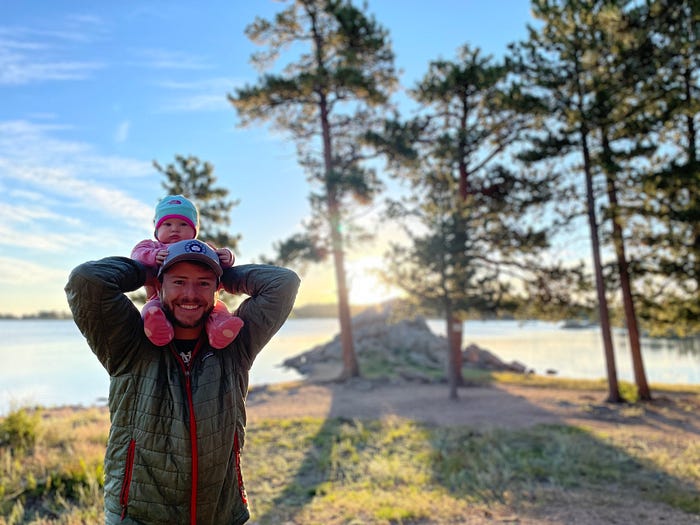
    Daniel recommends taking big tasks one small step at a time — particularly when dealing with being a parent!

    You’ve had an interesting background with experience in environmental technology startups and using your technology background to solve civic problems. Can you go into a little more detail as to your experience?

    Certainly. The past few years for me have been about exploring different sectors and how each one approaches problems, which I’ve found to be quite similar in many cases. After finishing school, I started my career in consulting and primarily worked with federal agencies. I then transitioned to local government and spent a few years working on public-private partnerships with entrepreneurs and startups. For the past few years, I’ve been working in startups myself. One of the most interesting things to me has been observing the different tools and approaches that each sector has for the same problems. When I first started out, it seemed like many groups were working in isolation, but now there is so much more collaboration. It’s been an enjoyable and insightful experience.

    When you look at some of those tools and approaches, do you see much overlap in how they solve problems, or are they really very specialized for those sectors?

    There is a great deal of overlap between different sectors, and I have seen many creative individuals who have worked in one industry take their experiences and apply them to another. One example of this is when I worked with the city of San Francisco, where I ran a startup accelerator program. This type of program was not traditionally associated with government work, but we saw great success with it. In fact, during my time there, we were in the process of turning the program into a non-profit organization, which would allow us to scale it more effectively across different cities and even across the country.

    Overall, I have been surprised by the fluidity between sectors and the ability of individuals to take their skills and experiences from one industry and apply them in new and innovative ways.

    Normally, innovation typically starts in the private sector and then moves to the nonprofit sector before eventually being picked up by the government. Have you also observed this pattern?

    The extent of innovation across different sectors can vary based on what is meant by “innovation.” While a lot of the latest AI excitement has been driven by companies in the private sector, a ton of early technology research is conducted in government labs when the innovations aren’t yet commercializable, and there are people in government who work to incorporate AI and other new tools into their systems early on.

    I have noticed that different sectors tend to foster different types of innovation. In my experience working with local government, I found that individuals tended to be more resourceful in solving certain problems due to government constraints such as limited, fixed-pool funding or difficulty in hiring new staff. These constraints can lead to innovative solutions that may not be thought of in a different environment.

    Interesting.

    I believe there is a growing interest in exploring new and diverse approaches to problem-solving. One thing that has become clear is that each sector has unique strengths and capabilities. Generally, most Americans would prefer the government not to intervene in matters that can be handled by the market. Consequently, the government is left to tackle complex issues, such as externalities and negative impacts on society that the market does not address. These problems often require collaboration between the government, non-profit organizations, academic groups, and companies to find a solution.

    My perception of what innovation entails has changed over time. Initially, I associated it with technological advancements. However, my understanding has evolved to encompass various methods, such as engaging with users or customers, and internal changes within an organization. I believe these can be equally transformative.

    Tell me a little bit more about your current company, Upstream Tech. Can you talk about some of the problems that you’re working to solve?

    Sure! As a company, Upstream Tech, we have two products or services, and the one I focus on is called HydroForecast. Our main goal is to provide information about water availability and risk, specifically on how much water will be available in dams, reservoirs, or streams in the future. This is crucial because water is becoming more volatile in many places, especially in places like California as seen after this last winter.

    Our aim is to help people who operate water resources, such as municipal water utilities or companies that produce agriculture, by giving them more information sooner. With this, they can make better decisions and not be caught off guard by severe droughts or floods. By addressing some of these risks, we hope to contribute to a better water management system.

    So basically your team would take a look at the data and it would show them the weak spots in their water management plan?

    Sure, we provide valuable information to water supply utilities, cities, and farms about their water resources. For example, if a utility has a reservoir that provides water to cities, farms, and ecosystems with fish, we can tell them how much water is expected to come into the reservoir over the next few days and weeks. With this information, they can plan the appropriate amount of water to release, ensuring they have enough for dry periods and avoiding the risk of flooding during storms. Our goal is to help them make better decisions and mitigate water-related risks.

    What are some of the ways that water flow and quality affect business, and what challenges and opportunities exist in this space?

    Definitely. I was at an event earlier today with companies that are concerned about water risk in their operations. These range from agricultural producers and beverage companies to tech companies that use water to cool their data centers. Water used to be something businesses could take for granted in many places, but that’s not the case anymore. Many companies are worried about whether they’ll have enough water to run their operations in the future, whether that’s irrigating crops or producing the wafers in silicon chips for semiconductors, which is super water-intensive. They want to make sure they have enough water across their entire portfolio of operations and are also concerned about flooding if there’s too much water at any one point. Cities and utilities that operate large dams and reservoirs also face the challenge of balancing water usage to avoid overtopping and flooding. Water is great in the right quantities, but keeping it within those bounds is becoming harder and harder.

    Whether water related or on a larger scale, how can individuals and companies work to build resilience?

    I think that’s a great question, and it’s clear that over the last few years, we’ve all become more aware of the many risks and challenges out there. From my perspective, I believe there are two key things we can do to prepare for the unexpected. The first is to identify potential risks and vulnerabilities, and then analyze them thoroughly to develop strategies to mitigate them. The second is just recognizing that there will always be things that catch us off guard, like the COVID-19 pandemic.

    Small changes add up to a big difference.

    I remember when my boss told me that an epidemiologist friend had predicted that 40 to 50% of the world’s population would be affected, and it was almost unimaginable at the time. That’s where building resilience and adaptability become crucial skills. It’s true that we may be exhausted from all the changes, but I also believe that we’re now much stronger and more resilient than we were just a few years ago.

    What are some ways that you’ve tried to build resilience in your own life and within your family?

    I believe that small changes can have a big impact, and this idea applies to my own personal growth as well. I’ve had a goal for the past five years of meditating for 10 minutes each day, with the hope that it would eventually grow into a more extensive practice. However, that hasn’t happened yet. Instead, I’ve found that taking small pauses throughout the day to take deep breaths and exhale has been more helpful for me. I try to find these small ways to be mindful and present in the moment, rather than feeling like I have to be the perfect, healthy, mindful person all the time. Whether it’s choosing roasted veggies over fries or taking a moment to breathe deeply, I focus on making small, doable changes in the moment rather than adding a thousand things to my to-do list. If I don’t have the energy or willpower to do better in that moment, I remind myself that it’s okay.

    It seems like it comes down to two different ideas that both focus on smallness. The first is just breaking up a big task into small manageable steps and conquering those small steps. The second is taking small moments and working to make the right decision in small moments, as opposed to focusing on a big long-term change or something drastic or radical.

    Yes, I think that’s right.

    What’s next for you?

    The biggest upcoming change in my life is that my wife and I are expecting again this summer. Going from not being a parent to having one kid was a massive shift, not something that could be accomplished with small changes. However, my wife and I were both intentional about keeping hold of our individual identities while still being present parents and maintaining our relationships with friends and hobbies. Figuring out how to balance being a parent and spending time with my family while also pursuing my interests and career goals will be a big challenge, especially with two kids instead of one. I recognize that other families have even more children, but for me, this change is significant. Ultimately, I believe that finding that balance and making sure to take care of myself and my family will be key.

    Thanks so much for this chat, Daniel. I think you’ve given us some great food for thought — and congrats on baby number two! If someone wants to contact you and talk more, what is the best way to reach you?

    They can find me here on LinkedIn. I’ve also recently started a newsletter on making your home more climate friendly and resilient. Check it out at Welcome Home Guides!

    Want to learn more? Go more in depth here:
    Welcome Home Guides

    Upstream Tech

    University of Notre Dame Rugby

  • Turning Waste into Electricity and Clean Water: An Inside Look at Aquacycl

    Turning Waste into Electricity and Clean Water: An Inside Look at Aquacycl

    Recently, I had the chance to sit down with Juli Iacuaniello, the Marketing Director at one of San Diego’s most cutting-edge startups, Aquacycl. Focused on providing modular, affordable wastewater treatment through an innovative modular, microbial fuel cell system that turns waste into electrical energy and clean water, this company is on the front lines of building resilience into our communities, society, and infrastructure.

    In the interview below, we explore the ideas of building resilience into a company culture and what it took to navigate through COVID, Aquacycl’s biggest successes, the San Diego startup scene, the role wastewater treatment plays in water access and the climate, and the importance of creating a product that isn’t just environmentally sound, but economically sound as well.

    If you’d like to see more about Aquacycl and their mission, you can check them out on LinkedIn or their website. You can also reach out to Juli personally if you’re interested in learning more!

    I’m chiefly interested in the concept of resilience — personal, communal, and societal. What does resilience mean to you and how does it align with Aquacycl’s mission?

    Our mission is to provide sanitation and clean water for people that don’t have it. There are over two billion people in the world that have no access to sanitation that is safe and reliable — more people have access to a cell phone than a toilet! When Aquacycl was started, the mission was to address this sanitation and clean water gap.

    In the global south especially, a lot of people don’t have the infrastructure for sanitation or clean water. Where we want to be in three, five, or seven years is to be able to provide modular, rapidly deployable mobile or permanent systems for sanitation. People that are displaced from natural disasters are oftentimes put into horrible situations, into refugee camps where they don’t really have the amenities that you or I would think of on a daily basis. Being able to rapidly deploy modular systems that can address that gap is one opportunity to build resilience in the face of disaster in areas that need it the most.

    We were founded with a goal of off-grid and off-energy sanitation. Eventually (and I say eventually because we aren’t quite there yet) that’s where we want to be. We aren’t rebuilding the old centralized model. We aren’t just replacing the old systems with how they were build 50 years ago. We are actually coming in with new technology that can address the problems in front of us without adding to the problem, without requiring additional infrastructure, and without requiring huge capital investment to build out the new infrastructure. We can build this new technology and infrastructure in a way that can reduce the impact of natural disasters and the sanitation gap, and build resilience in communities that are most vulnerable to natural disasters around the world.

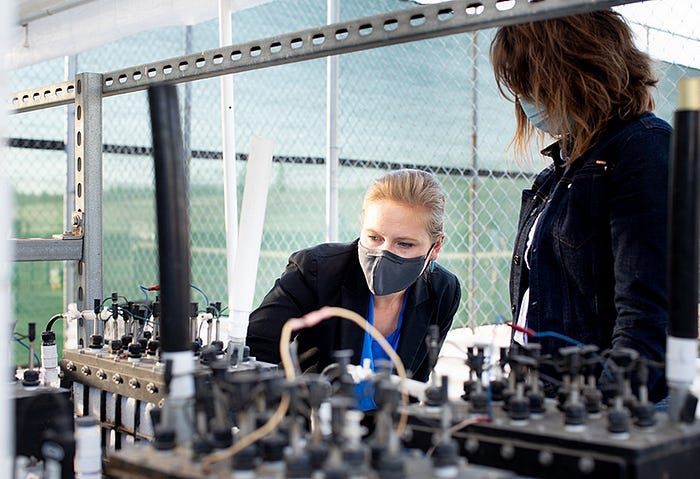
    Aquacycl CEO, Orianna Bretschger, examining their technology.

    Startups are notoriously vulnerable to risk. Can you talk about some of the obstacles that you have overcome thus far? How have you worked to build resilience within your company culture to continue to identify, as well as overcome, potential setbacks?

    I’d say the number one obstacle was COVID. I had joined maybe six months before COVID hit, and everything started shutting down. Schools shut down, businesses were closing — that was a really challenging time for AquaCycl. We were in the middle of raising money! We were trying to get customers and we were calling on companies that also basically stopped everything.

    Our CEO and founder, Orianna Bretschger, is tremendous. She responded very quickly to try to keep the company alive. During that time, Aquacycl pivoted a little bit, since we now had excess capacity — we used our lab space to make hand sanitizer and get it to first responders. And the several of us who had been furloughed while trying to understand what was happening believed so strongly in the mission and vision of the company that we actually kept working to try and bring it to fruition!

    But other than that, since there was a couple of us on the sales and marketing team that were still working through the shutdown, we actually ended up closing our first commercial contract.

    I think that the reasons we were able to pull through the COVID shutdown were because we believed so much in both the mission of the company and the value of the technology — both its industrial value and the long term value.

    Over the last couple years, we’ve closed our Series A and used this money to prepare for the next phase of growth. We are moving from startup to scaleup, so we have brought in new team members who can put in place the processes that will allow us to grow — but we’re making sure that we still have a culture of putting the customer first and getting things done quickly.

    Would you say that part of what helped Aquacycl get through the COVID pandemic was a hyper focus on the company’s vision and mission statement?

    Yes, absolutely.

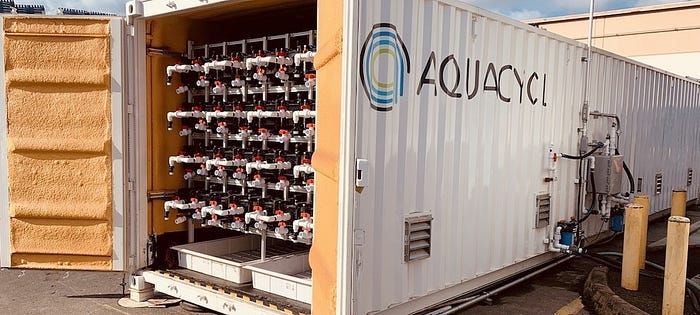
    I think the people who work at Aquacycl are excited to be here because of the vision and because of the game changing technology we are building. This is cool technology where you take, these little batteries, basically, and the microbes are both cleaning the water and producing electricity. I think people here really are excited about the technology, and they’re excited about the mission.

    I’d also say people like working here because, while it’s a small team still, it still has great comradery. We really haven’t had much turnover at all. There have been a couple people that came in and out, but for the most part, our team has stayed pretty consistent.

    So I think it comes down to the mission, the technology, and the people who are here. We’re really careful about hiring the right people, and hiring for fit rather than necessarily hiring the absolute most qualified. Our CEO is extremely careful about hiring for cultural fit within our company.

    https://cdn.embedly.com/widgets/media.html?src=https%3A%2F%2Fwww.youtube.com%2Fembed%2FIxsG8G0YTEE%3Ffeature%3Doembed&display_name=YouTube&url=https%3A%2F%2Fwww.youtube.com%2Fwatch%3Fv%3DIxsG8G0YTEE&image=https%3A%2F%2Fi.ytimg.com%2Fvi%2FIxsG8G0YTEE%2Fhqdefault.jpg&key=a19fcc184b9711e1b4764040d3dc5c07&type=text%2Fhtml&schema=youtubeTake a deeper look into Aquacycl’s technology with this video!

    Can you talk about your biggest success that you’ve had with Aquacycl thus far? What helped you achieve it?

    There have been several significant achievements for us! From a commercial standpoint, one of our biggest successes has been our partnership with PepsiCo, where we are working at their site to treat wastewater from their process. They have been a tremendous partner for us. After an initial pilot, we expanded to a multi-year commercial contract, with clear KPIs that track system performance, environmental impact and cost savings. Another big success for us last year was expanding into new industries, notably hydrocarbon remediation, where we validated that we can remove really challenging compounds.

    I’d say another success is the recognition that we’ve received from various awards and media, which has increased the visibility of what we are trying to achieve. Some of these included our CEO receiving the Cartier Women’s Initiative Laureate in STEMImpact Company of the Year by Startup San Diego, a nominee for Fast Company Next Big Things in Tech, and many others. We have also received coverage in Forbes and Fast Company, and various trade and business journals. These successes are a testament to our progress as a small company and provide the validation and social proof that our product is excellent, as well as customer satisfaction validation.

    We’ve had amazing support over the past few years that has helped us to grow the company to where it is. We’ve participated in a number of accelerators, including Imagine H20Xylem Innovation LabsGoogle for Startups100+ Accelerator (sponsored by AB InBev, The Coca Cola Company, Unilever and Colgate-Palmolive), Unreasonable ImpactCreative Destruction LabPlug and Play, and The Circulars. These have been key to our successes, as they help connect us with investors, customers and potential channel partners.

    San Diego is well regarded for our burgeoning biotech scene. Does being part of such a community help as you work to grow your company and innovate in your own space? Have there been any surprising drawbacks?

    No, it’s a good question, but I think that Orianna (our CEO) could probably provide a more detailed response. From my perspective, however, the San Diego community has been incredibly supportive of Aquacycl. I first met Orianna about four years ago at a pitch event organized by Hera Labs, which is now known as Stella. They do a lot to support female entrepreneurs. Orianna won the pitch contest, and went on to win the San Diego Angel Conference, where Aquacycl was the first company to secure seed money and visibility.

    The San Diego startup community, although not exclusively focused on biotech, has been a tremendous support to us. We are a biotech company, but we are not a traditional one. Nonetheless, the community has shown a strong desire to help startups grow by providing connections and inviting us to events. Overall, I cannot speak highly enough of the startup community in San Diego that has supported us!

    A look at one of Aquacycl’s modular wastewater treatment service units.

    Global water use is suspected to grow between 20–50% in 2050. Can you talk about Aquacycl’s role in helping mitigate the risk that dwindling water access poses to our communities?

    The big issue in the West is water scarcity, and I believe our solution has the potential to address this challenge. By treating water at the source, we can enable water reuse and reduce the amount of blue water required, which in turn alleviates water scarcity for everyone. Industrial companies are heavy water consumers, so reducing their water footprint can have a significant impact. For instance, clean water can be reused for non-product contact applications such as washing floors, toilets, and tanks. This approach reduces the need for freshwater while addressing concerns around food safety.

    Water scarcity is a significant driver for us, and it underscores the need for resilience in ensuring that water is available for everyone. We must prioritize water availability to avoid situations where people are forced to relocate because of water shortages. While small actions such as turning off the tap while brushing teeth can help, large-scale water conservation efforts by companies can make a significant difference.

    Looking to the future, what do you see as the future for Aquacycl? Are there any specific opportunities and risks that you are looking to navigate in the future, both near and long term?

    In the near future, our focus will remain on expanding our industrial customer base since we believe that’s where we have the strongest value proposition. However, our long-term goal is to return to sanitation and distributed sanitation, and we’re actively working towards that end. The challenge that our customers face is that while they have funds allocated for their operations, waste management is a necessary expense. The real challenge lies in meeting their aggressive sustainability goals related to water and climate, which requires reducing greenhouse gas emissions.

    Our aim in the next two to three years is to achieve a stronger penetration rate and quantify our contribution to improving water quality. Currently, a vast amount of wastewater, ranging from 56% to 80%, depending on the source, is discharged untreated into the environment. This is a significant environmental problem since the wastewater sector is already responsible for 4 to 5% of global greenhouse gas emissions. Our goal is to address this issue and make a tangible impact by expanding our reach.

    We’re also looking to expand into the European market, replicating our North American success. We see many opportunities in multiple verticals and waste streams, including pharmaceutical and hydrocarbon wastewater.

    Finally, technology plays a crucial role in our growth plan. Our CTO (who actually just walked by!) has a roadmap for the development of our technology, and we’re working hard to make it a reality.

    Aquacycl’s value proposition seems to be that not only is it greener and more efficient, it saves companies money. Can you talk about the importance of not only creating environmental resilience, but economic resilience as well?

    That’s a really insightful question — all too often we focus solely on the environmental benefits of a particular initiative, and fail to take into account the economic factors that drive businesses. Ultimately, our clients are in the business of generating profits for their shareholders, which is the fundamental principle on which our society is built. In our numerous conversations with various companies, we have found that unless an initiative can deliver both economic and environmental benefits, it cannot be effectively marketed on the basis of environmental benefits alone. While there may be some niche areas and technologies where the environmental benefit alone can drive sales, for the most part, companies require a solution that delivers operational savings as well as sustainability benefits.

    This approach is driven by the fact that if an initiative costs a company a significant amount of money without delivering a commensurate return, it will be viewed unfavorably by investors. In the consumer packaged goods (CPG) industry, which is known for its competitiveness, margins are crucial. If the margins start to slip, investors will take note, and this could have serious consequences for the company’s long-term viability. Therefore, any sustainability initiative must deliver a dual benefit in order to make sense from a business perspective and ensure the longevity of the company.

    Want to learn more? Go more in depth here:

    Aquacycl Website

    Aquacycl LinkedIn

    Aquacycl and PepsiCo Case Study

    Aquacycl in Forbes

    Aquacycl in Fast Company

    Circular Economy Overview