Tag: circulareconomy

  • A 21st Century Solution to a 20th Century Problem: Talking Bioplastics and Early Stage Startups with Ravi Chawla

    A 21st Century Solution to a 20th Century Problem: Talking Bioplastics and Early Stage Startups with Ravi Chawla

    I recently had the opportunity to sit down with Ravi Chawla, a postdoctoral fellow at Scripps Research, who is currently in the very early stages of forming ChakraTech (formerly known as WheelBio). This company is dedicated to using microbes to make completely and naturally degradable bioplastics from greenhouse gases, potentially solving the problem of plastic pollution! He recently took third place in a pitch competition through Aquillius, and will be utilizing their lab space as he forms his company.

    Over the course of our wide-ranging conversation, we covered topics like the risks associated with forming a startup, pushing through difficulties with commercializing this product, and building a resilient industrial biotech scene in San Diego.

    It was a fascinating conversation, and a great opportunity to talk to someone at the forefront of both science and business, working to get a brand-new, innovative company off the ground.

    If you’d like to learn more, you can reach Ravi on his LinkedIn.

    I’m primarily interested in the concept of resilience – whether personal, communal, or societal. What does the concept of resilience mean to you?

    That’s an interesting question!

    The word resilience to me refers to the spirit of persevering in the presence of difficulty. To be resilient, therefore, means to prevail or succeed despite all the odds!

    Resilience is a profound concept in philosophy and psychology, embodying a character marked by persistence in responding to challenges or hardships. Often, individuals are not immediately aware of their own resilience; it becomes apparent through their actions and reactions over time. I am deeply inspired by individuals who exhibit perseverance and courage. Their stories of overcoming adversity not only resonate with me, but also fuel my own aspirations and strengthen my own commitment to face challenges with similar bravery.

    Achieving anything significant, particularly when it involves paradigm-shifting innovations, demands immense determination. And interestingly, resilience extends beyond personal tenacity; it is deeply rooted in the collective strength drawn from one’s support network and community. Therefore, it’s crucial to be in the company of people who offer unwavering support and encouragement during challenging times. This belief forms the cornerstone of my philosophy on resilience.

    Overall, resilience is a harmonious interplay between personal commitment and communal support, underpinned by strategic thinking, persistent action, and reliable execution, all directed towards a common goal.

    So seeing a vision, and then doing whatever it takes to get there.

    Yes, by going full force!

    I attended an Anglo-Vedic middle school in India, where I drew much inspiration from ancient Indian texts. I am often reminded of a powerful quote by the late 19th-century Indian Hindu monk Swami Vivekananda, “Arise, awake, and stop not till the goal is reached.”

    This quote, which was inspired by a shloka from the Katha Upanishad, continues to resonate with me.
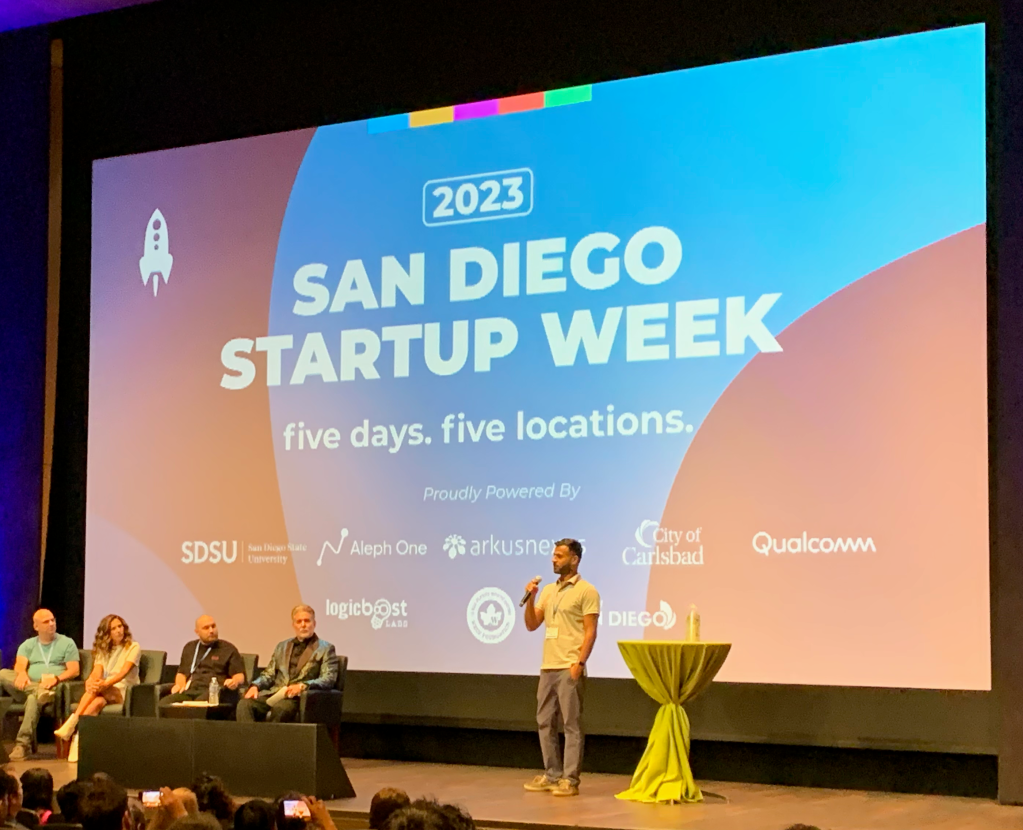
    Startup San Diego Pitch Competition Ravi Chawla, ChakraTech
    Ravi Chawla pitches ChakraTech’s innovative technology at San Diego Startup Week

    Your background is an interesting one. You’re from a small town in India but became a chemical engineer. How has this background influenced your career?

    Growing up in a small town was a formative experience for me. Limited opportunities translate into limited expectations and limited aspirations. My dad was just happy that I finished 10th grade.

    When I finished 10th grade, my dad brought me a job he saw in the newspaper for a position as a constable. I was like, “do I look like someone who could do that? I’m the biggest nerd that exists!” But I, somehow, have always had a determination to challenge the status quo and defy the norm. Perhaps, I get this trait from my mom, who I’ve always thought to be both fearless and a force of nature, and has always been a tremendous source of inspiration for me! Anyway, this drive led me to successfully persuade my family to relocate to a larger city, Chandigarh, that opened the door to more educational opportunities.

    After relocating to Chandigarh, I completed 12th grade and appeared for the engineering school entrance exams. My interests primarily lay in physics, chemistry, and mathematics. However, when someone suggested a career in chemical engineering, I was initially distraught. Even though I was preparing for engineering school, I had no understanding of what any of the engineering fields entailed. Among my peers, the prevailing belief was that chemical engineering involved extensive chemistry and rote memorization, with limited career prospects. This perception made me hesitant to pursue it.

    By a fortunate coincidence, Panjab University in Chandigarh had an outstanding chemical engineering program. Financial constraints led me to choose this path over the then-popular computer science or other engineering majors. Thanks to the program’s affordability and the scholarships I received, I could pursue my education. Surprisingly, I fell in love with the chemical engineering curriculum and education. It quickly became apparent that this was my true calling. I thoroughly enjoyed every aspect of it, and it continues to shape my approach to solving scientific and technical problems. In retrospect, my initial concerns were unfounded, as I stumbled upon my passion in a field I had chosen by chance!

    In my opinion, “success” is a delicate balance between determination and destiny. One has to attempt to create their own destiny, but then let nature take its own course. It’s actually a philosophy from a Hindu scripture, the Bhagavad Gita – you only have the rights to your efforts, and not the rewards or fruits of it. I think that is something that fundamentally governs me. Give it your best attempt, and then everything else is out of your control.

    Your biotech startup, ChakraTech, is still currently in stealth mode, but you have recently begun to pitch for fundraising, coming in third place at a recent pitch competition in San Diego. What can you tell me about your company so far?

    We are in early stages of our journey, and I can tell you in very broad terms about what we are doing and how we got here.

    The biggest thing that came out of the Industrial Revolution in the 20th century was the introduction of plastics. Plastics fundamentally changed the paradigm. It actually totally moved our society to where it is today – without them, we would not be here! Imagine life without milk containers, shoes, everything – everything has plastics.

    However, what was a boon for the 20th century is a bane for the 21st century. They’ve served an incredible purpose, but the truth is, these plastics are accumulating in our environment at an incredible pace.

    Growing up, my mom was always concerned about plastics entering our food chain through contact with food, and she preferred to use reusable containers made from materials such as steel, glass, and ceramic. It turns out her hunch was spot-on. Recent studies suggest that an average person is ingesting up to a credit card worth of microplastics every week! The full extent of how these micro- and nano-plastics affect our health and environment is still not completely understood, posing a concerning and largely unexplored risk.

    What we do at ChakraTech is emulate ancient microbial processes to create biodegradable plastics. Over billions of years, certain microbes have figured out a way to make a degradable plastic, or polyester. It’s actually a fat reserve for them! Similar to how we get fat and have love handles, for bacteria, they’ll end up making their own version of fat reserves – bioplastics. These bioplastics degrade completely in a short time, typically a year or less, and have the power to totally change the 21st century.

    Wow, that’s incredible. Is this a new discovery?

    No, this polymer is not a new discovery. The earliest reported sighting of this bioplastic polymer was actually from 1890 in a German textbook! Efforts to commercialize it since 1980s have faltered, struggling to compete with the economics of petrochemical plastics. Yet, the potential for scientific and technological advancement is vast — a direction I planned to explore in academica as a tenure-track faculty member. When faculty search committees didn’t embrace this vision, I remained steadfast and decided to pursue this opportunity through my own startup venture.

    Anyway, at ChakraTech, we are taking an innovative approach to make this bioplastic. To understand how, you need to understand what plastic is – a polymer is a chain of monomers, basic repeating units. How does a microbe or bacteria turn monomers into the polymers we want? They transform carbon from food source into “fat stores”. Historically, expensive carbon source such as vegetable oils have been used as carbon source, not only elevating expenses but also threatening food security in low-income countries. This approach renders the technology unaffordable and inaccessible to much of the world.

    Well, what else could serve as a great source of carbon? Greenhouse gases. That’s where we come in –  we’re going to take these microbes in giant vats, feed them greenhouse gases and get them to create bioplastics. What’s interesting about this is that it solves two problems at once. First, we can repurpose the carbon emissions, namely the excess carbon dioxide or methane that is emitted into the atmosphere, for manufacturing various types of materials and chemicals. Second, the bioplastics degrade naturally! This positions us to bridge two historically very different industry segments – biotech and cleantech/climatetech.

    The reality is that plastics aren’t going anywhere. Neither are the carbon emissions for the foreseeable future. But perhaps our technology can help to solve two huge environmental challenges at once!
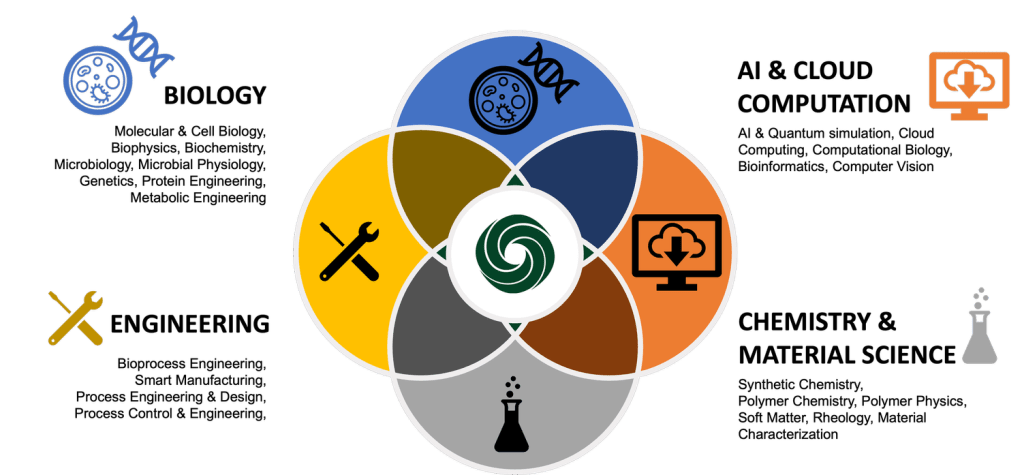
    Marrying science and engineering, Ravi hopes to scale bioplastics in a cost-effective way.

    And no one else is working on this?

    Various companies, some for over a decade, have concentrated on solving different aspects of the technology and challenges. While they have achieved some progress, most of them are yet to realize their full potential. This, I believe, is largely due to an insufficient integration of science and engineering.

    In my experience, the distinct training backgrounds of engineers and scientists often lead to communication barriers, which translates into insufficient technological advancement. Bridging this gap between basis sciences and engineering is therefore vital for effective collaboration on complex projects. Particularly in the case of bioplastics, biological systems don’t necessarily conform to engineering constraints in terms of scalability. This underscores the fundamental need for an integrated approach, combining process engineering with biology and chemistry, to develop bioplastics in a cost-effective manner.

    Fascinating. I don’t know too much about microbes, but I’ve seen a few companies lately using microbes in incredible ways. One such company is up in Escondido, Aquacycl, and they use microbial fuel cells to treat wastewater. The microbes generate electricity and clean water as part of that process.

    Is microbial engineering an emerging field? Or has the science simply progressed enough that companies can begin reaping the rewards from microbes in a cost-effective way at scale?

    Microbial engineering and biomanufacturing have been around for some time, but they are far from a mature industry, and have a unique set of challenges – including a capital-intensive research and development budget. While still in its infancy compared to the petrochemical sector, it is the future of next generation of sustainable manufacturing!

    If you really want to put a start date on it, things started when Alexander Fleming discovered penicillin in 1928. And if you want to be even looser with it, people have been fermenting things pretty much forever! The biotech industry, however, really took off in its current form in the late 1970s with the advent of molecular biology tools, notably when Genentech produced insulin using recombinant DNA technology.

    There are different kinds of microbes. There are fungi, bacteria, archaea…and companies have been using them at scale for a while now. One of the well-established companies in this field, Genomatica, based in San Diego, utilizes E. coli to manufacture the precursors for nylon and various other products. The tools and the technology to scale them have actually been available for a while now!

    So the tools exist, and companies are using them.

    Yes, but there are still significant challenges.

    Microbes are natural – they exist in nature. But how do you engineer them to perform their best? How do we get it to do what we want it to do, not what they want to do? We want them to produce the maximum amounts of our product, whatever that might be, not what the microbes wants to produce. Microbes have billions of years in their favor. It simply boils down to finding a way to get your microbes to do what you want them to do.

    Yet another challenge has been to build a robust scale-up framework, so that the microbes behave in the same way at an industrial scale as they do in the lab.

    Ravi works to scale the microbes from the lab to an industrial setting.

    You mentioned the environmental pushback with plastics, and how a biodegradable plastic can help solve that problem. But there’s another issue with plastics, which is that they’re endocrine disruptors. Does bioplastic solve this problem?

    Great question!

    Honestly, I think that bioplastic is our best shot at solving this problem. Based on the 2018 EPA statistics, less than 8% of things get recycled. The plastic itself isn’t getting recycled like we think it is! Moreover, recycling itself generates microplastics, which end up in the soil or in the ocean. If you eat a fish that’s has consumed microplastics in the ocean, these microplastics will enter into your body. Same thing when you drink soda out of a plastic bottle. Plastics used in food packaging are a source of microplastic contamination, gradually leaching tiny particles into our food.

    Our truly degradable bioplastics breaks down into its simplest, harmless form (technical term is monomers) in a relatively short time span and our bodies are able to tolerate this! It’s not like the plastic in a soda bottle which our bodies don’t make. Our bioplastics are biocompatible, since our bodies already make the base unit that make the bioplastic. Interestingly, there are already implants and sutures made out of this bioplastic since it’s not foreign to our body!

    As an extremely early stage startup, you are prone to lots of risk. What are some obstacles you are currently navigating, and what are you doing to create resilience in this fledgling company?

    That’s a good question! Transformative endeavors inherently carry risks, yet it is these very ventures that redefine our world.

    In the realm of hardtech start-ups, we typically encounter three broad risk categories: scientific/technical, team/execution, and market dynamics.

    Firstly, the bioplastics technology we’re focusing on, initially commercialized in the 1980s, has evolved significantly. Earlier, its adoption was limited due to high production costs. Our current objective is to refine this technology scientifically and technically to make it more cost-effective, thereby unlocking new opportunities.

    Next, regarding team and execution, we’re consciously assembling an interdisciplinary team with deep expertise in science, engineering, material science, and business development. It’s essential to achieve a harmony between scientific rigor and robust business strategy.

    Lastly, market risks can’t be overlooked. Past instances in this industry reveal that premature scaling in absence of market demand or acceptance can lead to failure. Over 40% of start-ups fail due to inadequate product-market fit, a trend even more frequent in our particular field. Hence, we’re prioritizing product development and forging key partnerships to ensure our product meets market needs.

    What is next for you, personally, workwise, and otherwise?

    I’m looking into transitioning into doing this full time – if you work on ideas part-time, the company will stay part-time.

    There is burgeoning start-up scene in India, and I have considered moving back to India to pursue a startup related to bioplastics or other independent ideas. But there are currently other bottlenecks in India which would take longer to resolve. Certain tasks might take five years to accomplish there, tasks that would only require a year or two in the US, especially the research and development (R&D) part. Consequently, I’ve learned to exercise patience in these situations. US has an excellent ecosystem for supporting tech start-ups, so it is a great place to pursue innovation and works out favorably for us.

    At this early ideation stage, our focus is on establishing a strong foundation that encompasses both technical and business aspects, as well as assembling an interdisciplinary team. We have an impressive global team of scientists and engineers working on this idea already. Friends and former colleagues in the US, Europe and India who have decades of professional science and engineering experience are helping us too. We are actively working to get advisors on-board with a diverse range of experience, spanning science and technology, government and international policy, business, and finance.

    You mentioned deciding on the United States vs India for some of this, and have people all around the globe who want to help. Can you talk about why you’re in San Diego, and any pros or cons that you see in this community?

    I think there’s a very big spirit of kindness and generosity in the greater San Diego area, which resonates deeply with me. Furthermore, people are really environment conscious and there is a great ecosystem to support the startups.

    San Diego is one of the top three cities in the US to pursue startups, especially in technology and biotech sectors. However, it appears to me that compared to other major hubs such as the Bay Area, NYC, or Boston, we are still lagging in terms of the overall support and funding opportunities for hardtech startups. In addition, there are not many startups in the field of industrial biotech, but I am hoping the success of companies like Genomatica will pave the path for others to follow.

    Well Ravi, I hope that you do succeed. What is the best way for someone to contact you if they’d like to learn more?

    Thank you. You can find me on LinkedIn! I check it pretty often, so I will be responsive.

    Want to learn more? Go more in depth here:

    Ravi Chalwa LinkedIn

    Scripps Research Profile on Ravi Chawla

    ChakraTech Website

    ChakraTech LinkedIn


  • Planting an Urban Forest: An Interview with Tree San Diego

    Planting an Urban Forest: An Interview with Tree San Diego

    When you think of city management and design, do trees come to mind?

    The good folks at Tree San Diego think so, and think that you should too!

    Tree San Diego is an urban forestry nonprofit who works to increase the quality and density of San Diego’s urban forest — and they have some thoughts about the importance of urban trees and how they contribute to a resilient community.

    Trees, and by extension, the “urban canopy” (the layer of leaves, branches, and stems of trees that cover the ground in an urban environment when viewed from above), have an important role in city design. They make cities cooler, quieter, more desirable, more efficient, and safer — and therefore, more resilient. San Diego has recently announced a plan for a dramatic increase in our urban canopy in hopes of reaping some of these benefits — and I turned to the experts at Tree San Diego to find out more.

    In this interview, you’ll learn all about why we need to have trees in our urban spaces, not just on our trails, as well as the number of benefits that urban trees and urban forests provide! You’ll also learn how Tree San Diego works to select their species, how they account for disease and pests, and the role of trees in urban planning.

    If you’d like to learn more about Tree San Diego and their mission, you can check them out on their website. I’d also like to give a special thanks to Elekra Fike-Data, Chris Klier, Chuck Morgan, and Kurt Peacock from Tree San Diego for their help and expertise with this interview.

    What does the concept of resilience mean to you and Tree San Diego? And how are urban trees part of a resilient community?

    Resilience is the ability to recover from problems or conditions that are not ideal. We at Tree SD are choosing tough, low to moderate water-use tree species to better prepare for the warming, drier climate we will face in the coming years.

    San Diego hopes to increase their urban canopy to 35% of the city by 2035. Can you talk about the benefits of having such a large, developed urban canopy, and what that would mean to the average resident?

    Hitting the 35% cover target will improve the quality of life for everyone in San Diego! Some of the immediate benefits include lowering temperatures, reducing pollution and storm water runoff, blocking ultraviolet light more effectively. Residents will want to be outdoors more, more active in recreational activity and lowering heating and cooling bills, which burns less fossil fuels.

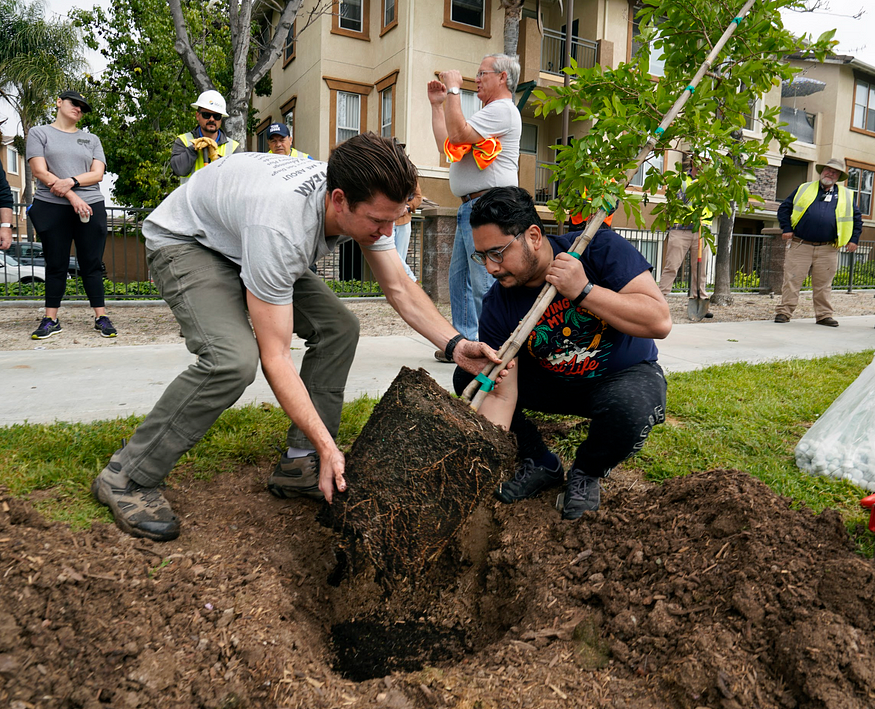
    Community Planting Day! (PC: Tree San Diego)

    Many folks associate San Diego (and, more broadly, Southern California), with palm trees — which are actually a non-native species! Can you talk about your process of choosing which trees (and where) to plant?

    Palms may be iconic, but they do not provide the ecological benefits that broadleaf or evergreen trees provide. They require annual maintenance which makes them more expensive to maintain than other trees.

    We base our tree selections on the soil volume available and the utility situation, such as overhead wires, to prolong the useful life of trees. Microclimates can also affect what we select — we need to keep in mind dimensions like sun vs. shade, soil grade, and proximity of buildings and other fixed infrastructure to the site, ultimately striving to maximize the size of any tree in a given site. The bigger the tree can grow, the more benefits it provides!

    San Diego is known for being an extremely biodiverse area, and there are a number of extremely unique environments in the county — from desert, to mountains, to ocean, just to name a few. Can you talk about the importance of wilding the urban environment? Have you received support from the outdoors community for your initiative?

    Wilding and rewilding our urban environments are important since it improves health, provides areas for recreation and relaxation, improves biodiversity, and expands our wildlands and ecosystem restoration. Here in San Diego, we see examples of this in our local estuaries from Carlsbad, to Carmel Valley, and Imperial Beach. Balboa Park is another example, which has both wilderness areas and more formal, landscaped areas. The various cities within San Diego are focusing now on more “plantscaping,” and adding trees to our urban areas. In fact, in small open areas around the city, local officials are now looking to create pocket parks!

    Planting an urban tree in Caesar Chavez park! (Photo: Tree San Diego Facebook)

    Water use is always a major concern for any SoCal resident. How does planting more trees affect a city’s water and usage?

    Planting trees uses a lot of water, especially during the establishment period. However, I believe the benefits gained with planting more trees far outweigh the additional water needed. For example, a tree cover will save 11,000 tons of soil annually in a medium sized city. A tree-shaded, air conditioned home can improve its efficiency by 10% and saves up to 34% of annual costs. Trees planted in the right place for a home can reduce heating costs up to 25%. Trees are natural air conditioners, cooling the air through transpiration (how plants evaporate water). Trees improve real estate value by 1% of sale price. Trees reduce and mask noise with white noise. One acre of trees will provide enough oxygen each day for 18 people to breath, while, at the same time, absorbing pollutants and filtering particulates. Trees planted in parking lots can reduce the ambient temperature by 3% and car interior by 30%. 100 mature trees intercept 210,000 gallons of water per year, allowing cities to spend less money on storm water control and keeping water pollution out of our estuaries, rivers and ocean. The list of benefits goes on and on!

    On the campus of UC San Diego, there are 27,000 trees. These trees sequester 7,560 tons of CO2 annually, and remove 6,210 pounds of pollutants from the air. A study conducted by the human-environment laboratory of the University of Illinois at Urbana Champaign concluded that a tree-filled community recorded a lower incidence of violence and vandalism than a community that was less forested. Additionally, trees can lower stress and help provide speedy health recovery. The benefits are monumental!

    Meanwhile, the city of San Diego is working to be water independent by recycling water. By the end of 2035, nearly 50% of San Diego water will be provided by taking waste water and purifying it to high-quality drinking water, and will actually cleaner and safer than our present drinking water. You can learn more about this initiative here. So there are a lot of things at play!

    You also run a project that diverts end-of-life urban trees away from the wood-chipper/landfill and towards other products. Can you talk more about the success of this program, and the difference between what happens to a tree in this program vs a normal urban tree?

    The Treejuvenation project was a small pilot that really started when we realized how many exotic trees are grown in the temparate San Diego climate. Once these trees reach the end of their life, they can be collected for their viable wood. The urban forester now thinks about what trees should be planted on a longer scale — not just thinking of planting the tree for now, but thinking about the end of life, and planting trees that can eventually turn into desirable lumber. As another benefit, the tree care industry strives to ensure that urban trees grow as straight as possible which makes them ideal for harvesting for lumber as opposed to being cut up and dumped in the landfill or chopped into firewood!

    What do you see as the future of the tree in urban planning and design? Have you seen an uptick in support from governments and planners in including more environmental elements such as trees in new developments?

    Trees are only increasing in importance for urban planning as we move forward into a changing climate. Many new developments have trees and environmental elements as a focal point, rather than an afterthought. This is a trend that we expect to see throughout urban planning, especially with support and funding opportunities from government and other stakeholders.

    How are you helping build resilience into Tree San Diego? What is a major obstacle that you have overcome?

    Tree San Diego is building organizational resilience through diversifying funding sources, strengthening partnerships, and growing to meet growing needs. While not unique to our organization, limitations related to COVID-19 were a major challenge. Tree San Diego prides itself on connecting and working with the community, but during the height of the pandemic we were unable to work face-to-face with folks. Instead, we adapted our programs, conducting our training virtually and delivering trees to be planted at individuals’ homes rather than community planting events.

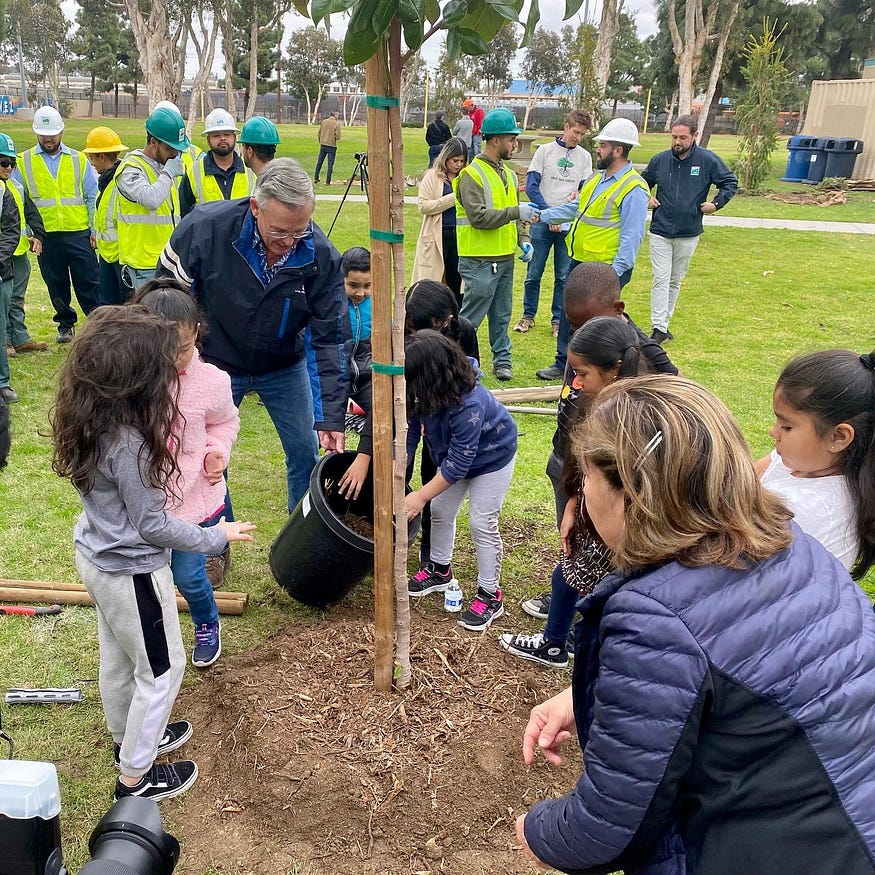
    (Photo: Tree San Diego Facebook)

    Can you talk about your biggest success so far as part of Tree San Diego? What helped you achieve it?

    Tree San Diego was recently awarded a federal IRA Urban Forestry Grant to continue planting trees, training candidates through our Treejectory workforce development program, and building a regional urban forestry management plan. This $2 million grant award will allow us to bring the benefits of trees to thousands of people while empowering communities in priority populations zones to grow and care for a newly planted urban forest.

    I know you partner with a number of groups around San Diego. Do you have plans to partner with urban forestry groups outside of San Diego?

    Yes, we will work alongside the US Forest Service, CAL FIRE, and other NGOs in California to achieve our goals of building a greener future.

    What is next for Tree San Diego?

    Tree San Diego will embark on a path to expand our impact, influence, and statewide partnership. As our team plans to celebrate the organization’s 10th anniversary in 2024, we are currently building models to broaden our shared urban forest and plan for sustainable urban forestry management throughout the region.

    What are the best ways for people to learn more about, or get involved with, Tree San Diego?

    Get involved and stay in contact with our team by joining the TSD Leaflet Newsletter, signing up for Tree Steward training, becoming a Terrific Tree Member, and donating to the cause.

    Want to learn more? Go more in depth here:

    Tree San Diego Website

    Urban Tree Canopy Overview

    City of San Diego’s Forest Management Programs

    Get a Free Tree from the City of San Diego!

    City of San Diego’s Tree Canopy Plan

  • Building a Sustainable Blue Economy: Resilience Insights from the Port of San Diego

    Building a Sustainable Blue Economy: Resilience Insights from the Port of San Diego

    I recently had the chance to speak with Port of San Diego Board of Port Commissioners Chairman Rafael Castellanos about the Port’s role in promoting the burgeoning Blue Economy —using the ocean’s resources to build a portfolio of businesses that deliver social, environmental, and economic benefits. Through their Blue Economy Incubator, they’ve managed to help support a number of early-stage, ocean-based startups looking to develop innovative solutions to some of the most pressing environmental challenges.

    In this interview, you’ll learn about the future (and challenges!) the Port of San Diego sees for ocean-based businesses, how the Port of San Diego balances economic development with environmental concerns, and some of the startup successes that have emerged through their Blue Economy Incubator.

    If you’d like to learn more about the Port of San Diego, their incubator, and their mission, you can check them out on their website.

    I’m chiefly interested in the concepts of resilience — personal, communal, and societal. The Port of San Diego is such an integral part of our community’s economic development and life. What does the concept of resilience mean to you and to the Port?

    San Diego Bay has given countless gifts to our region’s people long before any of us were here. As early as 12,000 years ago, the Kumeyaay people nourished themselves with seafood from the bay. And, once considered the tuna capital of the world, the bay continues to nourish us, all while the chapters of history have unfolded. Our beautiful natural harbor and deep-water port has seen people, nations, and industries come and go. Its resources are vast and rich, and we bear a special responsibility to make sure it continues to thrive and provide for all who depend on it, for the environment itself, and for future generations.

    Resilience for us means protecting, preserving, and enhancing the resources of San Diego Bay for many generations to come. We also strive to provide economic vitality and community benefits. We accomplish these things by taking a balanced approach to the maritime industry, tourism, water and land recreation, environmental stewardship, and public safety.

    What are some ways that the port works to build resilience throughout the San Diego region? What are some ways that the Blue Economy can build resilience in our community and beyond?

    As protectors of our air, land, and water, we build resilience through greenhouse gas reduction, sustainable development, water conservation, waste management and responsible business practices.

    The delicate balance of a healthy San Diego Bay ecosystem is upheld through a collaborative network of programs and initiatives, each working on innovative ways to sustain our waterfront. When it comes to the Blue Economy specifically, pilot projects supported through our Blue Economy Incubator have a large focus on coastal resiliency, water and sediment quality, ecosystem enhancement, and more.

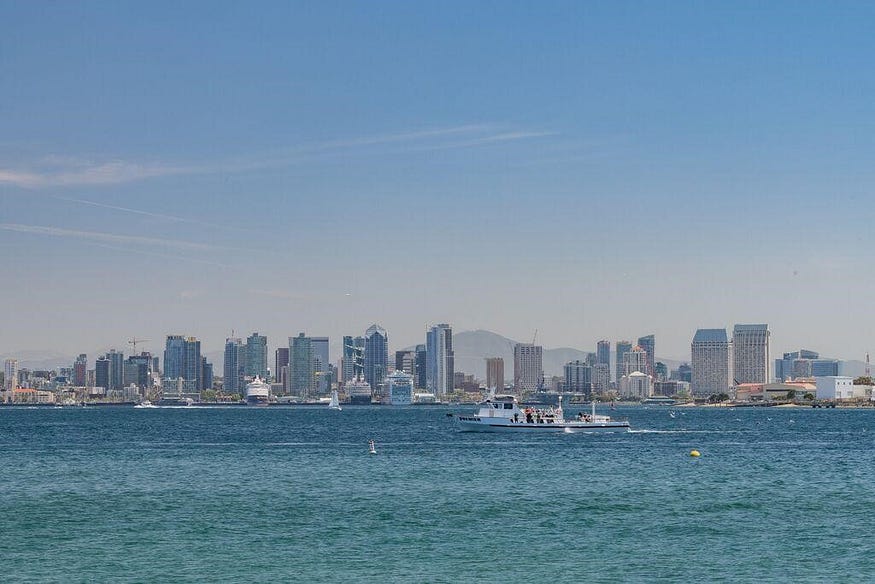
    Overlooking the iconic Port of San Diego (Port of San Diego)

    The Blue Economy is a relatively new concept. Can you talk a little bit more about what that entails? How have you been working to educate this concept to the general public?

    The term, Blue Economy, may be relatively new, but it’s really an age-old concept. Traditionally, the blue economy is made up of many industries like maritime cargo trade, cruise, fisheries, shipbuilding and ship repair, recreational boating, and more. The Port is and has been involved in all of those. More recently, ports are considering how best to support a transition to a more sustainable ocean economy (the Blue Economy). Ports have the potential to act as hubs for blue economy innovation. At the same time, there is an opportunity for ports to diversify their economic base and to become catalysts for the development of new business models that promote the Blue Economy. For the Port of San Diego, through our Blue Economy Incubator, we are trying to build a portfolio of new businesses that deliver social, environmental, and economic benefits to the Port and region. We are striving to advance proposals that are replicable and scalable to help other ports, harbors and coastal communities address similar challenges we face and that in turn support further innovation and investment in the Blue Economy. It is a win-win situation. The Port is learning from the pilot projects, which are addressing existing environmental challenges and informing future opportunities.

    How does the Port collaborate with other organizations in the region to support resilience and sustainability?

    Since the ocean is the focus of the Blue Economy, the region of the Blue Economy ecosystem is the world. The Port maintains a global network of partnerships within the Blue Economy ecosystem and maintains relationships with academic institutions, technology clusters, governments, industries, foundations, and the public.

    One of our recent partnerships is with the U.S. Navy and the Maritime Environment and Technical Assistance (META) program within the United States Department of Transportation’s Maritime Administration. Through this collaborative effort, we are studying carbon sequestration and storage in our bay’s eelgrass beds.

    Eelgrass and other coastal “blue carbon” ecosystems have a unique ability to rapidly capture and store large amounts of carbon. Like all plants, eelgrass absorbs carbon dioxide (CO2), which is stored as organic carbon in their plant material and produces oxygen through photosynthesis. When land plants die, their carbon is released back into the atmosphere as CO2. Unlike land plants, eelgrass is submerged in water, which prevents the release of CO2. Instead, the organic carbon is sequestered into the sea floor sediments. If left undisturbed, this carbon can remain trapped in eelgrass sediments for thousands of years. Eelgrass habitats cover a small fraction of the area forests do on land, yet they can store carbon at rates 30 to 50 times greater than forests.

    This study is an important component to the Port’s ongoing efforts to protect the indispensable resources San Diego Bay provides to our region, and to support state and local climate planning efforts. This study also complements the Port’s growing portfolio of nature-based solution projects like the Blue Economy Incubator.

    What has been the biggest obstacle that you’ve overcome thus far with the Blue Economy Incubator? The biggest success story?

    One of the biggest obstacles we have to overcome with the Blue Economy Incubator is the amount of time it takes to adequately review and consider all the good ideas we are pitched. Through the Blue Economy Incubator, an entirely new procurement pathway was created. The process is well outside of our normal procurement procedures. The perk of this new process is it allows the Port to partner with early-stage companies and support pilot projects and blue economy innovation. While still a relatively new process, we are actively working to improve efficiencies to allow us to scale the program and support more blue technology innovation.

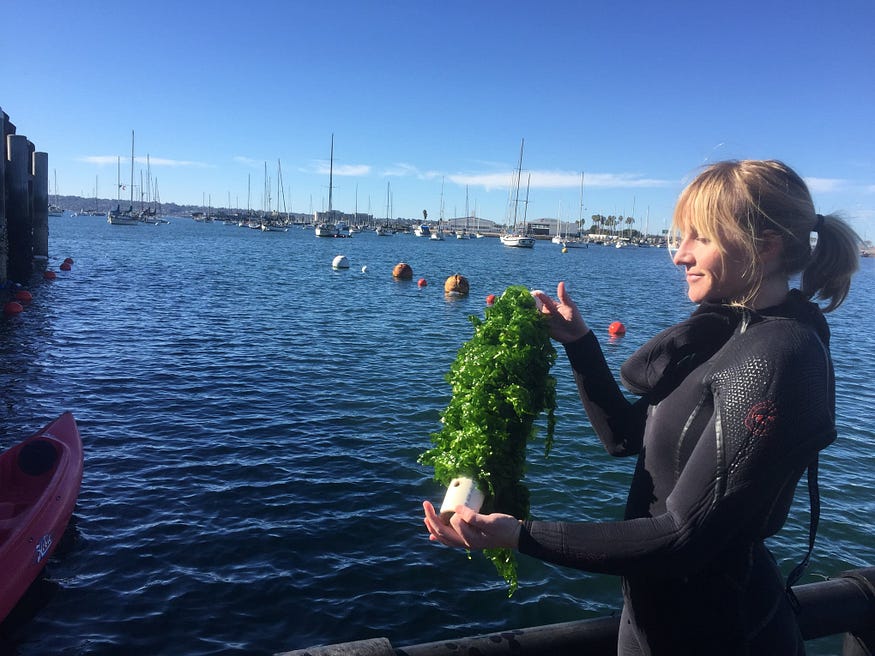
    We have had several success stories emerge from the Blue Economy Incubator. One example is Sunken Seaweed. Sunken Seaweed is an aquaculture startup company led by two marine ecologists committed to pioneering sustainable seaweed aquaculture in San Diego. Under the Port’s Blue Economy Incubator, the company established a seaweed pilot farm in San Diego Bay using a method of ocean farming that includes ropes, buoys, and anchors attached to existing pier pilings.

    Recently the Port reinvested into Sunken Seaweed’s project so they could scale their seaweed farm and eventually sell their seaweed to chefs, food production and distribution companies. They are also exploring a range of products including fertilizers, human food supplements, and livestock feed additives.

    Sunken Seaweed is a seaweed farming operation located in the Port of San Diego. (Port of San Diego Facebook)

    Another success story is a company called ECOncrete. Nearly two years ago, ECOncrete installed 74 bio-enhancing concrete tide pools that mimic natural rock pools at two sites along San Diego Bay’s Harbor Island. So far, this pilot project is showing promising results. Monitoring efforts so far have indicated the project is an innovative win-win approach to coastal protection by providing resiliency and adaptation strategies in an urban environment while simultaneously enhancing valuable marine life.

    What do you see as the biggest opportunities within the Blue Economy? What role does the Port play in filling these gaps, and in the future of the Blue Economy?

    Ports are indeed uniquely positioned to act as catalysts for the Blue Economy and to take advantage of the future opportunities of the Blue Economy, and in this regard the San Diego region is gaining both national and international attention.

    The Port is at the forefront of the environmental challenges associated with climate change and coastal development. And to adapt, the Port is leveraging the use of innovative technologies and collaborations with business partners and communities, to revolutionize how to be environmental champions, and protect coastal ecosystems in a way that is mutually beneficial to the economy, environment, and our communities. As champion of the Blue Economy, the Port is committed to enhancing San Diego Bay and its tidelands through innovative partnership opportunities. Like Santa Clara Valley came to be known as Silicon Valley, San Diego Bay could one day come to be known as the Blue Technology Bay.

    How does the Port balance economic development and growth with environmental concerns?

    We believe we can grow the economy and improve and protect the environment around us. The two concepts are not mutually exclusive. For instance, technology like shore power allows cargo and cruise vessels to plug into shore power while at berth rather than running their engines. This helps reduce air quality impacts while keeping the supply chain moving and tourism thriving. We’re also working to electrify cargo handling equipment. This year, we’ll be the first port in North America to get all-electric dual mobile harbor cranes. They will replace our current diesel-powered crane, which is our most polluting piece of cargo handling equipment. In addition to the environmental and public health benefits, the new crane system will represent the heaviest lift capability of any crane system currently in place on the West Coast and will enable the Port to attract additional business opportunities due to the increased maximum lift capacity — up to 400 metric tons (MT) versus the 100 MT lifting capacity of the Port’s diesel crane. Most of the heavy-lift cargoes destined for this region weigh more than 200 MT, including larger pieces of solar, wind, and industrial energy equipment as well as project cargoes. The new cranes will allow the Port to compete for more business and better serve our existing operations when crane movements are needed.

    Looking to the future, what do you see as the future for ocean-based economic development? Are there any specific opportunities and risks that the Port is looking to navigate in the future, both near and long term?

    The future of ocean-based economic development is very bright and exciting. The global “Ocean Economy” is growing. It is valued on a conservative basis by the Organization for Economic Cooperation and Development (OECD) at $1.5 trillion (2010) and growing to $3.0 trillion by 2030. Ocean development is driven by curiosity, ingenuity, and tenacity and many very smart people are working hard to solve some extremely difficult problems. We anticipate we will be rich in opportunities.

    A risk to potentially consider is that development will be directed by the public’s acceptance of these concepts and the ease at which regulatory considerations can be established. Will we be ready to appropriately address the planning and permitting work that will be necessary? The Port is leading the way in this arena by stepping up to engage with local stakeholders and work with regulatory agencies during planning and permitting phases. The Port’s communication and transparency are critical to the success of the project but also help inform others seeking to deploy new technologies.

    Can you discuss any upcoming initiatives or projects related to resilience that the Port has a hand in?

    Aside from the Blue Economy Incubator projects the Port is working on, the following resilience-related projects:

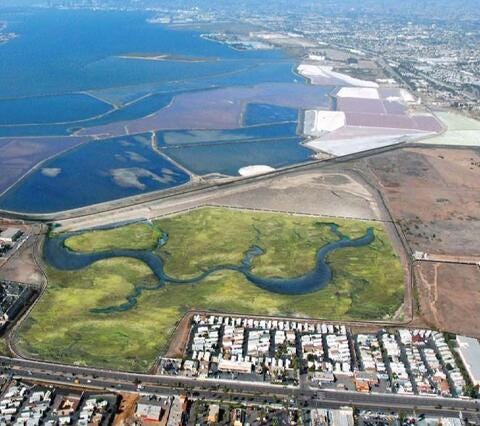
    · Pond 20— an 85-acre proposed wetland mitigation bank to restore coastal saltmarsh habitat with the added benefits of carbon sequestration and ecological enhancement, among others.

    · Native Oyster Living Shoreline Project— created oyster reefs to recruit native oysters, prevent shoreline erosion, and help with carbon sequestration.

    · Shellfish & Seaweed Aquaculture Planning — initiating the planning effort to review shellfish and seaweed farming for purposes such as food production, restoration, water quality improvements, biodiversity enhancement, and carbon sequestration.

    Pond 20 Restoration (Photo from Port of San Diego)

    Other than applying to be a part of the incubator, what are some ways that the local community can get involved with your efforts?

    We have a fun campaign called “That’s My Bay” to inspire people to help us improve our bay’s water quality and to also help the sea life in it thrive. Through a series of videos with lovable characters like Lil Wrapper and Trash Trooper Trish, we provide people with helpful tips and suggestions to help keep our waterways clear of trash, debris, and pollutants. Check it out here.

    What are the best ways for people to learn more about the Port of San Diego, your work in the Blue Economy, and the companies that are in the incubator?

    Our website is a great place to start. We also have some fun videos on our YouTube channel. If you’re on social media, follow us on FacebookLinkedInTwitter, and Instagram.

    Want to learn more? Go more in depth here:

    Port of San Diego Website

    Port of San Diego YouTube

    Port of San Diego Instagram

    Blue Economy Incubator Website

    Blue Economy Incubator on Al Roker

    Blue Carbon Project

    Sunken Seaweed

    ECOncrete

    Pond 20

    Native Oyster Living Shoreline Project

    Shellfish & Seaweed Aquaculture Planning

    Thank you to Port of San Diego Board of Port Commissioners Chairman Rafael Castellanos, as well as Gabriella Rodriguez and Brianne Page for their help with this interview.

  • Zero-Waste Grocery Stores and the Future of Food: An Interview with Katie Fletcher of Local Scoop

    Zero-Waste Grocery Stores and the Future of Food: An Interview with Katie Fletcher of Local Scoop

    What does the future of grocery stores look like to you? To Katie Fletcher, it looks a lot like the Local Scoop, a zero-waste, bulk grocery store located in Encinitas, California. Katie started Local Scoop in 2022 after studying abroad and getting used to shopping at healthy bulk food stores — stores that she couldn’t find in the United States.

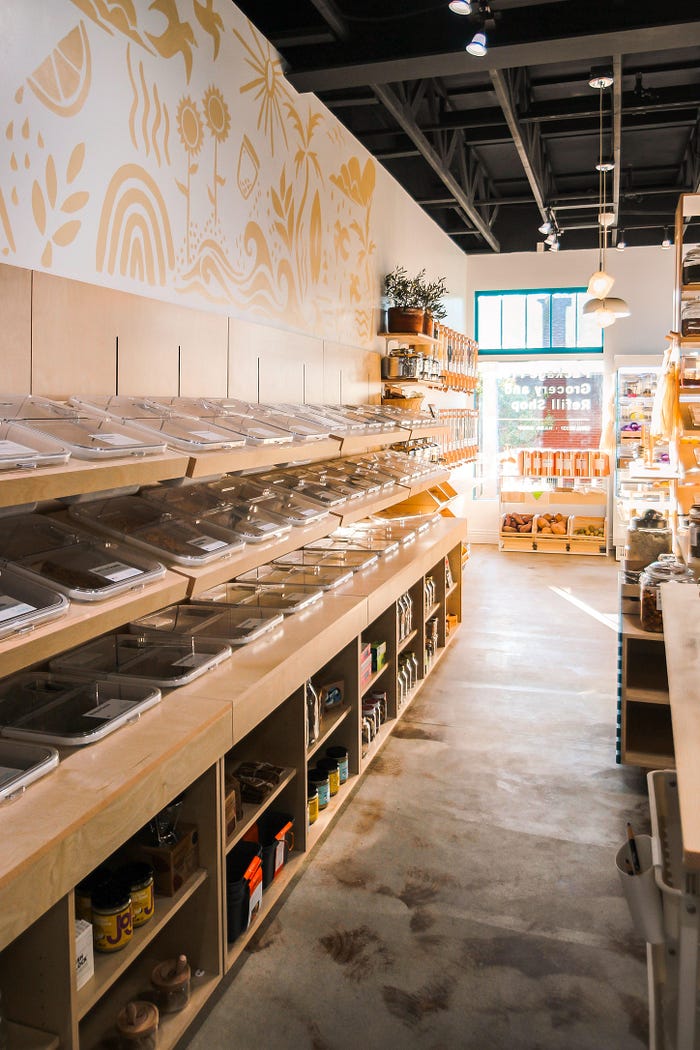
    Local Scoop provides products ranging from bulk spices and herbs, to flour, pasta, grains, teas, and even household and kitchen products like microplastic-free sponges. There’s no packaging at all in the store — customers bring their own jars and bags to house their purchases, and pay entirely based on weight. The entire process is quick and simple, and focused on not just providing healthy, natural options, but completely eliminating plastic and single-use containers and goods from the shopping experience.

    In the interview below, we explore topics like the future of grocery stores, building resilience in your food choices, obstacles in starting a business, and the importance of community support!

    If you’d like to learn more about Local Scoop, check out their websiteInstagram, or Facebook.

    I’m chiefly interested in the concepts of resilience — personal, communal, and societal. Your store seems to hit on all of these fronts — creating personal and communal resilience through sustainability and zero waste, with an eye towards ultimately creating a resilient society. What does the concept of resilience mean to you?

    To me, resiliency means adapting and returning from challenges while staying true to my values and goals. In the face of adversity (to the business, the planet, etc.) I remain determined, persistent, and passionate about positively impacting the environment and society. Since the beginning, I have not been afraid to take risks, try new things, and learn from my mistakes, all while staying committed to sustainability and ethical practices.

    I never know what is around the bend for me, both positive and negative. Despite the uncertainty, building a sustainable business takes time and effort. Still, I am more than willing to invest everything I have to create a better future for myself, my community, and the world around us. Ultimately, resilience to me means leading by example and embracing all opportunities to be a trailblazer, inspire others, and make a difference in the world.

    What are some ways that you’ve tried to build resilience in your own life?

    I’ve always been an athlete, playing D1 soccer at Yale and testing the waters in triathlon in the years since graduation. These experiences have led me to be very comfortable with the uncomfortable. I take a lot of pride in my ability to remain calm despite things being scary, stressful, painful, or overwhelming. I do feel all of these things, often and deeply. But I feel unwavering in my ability to stay the course, take a deep breath, and continue putting one foot in front of the other. I am extremely focused and goal oriented, both attributes that unsure I will absolutely never give up on things I care a lot about once I have set out to do them.

    You’ve had an interesting background with an emphasis on health and nutrition, but with a stint as a marketer as well. How have these past experiences helped you with your efforts at Local Scoop? Was there anything that you were surprised translated? Was there anything that didn’t translate at all as you transitioned to opening your own business?

    I think every experience I’ve had professionally before Local Scoop has benefitted my process in one way or another. Being at a non-profit instilled a desire to do meaningful, challenging work that aligns with my current job. Start-up culture later taught me the value of dynamism and the ability to wear many hats and juggle many balls.

    I like working with a team, but entrepreneurism can be a lonely pursuit. Before hiring store associates, I craved the camaraderie of shared goals, teamwork, and brainstorming. I have had help from friends and family since day one, but hiring Local Scoop-exclusive employees has been a gratifying experience.

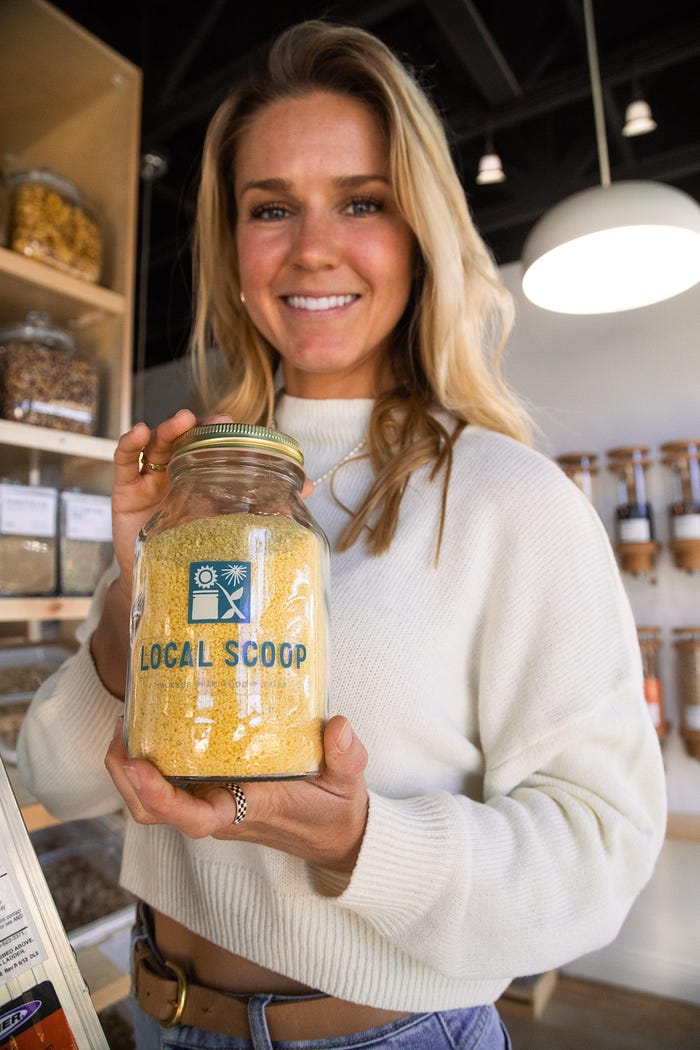
    Katie Fletcher started Local Scoop after being unable to find a healthy, zero-waste grocery store in San Diego. (Photo from Local Scoop Instagram)

    What was the biggest obstacle in opening The Local Scoop? How did you overcome it?

    The biggest obstacle in opening Local Scoop was getting the right permits! Working with the city and county can be a really daunting task that you want to get right the first time around. It can be a waiting game, that is for sure, but it is essential and I am grateful for the learning experience.

    How has community support been for The Local Scoop?

    Support from the community has been and continues to be one of the most rewarding experiences of my life. Almost weekly, customers come in to “thank me” for bringing this to our community or to tell me, “we’ve been waiting for this for so long!” These kinds of comments mean the world to me. Our grand opening was also a resounding success beyond what I could have imagined. The business continues to grow monthly, so I think the community is starting to learn about us and our ethos and support us!

    What challenges do you foresee in the future? What opportunities?

    I think it will be an ongoing challenge to educate the community on why they should care about shopping package free will be ongoing. Helping customers see how bringing their own containers can be simple, affordable, and sustainable is a big task, but I am definitely up to the challenge. I see opportunities to expand our current space or expand into additional locations so we can spread the message of zero-waste and empower our customers to do more with less plastic.

    I’d imagine that the concept of a “Zero-Waste grocery store” is new for a lot of people. Can you talk a little bit more about what that entails? How have you been working to educate this concept to the general public?

    I have been continually trying to move my life towards a plastic-free, zero-waste one, so I feel confident in my ability to speak to those experiences and be seen as a resource towards others at any point on their own zero-waste journey. Of course, the concept is novel — but that isn’t necessarily a bad thing! People come in and are so excited and receptive, often saying things like “wow, this just makes so much sense!”

    I will continue these efforts through myself and my employees through the store, and also attend as many community events as possible throughout the year. Encinitas has a lot of sustainability and zero-waste focused events, so it is a great space to start and continue the conversation!

    What do you see as the future of grocery stores?

    I genuinely believe there is no way grocery stores can continue to operate the way they do right now. There is SO much waste and an absurd amount of plastic. Consumers are becoming more engaged around conversations regarding food and packaging waste. Finding ways to address both of these concerns simultaneously is key. Local Scoop does this by allowing customers to bring their own reusable containers and offering a “buy as much or as little as you need” model. It really is a win-win.

    In recent years, there seems to be a movement towards keeping food minimally processed and staying local. Would you agree with that assessment? What do you see as the future of food?

    Absolutely. Customers are exhausted by the confusing, misleading, and often contradictory messages about what is and isn’t healthy. Every month it seems there is a new food that is either killing us or helping us live forever. It is all overwhelming. By stripping food down to just a few, recognizable, easy to read and pronounce ingredients, we are able to eat foods that are good for us and the planet. It is “food in the nude,” and it isn’t confusing or opinionated.

    I’d imagine the concept of a package-free grocery store would have been tough to operate during the Covid years. How have you worked to build resilience into your business model?

    We weren’t open during COVID, but that would have been very difficult. I believe we would have moved the business towards allowing customers to order online in the quantities they need for themselves and their families, and then we would prepackage them in our compostable paper bags or in jars from our jar recycle program for pick up or delivery.

    What’s your favorite item that you stock? Has there been anything that you’ve been surprised has done so well?

    I absolutely love our pulp chips, which are made from the recycled pulp produced during the commercial juicing process. This delicious, nutrient dense pulp was being thrown away until a female-founded company in Los Angeles started collecting this pulp and repurposing it into the most delicious, addicting chips.

    I have been really surprised that dark chocolate pretzels have been such a big seller for us! We also sell vegan, gluten-free, local raw protein balls that literally fly off the shelves. I definitely would not have predicted that!

    Those protein balls really are great — my wife loves them! What are some tips and tricks you can give towards others working to achieve Zero Waste in their own lives?

    I always recommend that people use what they already have until the end of its usable life. There is no need to get rid of your plastic toothbrush, sponge, hairbrush, etc. if it is still in working condition. However, once an item can no longer be used, it would be wonderful to replace it with a more sustainable product, such as something made from bamboo.

    “Finding ways to address both food quality and packaging waste is key.” (Photo from Local Scoop Instagram)

    What are some ways that others can build resilience in their own life, especially with regards to food systems?

    I think being educated on where your food comes from and what values are important to you regarding farming, food waste, and regenerative agriculture are a great place to start. If you don’t know where your food comes from or what is the state of the food system in our community and beyond, you probably won’t care much about the negative or positive impacts your choices can make. You can build resilience to corruption simply through the purchasing power of your dollar and where you chose to spend it when it comes to food.

    What’s next for The Local Scoop?

    Many spring and summer events to bring together the community with local food purveyors and awesome members of our food system!

    What are the best ways for people to learn more, and support you and The Local Scoop?

    Come visit us in the store! Our hours are Monday — Friday 11–7, and Saturday — Sunday 10–6. You can also visit our websitesend us an email, or follow us on InstagramTik Tok, and Facebook.

    Want to learn more? Go more in depth here:

    Local Scoop Website

    Subscribe to their newsletter

    Facebook

    Instagram

    YouTube

    Twitter

    Tik Tok

    Interview with The Coast News

    Interview with Del Mar Times

  • Turning Waste into Electricity and Clean Water: An Inside Look at Aquacycl

    Turning Waste into Electricity and Clean Water: An Inside Look at Aquacycl

    Recently, I had the chance to sit down with Juli Iacuaniello, the Marketing Director at one of San Diego’s most cutting-edge startups, Aquacycl. Focused on providing modular, affordable wastewater treatment through an innovative modular, microbial fuel cell system that turns waste into electrical energy and clean water, this company is on the front lines of building resilience into our communities, society, and infrastructure.

    In the interview below, we explore the ideas of building resilience into a company culture and what it took to navigate through COVID, Aquacycl’s biggest successes, the San Diego startup scene, the role wastewater treatment plays in water access and the climate, and the importance of creating a product that isn’t just environmentally sound, but economically sound as well.

    If you’d like to see more about Aquacycl and their mission, you can check them out on LinkedIn or their website. You can also reach out to Juli personally if you’re interested in learning more!

    I’m chiefly interested in the concept of resilience — personal, communal, and societal. What does resilience mean to you and how does it align with Aquacycl’s mission?

    Our mission is to provide sanitation and clean water for people that don’t have it. There are over two billion people in the world that have no access to sanitation that is safe and reliable — more people have access to a cell phone than a toilet! When Aquacycl was started, the mission was to address this sanitation and clean water gap.

    In the global south especially, a lot of people don’t have the infrastructure for sanitation or clean water. Where we want to be in three, five, or seven years is to be able to provide modular, rapidly deployable mobile or permanent systems for sanitation. People that are displaced from natural disasters are oftentimes put into horrible situations, into refugee camps where they don’t really have the amenities that you or I would think of on a daily basis. Being able to rapidly deploy modular systems that can address that gap is one opportunity to build resilience in the face of disaster in areas that need it the most.

    We were founded with a goal of off-grid and off-energy sanitation. Eventually (and I say eventually because we aren’t quite there yet) that’s where we want to be. We aren’t rebuilding the old centralized model. We aren’t just replacing the old systems with how they were build 50 years ago. We are actually coming in with new technology that can address the problems in front of us without adding to the problem, without requiring additional infrastructure, and without requiring huge capital investment to build out the new infrastructure. We can build this new technology and infrastructure in a way that can reduce the impact of natural disasters and the sanitation gap, and build resilience in communities that are most vulnerable to natural disasters around the world.

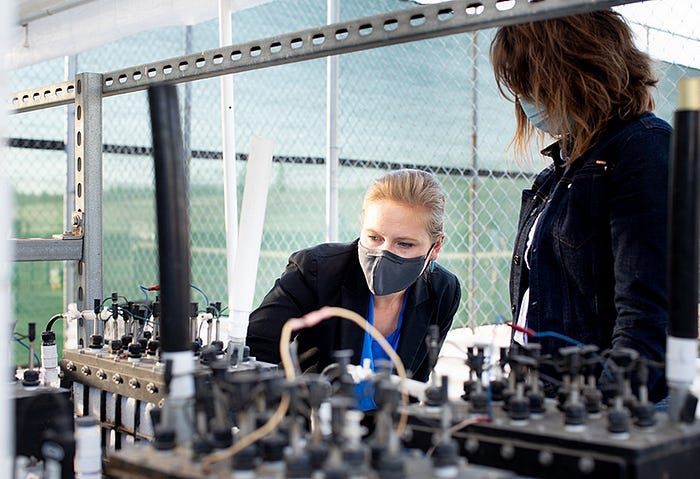
    Aquacycl CEO, Orianna Bretschger, examining their technology.

    Startups are notoriously vulnerable to risk. Can you talk about some of the obstacles that you have overcome thus far? How have you worked to build resilience within your company culture to continue to identify, as well as overcome, potential setbacks?

    I’d say the number one obstacle was COVID. I had joined maybe six months before COVID hit, and everything started shutting down. Schools shut down, businesses were closing — that was a really challenging time for AquaCycl. We were in the middle of raising money! We were trying to get customers and we were calling on companies that also basically stopped everything.

    Our CEO and founder, Orianna Bretschger, is tremendous. She responded very quickly to try to keep the company alive. During that time, Aquacycl pivoted a little bit, since we now had excess capacity — we used our lab space to make hand sanitizer and get it to first responders. And the several of us who had been furloughed while trying to understand what was happening believed so strongly in the mission and vision of the company that we actually kept working to try and bring it to fruition!

    But other than that, since there was a couple of us on the sales and marketing team that were still working through the shutdown, we actually ended up closing our first commercial contract.

    I think that the reasons we were able to pull through the COVID shutdown were because we believed so much in both the mission of the company and the value of the technology — both its industrial value and the long term value.

    Over the last couple years, we’ve closed our Series A and used this money to prepare for the next phase of growth. We are moving from startup to scaleup, so we have brought in new team members who can put in place the processes that will allow us to grow — but we’re making sure that we still have a culture of putting the customer first and getting things done quickly.

    Would you say that part of what helped Aquacycl get through the COVID pandemic was a hyper focus on the company’s vision and mission statement?

    Yes, absolutely.

    I think the people who work at Aquacycl are excited to be here because of the vision and because of the game changing technology we are building. This is cool technology where you take, these little batteries, basically, and the microbes are both cleaning the water and producing electricity. I think people here really are excited about the technology, and they’re excited about the mission.

    I’d also say people like working here because, while it’s a small team still, it still has great comradery. We really haven’t had much turnover at all. There have been a couple people that came in and out, but for the most part, our team has stayed pretty consistent.

    So I think it comes down to the mission, the technology, and the people who are here. We’re really careful about hiring the right people, and hiring for fit rather than necessarily hiring the absolute most qualified. Our CEO is extremely careful about hiring for cultural fit within our company.

    https://cdn.embedly.com/widgets/media.html?src=https%3A%2F%2Fwww.youtube.com%2Fembed%2FIxsG8G0YTEE%3Ffeature%3Doembed&display_name=YouTube&url=https%3A%2F%2Fwww.youtube.com%2Fwatch%3Fv%3DIxsG8G0YTEE&image=https%3A%2F%2Fi.ytimg.com%2Fvi%2FIxsG8G0YTEE%2Fhqdefault.jpg&key=a19fcc184b9711e1b4764040d3dc5c07&type=text%2Fhtml&schema=youtubeTake a deeper look into Aquacycl’s technology with this video!

    Can you talk about your biggest success that you’ve had with Aquacycl thus far? What helped you achieve it?

    There have been several significant achievements for us! From a commercial standpoint, one of our biggest successes has been our partnership with PepsiCo, where we are working at their site to treat wastewater from their process. They have been a tremendous partner for us. After an initial pilot, we expanded to a multi-year commercial contract, with clear KPIs that track system performance, environmental impact and cost savings. Another big success for us last year was expanding into new industries, notably hydrocarbon remediation, where we validated that we can remove really challenging compounds.

    I’d say another success is the recognition that we’ve received from various awards and media, which has increased the visibility of what we are trying to achieve. Some of these included our CEO receiving the Cartier Women’s Initiative Laureate in STEMImpact Company of the Year by Startup San Diego, a nominee for Fast Company Next Big Things in Tech, and many others. We have also received coverage in Forbes and Fast Company, and various trade and business journals. These successes are a testament to our progress as a small company and provide the validation and social proof that our product is excellent, as well as customer satisfaction validation.

    We’ve had amazing support over the past few years that has helped us to grow the company to where it is. We’ve participated in a number of accelerators, including Imagine H20Xylem Innovation LabsGoogle for Startups100+ Accelerator (sponsored by AB InBev, The Coca Cola Company, Unilever and Colgate-Palmolive), Unreasonable ImpactCreative Destruction LabPlug and Play, and The Circulars. These have been key to our successes, as they help connect us with investors, customers and potential channel partners.

    San Diego is well regarded for our burgeoning biotech scene. Does being part of such a community help as you work to grow your company and innovate in your own space? Have there been any surprising drawbacks?

    No, it’s a good question, but I think that Orianna (our CEO) could probably provide a more detailed response. From my perspective, however, the San Diego community has been incredibly supportive of Aquacycl. I first met Orianna about four years ago at a pitch event organized by Hera Labs, which is now known as Stella. They do a lot to support female entrepreneurs. Orianna won the pitch contest, and went on to win the San Diego Angel Conference, where Aquacycl was the first company to secure seed money and visibility.

    The San Diego startup community, although not exclusively focused on biotech, has been a tremendous support to us. We are a biotech company, but we are not a traditional one. Nonetheless, the community has shown a strong desire to help startups grow by providing connections and inviting us to events. Overall, I cannot speak highly enough of the startup community in San Diego that has supported us!

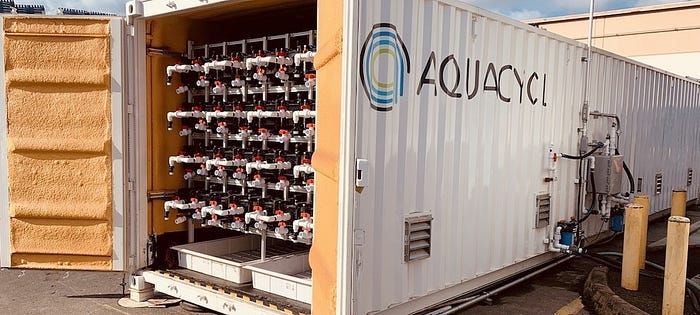
    A look at one of Aquacycl’s modular wastewater treatment service units.

    Global water use is suspected to grow between 20–50% in 2050. Can you talk about Aquacycl’s role in helping mitigate the risk that dwindling water access poses to our communities?

    The big issue in the West is water scarcity, and I believe our solution has the potential to address this challenge. By treating water at the source, we can enable water reuse and reduce the amount of blue water required, which in turn alleviates water scarcity for everyone. Industrial companies are heavy water consumers, so reducing their water footprint can have a significant impact. For instance, clean water can be reused for non-product contact applications such as washing floors, toilets, and tanks. This approach reduces the need for freshwater while addressing concerns around food safety.

    Water scarcity is a significant driver for us, and it underscores the need for resilience in ensuring that water is available for everyone. We must prioritize water availability to avoid situations where people are forced to relocate because of water shortages. While small actions such as turning off the tap while brushing teeth can help, large-scale water conservation efforts by companies can make a significant difference.

    Looking to the future, what do you see as the future for Aquacycl? Are there any specific opportunities and risks that you are looking to navigate in the future, both near and long term?

    In the near future, our focus will remain on expanding our industrial customer base since we believe that’s where we have the strongest value proposition. However, our long-term goal is to return to sanitation and distributed sanitation, and we’re actively working towards that end. The challenge that our customers face is that while they have funds allocated for their operations, waste management is a necessary expense. The real challenge lies in meeting their aggressive sustainability goals related to water and climate, which requires reducing greenhouse gas emissions.

    Our aim in the next two to three years is to achieve a stronger penetration rate and quantify our contribution to improving water quality. Currently, a vast amount of wastewater, ranging from 56% to 80%, depending on the source, is discharged untreated into the environment. This is a significant environmental problem since the wastewater sector is already responsible for 4 to 5% of global greenhouse gas emissions. Our goal is to address this issue and make a tangible impact by expanding our reach.

    We’re also looking to expand into the European market, replicating our North American success. We see many opportunities in multiple verticals and waste streams, including pharmaceutical and hydrocarbon wastewater.

    Finally, technology plays a crucial role in our growth plan. Our CTO (who actually just walked by!) has a roadmap for the development of our technology, and we’re working hard to make it a reality.

    Aquacycl’s value proposition seems to be that not only is it greener and more efficient, it saves companies money. Can you talk about the importance of not only creating environmental resilience, but economic resilience as well?

    That’s a really insightful question — all too often we focus solely on the environmental benefits of a particular initiative, and fail to take into account the economic factors that drive businesses. Ultimately, our clients are in the business of generating profits for their shareholders, which is the fundamental principle on which our society is built. In our numerous conversations with various companies, we have found that unless an initiative can deliver both economic and environmental benefits, it cannot be effectively marketed on the basis of environmental benefits alone. While there may be some niche areas and technologies where the environmental benefit alone can drive sales, for the most part, companies require a solution that delivers operational savings as well as sustainability benefits.

    This approach is driven by the fact that if an initiative costs a company a significant amount of money without delivering a commensurate return, it will be viewed unfavorably by investors. In the consumer packaged goods (CPG) industry, which is known for its competitiveness, margins are crucial. If the margins start to slip, investors will take note, and this could have serious consequences for the company’s long-term viability. Therefore, any sustainability initiative must deliver a dual benefit in order to make sense from a business perspective and ensure the longevity of the company.

    Want to learn more? Go more in depth here:

    Aquacycl Website

    Aquacycl LinkedIn

    Aquacycl and PepsiCo Case Study

    Aquacycl in Forbes

    Aquacycl in Fast Company

    Circular Economy Overview