I recently had the chance to speak with Port of San Diego Board of Port Commissioners Chairman Rafael Castellanos about the Port’s role in promoting the burgeoning Blue Economy —using the ocean’s resources to build a portfolio of businesses that deliver social, environmental, and economic benefits. Through their Blue Economy Incubator, they’ve managed to help support a number of early-stage, ocean-based startups looking to develop innovative solutions to some of the most pressing environmental challenges.
In this interview, you’ll learn about the future (and challenges!) the Port of San Diego sees for ocean-based businesses, how the Port of San Diego balances economic development with environmental concerns, and some of the startup successes that have emerged through their Blue Economy Incubator.
If you’d like to learn more about the Port of San Diego, their incubator, and their mission, you can check them out on their website.
I’m chiefly interested in the concepts of resilience — personal, communal, and societal. The Port of San Diego is such an integral part of our community’s economic development and life. What does the concept of resilience mean to you and to the Port?
San Diego Bay has given countless gifts to our region’s people long before any of us were here. As early as 12,000 years ago, the Kumeyaay people nourished themselves with seafood from the bay. And, once considered the tuna capital of the world, the bay continues to nourish us, all while the chapters of history have unfolded. Our beautiful natural harbor and deep-water port has seen people, nations, and industries come and go. Its resources are vast and rich, and we bear a special responsibility to make sure it continues to thrive and provide for all who depend on it, for the environment itself, and for future generations.
Resilience for us means protecting, preserving, and enhancing the resources of San Diego Bay for many generations to come. We also strive to provide economic vitality and community benefits. We accomplish these things by taking a balanced approach to the maritime industry, tourism, water and land recreation, environmental stewardship, and public safety.
What are some ways that the port works to build resilience throughout the San Diego region? What are some ways that the Blue Economy can build resilience in our community and beyond?
As protectors of our air, land, and water, we build resilience through greenhouse gas reduction, sustainable development, water conservation, waste management and responsible business practices.
The delicate balance of a healthy San Diego Bay ecosystem is upheld through a collaborative network of programs and initiatives, each working on innovative ways to sustain our waterfront. When it comes to the Blue Economy specifically, pilot projects supported through our Blue Economy Incubator have a large focus on coastal resiliency, water and sediment quality, ecosystem enhancement, and more.
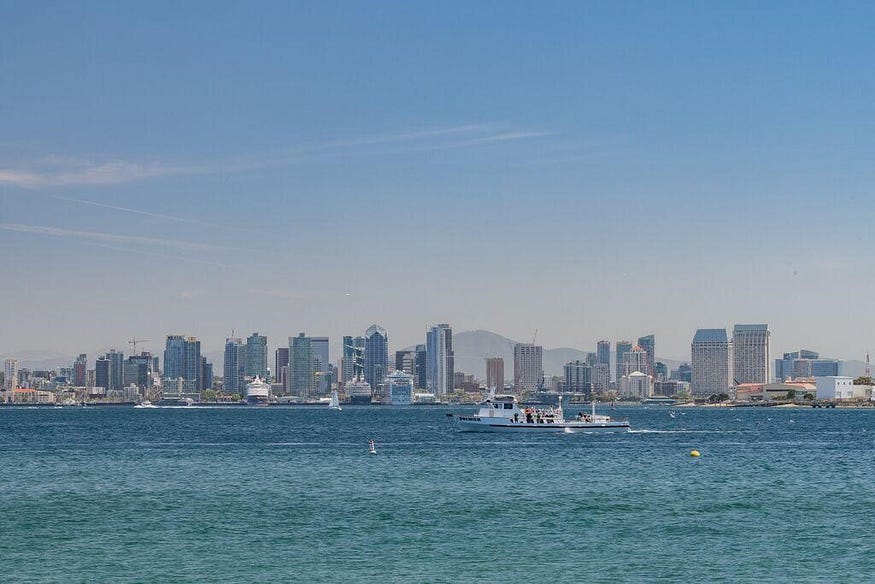
The Blue Economy is a relatively new concept. Can you talk a little bit more about what that entails? How have you been working to educate this concept to the general public?
The term, Blue Economy, may be relatively new, but it’s really an age-old concept. Traditionally, the blue economy is made up of many industries like maritime cargo trade, cruise, fisheries, shipbuilding and ship repair, recreational boating, and more. The Port is and has been involved in all of those. More recently, ports are considering how best to support a transition to a more sustainable ocean economy (the Blue Economy). Ports have the potential to act as hubs for blue economy innovation. At the same time, there is an opportunity for ports to diversify their economic base and to become catalysts for the development of new business models that promote the Blue Economy. For the Port of San Diego, through our Blue Economy Incubator, we are trying to build a portfolio of new businesses that deliver social, environmental, and economic benefits to the Port and region. We are striving to advance proposals that are replicable and scalable to help other ports, harbors and coastal communities address similar challenges we face and that in turn support further innovation and investment in the Blue Economy. It is a win-win situation. The Port is learning from the pilot projects, which are addressing existing environmental challenges and informing future opportunities.
How does the Port collaborate with other organizations in the region to support resilience and sustainability?
Since the ocean is the focus of the Blue Economy, the region of the Blue Economy ecosystem is the world. The Port maintains a global network of partnerships within the Blue Economy ecosystem and maintains relationships with academic institutions, technology clusters, governments, industries, foundations, and the public.
One of our recent partnerships is with the U.S. Navy and the Maritime Environment and Technical Assistance (META) program within the United States Department of Transportation’s Maritime Administration. Through this collaborative effort, we are studying carbon sequestration and storage in our bay’s eelgrass beds.
Eelgrass and other coastal “blue carbon” ecosystems have a unique ability to rapidly capture and store large amounts of carbon. Like all plants, eelgrass absorbs carbon dioxide (CO2), which is stored as organic carbon in their plant material and produces oxygen through photosynthesis. When land plants die, their carbon is released back into the atmosphere as CO2. Unlike land plants, eelgrass is submerged in water, which prevents the release of CO2. Instead, the organic carbon is sequestered into the sea floor sediments. If left undisturbed, this carbon can remain trapped in eelgrass sediments for thousands of years. Eelgrass habitats cover a small fraction of the area forests do on land, yet they can store carbon at rates 30 to 50 times greater than forests.
This study is an important component to the Port’s ongoing efforts to protect the indispensable resources San Diego Bay provides to our region, and to support state and local climate planning efforts. This study also complements the Port’s growing portfolio of nature-based solution projects like the Blue Economy Incubator.
What has been the biggest obstacle that you’ve overcome thus far with the Blue Economy Incubator? The biggest success story?
One of the biggest obstacles we have to overcome with the Blue Economy Incubator is the amount of time it takes to adequately review and consider all the good ideas we are pitched. Through the Blue Economy Incubator, an entirely new procurement pathway was created. The process is well outside of our normal procurement procedures. The perk of this new process is it allows the Port to partner with early-stage companies and support pilot projects and blue economy innovation. While still a relatively new process, we are actively working to improve efficiencies to allow us to scale the program and support more blue technology innovation.
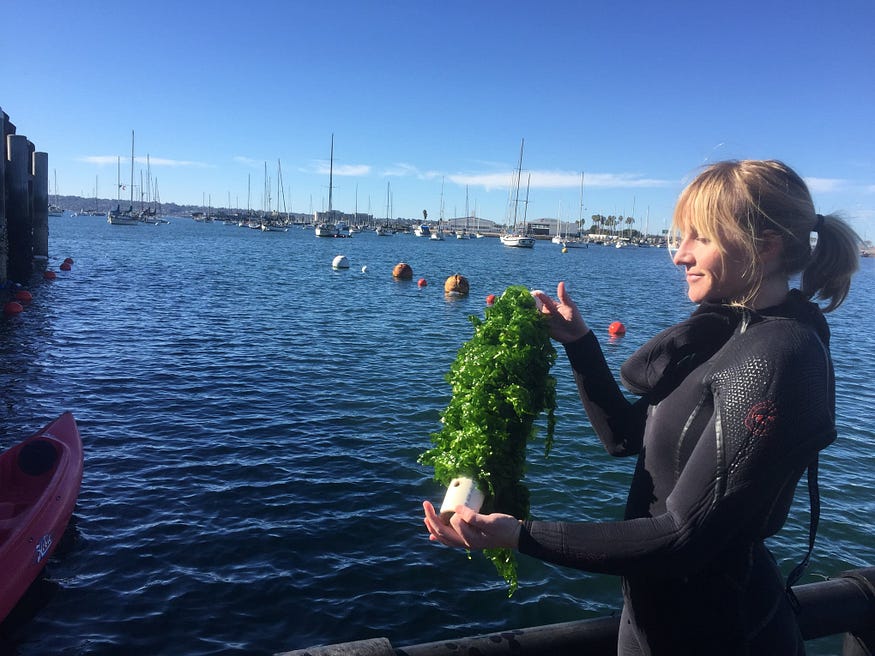
We have had several success stories emerge from the Blue Economy Incubator. One example is Sunken Seaweed. Sunken Seaweed is an aquaculture startup company led by two marine ecologists committed to pioneering sustainable seaweed aquaculture in San Diego. Under the Port’s Blue Economy Incubator, the company established a seaweed pilot farm in San Diego Bay using a method of ocean farming that includes ropes, buoys, and anchors attached to existing pier pilings.
Recently the Port reinvested into Sunken Seaweed’s project so they could scale their seaweed farm and eventually sell their seaweed to chefs, food production and distribution companies. They are also exploring a range of products including fertilizers, human food supplements, and livestock feed additives.
Another success story is a company called ECOncrete. Nearly two years ago, ECOncrete installed 74 bio-enhancing concrete tide pools that mimic natural rock pools at two sites along San Diego Bay’s Harbor Island. So far, this pilot project is showing promising results. Monitoring efforts so far have indicated the project is an innovative win-win approach to coastal protection by providing resiliency and adaptation strategies in an urban environment while simultaneously enhancing valuable marine life.
What do you see as the biggest opportunities within the Blue Economy? What role does the Port play in filling these gaps, and in the future of the Blue Economy?
Ports are indeed uniquely positioned to act as catalysts for the Blue Economy and to take advantage of the future opportunities of the Blue Economy, and in this regard the San Diego region is gaining both national and international attention.
The Port is at the forefront of the environmental challenges associated with climate change and coastal development. And to adapt, the Port is leveraging the use of innovative technologies and collaborations with business partners and communities, to revolutionize how to be environmental champions, and protect coastal ecosystems in a way that is mutually beneficial to the economy, environment, and our communities. As champion of the Blue Economy, the Port is committed to enhancing San Diego Bay and its tidelands through innovative partnership opportunities. Like Santa Clara Valley came to be known as Silicon Valley, San Diego Bay could one day come to be known as the Blue Technology Bay.
How does the Port balance economic development and growth with environmental concerns?
We believe we can grow the economy and improve and protect the environment around us. The two concepts are not mutually exclusive. For instance, technology like shore power allows cargo and cruise vessels to plug into shore power while at berth rather than running their engines. This helps reduce air quality impacts while keeping the supply chain moving and tourism thriving. We’re also working to electrify cargo handling equipment. This year, we’ll be the first port in North America to get all-electric dual mobile harbor cranes. They will replace our current diesel-powered crane, which is our most polluting piece of cargo handling equipment. In addition to the environmental and public health benefits, the new crane system will represent the heaviest lift capability of any crane system currently in place on the West Coast and will enable the Port to attract additional business opportunities due to the increased maximum lift capacity — up to 400 metric tons (MT) versus the 100 MT lifting capacity of the Port’s diesel crane. Most of the heavy-lift cargoes destined for this region weigh more than 200 MT, including larger pieces of solar, wind, and industrial energy equipment as well as project cargoes. The new cranes will allow the Port to compete for more business and better serve our existing operations when crane movements are needed.
Looking to the future, what do you see as the future for ocean-based economic development? Are there any specific opportunities and risks that the Port is looking to navigate in the future, both near and long term?
The future of ocean-based economic development is very bright and exciting. The global “Ocean Economy” is growing. It is valued on a conservative basis by the Organization for Economic Cooperation and Development (OECD) at $1.5 trillion (2010) and growing to $3.0 trillion by 2030. Ocean development is driven by curiosity, ingenuity, and tenacity and many very smart people are working hard to solve some extremely difficult problems. We anticipate we will be rich in opportunities.
A risk to potentially consider is that development will be directed by the public’s acceptance of these concepts and the ease at which regulatory considerations can be established. Will we be ready to appropriately address the planning and permitting work that will be necessary? The Port is leading the way in this arena by stepping up to engage with local stakeholders and work with regulatory agencies during planning and permitting phases. The Port’s communication and transparency are critical to the success of the project but also help inform others seeking to deploy new technologies.
Can you discuss any upcoming initiatives or projects related to resilience that the Port has a hand in?
Aside from the Blue Economy Incubator projects the Port is working on, the following resilience-related projects:
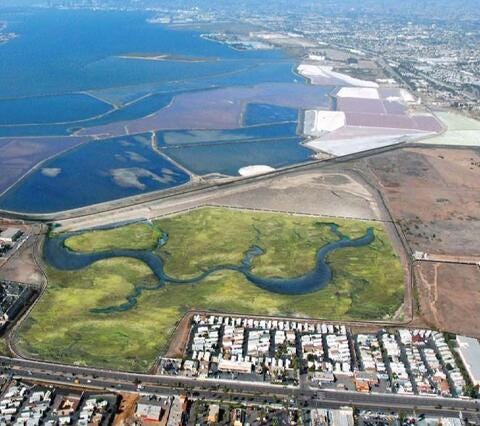
· Pond 20— an 85-acre proposed wetland mitigation bank to restore coastal saltmarsh habitat with the added benefits of carbon sequestration and ecological enhancement, among others.
· Native Oyster Living Shoreline Project— created oyster reefs to recruit native oysters, prevent shoreline erosion, and help with carbon sequestration.
· Shellfish & Seaweed Aquaculture Planning — initiating the planning effort to review shellfish and seaweed farming for purposes such as food production, restoration, water quality improvements, biodiversity enhancement, and carbon sequestration.
Other than applying to be a part of the incubator, what are some ways that the local community can get involved with your efforts?
We have a fun campaign called “That’s My Bay” to inspire people to help us improve our bay’s water quality and to also help the sea life in it thrive. Through a series of videos with lovable characters like Lil Wrapper and Trash Trooper Trish, we provide people with helpful tips and suggestions to help keep our waterways clear of trash, debris, and pollutants. Check it out here.
What are the best ways for people to learn more about the Port of San Diego, your work in the Blue Economy, and the companies that are in the incubator?
Our website is a great place to start. We also have some fun videos on our YouTube channel. If you’re on social media, follow us on Facebook, LinkedIn, Twitter, and Instagram.
Want to learn more? Go more in depth here:
Blue Economy Incubator Website
Blue Economy Incubator on Al Roker
Native Oyster Living Shoreline Project
Shellfish & Seaweed Aquaculture Planning
Thank you to Port of San Diego Board of Port Commissioners Chairman Rafael Castellanos, as well as Gabriella Rodriguez and Brianne Page for their help with this interview.
 Mick Hammock
Leave a comment