For this interview, I spoke to my friend Daniel Palmer, an experienced innovation manager currently working for Upstream Tech and former rugby player for the University of Notre Dame. Dan has a diverse background, having worked in consulting, local government, and startups, where he has gained valuable insights into problem-solving across all three sectors. Dan shares with us his thoughts on building a resilient mindset through his time playing rugby, using technology to help companies manage their water use, and the importance of taking things just one step at a time and focusing on small milestones to accomplish big things, whether at work or at home.
If you’d like to learn more and connect with Daniel, you can find him here on LinkedIn.
I’m chiefly interesting in the concepts of resilience — personal, communal, and societal. What does the concept of resilience mean to you?
For me, resilience is experiencing challenges, hardships, or change, and coming out on the other side of that. Whether that means surviving or just coming out stronger — but really being able to withstand challenges and thriving on the other side of those.
You played rugby at Notre Dame. Did playing a highly physical sport influence your definition at all or influence this mindset?
When I played rugby, the focus was heavily on mental toughness and persevering through tough situations. One of our favorite coaches was a former military and high-level rugby player from Scotland. He would organize sessions dedicated to building our mental fortitude, which he called Harden the F*** Up sessions. The goal was to train our ability to face challenges and persist despite difficulty — and these drills were tough. One session was held after a blizzard in January, where we did stretcher carries across the field, and, in between events, got quizzed about math and history to keep our brains engaged!
These sessions taught us about breaking down a difficult situation into small steps and focusing on reaching each milestone. It helped us build this ability to say that even if something was really hard right now, we knew we could make it to the next step, and then the next step after that. This mentality of not being overwhelmed and taking things step by step is transferable beyond just rugby. Even after the times we played against bigger and stronger opponents and they just beat us down terribly, I feel like the mental aspect of the sport has been most applicable to other areas of my life.
Then perhaps the most helpful mental trick you learned would be the ability to take a large problem and break it up into smaller, more manageable steps?
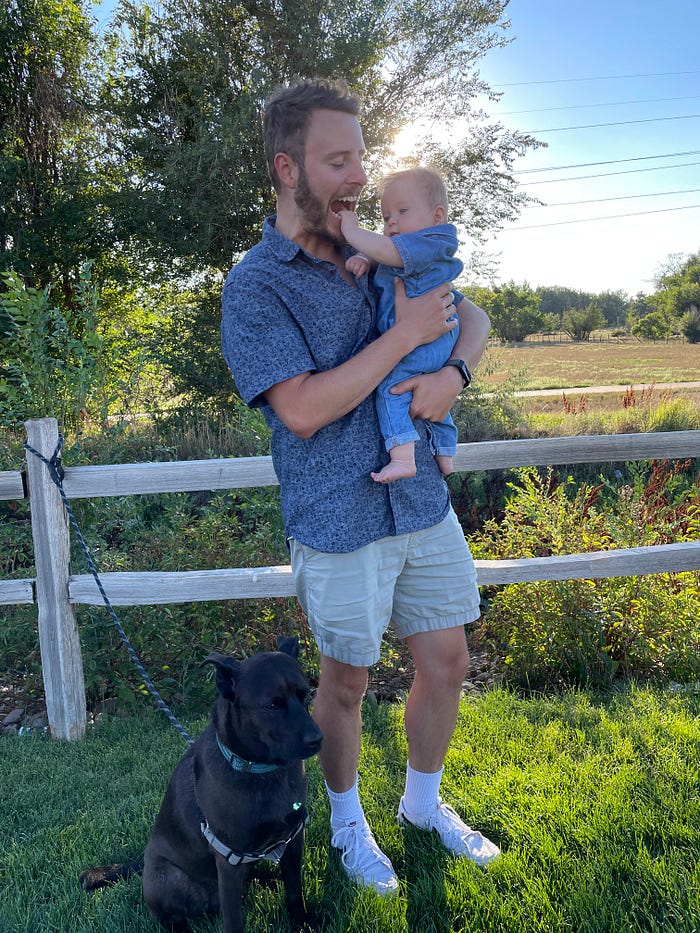
I often notice this in my life now. Personally, one of the most significant adjustments I’ve had to make, as we were discussing earlier, is transitioning from a young adult in my twenties and thirties with complete freedom to being a parent and finding my place in a larger family unit. During difficult times, I remind myself to take it one step at a time — whether that means focusing on the next five minutes or the next ten minutes. Or, simply making it to bedtime tonight and using that as an opportunity to reset. This approach has been really helpful for me.
You’ve had an interesting background with experience in environmental technology startups and using your technology background to solve civic problems. Can you go into a little more detail as to your experience?
Certainly. The past few years for me have been about exploring different sectors and how each one approaches problems, which I’ve found to be quite similar in many cases. After finishing school, I started my career in consulting and primarily worked with federal agencies. I then transitioned to local government and spent a few years working on public-private partnerships with entrepreneurs and startups. For the past few years, I’ve been working in startups myself. One of the most interesting things to me has been observing the different tools and approaches that each sector has for the same problems. When I first started out, it seemed like many groups were working in isolation, but now there is so much more collaboration. It’s been an enjoyable and insightful experience.
When you look at some of those tools and approaches, do you see much overlap in how they solve problems, or are they really very specialized for those sectors?
There is a great deal of overlap between different sectors, and I have seen many creative individuals who have worked in one industry take their experiences and apply them to another. One example of this is when I worked with the city of San Francisco, where I ran a startup accelerator program. This type of program was not traditionally associated with government work, but we saw great success with it. In fact, during my time there, we were in the process of turning the program into a non-profit organization, which would allow us to scale it more effectively across different cities and even across the country.
Overall, I have been surprised by the fluidity between sectors and the ability of individuals to take their skills and experiences from one industry and apply them in new and innovative ways.
Normally, innovation typically starts in the private sector and then moves to the nonprofit sector before eventually being picked up by the government. Have you also observed this pattern?
The extent of innovation across different sectors can vary based on what is meant by “innovation.” While a lot of the latest AI excitement has been driven by companies in the private sector, a ton of early technology research is conducted in government labs when the innovations aren’t yet commercializable, and there are people in government who work to incorporate AI and other new tools into their systems early on.
I have noticed that different sectors tend to foster different types of innovation. In my experience working with local government, I found that individuals tended to be more resourceful in solving certain problems due to government constraints such as limited, fixed-pool funding or difficulty in hiring new staff. These constraints can lead to innovative solutions that may not be thought of in a different environment.
Interesting.
I believe there is a growing interest in exploring new and diverse approaches to problem-solving. One thing that has become clear is that each sector has unique strengths and capabilities. Generally, most Americans would prefer the government not to intervene in matters that can be handled by the market. Consequently, the government is left to tackle complex issues, such as externalities and negative impacts on society that the market does not address. These problems often require collaboration between the government, non-profit organizations, academic groups, and companies to find a solution.
My perception of what innovation entails has changed over time. Initially, I associated it with technological advancements. However, my understanding has evolved to encompass various methods, such as engaging with users or customers, and internal changes within an organization. I believe these can be equally transformative.
Tell me a little bit more about your current company, Upstream Tech. Can you talk about some of the problems that you’re working to solve?
Sure! As a company, Upstream Tech, we have two products or services, and the one I focus on is called HydroForecast. Our main goal is to provide information about water availability and risk, specifically on how much water will be available in dams, reservoirs, or streams in the future. This is crucial because water is becoming more volatile in many places, especially in places like California as seen after this last winter.
Our aim is to help people who operate water resources, such as municipal water utilities or companies that produce agriculture, by giving them more information sooner. With this, they can make better decisions and not be caught off guard by severe droughts or floods. By addressing some of these risks, we hope to contribute to a better water management system.
So basically your team would take a look at the data and it would show them the weak spots in their water management plan?
Sure, we provide valuable information to water supply utilities, cities, and farms about their water resources. For example, if a utility has a reservoir that provides water to cities, farms, and ecosystems with fish, we can tell them how much water is expected to come into the reservoir over the next few days and weeks. With this information, they can plan the appropriate amount of water to release, ensuring they have enough for dry periods and avoiding the risk of flooding during storms. Our goal is to help them make better decisions and mitigate water-related risks.
What are some of the ways that water flow and quality affect business, and what challenges and opportunities exist in this space?
Definitely. I was at an event earlier today with companies that are concerned about water risk in their operations. These range from agricultural producers and beverage companies to tech companies that use water to cool their data centers. Water used to be something businesses could take for granted in many places, but that’s not the case anymore. Many companies are worried about whether they’ll have enough water to run their operations in the future, whether that’s irrigating crops or producing the wafers in silicon chips for semiconductors, which is super water-intensive. They want to make sure they have enough water across their entire portfolio of operations and are also concerned about flooding if there’s too much water at any one point. Cities and utilities that operate large dams and reservoirs also face the challenge of balancing water usage to avoid overtopping and flooding. Water is great in the right quantities, but keeping it within those bounds is becoming harder and harder.
Whether water related or on a larger scale, how can individuals and companies work to build resilience?
I think that’s a great question, and it’s clear that over the last few years, we’ve all become more aware of the many risks and challenges out there. From my perspective, I believe there are two key things we can do to prepare for the unexpected. The first is to identify potential risks and vulnerabilities, and then analyze them thoroughly to develop strategies to mitigate them. The second is just recognizing that there will always be things that catch us off guard, like the COVID-19 pandemic.
I remember when my boss told me that an epidemiologist friend had predicted that 40 to 50% of the world’s population would be affected, and it was almost unimaginable at the time. That’s where building resilience and adaptability become crucial skills. It’s true that we may be exhausted from all the changes, but I also believe that we’re now much stronger and more resilient than we were just a few years ago.
What are some ways that you’ve tried to build resilience in your own life and within your family?
I believe that small changes can have a big impact, and this idea applies to my own personal growth as well. I’ve had a goal for the past five years of meditating for 10 minutes each day, with the hope that it would eventually grow into a more extensive practice. However, that hasn’t happened yet. Instead, I’ve found that taking small pauses throughout the day to take deep breaths and exhale has been more helpful for me. I try to find these small ways to be mindful and present in the moment, rather than feeling like I have to be the perfect, healthy, mindful person all the time. Whether it’s choosing roasted veggies over fries or taking a moment to breathe deeply, I focus on making small, doable changes in the moment rather than adding a thousand things to my to-do list. If I don’t have the energy or willpower to do better in that moment, I remind myself that it’s okay.
It seems like it comes down to two different ideas that both focus on smallness. The first is just breaking up a big task into small manageable steps and conquering those small steps. The second is taking small moments and working to make the right decision in small moments, as opposed to focusing on a big long-term change or something drastic or radical.
Yes, I think that’s right.
What’s next for you?
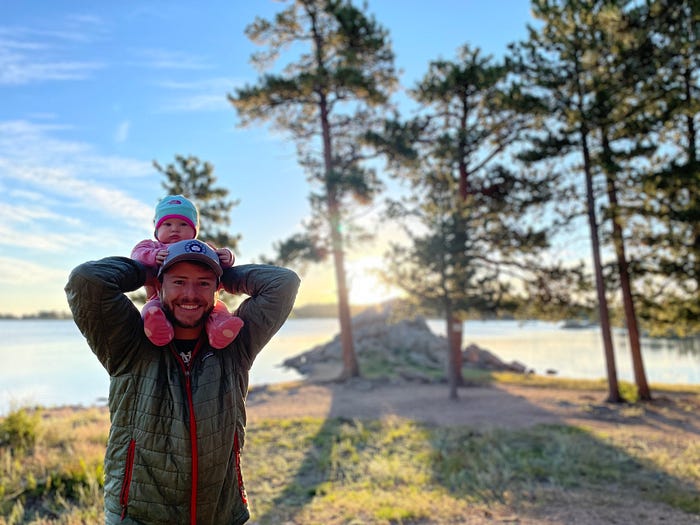
The biggest upcoming change in my life is that my wife and I are expecting again this summer. Going from not being a parent to having one kid was a massive shift, not something that could be accomplished with small changes. However, my wife and I were both intentional about keeping hold of our individual identities while still being present parents and maintaining our relationships with friends and hobbies. Figuring out how to balance being a parent and spending time with my family while also pursuing my interests and career goals will be a big challenge, especially with two kids instead of one. I recognize that other families have even more children, but for me, this change is significant. Ultimately, I believe that finding that balance and making sure to take care of myself and my family will be key.
Thanks so much for this chat, Daniel. I think you’ve given us some great food for thought — and congrats on baby number two! If someone wants to contact you and talk more, what is the best way to reach you?
They can find me here on LinkedIn. I’ve also recently started a newsletter on making your home more climate friendly and resilient. Check it out at Welcome Home Guides!
Want to learn more? Go more in depth here:
 Mick Hammock
Leave a comment