Tag: community

  • Navigating Disruption: Finding Resilience through Work-Life Balance with Bill Simon

    Navigating Disruption: Finding Resilience through Work-Life Balance with Bill Simon

    I recently sat down with Bill Simon, former managing partner of San Diego Law Firm, and current Founder and Chief Counsel at Sollertis, a law firm that specializes in personal and business asset protection. Bill has been a fixture in the San Diego business law scene for over 30 years, and has a wealth of experience in both business and life that made him a fascinating interview.

    Bill and I covered a number of topics that went a different, but much more profound, direction than what I originally anticipated. We talked about the importance of planning to be disrupted, Bill’s thoughts on risk, the questions that he asks himself every morning, the importance and beauty of work-life balance, and much more. I firmly believe that Bill’s philosophies of emphasizing health, helping others, and building strong personal relationships are crucial and beneficial for anyone pursuing a successful and meaningful life.

    If you’d like to learn more, check out Sollertis or connect with Bill on LinkedIn

    I’m primarily interested in the concept of resilience – whether personal, communal, or societal. What does the concept of resilience mean to you?

    That’s a great question!

    I went out to lunch one time with Fred Port, the former Vice President at Callaway Golf, who is both a client and a mentor of mine. He asked me if I knew the one thing that every single person on this planet was going to have to deal with in the coming years. I was trying so hard to figure out the answer, and I went down the routes of health problems and financial issues and whatnot. I wasn’t smart enough to figure it out, so finally Fred gave it to me – the answer is disruption.

    He told me, and I think he’s spot on, “Everyone is going to have to deal with disruption. There are no exceptions – everyone deals with it. Your ability to deal with disruption is going to determine how you do in life.” And I always thought that was super smart of him to come up with that. He told me this probably 20 years ago, and I’ve been thinking about that ever since.

    It’s something that I try to teach my kids. Most people like to think that everything will go according to plan. But when you reshape your mind around disruption, you realize that relatively little goes according to plan. And your ability to deal with all the changes that life throws at you determines how successful you are – however you define success. So yeah, when I think about resilience, I think it is the ability to continuously overcome disruption, things ranging from having to get knee surgery, a client who isn’t happy, a great employee leaving, finding out a loved one has cancer – resilience is just overcoming the disruptions to life, big and small, that keep coming day after day after day.

    You mentioned that overcoming disruption is something you try and teach your kids. What are some ways you try and instill that?

    Well, I don’t consider myself a qualified teacher, but I can talk about how I try to deal with it! For me, it’s all about anticipation. Don’t go through your day expecting everything is going to work out according to plan. Expect disruption. Look for it. Anticipate it. And sometimes the anticipation is easy – if you need to be somewhere at 3:00 pm and it takes 30 minutes to get there, don’t leave at 2:30!

    I remember I had to go to court one day and I was with my partner Tom. We were driving different cars, and Tom actually got in a car accident on the way there. He had to stop, exchange information, do all that, and was still only two minutes late! Meanwhile, the opposing counsel was 15 minutes late and he didn’t even have a car accident! That just goes to show you how good Tom was at anticipating and dealing with disruption.

    You can turn this anticipation of disruption into a positive, too. Something I always try to do is help at least one person a day. One of these times I was with my wife and kids driving somewhere when a car accident happened in front of us. We pulled over and I got out, and the girl who was in the accident was a young driver and didn’t know what to do. She needed someone to help her right there and be with her through it, and I was able to help her through that process and help her realize that things would be okay. You can’t do that for somebody if you don’t have time set aside to deal with disruptions. So perhaps another facet of this is not trying to cram so much stuff in your life, instead building in some time for those little disruptions that will always occur.

    Your dad actually has a great line around this. He always says, “Plan the work, work the plan.” I say that myself all the time now. Because when you plan, you don’t want to just plan for work you know about. You want to plan the work that you don’t know about that invariably will come up.

    That makes sense. So this sense of anticipation, of working through disruption, seems like a great quality for a lawyer to have. Is this something that you see often in law?

    Well, I think they’re good qualities for anyone to have. But you’re right, they come up a lot in law, especially on the litigation side, since you can’t control what the other side is going to do – you just know that they’re going to do something!

    So it comes up a lot in law, but I think it really just comes more in life. I actually think I can plan around that kind of stuff in the law firm better than I can in life. I mean, I don’t have a whole lot of surprises at the law firm anymore. And I have people who work for me and deal with those surprises more than me.

    But I still have to not pack my schedule and plan time every day. I know there will be certain clients who have things that come up and they’re going to need to talk to me or my attorneys. They’re going to need help getting through a situation. So if I have an eight hour day, I can’t plan back to back meetings for eight hours. I have to have windows where I can slide things in. If nothing comes up, then that’s great! I can do other things. But you have to reasonably anticipate disruption.

    Your ability to deal with disruption is going to determine how you do in life.

    So let’s talk about that law firm. You’re the founder and Chief Counsel of Sollertis, a law firm focused on maximizing and protecting assets. Could you give me a little bit of background on your career journey? What motivated you to open your own firm?

    Well, I think this actually opens up a discussion on risk. To me, working for someone else was more risky because they have layoffs. You don’t have as much control over what kind of work you do. Typically, you start working and you want responsibility. You don’t want to just sit there and do the same thing over and over, you want to grow. You just got out of school, you’re excited, and you want to bring it on, right!

    So I felt that if I started my own practice out of law school that I would be able to get that growth. That was less risky to me. I barely had any bills. I was single, I had no kids, no wife. I thought it seemed like the perfect time to do my own thing and go solo from the very beginning. And so that’s what I did.

    I did it with my best friend from law school, Tom Parashos. We were partners for over 25 years. When we started, we realized that my last name, Simon, was easier to spell, so we put my name first – our firm was Simon and Parashos. Then, when the internet came out, I went out and grabbed www.sandiegolawfirm.com, and we decided to change our name to that – so that if we ever sold the firm, we wouldn’t have to change the name! With lawyers, with business cards and brochures and all their stationary, every time someone added a new partner they had to throw away all the old materials and print new ones. And so we were just being proactive – everything could change and get disrupted, but we could keep the brand the same.

    Tom and I had a lot of fun. When we started, we were both just a couple of guys out of law school. We both got married, had kids, bought homes. It really took us a long way. Tom ended up moving and starting a residential real estate brokerage with his wife, and they’re doing really well at that. So when he was phasing out, I started heating up. And that’s when I started Sollertis.

    I decided to focus more on asset protection this time around. We did some of that at the San Diego Law Firm, but I really wanted to focus on that side with Sollertis.

    So you’ve actually started two law firms then! What would you consider to be one of your major successes?

    Most of my success stories are not through my law firm. They’re more on the personal side. And most of that gratification comes from the last 20 years when I’ve been married and had kids. That’s sort of a theme to my life, I really try to keep a balance. I wasn’t able to do this when I first started and worked longer hours like a typical attorney, but I saw other, older attorneys who were many years older than me and what their health was like and what their relationships were like, and I didn’t want that. So the law firm was part of my life, but the main part was the family. Family and health.

    I have a couple of questions that I ask myself when I wake up every morning. The first thing I say is, “Am I healthy?” Because the opposite of health is death. And what good am I if I’m dead? So I always have to be healthy. I owe it to my wife and kids to be as healthy as I can so I can be around as long as possible to help them out. So, I ask myself if I’m healthy, and figure out what I need to do that day to stay that way – whether it’s workout, eating right, or seeing a doctor about something.

    The next thing I think is “How’s my wife doing?” She takes care of my kids, after all. She’s a mother who looks after them nonstop, even though they’re all in their twenties now. She lets me know what I need to do or need to know. So she needs to be doing well too.

    After that, it’s “How are my kids doing?” I think about each one. My son Max is getting ready for a trip while studying abroad, so I check in with him. My other son, William, is going through a job transition in New York, so I check in with him. My daughter Lauren just had a little dinner party last night. I check in with her. It’s short – sometimes a call, sometimes a text.  After that, I ask about how my friends are doing. One friend is transitioning to a new company this year. Another friend has moved to a different state. I like to keep tabs on my friends and be there for them too.

    Then, finally, I think about work.

    The main part of life is the family.

    What’s a major obstacle you have overcome?

    I really worked hard on work-life balance. The biggest occupational hazard I think, and not just for lawyers but professionals in general, is stress. And I learned that early when I was a young lawyer. There were so many lawyers in their 40s who were divorced, who were unhealthy, who were alcoholics, and they all worked 10-hour days and worked on the weekends and whatnot. And I didn’t think that looked sustainable.

    I didn’t want that. I didn’t feel like I could be a good husband or father or friend or any of that stuff if I was spending my time for what, chasing money? I figured that maybe it would be okay if I drove a Honda to the gym instead of a BMW.

    So that was a big thing for me – and the big success was being able to overcome that trap. I’m 58 right now. I work three days a week – Tuesday, Wednesday, and Thursday, and I work 5 hours each day. And believe it or not, in those 15 hours, I get more done than I used to get in 40 hours.

    And it’s so hard to imagine how you could do that! But you start working smart, and to me, it’s all about kingpins. In bowling, when you knock the kingpin down, it knocks all the other pins down. So if you start thinking, what am I trying to accomplish, how can I accomplish that in the least amount of time, and in the most efficient way? What do I need to do this? What pin do I need to knock over to get the most amount done? So you can stop trying to be thorough and comprehensive, and focus your time on being precise and exact. You start to figure out the little things where you can bring about a result, or increase the probability of a result, by just doing one or two little things instead of a huge thing.

    Being precise and exact to get more things done. I like that!

    So you’ve structured your life in such a way that it allows you to have this work-life balance. Is that something that you talk to your clients about?

    Well, I don’t really like telling other people how to do things! It’s like when you’re golfing and you see someone who doesn’t play that much pull the wrong club out…if they’re not asking, I’m not telling. You know what I mean?

    I feel like, what I do works for me. And if someone along the way sees or hears about what I’m doing, and it influences them somehow, then great, so be it. But I’m not going to proactively tell people about things like that.

    However, I do sometimes get a little pushy when I talk to my clients about how they manage their personal wealth. And I don’t mean by how they have it invested and whatnot, but typically my clients are entrepreneurs. They have someone at their business managing the financial matters and moving it around and collecting the receivables and things like that. And it runs really well.

    But then on the personal side, they do all their own stuff. So when we set up our asset protection structures, I emphasize that, in addition to incorporating this asset protection structure into their situation, they really should have somebody handling all the bookkeeping, financials, loans, tax returns, that sort of thing. There’s a better use of their time, and that’s really what I push.

    The benefits of being precise and exact.

    I’d like to talk about risk again. You mentioned earlier that you saw not starting your own business as a risk! And, as far as I understand it, asset protection works towards minimizing risk. What are your own personal philosophies around managing risk in your own life?

    Well, again, this is just for me. I don’t know if this applies to everyone else, but there is no better bet than betting on yourself! That’s my philosophy.

    So if I had my own business, I can control it. I can make sure it’s financially sound. I can make it run smoothly. I don’t have to rely on a bunch of other people to make sure I still have a job.

    I just felt like, if you focus on work-life balance and some of the things we’ve talked about, working for yourself is a better situation. It carries less risk than all of those changes. I can set my own schedule. I could work as hard or as little as I wanted to. I always like consistency. I like steadiness. Like I talked about earlier, I want to minimize disruption, and it’s easier for me to plan for it when I work for myself.

    I love the philosophy of betting on yourself. In that same vein, what’s next for Bill Simon?

    Well, one of the challenges at the firm was that we deal with a lot of trustees, and the turnaround time when you deal with them can be long and difficult. It takes a lot of time to get things turned around, and it was slowing down our project. We solved that problem domestically by gaining control of trusteeship for our clients, and now we’re working on solving that at an international level when we deal with international trustees. Things were taking two or three months that we could normally turn around in two or three days. So that’s the new thing on the business front – we’re setting up an international trust company.

    On the personal front, I have my son William in New York and my daughter Lauren in Dallas. We split our time between the two cities so we can spend time with each kid. My youngest son Max, we’re still figuring out where he’s going to be, but I think he’ll end up in Dallas. We’re just following the kids around and spending as much time as we can with them – but in a good way! Not in a, “Oh man, dad’s here again,” way, you know what I mean?

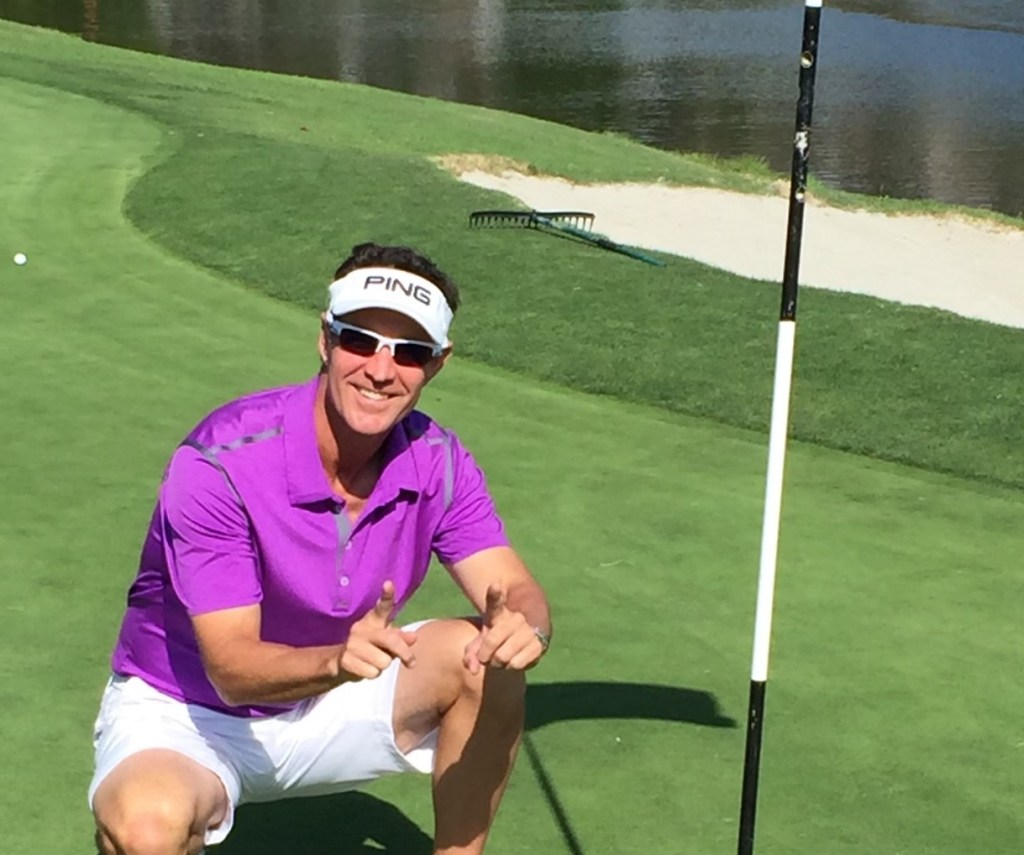
    At this point, I really just want to keep things going! I’m golfing a lot. I’ve played Augusta National recently, what a treat that was. And I’m going to Scotland in July to golf with your dad.

    What a year!

    At this point, I’m just trying to stay as healthy as I can. What’s next? I just want to enjoy the time. I’ve done the work, I had the discipline to invest and not blow money on material things, and I want to just keep doing what I’m doing.
    One of the many benefits of staying healthy!

    What’s the best way to get in contact if someone would like to learn more or follow up with you? 

    We have a good newsletter, and everything from our newsletter is on our blog, and my daughter Lauren turns the blog posts into video animations too, which you can find on our YouTube. Or you can follow Sollertis or me on LinkedIn. But that’s pretty much it.

    All of our business comes from relationships. Probably 95% of our clients are from relationships, only 5% found us on their own. Our clients are generally high net worth people who don’t really go online to look for us – they find us through their relationships. So for us, the social media and all that isn’t really to drive business, it’s to have a little street cred when someone checks us out.

    Is there anything you’d like to talk about or highlight before we go?

    I have been so fortunate to have some of the greatest mentors that you could ever imagine.

    Something I’ve noticed is that people who are successful, if you ask them, generally want to impart that knowledge and that wisdom on you.

    So even though, like we talked about earlier, I won’t tell someone what to do unprompted, if they ask for my advice, I’m very eager to share it with them. I’ve learned some good stuff. I want to pass on what I’ve learned.

    I would just say that to anyone out there reading this, never be shy about going out and talking to the most important person in the room, who’s accomplished the most. You might think, “Oh, he’s so busy,” or “He wouldn’t talk to me.” No, you go ask that guy, “Hey, how did you end up playing NFL football?” Or, “How did you become the CEO of that company?” And it’s unbelievable how much those people welcome that, and love to tell you the story, and how much you can learn just from listening to what they say.

    So I guess that’s my approach. Don’t try to reinvent the wheel. Just talk to people who have already done it, and they’ll give you the secret sauce.

    Want to go more in depth? Learn more here:
    Sollertis website

    Sollertis blog

    Sollertis LinkedIn

    Sollertis YouTube channel

    Bill Simon LinkedIn

  • Finding Civility: Community Resilience with Sam Dettmann

    Finding Civility: Community Resilience with Sam Dettmann

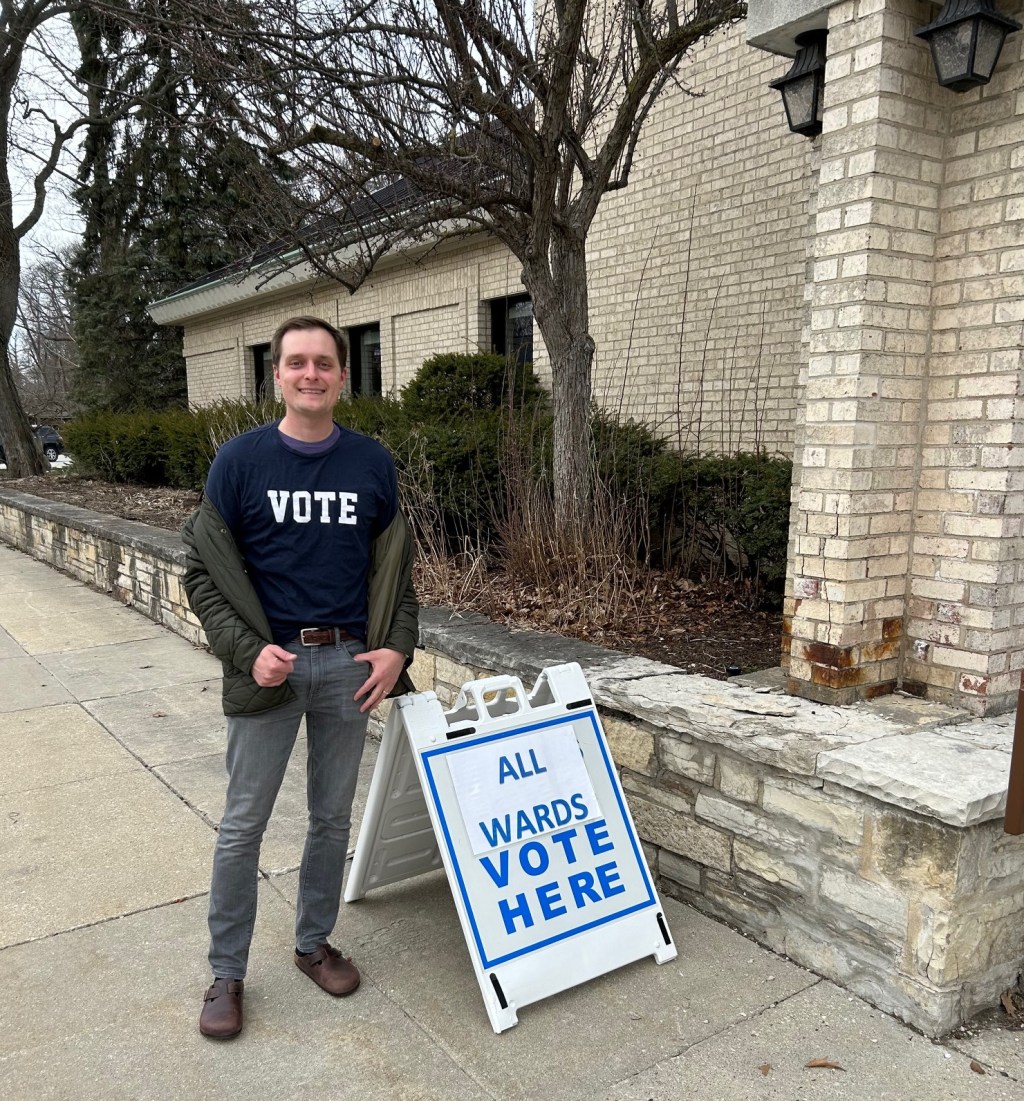
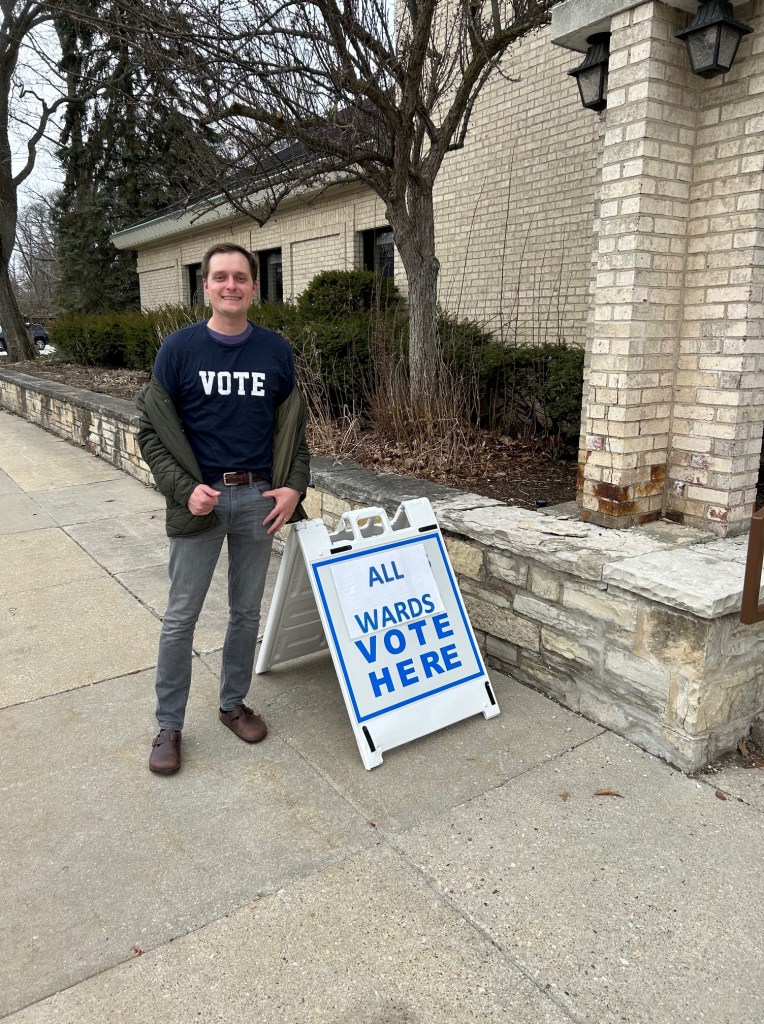
    I had the pleasure of sitting down with Sam Dettmann, a friend of mine since college. Sam is currently running for a Village Trustee position in his town of Whitefish Bay, Wisconsin. While many of my previous blog posts had a tangential relationship to the greater San Diego area, this one takes a peek behind the curtain of a close-knit southeastern Wisconsin community, and the high-level resilience insights we can glean from someone involved in the local political sphere there. It’s a slightly different angle than normal, but one that I found interesting – and still highly relevant.

    We covered a number of topics, ranging from what makes a resilient community, how a town’s design can contribute to its character, how to network, meet people, and the importance of listening, and the lost art of civility. It was a nice surprise – this catch-up with my friend turned into a really revealing discussion on the communities and institutions that we all make up, and the role that we play in strengthening them.

    If you’re in the community of Whitefish Bay, I hope you choose Sam on April 2nd! And if you’re not, I hope that you enjoy this discussion on what makes a local community strong.

    To learn more or reach out to Sam, you can contact him here.

    Editor’s note: Sam won! Congrats Sam!

    I’m primarily interested in the concept of resilience – whether personal, communal, or societal. What does the concept of resilience mean to you?

    That’s a good, tough question.

    I think for me it’s the idea of being comfortable with who you are, even if that sometimes means being okay with not being liked or not being able to please everyone.  As a candidate and a person, I am learning this as I go, and it’s a work in progress every day. In the campaign, I try to keep things even and I am always open to collaboration with anyone who reaches out to me, but it’s still important to realize that you’re never going to be able to please everyone. The way that I work on that and on being comfortable with it really starts with making sure that I have strong connections, with my family and my personal network, who I can rely on to help provide guidance and grounding.

    Being comfortable with who you are, while not necessarily being liked. Is that something that you started working on as a result of this campaign? Or is it something you’ve been working on longer?

    Something I’m always working on is my sense of self. What do I bring to the table, and how can I do it in a way that makes an impact?

    The campaign has been a great learning experience for this. It’s a lot of work even just running in a local race for a smaller town, but you learn a lot about yourself, what you do well, what you can work on, what your strengths and weaknesses are. And then you also get much more connected to your community and the people in it. If you’re reading this and interested in running for something, I think you should do it but be prepared to be challenged. At times, a campaign can also be a bit lonely, which is a strange paradox as running for office in an inherently connective experience but there’s an element of self-reliance that can be humbling at times.

    Sam Dettmann is running for Village Trustee.

    What originally attracted you to the Whitefish Bay community? Would you classify it as a resilient community?

    My wife actually grew up here, so we were familiar with it. I grew up nearby in the Milwaukee area, so I also knew the area but when we were looking for somewhere to set down roots we both knew Whitefish Bay was the right place.

    One of the things I like about living here is the nice blend of urban and suburban feel. We live about ten minutes from downtown Milwaukee, and can get there from our house by bike on well-maintained trails, but Whitefish Bay maintains this great neighborhood feel. It’s the second most densely populated community in Wisconsin, so you know your neighbors and it’s walkable.

    We also have phenomenal schools and phenomenal services. Those were big attractors for us, and that’s something I want to do my part to maintain over time. I have two kids, one who just started in the school system, and I want to make sure that I’m doing what I can to help build the community for them and the future.

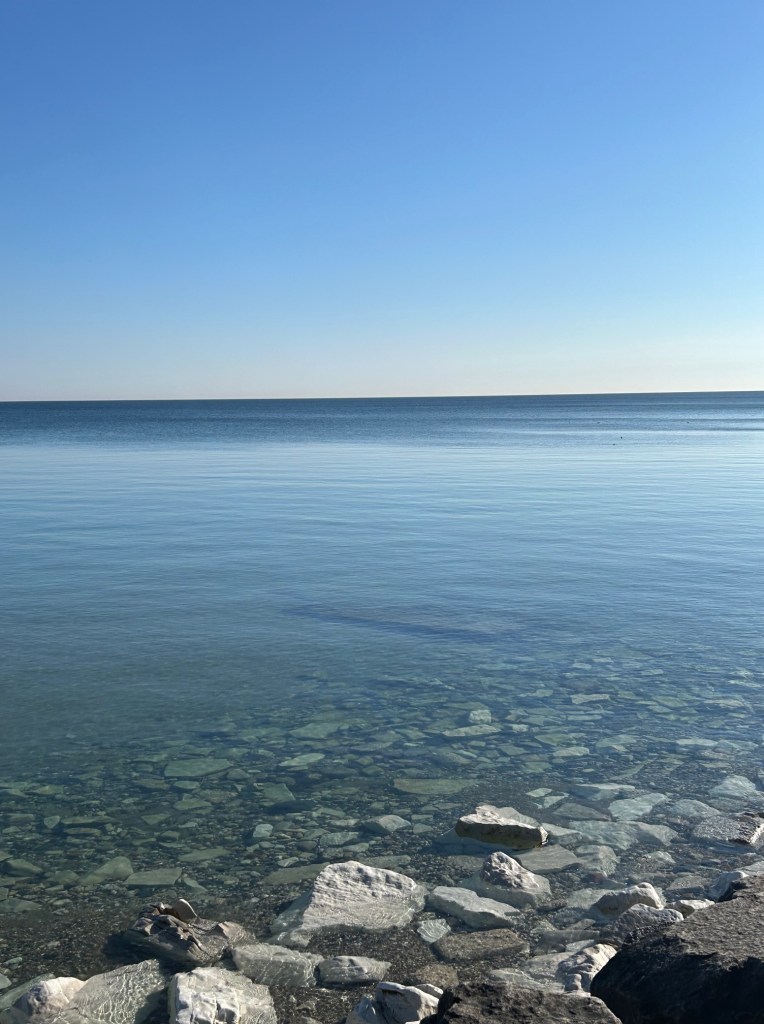
    The other piece that’s really cool about Whitefish Bay is the geography, which is really unique. You are never far from Lake Michigan in Whitefish Bay and it’s a great place for walking, biking, running…there are just some really nice opportunities to get outdoors here and our residents take advantage of it.

    The shoreline in Whitefish Bay, Wisconsin.

    It seems like a lot of what you’re saying is that resilience can be built into a city’s very design – the urban (or suburban) character, but also the interplay between nature and the built environment.

    I think the last piece is community as well. People contribute to the resiliency of an area, and we have very strong neighborhoods. Even individual blocks are really close knit with a mix of residents who have lived here for decades and new ones connecting and helping each other out. Throughout the summer, we have block parties, and the energy and attendance of that is really refreshing.

    Of course there are the city design elements, the geography, the interplay between nature and that design, but also the people who inhabit the community and how they contribute to it.

    We have some challenges though. One of the big issues we face here is maintaining and restoring our shorelines from erosion. They need a lot of maintenance, and our parks need maintenance as well – although both provide great opportunities to gather outside. So I’d consider this to be a resilient community, but we need to continue to improve it.

    Shoreline erosion is something that we’re intimately familiar with in Southern California!

    Where do you see the local government’s role in fostering community resilience? Is that even something that the local government should be involved in?

    I think it is. Something I’ve learned through this whole process, and it can be challenging both in a campaign and personally, is that it’s really easy to have huge aspirations and we need to think strategically about the future, about how we develop as a community. But when you start to realize what the day-to-day roles or the week-to-week roles of the local government are, and what they’re actually focused on, it’s not always the things you think about. There is a wide variety of boards and municipal departments that handle different things. And I think people often think that when things get done, it’s the seven people on the board who are pulling those strings, and there’s generally a lot more to it than that. We are lucky to have a great municipal staff who make life here safe and enjoyable for residents.

    A lot of what the local government gets down to doing is detail – it’s decision making, it’s pragmatism, it’s planning for the future in a strategic, concise way that is aligned to what our residents want. How do we take a year of our budget and make sure we’re investing for the future while controlling our tax burden? This type of balance is something I work on a lot in my day job and I hope to bring it here as well. I am a CPA and work with budgets and financial plans every day and I want to lend those skills to our local government

    So it’s important to have both – the aspirations and the basics. Effective leaders take aspirations and make sure they are achievable and make a positive impact on those they serve.

    So in summary, it often comes down to services. It’s the things you don’t notice – the sewers are working, the streets are shoveled, the parks are maintained. It’s all of those things. But of course, it’s critical to plan for the future too and I want to contribute to that discussion with an open-mind. What should we focus on knowing that we have limited resources, what will drive the most positive outcomes for our community? That’s part of where I think resilience fits in – we have various plans and initiatives that inform our vision and the goal is to implement them, but sometimes those plans are daunting, they’re long, they cover decades, and the world changes, so it’s also important to be nimble.

    Let’s go back to some of your comments about community, which you mentioned was one of Whitefish Bay’s strengths.

    In his book Bowling Alone, which you and I have talked about, Robert Putnam talks about community building almost as a paradox of being both in decline, but also more important than ever. Can you talk about the importance of community, not just at the local level, but the personal level? Then, do you have any tips for building community, not just within an urban environment, but also as part of a personal network?

    Yes, I agree wholeheartedly with that. I know you and I have talked about it in the past – this is one of my favorite books!

    When we think about what a society should look like, Putnam talks about a concept of social capital, which is basically the social and personal connections that make for a strong, productive and united community. It’s a really important idea, and for me it’s one of the biggest factors for increasing personal resilience – finding out how to increase and then effectively use your social capital. Because no matter what happens, if you have social capital, you have a community around you to help solve problems.

    In terms of building community, this has always been important to me, but I think that really came into focus during the pandemic. We had so much technology at our fingertips, but what people seemed to want more than anything was to connect in a meaningful way. And honestly, I think that we lost something at that time, and maybe we had been losing it for a while and COVID accelerated it, but I am concerned about our capacity to connect with one another. I think technology may be a part of that, since it can allow people to retreat into their bubbles but it’s really nice to get out there and connect in person with the community. That is one of the things I love about working with our town Civic Foundation – it forces you to connect.

    A little more about our Civic Foundation, it’s a private organization but it partners in many ways with our local government, and we put on a lot of the most loved community events around town. Many of these events have been going on in Whitefish Bay for decades and the Civic Foundation has been a great steward of them over time. They are attended by a huge portion of the community and residents of surrounding communities and they are always free to attend. I joined the Civic Foundation board coming out of COVID and it’s been a great way to build community and meet other residents. It’s really part of the fabric of our town. When I help with the Civic Foundation events, I feel like I am building social capital and contributing to a resilient community, and it is refreshing to be part of something positive and local.  

    Through this campaign, I have also enjoyed the nonpartisan approach of local politics, which is so different from partisan national politics. I think this really helps us focus on issues that matter to our residents.

    Let’s talk about that difference. When people normally think about politics, they often think about things from a long, drawn out, partisan national level. What has been your experience thus far with politics on a local scale?

    I think it’s quite different!

    The office I’m running for is nonpartisan, so it really forces you to think about issues and not categorize yourself into a specific camp and that helps remove some of the clear delineations you’d have in a national race. I mean when you think about a national race, you have 90% of the voters accounted for regardless of who is running or what the issues are. That’s a big challenge because you end up fighting over a tiny sliver of voters on a huge range of issues.

    On the local level, I’ve found it to be much more about networking, much more about visible things you can impact in a tangible way, and then also about your tone, your philosophy, and your resume. All of those matter in a different way than they would in a national election where there’s a partisan letter after your name that’s going to get you most of the way there. So that’s been nice.

    It also forces you to talk to people and really connect with them in a nonpolitical way. I’ve been able to connect with people who have politics coming from all different angles. And sometimes their politics come up, sometimes they don’t, but it’s never the central area of focus and that’s really nice.

    A lot of what you’ve mentioned has involved those most basic aspects of community building – talking one-on-one with people and networking. Can you talk more about the importance of that for strengthening the local community?

    I think it’s the single most important thing you can do, honestly. What I’ve found is that when you talk to one person, at least when you’re running for something or working for a civic foundation, they’ll usually connect you with like five more people and from there you’ll keep connecting and encountering new perspectives. It’s important that you’re willing to be outgoing, you have to be willing to pick up the phone, and you have to be ready to have a lot of coffee!

    I think it’s also really important to remind yourself to listen. I think everybody, myself included, loves to talk. But you learn a lot by listening and you start to figure out common themes. When you talk to one person, you get an individual opinion, but when you talk to 50 people, you start to see common themes emerge. That’s really what you’re working towards – bigger themes and once you’ve identified them you can focus on the details around how to make that happen.

    Again, it’s refreshing to see that a lot of times those themes cut across political lines. What people are looking for often isn’t that complicated. And at the end of the day, people want to be part of a community that’s respectful and willing to interact and engage back with them.

    So the major themes you hear while out and about center on respect and engagement?

    I think those are two big themes, in addition to others that are more specific to our town. Civility is so important, and we’re lucky that we have it in this community. Like any community, we’ve had divisions in the past and I think we’ve maybe been a bit more divided recently than is typical, but overall, it’s an extremely collaborative community that really does prize civility.

    Part of what pushed me to run in a concern about civility more broadly in our society. Our ability to be civil in our disagreements, well, it’s eroding at least as fast as any shoreline and that makes me afraid for the world that my kids will inherit. If we can’t have a coherent civil conversation where we might not agree, we are going to struggle to solve the many challenges we face. In Whitefish Bay, we are good at solving problems with civility, so I am going to do what I can to preserve that here in my town and improve it more broadly.  

    What made you want to get involved in local issues? What tips would you give to others looking to get involved in their own community?

    Since moving here I’ve been pretty involved in the community, from helping with reviews of people’s tax assessments, which I did for about six years, to now getting more involved in our Civic Foundation and Library Foundation. It turns out groups like that really like you if you’re a CPA and have budget and financial strategy skills and I’ve always looked for ways to use my skills and background to give back to the town. I mean, I’m probably not going to be the most creative event planner, but I can definitely make sure we have the funds to pay for it!

    At this point in our local government, I think my skills align with what we need, so that’s why I chose to run. It’s really for three reasons, which are themes of my campaign, community, consensus, and sound fiscal planning. There are a wide range of details underneath those themes, but they are the guiding principles for my campaign.

    As far as tips for running for local office, if you’re interested, first make sure there are five or ten people who are well connected in the community that you can talk with about your ideas and campaign approach. Ask them, does your case make sense? Who can they connect you to? What tips do they have and how do they perceive you? It’s always interesting to learn more about how you are perceived compared to how you perceive yourself and I think good leaders adapt and grow based on this feedback. These first connections are incredibly valuable in the early part of a campaign.

    When I think about a local community, I like to think about how it’s made up of building blocks of individuals, who make up individual families, who come together and form the culture of a town. So I want to talk about your own building block – your own family. Are you taking things you’ve learned from the community back to your own family? Are you taking lessons from your family out to the broader community?

    Yeah, I think it goes both ways. When I think about my own family, my two kids and my wife, they’ve done so much to instill into me the importance of listening, kindness, stability – I definitely learn much more in my house that I take outside.

    And then even though the kids are a little young to participate in the campaign, they like to be part of things when they can. They take pictures, they ask why there are signs up around town with my name on it, that sort of thing. I hope to make them proud! They may not know it now, but someday when they look back, hopefully they’ll think this was good no matter what happens.

    Even though the kids are a little young to participate in the campaign, they like to be part of things when they can.

    What are the best ways for someone to learn more about you or contact you?

    Our election is coming up on April 2nd, you can check out my website, and you can also use one of the various contact forms on that site to connect with me via email. I’m not taking donations for this campaign, but if someone wants to contact me and learn more, whether they live in Wisconsin, California, or anywhere really, then feel free, I’d be happy to talk with them.

    Is there anything else you’d like to talk about or highlight before we go?

    The first thing is that I’d really just like to encourage people that if they’re on the fence about running for a local office or getting involved in your local community, I’d say you should go for it! It’s a really great personal and professional experience. It will be uncomfortable at times and it will challenge you in ways you wouldn’t expect, but it will also connect you to really interesting people you wouldn’t have met any other way. And you never know where those connections and learning experiences will take you. Whether you win or lose, you’ll have a good experience, and you’ll be glad you did.

    The other thing I want to highlight is on that theme of civility that we talked about. I think the more you get out and talk to people, the more people will surprise you. They’re going to be more reasonable than you expect, going to have more complex views than you’d think. It’s so easy, at a national level, to classify people based on their political leanings, but underneath it, there is so much complexity that those parties gloss over. And that’s something that’s really harming our ability to be civil at a local level.

    There’s a scene in the show Ted Lasso where Lasso is playing darts and references a quote, “Be curious, not judgmental.” If you are curious about people, you are going to learn something – and I think that’s a pretty good takeaway for anything you want to do.

    Want to go more in depth? Learn more here:
    Sam Dettmann’s Village Trustee Website

    Sam Dettmann’s Village Trustee Instagram

    Sam Dettmann’s Village Trustee Facebook

    Sam Dettmann LinkedIn

    Whitefish Bay, Wisconsin

  • The Social Coyote: Getting Out of Your Den and Finding Your Pack with Jonah Peake

    The Social Coyote: Getting Out of Your Den and Finding Your Pack with Jonah Peake

    I recently had the chance to sit down with Jonah Peake to talk about the go-to source he created for all of San Diego’s tech and entrepreneurship events, (and perhaps what could be called his alter ego), The Social Coyote

    More than just a mere event newsletter, The Social Coyote is one man’s mission to get 1000 San Diegans out of their dens and into the tech and entrepreneurship community. Sprinkled throughout the weekly calendar are a healthy doses of coyotes wearing sunglasses and a fur-rocious amount of puns. It’s great fun, sure, but The Social Coyote is also a case study on building community and connection in an increasingly digital age. And honestly, it’s working – it really does get people excited for these events! Who would have thought that such a simple concept, a curated event email newsletter, would be so much fun? Jonah would, that’s who. 

    We talked about a number of topics, including using change to propel yourself forward, his thoughts on San Diego’s tech culture, how to build and see a community’s web, how to be comfortable at unfamiliar events, and how to finally find your pack. 

    If you’d like to learn more, you can reach Jonah on his LinkedIn – or sign up for his newsletter here to stay abreast on all that’s happening in the San Diego tech scene. (Just make sure to use this link so I can get the coveted CoyoTee). 

    Howl yeah! 

    Ah-wooooo!

    I’m primarily interested in the concept of resilience – whether personal, communal, or societal. What does the concept of resilience mean to you? 

    I like this question – I’ve actually been thinking about it all week! Resilience, to me, means going through something challenging, coming out different, and then finding a way to use that difference to move forward. 

    I have a bit of a personal story with this. When I was 27, I went through a health crisis. I went into a coma, was taken into the hospital by my girlfriend (who is now my wife!), and it turned out that I had ketoacidosis, which is what happens when you have Type 1 Diabetes. Basically, your body turns acidic because you can’t get sugar into your cells. 

    It was crazy because, after a few days in the hospital and many IVs, I was released from the hospital – but I had an entirely new lens to view the world. If I eat a certain way, I have to think about it differently. If I exercise a certain way, I have to think about it differently. Even something like leaving the house is different. And it was a total shift in how I lived my life. 

    So in a weird way, going through that experience shifted who I was completely, and refocused how I thought about everything – and I do see that as finding a bit of resilience in an extremely challenging situation. I could have easily said “This sucks” and felt sorry for myself, (although you sometimes do), but that’s not the way you want to go through something like that. 

    I think if we think about it, most of us have had an experience that totally shifted us, but that health crisis was a really strong one that taught me a lot. 

    So going through something, and coming out on the other side differently as a result – but resilience is found when you use that difference to propel yourself forward.

    I mean, you never go back to being the person that you were a year ago – or even the person you were yesterday. Propelling yourself through change with a new context is how I like to think about it. 

    You are heavily involved in the San Diego startup and entrepreneurship community. Can you briefly give some background on your career/areas of focus so far? 

    The start of my career in San Diego was teaching surf lessons and handing out Monster Energy drinks. These ended up being dead end jobs and I needed to find something I could grow into. So I went searching for a startup, and what I found was basically on-demand tech. I found my way to a company I found on Craigslist called Handy, which was a home cleaning startup, in the era where people were trying to build the next “Uber for ….” They eventually were purchased by Angie’s List.

    Handy shared coworking space with Postmates – so we battled for conference room space with them to onboard our people!Then, I worked on a project that would eventually automate my job entirely at Handy, and, seeing the writing on the wall and having connections at Postmates, I jumped over. Plus, food delivery felt cooler than home cleaning!

    What I started to notice, though, is that when a company (like a Postmates) gets massive quickly, they start to dial in certain processes. There’s less “We don’t know how to solve this, go figure it out,” and more “Here’s the playbook, run it and do the same thing every day,” which isn’t necessarily how I tend to think. 

    I really enjoy trying things and being creative, and that doesn’t always lend itself as well to the big machine that companies eventually grow into. I realized that I wanted to go earlier and see what companies that were far younger were doing. And so I started to seek out the San Diego tech scene, see who was active here, and see who was building things here. That’s how I started to plug into what was happening in the scene. 

    I started offering to volunteer at organizations that I thought were cool, like Startup San Diego, which was looking for an entrepreneur in residence in 2020. I ended up spending a year with them and putting on the Startup Month conference. It was actually a month, not a week, at that point!

    Cool.

    And there were a few others as well – the San Diego Angel Conference was going online, and when I talked to some of the people involved, it seemed super interesting. So I volunteered there, and tried to meet people and see who was operating in that space. 

    What ends up happening with many communities is that the same faces start showing up at different events. You start recognizing people from all over the place, and you start to put these webs together. 

    I had enough time working in and hopping between these different ecosystems and realized that we have a pretty intimate web in San Diego. Even though it’s large, there’s lots of overlap and crossover. And that got me really excited. 

    Before we move on to The Social Coyote, let’s keep talking about the idea of a San Diego ecosystem. What do you believe are some unique strengths in the San Diego scene? A common topic of discussion is that the San Diego tech scene is great at starting and growing mid-sized companies, but with a few exceptions, tech companies here seem to have a hard time crossing the chasm to become giant household names. 

    There’s a lot of debate on what makes San Diego what it is and why it’s the way that it is. Some people say that we’re the little underdog brother to some of the bigger scenes, and others disagree. Other groups don’t count biotech as part of the tech scene, even though I think it’s really a massive part! It could be partly due to the fact that there are so many transplants here. I’m one. 

    One thing I’ve thought about, and I don’t know if this is the real reason, is that some of the biggest industries and most influential groups in San Diego aren’t necessarily in the news. For example, they provide infrastructure or something to the military and it’s literally top secret so you can’t talk about it. 

    Biotech is also interesting. They don’t like to share what they do unless it’s already successful. Then, a company like Qualcomm is huge, but their technology powers other technology – and most people are just more familiar with Apple than the technology inside an iPhone.

    So I think there’s a feeling that we don’t have as much going on here as we truly do, just due to the nature of some of the biggest tech businesses we have here – but again, this is something that people like to debate. 

    The other thing though is that we have this culture here that is a touch more relaxed. You might have noticed this if you’ve asked for an intro to someone. It’s somehow easier to acquire than other tech scenes or tech communities. 

    I also think there’s just something about the way the city is structured. It’s very laid back. It doesn’t have the intensity of New York or San Francisco, and I think that changes how other people view it. But I think that’s a good thing! I really like how we have this energy and how we, for example, like to just take advantage of when it’s nice out! 

    So, I don’t know. I do think the friendliness and interconnectedness are a bit more vibrant here. We also shouldn’t forget that we’re 1.5 million people with 2 million more just south of the border who are very engaged with what’s going on up here – in effect, we’re nearly 4 million people in a very small area. That counts for something. 

    The man behind the coyote – Jonah Peake!

    Totally. And so that’s where you come in! Your current project, or perhaps your alias, is The Social Coyote, and helping push these connections and the culture. Can you talk about that? Why a coyote?

    I guess I was looking for some creative fulfillment. I was feeling disconnected from, let’s say, community in general, for a number of reasons. There was the pandemic, and I had a young child which also limits your schedule. But a few cool tools started to come online right around then – AI started to come out and people are generating amazing images with it, and there’s this new platform, Beehiiv, which allows you to make newsletters in a really effective and efficient way. All of these things kind of came together for me – I know I want to do a project, I want it to be creative, I want it to be helpful, and I want it to have some sort of cool impact on San Diego. And I also know that I have a limited schedule, and there’s lots of cool stuff going on. 

     Meanwhile, people would shoot me a text and ask me if I was going to something that night that I didn’t even know was happening. I had to decline all the time because I couldn’t get out of the house that quickly, so it started to get a little frustrating. So I first thought that, if I could learn how to code a web scraper, I could pull every event into one big database, and then I could know who is doing what and then I choose what fits in my schedule. I used as many tools as I could and banged my head against a wall, because that turned out to be a really bad plan! I realized that curation is what makes The Coyote special, not aggregation.

    I told a friend about this and he told me just to do it manually – just make a list and put it out there. See if anyone cares. That was a good point, because I was really overthinking what I wanted to do, and he pushed me to just go for it. 

    So at that point, I had to figure out what I really wanted to highlight. I knew some people in the tech community and really respected the events they were putting on, and I could share their events without having to attend each one. So then it all started coming together, but I couldn’t put out a brand that was something like OnlyTechEvents, or something,  but that’s a little too basic – or a little too much like OnlyFans. But maybe my SEO would have been great! 

    Then I thought of some other names, like Songbird Soirees. But songbirds didn’t make sense, and soirees are too fancy. So then I started to think about what we have in San Diego. What’s a San Diego animal? Could be a pelican, but then everyone who reads my list is a pelican too. So then I thought, what do I really want this to be? And I wanted it to be groups, packs of people. I wanted it to be a clever animal. I wanted it to have the feeling of something that is always present, but you might not always see. That’s when I thought about coyotes, which you sometimes see in our canyons or trotting around our neighborhoods, and I’m certain that they know a hell of a lot about us, even if we don’t see them at all! 

    And all of these things together felt really right. Packs and families, groups coming together. It felt like something I wanted to embody – bringing groups of people together and having them meet each other. My thesis became, the more people got out into the community, then the more opportunity they’d have to meet someone new who can open a door for them. We just needed the initial catalyst to get people out of their dens. And then the puns started showing up, and that’s what I built the brand around. It just felt right.

    That sort of hearkens back to your original comment about resilience – using the change from a transformative event to propel you forward. You felt disconnected from a community, then acted on that feeling to build something new. And you acting on that feeling has allowed other people to access that community too. 

    I think that’s really true. When I started talking to people, I realized that most of the comments I got back were things like, “My events pop up in my feed,” or “Someone told me about it,” or some other way of getting lucky. I didn’t want luck to be the barrier that prevented people from getting out there.

    The more interactions we have, the better we get at them, so I wanted to make it easy for someone to grab my list, make it unbelievably simple to find what they’re looking for, and encourage them to go to it. And I wanted to make Mondays something to look forward to!

    But really, I see this as a way to bring more eyes and more people into the tech community. If we can get more people in more easily, I’d consider that to be a success. 

    You mentioned that the genesis for The Social Coyote was that you felt disconnected. It was during COVID, you had a young child at home. Now that you’re connecting with the business community at large, does that fill that personal need for connection? Are you experiencing more community? 

    I think it does! 

    I think what ends up happening, and maybe this happens by accident, is you just start to go out more. You start to notice more connections. You start to see more people doing things you appreciate, and you absorb that. 

    Speaking of resilience, I remember going to a couple of events in the very beginning to test my thesis, and I knew no one. It was so hard to be at one of those events with something so small. The Social Coyote was tiny, and I wasn’t even sure I was allowed to talk about it yet. No one had heard of it. I didn’t even know if I had anything yet. But what I realized was, the more you went, the more you started to see similar people. The same people were now at a different event. And so you started to feel a bit more comfortable, and by being more comfortable, you felt more confident in going out and trying something new. 

    The other thing I noticed throughout this process is that every event starts out and hasn’t warmed up yet. So a lot of times you show up and get into a room and think, “This is uncomfortable. I am uncomfortable. I shouldn’t be here.” But what I realized is, after a certain amount of time, everyone warms up and loosens up, and so does the event itself. A lot of people associate that with having a drink or whatever, which can be a good strategy, but the event itself takes time to warm up too. 

    Sometimes just giving it time, being observant, and finding someone that you recognize is all it takes to get to that point. Then, when you get out more, you run into more people. You follow their journeys, and you see them grow as well. That’s kind of how I think about it, anyways.

    To continue down the coyote theme, you’ll start to find your pack and this will help you get more comfortable! 

    Go through something challenging, come out different, and then find a way to use that difference to move forward. – The Coyote

    What are some tips that you have for people who want to get involved in a new community, perhaps the San Diego business scene, who don’t have much experience in these types of events and don’t know where to start?  

    One thing I learned from the early stages, before I was comfortable, was that I didn’t actually have to say anything. I didn’t have to come to the table and start to pitch what I was doing, or tell everyone everything that is really cool about me, or whatever.

    This strategy lets me ease into events a little more. After a few times, you start to recognize people, and now it becomes easier to chat with someone or even just show up at an event. Like I said earlier, it takes time to warm up. It will always feel weird at the beginning. And if you do have something you want to chat about, have that prepared a little bit so you don’t hit someone with a really long winded story! Wait for some questions to come in after you give a little elevator pitch. 

    The other thing is to just ask questions. Care about what other people are doing. That makes the thing a whole hell of a lot more fun if you’re curious and truly want to learn what other people are up to. 

    I used to do this when I was uncomfortable. I would be in my own mind a little bit and pretend I was hosting a podcast. Just ask some questions and don’t feel like you have to talk about yourself, because sometimes that can be a bit uncomfortable. Sometimes just being curious as to what other people are doing can be super helpful, and can take the spotlight off yourself too. 

    I like that podcast host tip – that’s unique! A fun little mental trick.

    It actually works! Although it sometimes backfires, because I’ve had conversations end and the other person says, “I feel horrible! I didn’t ask you anything about yourself!” 

    In my mind though, I’m like, “I loved our conversation, I learned so much!”

    Can you share some success stories from The Social Coyote? Have there been any connections or communities built that you have been especially proud of? 

    There are a few examples! I can’t take credit for either of these events, but I love that I can help elevate newer events.

    One of my favorites is the North County Tech Meetup. This isn’t my group, but I love helping to promote it. Hussein is the best! 

    Rick Moy’s product group is another group that I love to promote. 

    Both groups are under a year old but are gaining steam. Everyone knows about the big San Diego events, but it’s these up start groups by talented people that really get me going.  

    So it really doesn’t take much to get me excited. Someone gave me a “Howl Yeah!” in Costco the other day and it made my week! I can’t take credit for much of this really, everyone else is working so hard – I just collected a few things that I thought looked awesome and wrapped them in some coyote puns.

    The branding of The Social Coyote is so unique – and fun! I especially love the “Howl Yeah” shout out. Despite being a relatively small niche (San Diego tech events), you have such a strong brand voice. Can you talk about the importance of branding? What, in your opinion, goes into making a strong and memorable brand? 

    I don’t have a background in branding or anything, but I just like things that flow together and sort of fit. The Social Coyote has a lot of elements that are kind of weird, or funny, but together feel like they make sense for some reason. It’s important to listen to what other people are saying too. They like coyotes wearing sunglasses. They say things like “Howl yeah.” And you’re like, “Oh man, that works. You’re right.”

    I think maybe the advice is, for something like this, you don’t have to create the entire brand, but set the foundation and put it out there, and you’ll get good feedback. The hard part can be, and part of this is from the tech background that says to always innovate and move forward, is knowing when to keep things simple. I put out a couple questions asking what I can do better and what to do next, and someone replied, “Don’t.” And that made me realize that something cool can be simple.

    Totally. What’s next for the Social Coyote?

    I’m trying to figure that out right now. There are lots of really interesting ideas! For the brand, it could be events. It could be promoting events. I’d love to help founders make connections if I can, and of course I’d like to be a little more connected myself. 

    I’ve even been pitched a Coyote Accelerator, a program that helps founders. I like all these ideas, so I think it’s now just finding out how to look through the lens and see what’s next. 

    I wish I had a grand master plan, but I’m having so much fun meeting people that, just the fact that this is out there and people are noticing it, is considered a win. I think there could be more down the road, but we’ll have to see. 

    What is the best way for someone to follow you (or get in touch!) if they’d like to learn more or get involved? How can someone reading this blog help out? 

    I’m mostly on LinkedIn. I have a pretty simple rule for connecting there – if you’re in San Diego, I’ll accept. I just love to meet people in San Diego.

    I think the best way to help is to just come out and support event organizers! People put a lot of work into these events, and getting out of our dens makes an even more connected San Diego. Oh, and loop in folks who’ve just moved here with The Social Coyote so we can bring them out too. 

    That’s kind of the origin of all of this anyways. How can we build a bigger network, a bigger group, a bigger pack of people who care about San Diego Tech and Entrepreneurship?

    The other thing too is, there’s always room for more awesome events. If you’re eager to get a pack of people together and start something, go for it. Nothing should slow you down. Even just getting people together for coffee is valuable, and I like promoting that stuff too.

    Get out there and check things out!

    Want to go more in depth? Learn more here: 
    Sign up for The Social Coyote Newsletter

    The Social Coyote LinkedIn

    Jonah Peake’s LinkedIn

    Startup San Diego Events Calendar – Powered by The Social Coyote

  • Building the Culture: Lessons on Business and Family with Steve Hammock

    Building the Culture: Lessons on Business and Family with Steve Hammock

    This latest interview is a special one with a special guest – my father, Steve Hammock!

    An accomplished business professional, he was president of Watkins Wellness, the leader in the worldwide hot tub and swim spa industry, for over 25 years. While growing that company into the hundreds of millions in revenue, he was also highly accomplished on the personal side as well – raising 5 kids and maintaining his marriage of nearly 35 years.

    As a newly minted parent of a six-month old, I find myself constantly thinking about the lessons I learned in my own childhood from my own father. And as someone who is always working to grow and expand his career, the business lessons that my dad imparted to me are also invaluable.

    In a way, then, this is a post on the ground zero of where I developed a sense of resilience – watching my dad work to provide for his family, develop a loving relationship with his wife and kids, and grow a successful company.

    In this interview, you’ll learn about building a strong and resilient, company culture, how culture pays dividends in challenging economic times, the critical importance of keeping your customer at the center of your target, the parallels of business and family, and what my dad learned from his own father.

    If you enjoyed this interview and would like to contact Steve Hammock, you can contact him here.

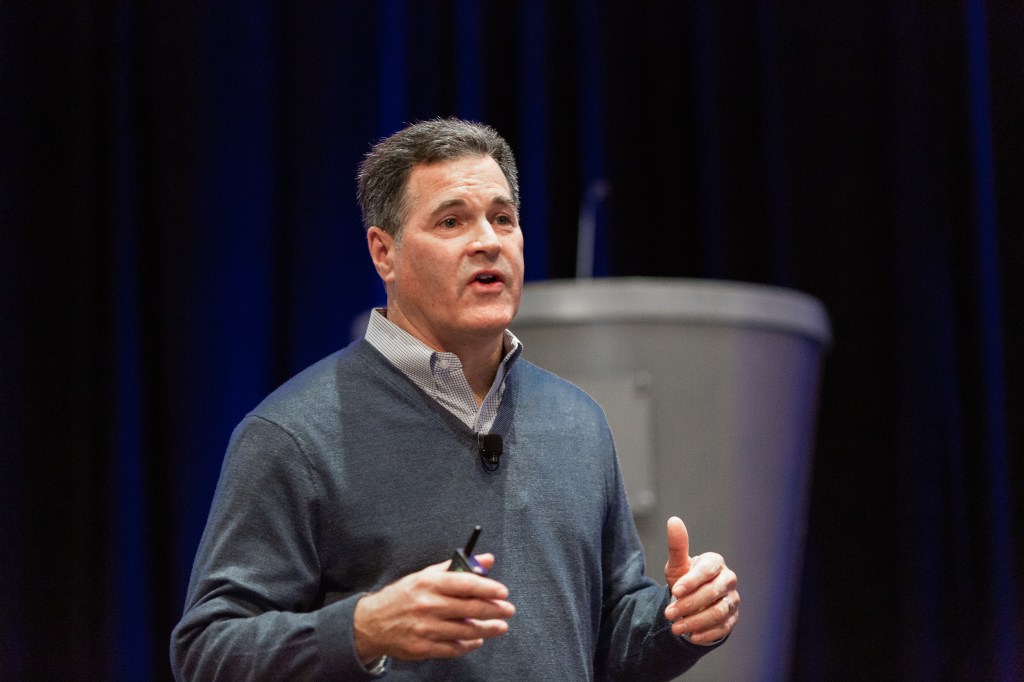
    Steve Hammock giving an address.

    I’m primarily interested in the concept of resilience – personal, communal, and societal. What does resilience mean to you?

    Well, we certainly all know what the definition of resilience is. We know too, that life is hard, business is hard, parenting is hard, and relationships are hard. Resilience is about navigating your way through all that. But for me, resilience has primarily been about growth.

    I’ve always believed that you’re either growing or you’re shrinking. You’re moving forward, or you’re moving backwards. In a business sense, we really don’t have the ability to stand still!

    If you think about it in a business context, the primary reason companies go out of business is that they can’t figure out a way to grow. To me, that fails the resilience test. In business, there’s going to be a lot coming at you, and the way to win is to grow your way out of it.

    Can you take us through a cliff notes of your career journey?

    I’ve sort of had a different type of career by modern standards. I only worked for two companies after leaving college – one for a relatively short time, and then the other for over 40 years.

    I joined what was a rather small, very young, consumer products manufacturing business in the early 1980s. I started in a low level, sort of an entry level marketing job. I grew my career with that company as it grew along a sales and marketing track. After a couple years I became the Marketing Manager, then National Sales Manager, Director of Sales and Marketing, the Executive Vice President, and lastly, I had the privilege to serve as company president for the past 25 years.

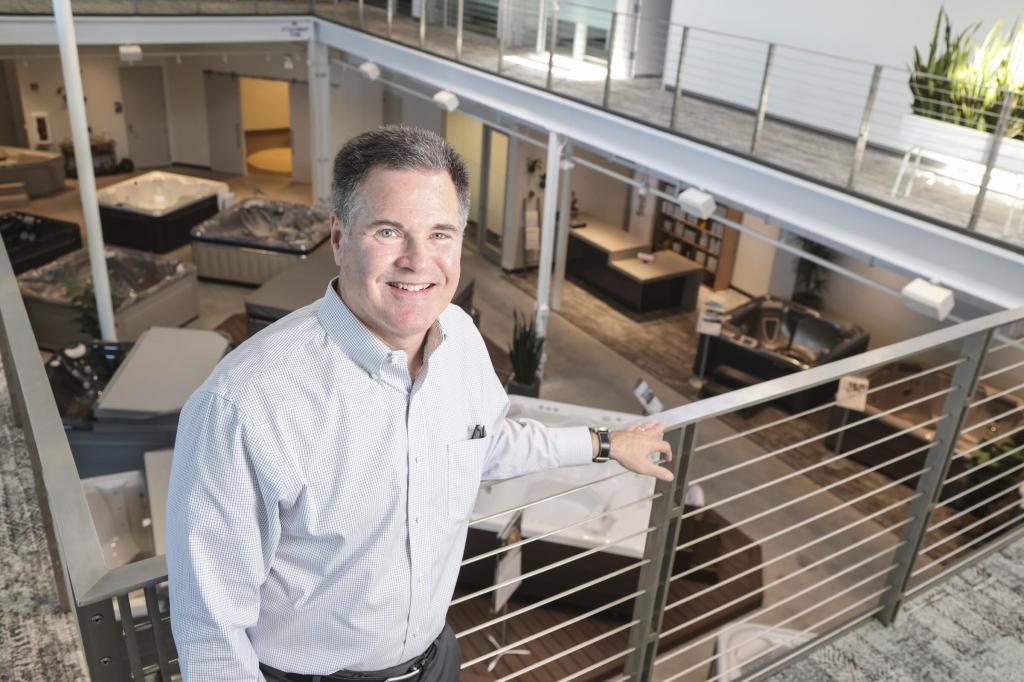
    Steve Hammock was president of Watkins Wellness for 25 years.

    You were the President of Watkins Wellness for a number of years. The company grew and transformed an incredible amount during your tenure. What were you most proud of?

    Gosh, a lot of things!

    First of all, our growth was phenomenal over a very long period of time. We grew to the point where we became the number one company in our industry, and maintained that leadership position for at least the last 30 years in a row. You’d be hard-pressed to think of another company in any industry that has ever done that.

    We navigated our way through the public company space, which is difficult in its own right. We also had tremendous success after emerging from the Great Recession, which was very difficult.

    I am certainly, too, proud of the way we handled COVID. We were a company that got shut down for 16 weeks, so restarting all our factories was a huge task.

    But I think if I had to pick one thing, it was the culture that we built at our company. We did a great job, I think, of inculcating a growth mindset, giving our people purpose, and creating a culture where everybody pulled on the same oar.

    In fact, we won top workplace here in San Diego County multiple times, and that’s an award that is voted on by your employees. So, while I think hitting all of our business milestones was rewarding, it was really the culture of the company that we built that was “that one thing” I’m most proud of.

    Was a strong company culture something that you had always set out to create? Or did you notice it happening organically, and you worked to incubate it? Was it a byproduct of the growth and success Watkins was having?

    Well, I think cultures are developed off the personalities of your leaders. Certainly, I had a personality, and I think over the years we did a great job of hiring the right people to get us where we needed to go. We always walked our own talk, if you will, and challenged everyone to call us out when we didn’t! But many years ago, maybe over 20 years ago, we took a good look at our company, why we had been successful, why our employees were happy, what made us unique and special, and why our employees rated us so highly, and we formalized our value system. That gave us a roadmap to stay on as we grew.

    As you know, the more you grow and the bigger you get, the harder it is to hang on to those unique things that make you, you. By formalizing our culture, making it a centerpiece of what we talked about on an ongoing basis, and then hiring people that were motivated by who we were and wanted to be a part of it, it helped us maintain our guiding principles as we got bigger.

    You also were president during a number of challenging times and recessions. Can you discuss a major obstacle that you overcame, and how you overcame it? Does culture help build resilience to navigate challenging times?

    Culture absolutely helps you – if you take care of your people when times are good, they will be there for you when the times get tough. We saw that play out in our business time and time again over the four decades. For example, everyone talks about the Great Recession starting in 2008. But in our particular category, since we were so tied to the housing market, it really started in July of 2005 and extended all the way through 2009! It was a very long, very tough time.

    We made expensive products that oftentimes needed to be financed, and during that period all the funding sources were wiped out. There was no home equity for people to borrow against and your traditional lenders weren’t lending. It was a pretty desperate time. Since we were a discretionary product, we produced the kind of things people defer when times get tough. As a result, we lost half of our top line over that period. But we still made a profit, even at the very bottom, which obviously is the goal of business. That was a reflection on how our people battled.

    We made money because we always had our customers in the center of our target. If you have your customer in the center of your target, you’re going to do fine. Most companies, I think, and most people, have someone or something in the center of their target, other than their customer. In my opinion, that’s when companies run into trouble.

    We also were very tough to compete against. We were an extremely agile group, and we weren’t wedded to any specific products.  If it sold, we kept it, if it didn’t, we moved on. We knew that when we got into those tough times, our traditional retail customer was going to be out of the market for a very long time. We had to do something different. So, we pivoted to different products, different customer segments, different channels, and things like that. So agility, I’d say, would be another component to answering your resilience question.

    Being last one standing in a space that is being wiped out doesn’t help you! The inclination often, is to hang on to what you have, and ride it down. We didn’t do that. We were conscious enough of what was going on to say, “Hey, you know what? That’s not going to work anymore, we have to do something else.” And we did. Again, since our people were all-in on our mission, we did a lot of something-else’s, and it ended up paying dividends.

    You’ve told me that one of the most important qualities a leader can have is the ability to decide. Can you expand on that? What other qualities are important for a leader (or in general, a businessman) to have?

    Well, obviously a business is made up of a lot of leaders, so really the decision-making comment I think applies mostly to the person at the top. Not everybody is built to be a number one. There are a lot of great number twos out there that really aren’t the right people to be number ones. I think in my experience, the primary thing that separates someone at the top of a business, who does well there, from otherwise really smart people who don’t, is the ability to make a decision on time. On time always means before it’s obvious to everyone else.

    As an example – I always looked at growth as the main thing. No matter the environment, you’ve got to grow. Growing requires rolling the dice. You’ve got to take some chances. But once the right direction becomes obvious to everybody else, the move has already happened! So you have to move before having all the information, and that requires a certain amount of fortitude that a lot people don’t possess. In the business that I was involved in, we made a lot of really impactful decisions before it was obvious to everyone else, and that made us very tough to compete against.

    So there’s a certain appetite for risk that must be there as well.

    It’s absolutely required, absolutely required!

    I mean, honestly, if you want to be a “me-too” business, that’ll last for a while, but again, companies go out of business because they can’t figure out how to grow or how to innovate. So, in your parlance, that means they fail the resilience test. But in order to grow, you must be “first” a lot of times! Yes, you almost always have to be better, but you also have to be first.

    First means that you have to come out of the box before your competitor is ready to move. That’s risk. So, it’s classic risk and reward. And you won’t always be right. I sure wasn’t. We made plenty of mistakes, but over the long haul, we were right way more than we were wrong.

    Not just a businessman, but a father to five as well.

    Not only did you find success in business, but you were (and are) a great dad to five kids! Can you talk about how you worked to build resilience in your family life? What, in your opinion, makes a resilient family?

    I think there are a lot of business parallels!

    You have to stand for something, you have to have values. I think the greatest virtue to have in business is transparency. I’m going to skip around on you here a little bit, but communication is always key, and transparency is the most important part of good communication.

    When you think about a company, literally everyone working there is doing it for a living. That means that everybody is equally vested. Therefore, the more people understand what you’re trying to do, where you’re trying to go, and how you’re doing along the way, the better off they are, right? All employees really need to know four things – Where are we now? Where are we going? What role do I play? And what do I get if we get there?

     It’s my belief that, in order to do the best job possible, a person needs to know everything he/she thinks they need to know. It’s a simple concept.  If you think you need to know something, then you probably do.

    In our business, we would say, “If there’s something you think you need to know in order to do your best job, please tell us what it is, and we’ll get the answer for you.” That’s how you empower your people. We spent an awful lot of time teaching our teams about the company, why we do what we do, why we don’t do what we don’t do, how our profits are made, how we go to market, what our channels are all about. The more that teammates understand about the entirety of the business, even if it doesn’t relate to their specific function, the more valuable their opinion becomes. Since we are all equally vested, all opinions mattered.

    When you’re running a big business, you got to be listening to everybody, because nobody has all the answers. It’s the basic philosophy of “everybody is in it together”.

    All of that is to say – many of the tools required to build a winning culture in business, and are the same ones needed to build resilient families!

    You have to stand for something, you have to have a certain set of principles, you have to walk the talk, you have to impress upon your own children that you’re actually the kind of person you say you are. If you want to be a good dad, start by being a good husband.  Respect your partner, treat them well.

    Similar to my previous comment, in our family, our kids were in the center of our target. If the kids are in the center of your target, then that’s where you’ll spend your time. If you walk that talk, you end up with some pretty good kids.

    Heck, even though you and the rest of our kids are all grown up, I think the five of you are still in the center of our target.

    Is ensuring that the kids are at the “center of the target” how you are able to find the balance between work and family life? How did you find that balance?

    Yeah, it’s funny you bring up balance. I don’t know if I did find the balance!

    I mean, I tried to do what I could, but there’s a lot of ways to do it. In our family, we were very traditional. I went to work, I made money so we could pay for things, and your mother spent her career raising you kids. My job when I was home, was to be present, to show up for things, and to inculcate the gifts of hard work, integrity, humility, and those other personal qualities that you want your children to have.

    The goals we set were mostly ensuring that each of you was reaching high. We told each of you that if you reached super high and attained something great, we would be there to support you. And I think that’s how it worked out. We had a plan, and we executed that plan. Of course, in our family, staying close to God and being a faith-filled family also played a major role.

    What would you consider your greatest success on the family side to be? Were there any significant obstacles?

    Well, we live here in Southern California, and we had five kids. It’s an expensive proposition! Everybody worked really hard in school and earned their way into really top colleges. That cost a lot of money, so these were obstacles that required us to make decisions. Again, we prioritized our children over ourselves.

    That said, I think in any family that’s going to work, the parents have to take care of their relationship first. In our case, a strong marriage has been, and is, key. When you do have kids, you’re undoubtedly going to say no to things a lot – but you have to explain the whys behind the reasoning. This is the transparency part! You communicate from within values and the principles we established for our own family, and the understanding is there.

    Our goal was to raise five great citizens, and I believe that we’ve done that.

    Your own father was a colonel in the Air Force. What lessons did he impart to you about business or family?

    Well, he was a man of integrity and a man of humility. He was a pretty simple guy, a man of few words. But first and foremost, his main lesson was always, “Be honest”. Adjacent to that was, “Do the right thing”. That’s it really. Pretty simple. If you’re honest with the people that you love, be honest with the people who love you, honest with those who work for you, and mostly, be honest with yourself, you’ll go far. He would also always say, after do the right thing, “And you know what that is.”

    That second rejoinder is not unimportant! The right thing can change in the moment! But he would always say, “And you know what that is.” Again, one of my goals in life is to live guilt-free, because guilt is so debilitating. If you do the right thing because you know what it is and you’re honest with yourself, you can live a guilt-free life.

    What’s better than that?

    Col. Rex Hammock
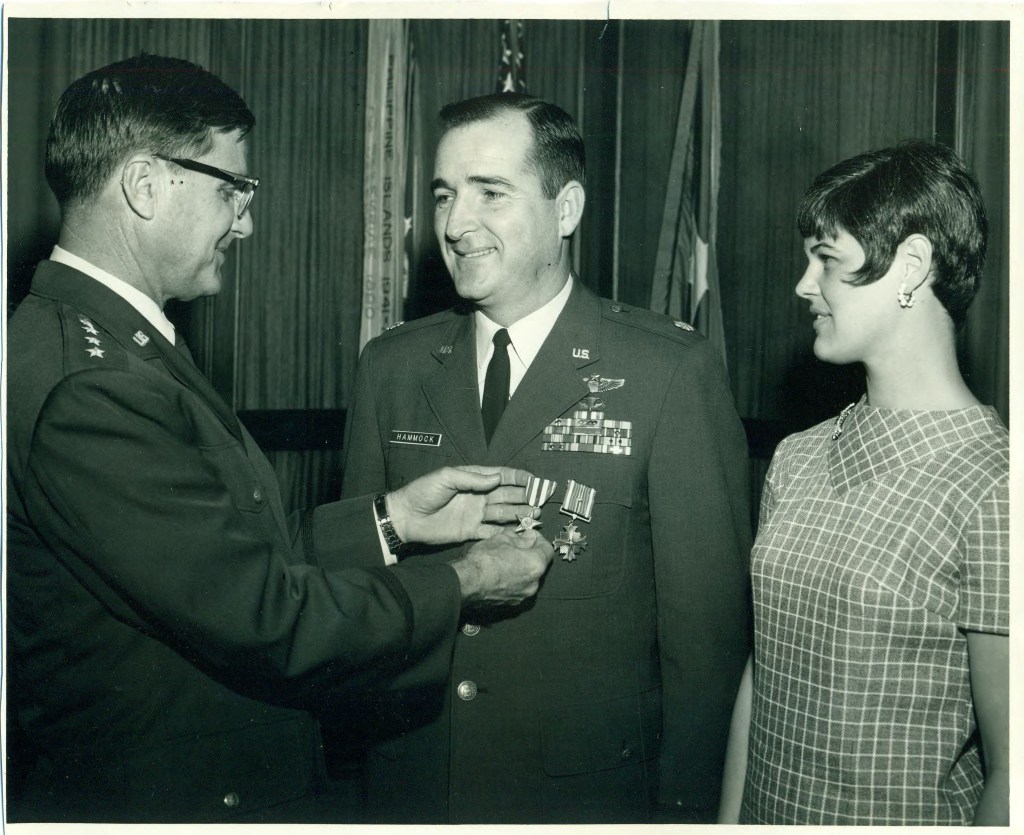
    Steve Hammock’s father, Col. Rex Hammock, receiving the Silver Star from Gen. Westmorland, circa 1968.

    How has the transition to retirement been? Was there anything unexpected? Anything easier or more difficult than expected?

    What’s been the most interesting is that I don’t miss work – and I thought I would. I do miss talking about business and talking about work, and I do know that I’ve got more to give. Right now, I’m trying to think through how I’m going to do that going forward.

    I certainly have more aches and pains than I was expecting to have, ha! All this golf and tennis comes with a downside, I guess. But retirement’s been pretty smooth so far.

    I’ve always been a person that worked off lists, and I write out a list every day of some things that I want to accomplish. I move through that list, and get a lot done, so it definitely hasn’t been boring.

    How’s the transition been to grandfather?

    Well, it’s been pretty easy for me, because I’m not doing that much! I think my opportunity will come after the baby stage. Our little grandson is still a baby, so it’s grandma’s time to shine right now.

    But I think the most rewarding part, not that we don’t have a beautiful boy there, has just been watching you as a parent and watching your relationship with your wife grow. Just seeing the two of you and how you’re taking care of your child and maturing, and again, doing the right thing has been so impressive to watch. So, I think that’s been the most rewarding part of being a grandfather thus far.

    Wow, thank you! So, what’s next for Steve Hammock?

    I don’t know. Like I said, I’ve always been somebody that had a plan and I don’t really have a plan right now, and I think I’m good with that. But I do have some talent and I do have some gifts, and I still have a lot of energy. I wanted to take some time and just sort of live life, which we’ve been doing right now, but I’m starting to contemplate how I want to channel my professional energies going forward.

    Have a proposition for what Steve Hammock should do with his free time? Want to reach out to him to learn more? Contact him here.

    If you enjoyed this post, please share this post, or comment your thoughts below. In addition, if you have ideas for my next feature, please drop me a line here.

    Want to learn more? Go more in depth here:

    Watkins Wellness website

    San Diego Union-Tribune Interview with Steve Hammock on Leadership

    San Diego 500 Profile on Steve Hammock

    Contact Steve Hammock

  • San Diego’s Space for Innovation: How Aquillius is Building a Resilient Startup Ecosystem

    San Diego’s Space for Innovation: How Aquillius is Building a Resilient Startup Ecosystem

    Consistently ranked as one of the top biotech cities in the United States, San Diego is home to giants like Illumina, Thermo Fisher Scientific, Genentech, Bristol Meyers Squibb, and seemingly countless more – many of which are fed from a rich pipeline of science graduates from UCSD, SDSU, and USD.  

    However, not everyone interested in biotech wants to go to the giants. Some think that they’re the ones who can create the next big thing.  

    And that’s where Aquillius comes in.  

    A biotech and MedTech incubator, Aquillius is a biotech startup founder’s dream – they provide a space for extremely early-stage startups to develop and grow. With 25,000 feet of lab and office space, they offer a physical place (and access to a vibrant community!) for lab-heavy startups to research, prototype, network, raise capital, and more.  

    Their mission is to accelerate the integration of life sciences and engineering to create innovative solutions that can improve human health, by focusing on streamlining product development and early R&D in the biotech and MedTech industries.  

    Or, to say it another way, they want to make the next generation of San Diego’s innovative science companies more successful – by making them more resilient. 

    In this interview, you’ll learn about the importance of providing space to fledgling companies – whether it’s physical, educational, or mental. You’ll learn about just how Aquillius matches resources with the startups they work with. And, most importantly, you’ll learn what they’re doing to set the next generation of scientists and entrepreneurs up for success.  

    If you’d like to learn more about Aquillius, you can check them out on their website. (I’d also recommend you take the tour!) 

    I’d like to give a big thank you and a shout out to Leah Villegas and Austin Strain for their time and help on this interview. 

    Aquillius provides office and lab space for burgeoning BioTech companies.

    I’m chiefly interested in the concept of resilience – personal, communal, and societal. What does the concept of resilience mean to you and Aquillius? 

    Leah Villegas: I believe resilience means persisting, unwavering in your commitment to your business, regardless of the challenges encountered. In our environment, we engage with many early-stage startups and companies just setting out to make their mark in their respective markets. It’s a demanding journey. As entrepreneurs ourselves, my team and I face these challenges too. I see resilience as the key. There will be numerous obstacles and setbacks along the way, but pushing through and surviving these challenges is what truly cultivates resilience and shapes the character of every founder. 

    Startups, especially the early-stage startups that you focus on, are notoriously prone to risk. How have you worked to build resilience within Aquillius to continue to identify and overcome potential setbacks when dealing in that scene? How do you work to make the startups who use your spaces more resilient? 

    LV: We serve to provide the foundation or provide a safety net of sorts. We’ve methodically worked out potential paths these startups could take, identified needed resources, and even identified common challenges that startups might encounter, and we work to tackle these challenges head on. 

    We address these challenges before the startups themselves confront them, and then work to make all the necessary resources available to them to give them the best chance.  

    Most of these startups are in the biotech and MedTech realms. From what we’ve seen, regulatory and IP complexity are the two main major challenges that these startups face. So, we’ve identified and paired up certain resources and subject-matter experts in those realms, like different law firms and regulatory experts, to help them navigate those challenges.  

    San Diego’s biotech scene is world famous. How do you see yourselves positioned in this space? How do you see yourself contributing to building resilience both within the scene and within the broader San Diego community? 

    LV: We see ourselves mainly as a resource provider in the biotech space. Our physical space is critically important – we have a nice tech lab and a nice wet lab, which those companies need the most. This sort of sets the biotech companies apart, since they really need that physical lab space. For example, during COVID, we didn’t really feel as affected as other people who worked from home, since we actually couldn’t work from home – we needed to be in the lab!  

    Basically, our niche is now being a resource provider for biotech startups. 

    A peek inside the lab!

    You guys provide physical resources such as lab space, but you also host a lot of events that provide space for companies, founders, and people interested in that whole scene. So really, it seems like your main resource is providing space?  

    LV: Yes, we provide those events, and a lot of events on the educational side. We also provide a lot of networking opportunities. That’s a pretty important thing as well, we’ve found, especially for young startups that are fundraising.  

    What projects are you most proud of? 

    Austin Strain: What I feel is most impactful is our Catalyst program. When I got a chance to actually talk to the people and participants who went through that, to see how much they learned and grew, it was absolutely remarkable. 

    Our Catalyst program is basically a ten-week program for students of all levels – undergrads, graduates, PHDs, postdocs- to get entrepreneurial training and to get a hands-on opportunity to solve real-world problems. Throughout those 10 weeks they learn how to set up a business, and then, at the end, get to pitch that business to experts, investors, and other people who can give them feedback on how well their entrepreneurial journey went.  

    I personally know how important this is. I studied entrepreneurship in school, and I also took part in a startup summer program. I saw how much that helped me personally with my own career growth. So, getting to meet all the participants at the end of our own Catalyst program and some of the older participants as well was really nostalgic and gratifying for me, because I remember when I was exactly where they were! I remember getting to that pitch day and how nervous and exciting it is! And then hearing what they have learned, and recollecting what I personally learned was just so impactful. It was like you could literally see a bright future.  

    LV: We do this cohort every summer. And in the beginning, it’s always the same – they’ll come up with their one-minute elevator pitch and they’re very timid and shy, saying things like “I don’t know how to talk about myself.” And then just 10 weeks later, you see so much growth! They’re no longer that timid, they’re outgoing and putting themselves out there and pitching their companies and projects. It’s just incredible.  

    So, another one of your major resource spaces is just giving others the opportunity and mental space to grow?  

    AS: Yes, yes, for sure! So, if you’re interested, we’re offering our next one to the broader startup community next year.  

    Can you talk about the biggest obstacles you’ve overcome so far? How have you worked to build resilience within your own company and culture, or those you serve? 

    LV: Honestly, the biggest one is providing access to capital. These are very, very early-stage companies, just trying to find traction in the world. They need people, they need institutions, and they need capital to help get them to the next level.  

    We will be rolling out with more programs this coming year to help them do that – to raise capital and get to that next level. 

    In addition to lab space, Aquillius also provides offices.

    What are the biggest opportunities that you see in the biotech scene in San Diego? What role do you play in filling these gaps? 

    LV: San Diego is a huge biotech hub in and of itself. But even though it’s so large, it has the potential to grow.  

    When it comes to investing in these projects, San Diego has a pretty big angel investing scene – the venture capital scene still seems to be up and coming. But I think that we’re going to see some growth in that sector in the coming year.  

    The whole investing scene has been very slow really, because of the pandemic and the slowdown in the economy the past few years. But I think it’s coming back, and I think it will be a pretty vibrant scene going into 2024. 

    So, do you see yourself playing a role and filling the access gap to venture capital?  

    LV: Absolutely! So, we’re hoping to have a fund ready to go by next year that can invest in these companies. And we will be rolling out those programs that I talked about earlier. We’re going to hold more pitch days and things like that, centered on different themes and industries to attract those VCs to be a part of all of it as well. 

    AS: In addition, we work to reduce access gaps wherever we see them. We host a number of events around women in investing, women in science, and trying to encourage women, or others who are normally not as active in the science and founders community, to be involved. That focus is very important to us – it’s another way we build a more resilient future, by making sure everyone has access to the tools and resources they need to succeed. Really trying to empower women to be involved in the ecosystem.  

    So not only are we filling a gap for capital in the biotech space, but we’re providing a leg up for groups and communities who might need it most. And that’s definitely something different and important that we do. 

    Looking to the future, what do you see as the future for Aquillius? Are there any specific opportunities and risks that you are looking to navigate in the future, both near and long term? 

    LV: As far as growth goes, we’re just getting started! We’ve built out the lab space, we’re trying to attract companies to come in here, build, and be part of our community, and then just see where it goes!  

    We do have longer-term plans, such as growing to more locations, but those are definitely long term. We’ll see how this current model works in 2024. We just want to be able to provide more resources to the broader startup community, even beyond just San Diego! 

    What are the best ways for people to learn more about, or get involved with, Aquillius? 

    AS: The easiest way is to just check out all the information on our website. If you’d like a brochure, we have those too. But realistically, the best way is to book a tour! Come see it firsthand and say hi! We’ve found tours really spark the types of questions that we like to answer, that aren’t necessarily found on our website.  

    But yes, the best way is to book a tour, or come to a networking event! 

    Want to learn more? Go more in depth here:  

    Aquillius Website 

    Book a tour 

    Upcoming events 

    Aquillius Catalyst Program 

    Aquillius LinkedIn 

  • Planting an Urban Forest: An Interview with Tree San Diego

    Planting an Urban Forest: An Interview with Tree San Diego

    When you think of city management and design, do trees come to mind?

    The good folks at Tree San Diego think so, and think that you should too!

    Tree San Diego is an urban forestry nonprofit who works to increase the quality and density of San Diego’s urban forest — and they have some thoughts about the importance of urban trees and how they contribute to a resilient community.

    Trees, and by extension, the “urban canopy” (the layer of leaves, branches, and stems of trees that cover the ground in an urban environment when viewed from above), have an important role in city design. They make cities cooler, quieter, more desirable, more efficient, and safer — and therefore, more resilient. San Diego has recently announced a plan for a dramatic increase in our urban canopy in hopes of reaping some of these benefits — and I turned to the experts at Tree San Diego to find out more.

    In this interview, you’ll learn all about why we need to have trees in our urban spaces, not just on our trails, as well as the number of benefits that urban trees and urban forests provide! You’ll also learn how Tree San Diego works to select their species, how they account for disease and pests, and the role of trees in urban planning.

    If you’d like to learn more about Tree San Diego and their mission, you can check them out on their website. I’d also like to give a special thanks to Elekra Fike-Data, Chris Klier, Chuck Morgan, and Kurt Peacock from Tree San Diego for their help and expertise with this interview.

    What does the concept of resilience mean to you and Tree San Diego? And how are urban trees part of a resilient community?

    Resilience is the ability to recover from problems or conditions that are not ideal. We at Tree SD are choosing tough, low to moderate water-use tree species to better prepare for the warming, drier climate we will face in the coming years.

    San Diego hopes to increase their urban canopy to 35% of the city by 2035. Can you talk about the benefits of having such a large, developed urban canopy, and what that would mean to the average resident?

    Hitting the 35% cover target will improve the quality of life for everyone in San Diego! Some of the immediate benefits include lowering temperatures, reducing pollution and storm water runoff, blocking ultraviolet light more effectively. Residents will want to be outdoors more, more active in recreational activity and lowering heating and cooling bills, which burns less fossil fuels.

    Community Planting Day! (PC: Tree San Diego)

    Many folks associate San Diego (and, more broadly, Southern California), with palm trees — which are actually a non-native species! Can you talk about your process of choosing which trees (and where) to plant?

    Palms may be iconic, but they do not provide the ecological benefits that broadleaf or evergreen trees provide. They require annual maintenance which makes them more expensive to maintain than other trees.

    We base our tree selections on the soil volume available and the utility situation, such as overhead wires, to prolong the useful life of trees. Microclimates can also affect what we select — we need to keep in mind dimensions like sun vs. shade, soil grade, and proximity of buildings and other fixed infrastructure to the site, ultimately striving to maximize the size of any tree in a given site. The bigger the tree can grow, the more benefits it provides!

    San Diego is known for being an extremely biodiverse area, and there are a number of extremely unique environments in the county — from desert, to mountains, to ocean, just to name a few. Can you talk about the importance of wilding the urban environment? Have you received support from the outdoors community for your initiative?

    Wilding and rewilding our urban environments are important since it improves health, provides areas for recreation and relaxation, improves biodiversity, and expands our wildlands and ecosystem restoration. Here in San Diego, we see examples of this in our local estuaries from Carlsbad, to Carmel Valley, and Imperial Beach. Balboa Park is another example, which has both wilderness areas and more formal, landscaped areas. The various cities within San Diego are focusing now on more “plantscaping,” and adding trees to our urban areas. In fact, in small open areas around the city, local officials are now looking to create pocket parks!

    Planting an urban tree in Caesar Chavez park! (Photo: Tree San Diego Facebook)

    Water use is always a major concern for any SoCal resident. How does planting more trees affect a city’s water and usage?

    Planting trees uses a lot of water, especially during the establishment period. However, I believe the benefits gained with planting more trees far outweigh the additional water needed. For example, a tree cover will save 11,000 tons of soil annually in a medium sized city. A tree-shaded, air conditioned home can improve its efficiency by 10% and saves up to 34% of annual costs. Trees planted in the right place for a home can reduce heating costs up to 25%. Trees are natural air conditioners, cooling the air through transpiration (how plants evaporate water). Trees improve real estate value by 1% of sale price. Trees reduce and mask noise with white noise. One acre of trees will provide enough oxygen each day for 18 people to breath, while, at the same time, absorbing pollutants and filtering particulates. Trees planted in parking lots can reduce the ambient temperature by 3% and car interior by 30%. 100 mature trees intercept 210,000 gallons of water per year, allowing cities to spend less money on storm water control and keeping water pollution out of our estuaries, rivers and ocean. The list of benefits goes on and on!

    On the campus of UC San Diego, there are 27,000 trees. These trees sequester 7,560 tons of CO2 annually, and remove 6,210 pounds of pollutants from the air. A study conducted by the human-environment laboratory of the University of Illinois at Urbana Champaign concluded that a tree-filled community recorded a lower incidence of violence and vandalism than a community that was less forested. Additionally, trees can lower stress and help provide speedy health recovery. The benefits are monumental!

    Meanwhile, the city of San Diego is working to be water independent by recycling water. By the end of 2035, nearly 50% of San Diego water will be provided by taking waste water and purifying it to high-quality drinking water, and will actually cleaner and safer than our present drinking water. You can learn more about this initiative here. So there are a lot of things at play!

    You also run a project that diverts end-of-life urban trees away from the wood-chipper/landfill and towards other products. Can you talk more about the success of this program, and the difference between what happens to a tree in this program vs a normal urban tree?

    The Treejuvenation project was a small pilot that really started when we realized how many exotic trees are grown in the temparate San Diego climate. Once these trees reach the end of their life, they can be collected for their viable wood. The urban forester now thinks about what trees should be planted on a longer scale — not just thinking of planting the tree for now, but thinking about the end of life, and planting trees that can eventually turn into desirable lumber. As another benefit, the tree care industry strives to ensure that urban trees grow as straight as possible which makes them ideal for harvesting for lumber as opposed to being cut up and dumped in the landfill or chopped into firewood!

    What do you see as the future of the tree in urban planning and design? Have you seen an uptick in support from governments and planners in including more environmental elements such as trees in new developments?

    Trees are only increasing in importance for urban planning as we move forward into a changing climate. Many new developments have trees and environmental elements as a focal point, rather than an afterthought. This is a trend that we expect to see throughout urban planning, especially with support and funding opportunities from government and other stakeholders.

    How are you helping build resilience into Tree San Diego? What is a major obstacle that you have overcome?

    Tree San Diego is building organizational resilience through diversifying funding sources, strengthening partnerships, and growing to meet growing needs. While not unique to our organization, limitations related to COVID-19 were a major challenge. Tree San Diego prides itself on connecting and working with the community, but during the height of the pandemic we were unable to work face-to-face with folks. Instead, we adapted our programs, conducting our training virtually and delivering trees to be planted at individuals’ homes rather than community planting events.

    (Photo: Tree San Diego Facebook)

    Can you talk about your biggest success so far as part of Tree San Diego? What helped you achieve it?

    Tree San Diego was recently awarded a federal IRA Urban Forestry Grant to continue planting trees, training candidates through our Treejectory workforce development program, and building a regional urban forestry management plan. This $2 million grant award will allow us to bring the benefits of trees to thousands of people while empowering communities in priority populations zones to grow and care for a newly planted urban forest.

    I know you partner with a number of groups around San Diego. Do you have plans to partner with urban forestry groups outside of San Diego?

    Yes, we will work alongside the US Forest Service, CAL FIRE, and other NGOs in California to achieve our goals of building a greener future.

    What is next for Tree San Diego?

    Tree San Diego will embark on a path to expand our impact, influence, and statewide partnership. As our team plans to celebrate the organization’s 10th anniversary in 2024, we are currently building models to broaden our shared urban forest and plan for sustainable urban forestry management throughout the region.

    What are the best ways for people to learn more about, or get involved with, Tree San Diego?

    Get involved and stay in contact with our team by joining the TSD Leaflet Newsletter, signing up for Tree Steward training, becoming a Terrific Tree Member, and donating to the cause.

    Want to learn more? Go more in depth here:

    Tree San Diego Website

    Urban Tree Canopy Overview

    City of San Diego’s Forest Management Programs

    Get a Free Tree from the City of San Diego!

    City of San Diego’s Tree Canopy Plan