I read a handful of books this year, primarily on my Kindle (my current preferred medium since I can read it at night in bed with all the lights off and won’t wake any sleeping toddlers up). My tastes are generally pretty varied, and I usually try to alternate non-fiction and fiction to keep things from getting stale, but even that isn’t really a rule.
The books below are written down in the order that I read them in 2025. I did not include any books I did not finish, nor any book that I read this year that was not new to me (ie, a re-read). I’ve included a brief write-up and a score ranking. I did not include any discussion around plot on the off chance that you want to read the book. (I have, however, included Amazon links in case you want to buy one. You can see a bit more about the book there. They aren’t affiliate links, so I will not get paid either way).
The score is not based on anything scientific, but is simply an attempt to put a number around how much I enjoyed a specific book, or the impact that it had on me.
The rankings:
5 – Excellent, phenomenal, highly recommend
4 – Quite enjoyable and a lovely way to spend an afternoon or evening
3 – Worth the time, but probably wouldn’t need to read again
2 – Probably not worth the time to read the whole thing, but may have some redeeming qualities that you could enjoy if you are really intent on reading this book and finding them
1 – Did not enjoy, not worth the time, barely scraped through out of a strange misplaced sense of duty to not letting the book win
Hopefully this helps you find something new to read (or, selfishly, inspires you to send me something new that you think I would like to read).
Thoughts: This is the best business book I’ve ever read. I’ve given multiple copies of it away to people and am planning on buying more copies to continue that practice. Slootman was the CEO who took both ServiceNow and Snowflake public (and took Data Domain to a billion dollar exit too). A phenomenal playbook on how to get things done as an organization, and the importance of moving quickly with focus and intensity in the workplace. I’ve literally used multiple things from this book at my own job and it is shocking how much you can accomplish. Everyone who works for a living should read this book, especially if you want to be a leader in the workplace and to be on a winning team. The only downside is after reading it I watched every Frank Slootman interview on youtube and now my wife makes fun of me.
Thoughts: A classic for a reason. What a rollicking good time. The original swashbuckling adventure. The black spot. Long John Silver. Rum all over the place. Dudes shooting each other with muskets. Cutlasses flying. Poor Jim Hawkins holding his own among a rash of dastardly mutineering pirates. Buried treasure. It’s Treasure Island baby. What more do you want?
Thoughts: This was Frank Slootman’s thoughts after heading his first major company, Data Domain. A good read if you like Slootman, but just stick with Amp it Up – it’s way more fleshed out. You can probably bang this one out in an hour or two. Glad I read it and have it, but his later book is better.
Thoughts: Loved this book. This is the first book in a series of three by Scott Lynch. It’s essentially Oceans 11 set in a historic, stylized, fantastic Venice. I’ve always been a sucker for characters that are thinking like ten steps ahead in their little schemes and plans, and this book has that in spades (but also every once in a while the main character here gets caught and punished, and realizes that he’s not as smart as he thinks he is, either). What fun. Great world building, fun characters, lovely capers. Prose can be a little clumsy but who cares. Great book if you’re into this sort of thing.
Thoughts: This is the second book in Scott Lynch’s series. This one is is like if Oceans 11 and Jack Sparrow had a baby. There are even some scenes in the book that the discerning reader will note seem to be directly from the Pirates of the Caribbean movies. Whatever. I loved those films and I enjoyed this book. Ending felt a little rug-pully and flat, but who cares. Would read this again. Fun read that just takes itself seriously enough to not feel like junk food. Hooray!
Thoughts: This book is a classic management book. Ultimately I liked it. It will be good to have on my shelf to refer to now and then. Some good thoughts on performing high leverage tasks, time management, etc. I liked this book but didn’t love it. Worth a read if you’re interested in this type of thing though.
Thoughts: A great, anecdote-driven meditation on the virtue of courage. I enjoyed it. Seems like something I would find in the airport or in a monthly subscription box for men. However, there really were some great thoughts in there and it did get me thinking about the idea of courage for a while, so I guess it did its job. I read this book because Frank Slootman mentioned it in an interview.
Thoughts: This is the third and final book in Scott Lynch’s series. There were some really neat elements to this book; the setting was fun and the main characters are now trying to rig a high stakes election. Great stuff. Who doesn’t love a good caper with both sides trying to stay two steps ahead of the other? Ultimately though, one of the central narratives of the main character’s romantic history with the antagonist dragged this whole thing down. You could tell the author was either going through, or just went through, a divorce. Glad I wrapped up the series, just wish it went out on a higher note.
Thoughts: This series is about a lady who owns a tea shop and solves murder mysteries. Formulaic but who cares. Banged this out in an afternoon. Lots of descriptions about scones and teas and interior decorating and lilac in the countryside and whatnot. Not gonna blow your socks off but again, I wanted to read a mystery solved by a lady who owned a tea shop and that is what I got. Tremendous. Can’t wait to read another one.
Thoughts: A guy named Tom Quigley who runs a biodiversity based venture fund called Superorganism gave me this recommendation in the comment section of a LinkedIn post. This book is wild. Extremely inventive and exceptionally sobering, it’s part madcap adventure, part ecological horror, part science fiction apocalypse, part financial market fiction(?) It’s essentially biodiversity banking and environmental destruction taken to a dystopic scifi extreme and is worth a read for anyone in the green adjacent space.
Thoughts: If you are going to raise a venture capital fund, read this book. A phenomenal resource that covers everything from legal and compliance to LP updates to fundraising and more. Easy to read too, which is always a plus when you’re reading what is essentially a cleverly done textbook. I immediately went out and bought a hard copy to have on my shelf as a reference guide for a project that shall be named later.
Thoughts: The first part of this book rocked. Ned Land is an all time character. Finding the mysterious submarine and attempting to harpoon it is fantastic. Really fun to read how an author in the 1870s explains how a submarine can breathe under water. You can really see Jules Verne’s mind at work here and why he is one of the fathers of science fiction. Unfortunately, and this is probably something that everyone went nuts for and loved in the 1870s, I don’t need to read just pages and pages of Professor Pierre Aronnax cataloguing random fish and seaweed and rocks that he sees outside the window of the Nautilus. This book is tremendous for what it is, and you can see why Jules Verne is so revered; it just has a few passages in there that might be a slog for a modern audience who already knows that different fish exist and that they live in the ocean.
Thoughts: Prose was miserable. Hyper violent. No idea how anyone grows old in this world if everyone in every village is getting brutally slaughtered all the time. Overly relied on some (terrible) faux-Norse stylistic language. Got great reviews, but I can only assume the reviewers were just the author and his friends.
I read this in one sitting at the San Francisco airport, waiting for my flight which had been significantly delayed. A beautifully written book. A phenomenal meditation on life and what it means to live it, as well as memory, duty, etc. A lovely narrator who is ultimately unreliable. I guess it won a Nobel prize. I can see why. Parts of this book stuck with me for a long time.
Thoughts: I really wanted to like this book more. The first half was wonderfully atmospheric, with some really interesting meditations on memory, exploration, etc. It really had lots of potential. The second half was essentially just an exposition dump that you could see coming from miles away. I feel like the author wasn’t sure if she wanted to explore a philosophical concept or write something plot driven, and ultimately chose to do both – and failed to do either satisfactorily. If she leaned hard towards one way she probably would have saved it. Tremendous idea and some really strong writing ultimately marred by just poor execution. If you want to read someone who’s written what this book should have been, just pick up some Italo Calvino.
I’ve always been interested in those taking the bold step – people with big ideas who are trying to solve big problems. And there’s nobody bolder than Andrew Song, co-founder of Make Sunsets, a controversial climatetech startup that is launching balloons filled with sulfur dioxide into the stratosphere to cool the earth.
Yes, that’s right.
It’s a fascinating idea, a true moonshot, and an idea that Andrew Song believes provides the stopgap between rising temperatures and a more resilient future.
Andrew and I go in depth on what his company does, the science behind it, the idea of “moonshot thinking,” and the power of just getting started.
I’m primarily interested in the concept of resilience, whether personal, communal, or societal. What does resilience mean to you?
I think it’s just getting back up after you fall down. That’s pretty much it. Don’t be afraid of failure, because I think that fear actually stops people from being resilient.
Resilience, to me, is really just the ability to bounce back. I learned that at a very early age; my parents instilled it in me. I was a swimmer and started competing when I was eight. I’ve never been the biggest guy in the room, so I had to learn how to lose, a lot, before I figured out how to win.
I was racing guys who were four to six inches taller than me, and in swimming, that matters. But I learned that if you can develop your technique and use your body efficiently, you can still be fast. That’s what really taught me: I don’t have to be the biggest. I don’t have to be the smartest. I just have to work hard and iterate faster.
Two balloons were launched today in California. Both balloons reached the stratosphere and offset the warming of 2,820 tons of CO2 for a year.
This is the equivalent of 134,285 mature trees that last for a year.
That’s interesting. In a lot of these conversations, resilience comes up almost like a muscle – you have to work hard at it in order to actually grow in resilience. It sounds like your background in swimming gave you that repetition, that practice in losing before winning.
Do you think those early experiences shaped how you move through life now?
Oh, absolutely. I don’t know how you gain that kind of resiliency or agency without actually doing it. You can read all the books you want about resilience, but until you put it into practice, it’s really hard to overcome that psychological fear of failure.
You and your co-founder have a lot of experience in Silicon Valley and tech. Can you talk about the switch from tech to green technology and whether it feels like a natural fit?
Sure. I think for me, it was always a kind of parallel process. Actually, the first company I ever wanted to start, back in 2010, was sustainability-related.
I grew up in a family with four kids, all athletes, and we ate a lot of food – but we also wasted a lot of it. My poor mom had to cook for four hungry kids all the time. Sometimes we’d eat everything, sometimes we wouldn’t, so she always overcooked just in case.
That experience inspired an idea I had. You’d take a picture of your grocery receipt, use OCR (optical character recognition) to identify what you bought, and then get recipe recommendations to help use up any leftovers. That was my first real concept, during the early App Store days. I just wanted to reduce food waste because about 30% of all food ends up in landfills.
But I quickly learned that most people don’t actually care about saving food! Still, I learned a lot from that experience, and I discovered I had a knack for selling. That eventually led me into Silicon Valley. I grew up here, so I was very familiar with the tech scene and its cycles. It was a natural fit, and I just thought, “I want to try this.”
So when the opportunity to start Make Sunsets came along, it really felt like a coming home moment. I’d spent ten years learning, and this was my chance to put it to use. I wasn’t just going to sell SaaS or hardware, but to take the skills I’d built up and return to the problem I actually cared about from the beginning.
Andrew Song (left) and Luke Iseman (right) readying a weather balloon.
She sounds like a good mom!
Make Sunsets uses balloons to launch reflective clouds into the stratosphere to combat the greenhouse effect. Can you talk a bit more about what exactly it is that you’re doing?
Make Sunsets is using stratospheric aerosol injection. That’s the technique we’re using to reflect some of the sun’s energy away from Earth. As you probably know, greenhouse gases trap heat. A lot of really smart people are working on removing greenhouse gases so they don’t keep building up and heating the planet. But right now, we’re putting more in than we’re removing.
As you trap more energy, more bad things happen, like higher variance in global weather events, things like that. But what we discovered was that there was this volcanic eruption in 1991 called Mount Pinatubo that injected about 20 million tons of sulfur dioxide into the stratosphere, and it cooled the Earth by 0.5 degrees Celsius.
And more recently, there was the Hunga Tonga eruption in the Pacific (look it up, I’m not making up that name!) that happened in 2022. It injected about 400,000 to 700,000 tons of sulfur dioxide, and that actually cooled the Earth by 0.1 degrees Celsius.
So yeah, at first glance, that sounds like a lot of sulfur dioxide going up into the atmosphere. But actually, we all live in the troposphere. That’s where all living species are and where 99% of weather happens. And Make Sunsets is going one level up, into the stratosphere. That’s where these volcanic eruptions are really effective at reflecting the sun’s energy.
So, to put it in context, a volcano’s 20 million tons sounds like a huge amount, but humans currently emit about 70 million tons of sulfur dioxide every year into the air we breathe. That comes from coal plants, diesel emissions, industrial processes, ships. Basically anything that burns fuel with sulfur in it.
Sulfur dioxide is actually pretty effective. Even in the troposphere, it reflects some sunlight. But if you put it higher, into the stratosphere, it’s like 20 times more effective. That’s because of two things: one, the winds up there are really fast, so it disperses quickly. And two, since there’s not a lot of weather up there, so it doesn’t rain out.
Interesting.
This is a great example of moonshot thinking – an out-of-the-box solution that aims to boldly solve a major challenge.
We’ve talked about the volcanic aspect and the science behind it, but can you talk about how you personally developed this concept? What helped you build the momentum to take action and actually start this project?
The concept of stratospheric aerosol injection has actually been around since the 1970s. There have been over 2,000 academic papers written about it! It’s very well modeled.
You’ll see a lot of papers that focus on the potential downsides, and there have been academic institutions that have tried to move toward actual deployment, but they’ve usually been blocked. Often, it’s by well-intentioned people saying, “Hey, we shouldn’t be doing this.” And to be honest, academics aren’t necessarily the right people to push this forward anyways.
So a lot of the inspiration came from that logjam of really great ideas that just hadn’t been implemented.
The reason we’re pursuing this is because stratospheric aerosol injection hasn’t been well explored at the deployment level. We’re just getting started. We’re still a two-man company, but we’ve already gotten a lot of attention.
I think the reason we’ve gotten so much attention is because it’s such a novel idea. Like you said, it’s a moonshot, and I agree, it’s kind of crazy. Instead of removing something from the atmosphere, like greenhouse gases, we’re actually adding something to it. That’s a foreign concept to most people.
The simplest way to describe what we’re doing is sunscreen for Earth. So all we’re saying is, instead of applying it to the troposphere, apply it to the stratosphere, where it’s more effective.
Big thanks to all the people who came out today to help us cool Earth. This was the third balloon with a payload 1,030 grams of SO2. It's still traveling to the stratosphere and if reached will be the equivalent of planting 49,047 trees that last for a year. pic.twitter.com/XRhyfAspNl
And the fact that there’s such a long academic tradition behind this is surprising.
I recently read a study on AI in the environmental space, and while there’s a lot of bold innovation happening there, the market doesn’t always value it like other types of AI. A lot of it ends up in academia or NGOs because of the tragedy of the commons, you know, things everyone agrees we should do, like protecting biodiversity or cleaning plastic out of the ocean, but no one wants to pay for.
Can you talk about how you’ve approached this differently as a for-profit company tackling a global environmental issue?
Yeah, people ask us all the time, “Why aren’t you a nonprofit or an NGO?” But we believe the only way this will ever be widely accepted is if it works within a capitalist system and if people vote with their wallets.
The beauty of what we’re doing, compared to other sustainability efforts, is that it’s extremely cheap. We did the math recently, and to offset all manmade global warming since the 1850s, it would cost about $3 per American per year. That’s one cup of coffee.
To give some context, the Smithsonian costs about $3 per American per year. And the Smithsonian is awesome. It educates people and preserves our history. But for the same price, you could have a more livable planet.
Other climate solutions often come with political baggage. You’ve got people saying we need to degrow the economy, stop eating meat, give up trucks. But a lot of Americans don’t want to change their lifestyle. What’s different here is that you don’t have to!
I want capitalism to win. I want people to have access to meat that doesn’t emit so much CO₂ and maybe lab-grown meat will get us there. But right now it’s too expensive. Same with EVs. Telling someone to give up their Ford F-150 for an electric vehicle? It’s a non-starter for a lot of folks. And it doesn’t help when the people pushing these ideas are still living lives full of fossil fuel consumption themselves.
Our solution doesn’t require lifestyle changes. One, because it’s cheap. Two, because it’s deployable pretty much anywhere. We can do this in the ocean or in remote areas. California lets us do it now, which is where we’re from, so that’s where we’re deploying.
I totally agree. Capitalism has to be part of the solution if we want lasting change. But environmental work is a long game, often measured in decades, while startups are typically built around short timelines. How do you reconcile that?
Honestly, I don’t want Make Sunsets to be a 100-year company. I want us to shut down as soon as possible. This is a stopgap solution.
The best analogy I can give you is that we’re Ozempic for the climate. Ozempic doesn’t cure obesity, but it buys time and reduces the worst effects while people try to get healthier. Climate change is the same. The real danger is the heat. CO₂ itself isn’t going to kill us, at least not directly, but the rising temperatures it causes will. Until we scale carbon removal, plant more trees, and shift to sustainable fuels, we need something like this to buy time.
You’ve been getting a lot of media attention. What would you say is your biggest success so far? And on the flip side, your biggest failure or challenge?
That’s a good question. In terms of success, I mean, we’re literally the first company in the world trying to commercialize stratospheric aerosol injection as a service. There’s a startup analogy where you’re building the car while you’re driving it. For us, we’re building the car and the road at the same time.
It’s hard to say we’ve failed yet. I mean, we’re not dead. When we started in October 2022, we thought we’d get shut down immediately. Like, “Wait, you’re copying volcanoes? You’re using sulfur dioxide? Isn’t that acid rain?” But we’re still here.
Now, are we profitable? No. So technically we’re what startups call “default dead” since we’re burning more money than we’re making. But we’re about halfway to default alive. That’s when your revenue outpaces your burn. So we’re making progress.
We’re transparent about this. Every month we post how much money we have in the bank, what we spent, our sales, what we failed at, and what we’re working on. This is all about trying to figure out how to become a profitable company. We’re not there yet, but we’re closer than I expected.
Going back to bold thinking – has anything influenced your appetite for that? Or have you always been that way?
I think it comes down to how I was raised. I’m the middle child. The youngest is the baby, the oldest is the golden child, my sister’s the only girl, and then there’s me. So growing up, I was kind of the wild card.
But really, I’ve always had a safety net. I’m fortunate. My parents came to Silicon Valley in the late ’70s. If they had stayed in South Korea, I probably wouldn’t be doing any of this. A lot of it comes down to luck, and I try not to forget that.
You mentioned that safety net – and in a previous interview, someone told me they think resilience comes from that. Like, having a partner or family who loves you even if you fail. That safety makes risk-taking possible. Sounds like that applies to you.
You’ve talked about a long academic tradition behind this idea. Are there any other climate tech concepts you came across that you think deserve more attention?
Yeah, actually. Space mirrors are pretty cool. It’s another form of solar geoengineering. The problem right now is the launch cost. But as the space market grows and prices drop, I think that’s something we’ll pursue ourselves.
The idea is to put a constellation of mirrors at the Lagrange point, halfway between the Earth and the sun, so you can basically dial down the sunlight. I want to live in a world where we can control the weather the way we control the A/C in our cars. But right now the material science and economics aren’t there yet.
Eventually, though? I think it’ll happen.
10 years ago, 99% of the space industry was government funded. But today, it’s something like only 20%. Private industry makes up the vast majority now. Feels like we’re on the edge of something big.
So what’s next for you and Make Sunsets?
Right now, the next big milestone is doing a large enough deployment that it’s detectable by satellite. We already have people buying what we call “cooling credits.” One credit offsets the warming of one ton of CO₂ for a year. It’s like a carbon credit, but instead of removing CO₂, we apply aerosol.
Eventually, we want to scale enough to trigger satellite detection. These are the same satellites that detect volcanic eruptions. It’s third-party verification, and the data is public. Anyone can ping the satellite and pull the data themselves.
We’re not talking about 20 million tons like Pinatubo. Scientists say 100 to 1,000 tons might be enough for detection. That’s our next big step, and we’ve got about two years of runway to get there.
If you’re curious, read more about the science. And when people bring up concerns, always ask: “How much would it take for that bad thing to happen?” Because people will say, “This could cause acid rain.” But how much sulfur would it take? It’s not 1 ton. It’s not 69 million tons, and we tolerate that amount right now from other sources. That context matters.
Just something for your readers. If you have an idea, just do it. People get so hung up on what might go wrong. Start small. We did. Our first balloon had just one gram of sulfur dioxide in it. That’s the weight of a dollar bill. And Time Magazine covered it.
That one gram? It didn’t do anything. It wasn’t dangerous. But we started. And once you start, maybe someone notices. Maybe someone cares. And you go from there.
A lot of people think 100 steps ahead, start thinking early about how could this fail? But you really don’t know until you try. Until you start talking to people. That’s what agency looks like. And look, we thought we’d be shut down in the first six months. We’re still here. I’m talking to you two years later.
I recently came across the Black Flag accelerator put on by Harpoon, and I honestly can’t stop thinking about the companies on there.
The energy and drive these companies have is palpable. I don’t even care that half of them will probably go out of business just due to the brutal nature of the startup game. These are folks at the helm that are taking moonshots to drive humanity forward. What a rush to witness people that are doing things like automating mining robots, or carbon negative chemical manufacturing, or weather-independent solar delivery, or underwater robots, or… or… or.
I love the energy in the innovation sector. I love that feeling of summoning the future out of nothing. I love the idea of aiming big, fast. It’s honestly what gets me out of bed in the morning to go to work – that someone, somewhere, has a huge solution to a giant problem, and I get a front row seat to see someone’s imagination become real.
I’ve been thinking a lot lately about the idea of human-centric infrastructure. After going deep into Charles Marohn’s Strong Towns a few years ago, I’ve been really contemplating what a “better” city looks like – not just in terms of clean sidewalks and new buildings, but how cities can, through their design and infrastructure, intelligently improve how we live, work, and play with each other.
That’s why I was excited when I was able to sit down with Ari Isaak, the founder of Photometrics AI and Evari GIS Consulting. After talking to Ari, it’s clear that he isn’t just optimizing lights—he’s answering the question I’ve been wrestling with, how does a city optimally function, at the most granular level. From safety and sustainability to neighborhood identity and community resilience, Ari is exploring what it would mean for public infrastructure to meet us where we are, both in physical space and in real human need.
We talked about where he thinks resilience really comes from, what government gets wrong (and right), and how one light at a time, we can make our cities more human.
I’m primarily interested in the concept of resilience – whether personal, communal, or societal. What does the concept of resilience mean to you?
I had to think a lot about this one – this is good!
I’ll tell you what, I’m not a fan of the idea of the self-made man. There’s a famous sculpture of “the self-made man” where he’s chiseling himself out of marble, and I don’t really think it’s that accurate.
I think our strength and resilience comes from the people around us, and that security net is what enables us to take risks and make decisions. If you’re worried about where your next meal is going to come from, if you’re worried about the basics, it will be hard to take any sort of risk since that’s the top thing on your mind.
I think resilience comes from family, friends, and the world that you have around yourself that enables you to make it through any challenge that comes your way.
Pictured: The source of Ari’s resilience!
Resilience is born as a result of having the safety of a social sphere around you that lets you bounce back from challenges and risks more easily?
Yeah, whether it’s just taking risks in the first place, or overcoming challenges, or just having the ability to fail. You must have people that love you even after you fail! So I really think resilience comes from all of the people around you, who may not say it explicitly, but believe in you.
And would you say that you have that resilience safety net around you?
Oh, absolutely. When I started both companies, I couldn’t have done it without the support of my wife. She was going to experience either the benefits or the challenges right alongside me.
When we launched Evari GIS Consulting, she was a college professor in Irvine. She was commuting from San Diego to Irvine twice a week, and at the same time, I landed a small contract. That left us with a big question: Should I stay at my government job at the Port of San Diego, or should I go all in on the business?
We talked it over, and she said, “Go for it.” At the time, we didn’t have kids yet, and we were living in a one-bedroom place. In the end, it turned out to be a good bet—but none of it would have been possible without her support.
In a previous interview, Bill Simon said that it always seemed to be less risky to start his own company and bet on himself than to work for someone else – since he would have more control over his own career. Would you agree with that?
I generally agree with that. But I think the idea of becoming an entrepreneur is seen as more risky than it actually is. There’s this concept that losing a dollar hurts ten times more than the joy of making one. I think that holds a lot of people back.
We have safety nets—unemployment, family, personal savings, whatever—and while you don’t want to tap into the safety net, that security also enables me to invest in an idea that might not pay off for four or five years.
I also agree that there’s a false sense of security in having a job where someone else pays you. Unless you work for the government—but even in the government these days, that’s not necessarily secure.
You’re currently the founder of an AI startup, Photometrics AI – but you’ve previously founded another company, Evari GIS Consulting, Inc. Can you talk a little bit about your experience running your own company?
Evari GIS Consulting is a GIS consulting firm that found a niche in supporting street lighting conversions. When a major city wants to convert its streetlights to LED, they need to know where every light is and what type it is.
A lot of the time, these projects are funded through ESPC (Energy Savings Performance Contract) agreements. Essentially, the contractor guarantees the savings upfront—before the job is even done. It’s like getting a home remodel where the contractor guarantees your house will increase in value by $100,000. And then, the project is financed through that model.
To make it work, cities need detailed data: what streetlights are out there, their wattages, energy usage, things like that. That information allows them to calculate the new lighting plan and determine the energy savings. Our job is to collect that data. We’ve done this in cities across the U.S., including Honolulu, Chicago, San Francisco, Oakland, Philadelphia, and Boston.
Beyond just meeting the financial requirements of these contracts, GIS data is critical for managing the construction process. Crews need to know exactly where each light is, which lights to load onto trucks, where to replace them, and a ton of other things. We’ve built entire systems to support this process, including capturing before-and-after photos as part of the audit and linking everything back into GIS data.
Evari GIS Consulting also uses AI to analyze these photos, helping cities better understand and manage their street lighting infrastructure.
There’s a better way to light our streets.
What drove you to start Photometrics AI?
When I was doing this work across the United States, I realized something and I’m just going to say it: they’re doing it wrong. There’s a part of this process that isn’t working, and I was in a unique position to fix it.
So right now, cities design what are called typical layouts—cookie-cutter lighting plans based on standardized guidelines for road design. These manuals dictate things like road width, bike lane dimensions, sidewalk placement, and the type and spacing of streetlights. The idea is that engineers can use these templates when designing new roads or developments.
But in reality, cities weren’t built this way. Many older streets don’t follow a standard pattern. In some areas, like North Park, we have a grid layout. In others, we see sort of dendritic street patterns with cul-de-sacs, and then there are major arterial roads and stroads.
The way lighting is currently designed follows these cookie-cutter templates rather than adapting to the actual street layout. Cities like San Diego, Phoenix, or Oakland are broken down into a handful of typical layouts—maybe 20 for a city with 100,000 streetlights. Then, using Excel, they extrapolate the lighting design for the entire city based on those few templates.
The problem is it misses critical details. It doesn’t account for whether a road curves left or right, whether a light is mounted on a mast arm, whether intersections don’t meet at right angles, or whether there’s only a sidewalk on one side of the street.
So my idea was to bring the lighting design process into GIS—so we can actually see where the light falls on the street. We built this tool within Evari GIS Consulting, called EvariLUX, and it’s now being used across the country. It was a huge investment five years ago, and it’s just now paying off.
Now, Photometrics AI takes this concept one step further. Today, many streetlights are connected to control systems. So the question becomes: How can we tap into those systems and get the lights to perform exactly the way we want?
I developed a patented concept called the Target Lighting Layer. It allows cities to specify exactly where they want light to go—down to precise illumination levels. For example, 7 lux on the street, 4 lux on the sidewalk, 1 lux on front yards, and 0 lux on the windows of your house.
Instead of running every light at 100% brightness, our system calculates the optimum dimming level for each one—maybe 85%, 72%, or whatever is needed to meet the lighting goal. Using GIS and AI, we calculate the exact dimming level for every light in the system, which results in about 25% energy savings.
But the benefits go beyond just energy savings. A city like San Diego spends $4 million a year on electricity just for streetlights. With our system, that could drop to $3 million. Even bigger savings come from maintenance—running lights at an optimal, lower level extends their lifespan, reducing failure rates and replacement costs. Most streetlights are designed to last 50,000 to 100,000 hours at full power. By running them at a lower wattage, we can significantly extend their lifespan.
Ultimately, our goal is to bring precision to an industry that has relied on rough approximations for too long. The standard approach of dimming all city lights by 30% after midnight is a step in the right direction, but it’s not truly data-driven. We use math and AI to calculate the optimal dimming level for every light, making street lighting smarter, more efficient, and more cost-effective.
And that’s what we’re doing.
And how has the industry received this so far?
It’s definitely an uphill push. There are a few key challenges. When you’re optimizing light levels, the question comes up—is there really a business here? Is lowering lighting levels really a venture-scale opportunity?
There are also obstacles when it comes to getting new rates from utilities, and then you have multiple players involved in the government space. It’s not just one department making the decisions. The people managing energy and utility bills aren’t the same as the ones maintaining the streets. The police, who are concerned with lighting’s role in crime prevention, are separate from transportation safety teams, who care about encouraging people to use crosswalks. It’s a mix of different priorities across multiple departments, which makes progress more challenging.
What we’re hoping to do is keep our costs low enough that the decision becomes obvious for any one of those stakeholders. We’ve worked to calculate the average direct financial benefit of implementing Photometrics AI for each of them, and our pricing will come in well below that threshold.
For example, if adjusting lighting levels could reduce crime by even 1%, that translates to about ten dollars per light per year in savings for the average local or state government. Our goal is to come in well below that—say, at two dollars per light per year. That way, the police department decision-maker we’re talking to sees an immediate benefit.
But then, they might need to check with the energy department, and then they might need to check with transportation safety, and so on. So yeah, it’s challenging, but we’re making the case as clear and compelling as possible.
It’s interesting you say that, though. It echoes your opening point about how resilience is community-oriented and not just one person in a vacuum. The product you’re selling can be painted that way, too! The benefits of street lighting are community oriented, and it sounds tough to sell and impress the benefits of improving street lighting to just one person in a silo.
I want to preface this by saying that I’m a capitalist. I believe in capitalism, I believe in making money, I believe in all of that. But I also believe it’s okay for us to work together on things that benefit everyone, and that doesn’t always have to be financially driven.
The classic example is the fire department. People used to have to buy fire insurance, and if you didn’t have it, the fire department wouldn’t come. So if Joe had fire insurance but Steve next door didn’t, and Steve’s house caught fire, the fire department would let it burn. But eventually, that fire would spread and take out Joe’s house too. At some point, people realized it just made more sense for everyone to pitch in and create a public fire department.
I have no problem with that. We can work together on things, and that’s okay.
There’s this attitude that working for the common good is somehow a bad thing, and I don’t understand it. We can improve street lighting across the entire U.S., and that’s not a bad thing.
Photometrics AI optimizes each streetlight for where it is, lighting the area correctly.
In a previous interview, I talked to Sam Dettman, who was running for a Trustee position in his city in Wisconsin. We talked about how resilience can be built into the way a city is designed – the character of the architecture, how roads and neighborhoods are designed, and even the interplay of the natural and urban environments can influence how we interact with our cities and communities, and can create a resilient environment. Would you agree with that? How does street lighting play into that?
So both answers are yes, in my opinion. We absolutely design and choose the neighborhoods we live in, the places we work, and the places we go out to dinner because those spaces make us feel a certain way and support the kind of activity we want to do there.
If you want to live on a street where your kids can play catch in the middle of the road, you move to that kind of neighborhood. Downtown Manhattan probably isn’t the right spot for that.
The infrastructure we build is purposefully designed to support our lives and to discourage behaviors we don’t want. Now, that doesn’t always work. Sometimes people want to do something badly enough that they’ll ignore what the infrastructure is telling them. So it’s not a perfect system, but it is one of our most powerful tools—and we should design our cities and our spaces to support the way we want to live.
Streetlights are a part of that. We should be using lighting to encourage the behaviors and activities we want to see—not with a one-size-fits-all solution, but in a way that’s dynamic and responsive.
One thing I haven’t mentioned yet about Photometrics AI is that, because it uses AI, it can figure these things out in seconds. Photometrics AI can quickly calculate the optimum lighting performance for a specific setting. That means we can do things like adjust lighting for Halloween. That doesn’t need to apply everywhere—maybe it only affects quiet, single-family neighborhoods where the parcel sizes make it good for trick-or-treating.
You’re probably not going to walk a mile between houses, so we know where those neighborhoods are—and we can use light to encourage that kind of activity. Our kids should be able to go out and trick-or-treat safely, and we should use lighting to support that. We should be treating the street like a place for walking kids, because for that night, it is.
That’s a good point.
I think a lot of people only notice when there’s an absence of street lights, or one is broken. If things are working, most people tend not to think about it. Can you talk about how you educate people on that streetlight improvements are actually necessary?
I’d say when I talk to people about Photometrics AI, a lot of them say, “Oh, I never even thought about that.” And I’m like, well, they’re everywhere. Streetlights are on every street. There’s about one streetlight for every two houses in the U.S.—so roughly one for every five people. They’re freaking everywhere, but people often confuse them with traffic signals.
I’ll hear things like, “Oh, I want the red light to go away. Isn’t there some sort of motion thing?” And I have to say, “That’s not what I do.”
Streetlights exist to bring a little bit of the day into the night, but people don’t really notice them unless they’re not doing what they’re supposed to. When a streetlight’s out—or on during the day, which happens constantly—that’s when people pay attention. And that’s part of the challenge I’m trying to solve.
Every single day, there are lights that are on when they should be off and off when they should be on. They’re too bright, shining into people’s windows while they’re trying to sleep, or they’re wasting energy lighting up front yards that don’t need it. What we need is much more precision in how street lighting is managed.
But to go back to your question—no, people really don’t think about this stuff much. When I go to investor events and explain what I’m working on, they’re like, “Wait, what? Streetlights? How’s that a business?” So I have to do a little bit of education. I explain there are different types of lights, we can dim them, we can place them more strategically. But yeah, it’s something most people just don’t pay attention to.
That sounds challenging, since you have to educate so many people on why this actually is a problem, and it’s a problem with infrastructure that people don’t often think about.
Yeah, and it takes a little while. I’m not selling a new energy drink.
It’s not hard to explain, but when I say I’m optimizing street lighting so it falls on the street and not in front yards, I don’t think it really clicks for most people. They don’t know what’s possible. They assume all lights are the same—like there are three kinds or something. But no, there are hundreds of different types. You can change their color, their distribution, you can dim them, and many are connected to control systems.
And when I talk to people who are already in the industry, they’re often pretty entrenched in the way things have always been done.
That’s why I think my best angle is to reach Public Works directors. They’re not as locked into traditional processes, and they actually have a broad understanding of how street lighting fits into the bigger picture. They know what maintenance costs look like, they know how much it costs to buy a new fixture, they understand the impact on crime, and how lighting affects transportation safety.
So that’s really who I want to work with. They have the right perspective and the authority to think holistically about lighting and how it can be done better.
What does the future of street lighting look like to you? The future of city design?
They should all work together! In our hyper-connected world, it’s completely unacceptable that government is still slow to adapt and build systems that function as seamlessly as, say, an iPhone.
An autonomous car should have everything it needs to get a person to their destination safely—whether that means streetlights illuminating properly or pedestrian systems ensuring people can cross the street safely. We must do a better job. In my mind, this really comes down to government. Government moves slowly, and utilities that manage streetlights also move slowly. But they have to work together much better. Private industry would never tolerate the kind of inefficiencies that are just accepted in government.
I’ll give you an example. At one point, I was talking to someone about street paving. He was in charge of digging up asbestos pipes, and I suggest coordination so that street paving happens after the asbestos pipe work is done—not two months before, only to dig it all up again.” And his response was, believe it or not, “You’re going to make my job harder.”
That’s exactly the problem. He was in a different department, working on his own timeline, with no regard for the bigger picture. And that kind of disjointed thinking is everywhere in government. We have to do better.
The future will belong to cities that make innovation a priority—those that move away from entrenched interests and start working with smaller, more agile innovators. Cities need partners who can orchestrate and facilitate activities in public spaces more effectively.
In terms of lighting, it should change based on when and where it’s needed. We need the right light in the right place at the right time. Halloween is one example, but what about during a major car crash? Could a 911 call trigger a change in street lighting? If emergency responders receive a dispatch code with a crash location, could the lighting automatically adjust to help them? Light could be critical when performing CPR or assisting an injured person, and while emergency vehicles have their own lighting, there’s no reason streetlights couldn’t dynamically adapt to provide additional support.
We’ve already transitioned from legacy technology to LEDs, and many of those LEDs are now on control systems. The next step is to evolve. We need to innovate and align street lighting with how we actually use it in the modern world.
What’s next for you? How could someone reading this blog potentially help you?
I’ve been thinking a lot about this. You can reach out to me directly, but you can also contact your Public Works director or send a comment to your city or utility—whoever manages your streetlights—and say, “I think this guy is onto something.”
Maybe you’d really like it if the light didn’t shine in your window, and you think this approach could make sure that doesn’t happen across the entire city. Plus, you’ll save energy because right now, you’re spending money and energy to put light in someone’s window. So, can we not do that? Can we just not? He doesn’t want it.
So yeah, recommend that they reach out. I’d love to talk with anyone across the U.S. or even globally. We’re already having conversations with folks in Europe about this idea.
As for what I do every day…I read a blog post the other day that said, “If you’re a founder, you’re either building or selling. There’s nothing else.” And that really resonated with me.
I switch between those two things. I make sure our MVP is up and running, I create videos for LinkedIn to share what we’re doing, I reach out to Public Works directors I’ve worked with before, and I build partnerships with private companies that can help us get into multiple cities. That’s what I do all day, and I like it. It’s great.
I’m on my own right now. I don’t have a whole team, but it’s exciting. And hopefully, it works. I’m going to do my best.
What’s the best way for someone to contact you to learn more or follow up?
You can email me at ari@evarilabs.com, or reach out to me on LinkedIn. I’m pretty active there.
Is there anything else you’d like to talk about before we go?
I just think that, in many ways, the government gets a bad rap. There are good people who show up every day, working in government, doing their best for the citizens. But they should embrace technology.
The GovTech space is notoriously difficult. There are VCs who won’t even talk to people trying to do business with the government. And the reality is, the government is never going to release an RFP for the product I’m selling, because I’m the only one selling it—it’s not a known entity. I understand the point of an RFP. At Evari GIS Consulting, I spend my life chasing those kinds of opportunities. But in many ways, the government needs to figure out how to cut through bureaucracy and try new things.
It should be completely acceptable for a city to say, “Hey, Ari, why don’t you test this out on a neighborhood or 20 lights in a quiet residential area? Let’s see if it works.” And if it doesn’t work, so what? What’s the worst-case scenario? The streetlights turn on 10 minutes early or turn off too soon? We already deal with streetlights that don’t work all the time! Government should be way more open to experimentation and failure—the same way private industry is.
With that said, this fear of failure is also one of the government’s biggest weaknesses. There’s this mentality of “nobody gets fired for buying Apple products.” So in many cases, governments default to hiring the biggest, most well-known firms for consulting contracts. But in reality, it’s often their subcontractors doing the actual work. The assumption is that hiring a familiar name ensures a better product, but I don’t think that’s really the case. And I actually think it’s time that the government moves away from that mindset.
It’s time to look for innovative, younger, smaller teams that are building new things.
I recently sat down with Alexandra Vidyuk, a venture capitalist, venture builder, and blogger passionate about a topic that has fascinated me since childhood – space!
Currently living in Singapore, but with professional experience in London and Hong Kong, I first found Alexandra through her weekly newsletter, Space Ambition, an 11,000+ subscriber strong weekly missive that highlights topics in the space, deep tech, and venture communities. If you’re interested in current space developments, it’s a must-read. She also runs a spacetech investment syndicate on AngelList, a venture builder Beyond Earth Tech Venture Builder, and is a venture partner at Aloniq.
We went in-depth on a number of topics, including her quest to show that space is more than just rockets, how she wants to bridge the gap between space entrepreneurs and investors, how space enables other industries, and, of course, how the work we do in space in this generation will build a more resilient future for humanity. Alexandra was an engaging interview, and it was a great opportunity to talk to and learn from someone who is truly reaching for the stars.
If you’d like to learn more, you can reach Alexandra on her LinkedIn.
I’m primarily interested in the concept of resilience, whether it’s personal resilience, communal, societal. What does the concept of resilience mean to you?
To me, resilience is the ability to continually adapt to new circumstances. I believe it is an essential quality for every entrepreneur and founder. They constantly face failures but rise again and persist. They learn from their mistakes and continue working, even if it means completely reinventing themselves.
This perspective might be influenced by my professional background, but I see resilience as a defining trait of successful founders and venture capitalists.
Alexandra Vidyuk, working to demystify the space industry.
You’re currently a venture partner atAloniq, a venture firm that invests in early stage deep technology as well run a spacetech investment syndicate on Angelist andBeyond Earth Tech Venture Builders. You also foundedSpace Ambition, which is an organization aimed at bridging the gap between space startups and investors. Can you give me a little background as to your career journey, and then what led you towards starting a space research and consulting firm?
Yes, sure!
As you mentioned, I am currently involved in several projects: a venture capital role, an investment syndicate, a venture builder, and Space Ambition, which includes a blog, media, and consultancy services. I’ve been engaged in these activities for about two years now.
I graduated with a degree in physics, but like many of my classmates, I initially pursued a career in banking. About ten years into my banking career, I had an epiphany and thought, “What am I doing here?” While banking is a great and intellectually stimulating job that I enjoyed throughout my twenties, it didn’t provide the impactful experience I was seeking.
I briefly ran a FinTech startup, which was rewarding in its own way, but I still felt I wasn’t making a significant difference. I wasn’t contributing to curing cancer, solving the energy crisis, or addressing climate change. Although bankers do contribute, their impact is often indirect and multilayered. I wanted to pursue something with a more direct and substantial impact.
As a child, I was passionate about space, science, and sci-fi movies. This passion led me to study physics with the dream of becoming a scientist. Over time, I realized I wanted to do something that aligned more closely with my childhood dreams. I wanted to combine my passion, education, and experience in finance and entrepreneurship, making deep tech and space a natural fit.
It’s an exciting time, as many investors are now shifting their investment theses towards deep tech, which requires unique expertise. There’s a growing belief that deep tech will drive the next big wave of startups and investments, spearheaded by a new generation of PhDs and postdocs who are seeking opportunities outside academia. This burgeoning field presents numerous opportunities, and I was eager to explore something in space.
I originally started my blog at the suggestion of a friend who noticed how much I read and thought I should write about it weekly. Initially, I was trying to get my footing and understand the existing research. I began summarizing my readings on space technology and deep tech in plain English, essentially creating executive summaries. Now, the blog has grown to over 11,000 subscribers on Substack, making it the largest blog for space tech investors.
My other projects emerged because I didn’t want to be a pure venture capitalist. Having been a founder myself, I knew that achieving success in that role often meant sacrificing other aspects of life. I sought a balance and found it in the venture builder model, which allows me to go deep on three to five projects in different areas while maintaining a broader scope.
One of my current projects, for example, involves laser beaming energy, which is highly technical. Another focuses on CO2 capture using algae, which addresses climate change. These diverse projects give me different perspectives and areas of focus, making my work both challenging and rewarding.
I still feel like I’m in transition and might be doing something different five years from now. But for now, this combination is perfect, and I am thoroughly enjoying my work.
So it’s almost nice being able to branch out and have different projects in sort of under arching this main umbrella, space and deep tech. By doing some of the venture builder and Space Ambition and things like that, you’re able to learn and get involved in multiple areas still under one roof, which you didn’t have before. Would that be right?
Yes, exactly! I think that’s the perfect summary.
“Space is not just an industry; it is an enabler for advancements across various sectors. This cross-industry impact is what excites me most about the potential of space exploration and technology.“
Cool. How in your opinion, would space contribute towards a more resilient future for humanity?
I really appreciate the growing recognition that the answers to some of Earth’s most pressing questions may lie in space. While Elon Musk’s idea of Mars as a Plan B for Earth is a bit of a PR statement, there are genuinely compelling examples of how space can address critical issues.
For instance, climate monitoring heavily relies on data from satellites to track greenhouse gases and emissions. Ground-level measurements alone are insufficient; satellites provide the comprehensive data needed to monitor our climate effectively.
Energy production is another area where space offers significant advantages. Semiconductors produced in space, due to zero gravity and the deep vacuum, are purer, longer, and consume 50% less energy. This innovation could help address the energy crisis. Similarly, space-based solar power projects are underway, with large solar stations in orbit collecting and either storing or transmitting energy back to Earth. These stations can harvest sunlight continuously without the interference of the atmosphere or clouds.
There are also opportunities to move toxic or energy-intensive production, such as data centers, into orbit. The conditions in space can be more favorable for certain processes, though this would require substantial engineering efforts.
Pharmaceutical research is particularly exciting. One of our current investments focuses on producing antibodies for cancer treatment in orbit. These complex protein molecules tend to collapse under Earth’s gravity, but in microgravity, they can grow larger, more symmetrical, and more complex. This means more effective antibodies, potentially transforming cancer treatment from hospital drips to at-home injections.
Space is not just an industry; it is an enabler for advancements across various sectors. This cross-industry impact is what excites me most about the potential of space exploration and technology.
I like that last point, that space is an enabler for other industries. That leads me to one of the questions I was most interested in – in the United States, when someone thinks about space, they are generally thinking about NASA or another government funded entity. However, it seems like we’re now seeing the private sector finally get involved and pouring capital into the space industry. Can you talk about the private sector’s role in the space industry going forward? Are there any unique use cases where the private sector is particularly poised to make a difference?
There are many misconceptions about space, and I believe we are not doing enough, PR-wise, to address them. While NASA remains a leading organization in the field, the landscape has significantly changed over the past decade. Ten years ago, nearly 99%, if not the entirety, of the space industry was government-funded. Today, only about 20% of the industry is funded by the government, reflecting a major shift towards private investment and commercial ventures.
Wow.
75% or 80% is funded through private organizations and private investors. So it’s actually a private industry now!
NASA is fundamentally a research organization focused on conducting experiments rather than executing business projects directly. Over the past 24 years, since the ISS was launched into orbit, around 3,000 experiments have been conducted there. These experiments cover a wide range of topics, including semiconductors and proteins. The results of these experiments are available in an open database, providing valuable insights into their outcomes.
When a skilled entrepreneur leverages these insights, assembles a capable team, conducts further research, and identifies viable use cases, a private company can emerge from this foundation.
I believe the opportunities in the space industry are now more accessible than ever. Elon Musk’s SpaceX is continuously driving down the cost of launching payloads into orbit. Currently, it costs about $1,700 per kilogram, but with the advent of Starship, this cost could drop to less than $100 per kilogram. This means that even children could potentially use their pocket money to send something into space!
This dramatic reduction in costs has fundamentally changed the business model and unit economics of space ventures. What was once difficult or unthinkable a decade ago is now feasible and can be economically viable. New products and business models are becoming more practical and attractive.
Moreover, the space industry is experiencing a shift similar to what the internet industry saw in the 1990s. Initially, engineers and programmers were the primary entrepreneurs, but soon others realized the potential to make money online. Generalist entrepreneurs entered the scene and began building internet companies. A similar trend is now happening in the space sector, with individuals from various backgrounds bringing fresh perspectives and innovative ideas. This influx of diverse talent is invigorating the industry, and I believe this trend will continue for the next couple of decades.
Alexandra Vidyuk and the Mars Rover
Let’s talk about some of the work you’ve done with some of these companies. Could you talk about any potential challenges that you’ve worked through, and any successes you’ve seen?
I’ll share some general issues I’ve observed. Previously, as a FinTech founder, I noticed that most of my peers and co-founders came from backgrounds in banking or finance. They were commercially driven, fluent in investor language, and aggressive in a positive sense. They excelled at networking and understood how to navigate the investor landscape.
In the space industry, however, many founders come from academia or engineering. They often lack the same level of commercial polish and investor communication skills, even though they are dealing with the same investors. Investors expect a clean presentation, an outstanding pitch, and a polished founder. A significant part of our daily work involves helping these founders refine their presentations and pitches. While it might seem like a small task to us, it can make a huge difference for them.
This issue ties back to resilience. During my fundraising days, I had a spreadsheet with 500 investors, including VCs and individual investors. Out of those 500, only three invested. You go through the entire list, contacting everyone, and in the end, you might get just a few term sheets. Many people give up at this stage. But by developing a mindset of persistence and determination, focusing on the 1% that work, you keep pushing forward. It requires immense self-awareness and resilience.
To address these challenges, we built the venture builder. Our goal is to make space technology more mainstream, turning it into a normal startup and investment case. We want to eliminate the notion that you need to be a rocket scientist or a billionaire to get involved. We bridge the gap between investors and startups, helping them meet in the middle.
Investors often look for polished presentations and immediate revenue, but most deep tech startups have zero revenue for the first five years. This scares off many traditional investors who ask, “Where is the traction?” My response is, “It takes three years to build a satellite!”
Changing this mindset is crucial. Many investors are eager to invest in deep tech and space tech but don’t fully understand what it entails. We are helping to educate them, sharing the vision that this is the next big wave of innovation and investment.
Right. Yeah, so investors need to be educated as well. So that’s the gap.
Yes, I think they should be somewhere in the middle.
You’ve talked a little bit about some of the space adjacent technologies that you’re excited about – for example superconductors and pharmaceutical development. Are there any other space technologies that you’re really excited about that you’re seeing, other than something like a rocket?
Earlier, I discussed space manufacturing, including the production of drugs, semiconductors, and other materials, as well as energy and climate-related applications. One particularly exciting area is Earth observation, which involves the use of satellite images. These images are now employed across a wide range of industries, including commodity trading, disaster recovery, insurance, and mortgages, among others. The breadth of their application is truly exciting.
Another fascinating prospect is mining on the moon and asteroids. This might sound like science fiction, but considering the depletion of Earth’s resources, it’s a concept we need to take seriously. As our economies and consumption continue to grow, we will eventually need to look beyond our planet to meet resource demands. I believe that seeking rare earth metals on asteroids and the moon will become necessary. While we are not ready for this yet, and significant developments may not occur for the next decade, the advent of stable and affordable technologies like Starship will gradually make this a major industry.
I often hear the prediction that the industry beyond Earth will surpass the one on our planet, and I believe this will indeed be the case.
Yeah.
And that would probably be driven by mining.
Cool. What advice would you give somebody who’s interested in a career in the space industry?
You should leverage your skills and network. Changing your entire career can be challenging. For example, transitioning from being an accountant for ten years to becoming a rocket scientist requires immense effort. However, space companies now need a variety of professionals beyond engineers and scientists—they require HR managers, accountants, PR experts, marketers, and more.
Look for recruiting agencies specializing in the space industry, as they hire a diverse range of professionals. Attending networking events, conferences, and webinars is an excellent way to stay informed about industry developments.
I work with many investors and startups, and it’s an exciting time to be involved in the space sector. Take the time to explore what’s happening, and you might discover a gap or an opportunity that aligns with your expertise. Be curious and proactive—there are still plenty of untapped opportunities in this emerging field.
“The space industry is experiencing a shift similar to what the internet industry saw in the 1990s.”
The United States and EU lead the charge in terms of an innovative startup economy and culture. Does that hold true with the space industry too? Or do you see other countries with a robust government funded space industry, like India or China, in the mix as well?
The startup industry is still predominantly led by the US, and the space sector is no exception. Many companies founded outside the US eventually need to establish US headquarters for joint ventures and other strategic reasons. The space industry is unique due to its strong ties to national security, prompting countries to develop their own satellite manufacturing and launch capabilities within their borders to avoid dependency on foreign entities. However, it’s challenging to create a large unicorn by serving only a small domestic market.
India is experiencing significant growth, boasting a wealth of engineering talent. The successful landing of a moon rover was a monumental achievement, which led to an influx of Indian subscribers to Space Ambition that same night.
Europe is also making strides, supported by the European Space Agency, which offers numerous incubators and grant programs to foster the local space ecosystem. Israel is another notable player with strong space technology capabilities. However, the majority of the activity remains centered in the US.
China presents an interesting case, with a more government-led approach. While the US is known for NASA’s role as a central hub and grant distributor, along with a robust network of private companies like SpaceX, China’s space sector is growing rapidly in its own way. Although I am not deeply familiar with the Chinese ecosystem, its rapid development is undeniable.
Sure. What’s next for you?
I’m happy where I am now; every day feels like a school day! I’m constantly learning and growing. Despite having been in the industry for only a couple of years, I still experience some imposter syndrome. I try to absorb as much information as possible while maintaining a fresh perspective to avoid bias.
The venture builder is my main focus for now, and I’m eager to see where it leads me. As part of the venture builder, we also run the investment syndicate, which I view as more of a democratization effort—a bit like a philanthropic project. It’s not about making immediate cash but about bringing space investment opportunities to a wider audience.
There wasn’t a dedicated space tech syndicate on AngelList yet, and I see this as a gap and an opportunity. I want to build something that fills this niche.
My ultimate goal is to contribute to the advancement of our civilization. I want to maximize my impact during my lifetime, leveraging my skills and energy. I’m not interested in creating an NFT collection or a fizzy water brand. Instead, I want to help develop technologies, whether as an investor, venture builder, or startup founder, that can propel us forward. We are responsible for what our generation can achieve. While we’re not ready to build a Mars mining company yet, we can certainly take steps that push us in that direction.
Right!
How do we maximize the impact of our generation today?
In a Jeff Bezos interview with Lex Fridman, he discusses building the general infrastructure for space. He compares it to building Amazon, where he benefited from existing infrastructure like the post office, the internet, and electricity. He simply added an online shop to sell books. Similarly, what we are doing now with space is laying the groundwork—developing launchers, robots, satellites, and non-return capsules. These foundational elements might be fully utilized by the next generation, but they are essential for future progress. Future generations will be able to build their business products on the infrastructure we are establishing today.
Currently, our focus is on Low Earth Orbit (LEO). There are numerous business opportunities in LEO. The next steps could involve mining on the moon and capturing helium, a resource that is extremely scarce on Earth but abundant on the moon. After that, the natural progression could be moving towards Mars.
For me, it all comes down to pushing the boundaries as much as possible. By developing the infrastructure and technologies today, we are paving the way for future advancements and possibilities in space exploration and utilization.
I like it. What’s the best way for somebody to get in touch if they’d like to learn more, or get involved with Space Ambition – or any of your other projects?
I’m very approachable! You can find me on LinkedIn. I always try to respond personally to everyone and am even open to having a call to see how I can help. I’m happy to review projects, answer questions, or provide guidance.
In terms of how others can contribute, I would love to see more talent, capital, and attention directed towards the space industry. If anyone is considering starting a space-related venture, we recently launched a program called Fellowship. This four-week program is designed for aspiring entrepreneurs, offering them ideas, advice, and connections. It helps participants choose the right idea, find co-founders, and get a solid start.
Additionally, we need to lower the barriers to entry for the space industry. There are numerous obstacles and misconceptions, often perpetuated by mainstream media. The space media, on the other hand, tends to be quite insular.
What we really need is great storytelling. I am eager to collaborate with others on this front. Let’s work together to share the exciting possibilities and opportunities in space.
It sounds like you want the space industry as a whole to be demystified.
Yes, demystified! I think that’s the perfect word.
I recently sat down with Bill Simon, former managing partner of San Diego Law Firm, and current Founder and Chief Counsel at Sollertis, a law firm that specializes in personal and business asset protection. Bill has been a fixture in the San Diego business law scene for over 30 years, and has a wealth of experience in both business and life that made him a fascinating interview.
Bill and I covered a number of topics that went a different, but much more profound, direction than what I originally anticipated. We talked about the importance of planning to be disrupted, Bill’s thoughts on risk, the questions that he asks himself every morning, the importance and beauty of work-life balance, and much more. I firmly believe that Bill’s philosophies of emphasizing health, helping others, and building strong personal relationships are crucial and beneficial for anyone pursuing a successful and meaningful life.
I’m primarily interested in the concept of resilience – whether personal, communal, or societal. What does the concept of resilience mean to you?
That’s a great question!
I went out to lunch one time with Fred Port, the former Vice President at Callaway Golf, who is both a client and a mentor of mine. He asked me if I knew the one thing that every single person on this planet was going to have to deal with in the coming years. I was trying so hard to figure out the answer, and I went down the routes of health problems and financial issues and whatnot. I wasn’t smart enough to figure it out, so finally Fred gave it to me – the answer is disruption.
He told me, and I think he’s spot on, “Everyone is going to have to deal with disruption. There are no exceptions – everyone deals with it. Your ability to deal with disruption is going to determine how you do in life.” And I always thought that was super smart of him to come up with that. He told me this probably 20 years ago, and I’ve been thinking about that ever since.
It’s something that I try to teach my kids. Most people like to think that everything will go according to plan. But when you reshape your mind around disruption, you realize that relatively little goes according to plan. And your ability to deal with all the changes that life throws at you determines how successful you are – however you define success. So yeah, when I think about resilience, I think it is the ability to continuously overcome disruption, things ranging from having to get knee surgery, a client who isn’t happy, a great employee leaving, finding out a loved one has cancer – resilience is just overcoming the disruptions to life, big and small, that keep coming day after day after day.
You mentioned that overcoming disruption is something you try and teach your kids. What are some ways you try and instill that?
Well, I don’t consider myself a qualified teacher, but I can talk about how I try to deal with it! For me, it’s all about anticipation. Don’t go through your day expecting everything is going to work out according to plan. Expect disruption. Look for it. Anticipate it. And sometimes the anticipation is easy – if you need to be somewhere at 3:00 pm and it takes 30 minutes to get there, don’t leave at 2:30!
I remember I had to go to court one day and I was with my partner Tom. We were driving different cars, and Tom actually got in a car accident on the way there. He had to stop, exchange information, do all that, and was still only two minutes late! Meanwhile, the opposing counsel was 15 minutes late and he didn’t even have a car accident! That just goes to show you how good Tom was at anticipating and dealing with disruption.
You can turn this anticipation of disruption into a positive, too. Something I always try to do is help at least one person a day. One of these times I was with my wife and kids driving somewhere when a car accident happened in front of us. We pulled over and I got out, and the girl who was in the accident was a young driver and didn’t know what to do. She needed someone to help her right there and be with her through it, and I was able to help her through that process and help her realize that things would be okay. You can’t do that for somebody if you don’t have time set aside to deal with disruptions. So perhaps another facet of this is not trying to cram so much stuff in your life, instead building in some time for those little disruptions that will always occur.
Your dad actually has a great line around this. He always says, “Plan the work, work the plan.” I say that myself all the time now. Because when you plan, you don’t want to just plan for work you know about. You want to plan the work that you don’t know about that invariably will come up.
That makes sense. So this sense of anticipation, of working through disruption, seems like a great quality for a lawyer to have. Is this something that you see often in law?
Well, I think they’re good qualities for anyone to have. But you’re right, they come up a lot in law, especially on the litigation side, since you can’t control what the other side is going to do – you just know that they’re going to do something!
So it comes up a lot in law, but I think it really just comes more in life. I actually think I can plan around that kind of stuff in the law firm better than I can in life. I mean, I don’t have a whole lot of surprises at the law firm anymore. And I have people who work for me and deal with those surprises more than me.
But I still have to not pack my schedule and plan time every day. I know there will be certain clients who have things that come up and they’re going to need to talk to me or my attorneys. They’re going to need help getting through a situation. So if I have an eight hour day, I can’t plan back to back meetings for eight hours. I have to have windows where I can slide things in. If nothing comes up, then that’s great! I can do other things. But you have to reasonably anticipate disruption.
Your ability to deal with disruption is going to determine how you do in life.
So let’s talk about that law firm. You’re the founder and Chief Counsel of Sollertis, a law firm focused on maximizing and protecting assets. Could you give me a little bit of background on your career journey? What motivated you to open your own firm?
Well, I think this actually opens up a discussion on risk. To me, working for someone else was more risky because they have layoffs. You don’t have as much control over what kind of work you do. Typically, you start working and you want responsibility. You don’t want to just sit there and do the same thing over and over, you want to grow. You just got out of school, you’re excited, and you want to bring it on, right!
So I felt that if I started my own practice out of law school that I would be able to get that growth. That was less risky to me. I barely had any bills. I was single, I had no kids, no wife. I thought it seemed like the perfect time to do my own thing and go solo from the very beginning. And so that’s what I did.
I did it with my best friend from law school, Tom Parashos. We were partners for over 25 years. When we started, we realized that my last name, Simon, was easier to spell, so we put my name first – our firm was Simon and Parashos. Then, when the internet came out, I went out and grabbed www.sandiegolawfirm.com, and we decided to change our name to that – so that if we ever sold the firm, we wouldn’t have to change the name! With lawyers, with business cards and brochures and all their stationary, every time someone added a new partner they had to throw away all the old materials and print new ones. And so we were just being proactive – everything could change and get disrupted, but we could keep the brand the same.
Tom and I had a lot of fun. When we started, we were both just a couple of guys out of law school. We both got married, had kids, bought homes. It really took us a long way. Tom ended up moving and starting a residential real estate brokerage with his wife, and they’re doing really well at that. So when he was phasing out, I started heating up. And that’s when I started Sollertis.
I decided to focus more on asset protection this time around. We did some of that at the San Diego Law Firm, but I really wanted to focus on that side with Sollertis.
So you’ve actually started two law firms then! What would you consider to be one of your major successes?
Most of my success stories are not through my law firm. They’re more on the personal side. And most of that gratification comes from the last 20 years when I’ve been married and had kids. That’s sort of a theme to my life, I really try to keep a balance. I wasn’t able to do this when I first started and worked longer hours like a typical attorney, but I saw other, older attorneys who were many years older than me and what their health was like and what their relationships were like, and I didn’t want that. So the law firm was part of my life, but the main part was the family. Family and health.
I have a couple of questions that I ask myself when I wake up every morning. The first thing I say is, “Am I healthy?” Because the opposite of health is death. And what good am I if I’m dead? So I always have to be healthy. I owe it to my wife and kids to be as healthy as I can so I can be around as long as possible to help them out. So, I ask myself if I’m healthy, and figure out what I need to do that day to stay that way – whether it’s workout, eating right, or seeing a doctor about something.
The next thing I think is “How’s my wife doing?” She takes care of my kids, after all. She’s a mother who looks after them nonstop, even though they’re all in their twenties now. She lets me know what I need to do or need to know. So she needs to be doing well too.
After that, it’s “How are my kids doing?” I think about each one. My son Max is getting ready for a trip while studying abroad, so I check in with him. My other son, William, is going through a job transition in New York, so I check in with him. My daughter Lauren just had a little dinner party last night. I check in with her. It’s short – sometimes a call, sometimes a text. After that, I ask about how my friends are doing. One friend is transitioning to a new company this year. Another friend has moved to a different state. I like to keep tabs on my friends and be there for them too.
Then, finally, I think about work.
The main part of life is the family.
What’s a major obstacle you have overcome?
I really worked hard on work-life balance. The biggest occupational hazard I think, and not just for lawyers but professionals in general, is stress. And I learned that early when I was a young lawyer. There were so many lawyers in their 40s who were divorced, who were unhealthy, who were alcoholics, and they all worked 10-hour days and worked on the weekends and whatnot. And I didn’t think that looked sustainable.
I didn’t want that. I didn’t feel like I could be a good husband or father or friend or any of that stuff if I was spending my time for what, chasing money? I figured that maybe it would be okay if I drove a Honda to the gym instead of a BMW.
So that was a big thing for me – and the big success was being able to overcome that trap. I’m 58 right now. I work three days a week – Tuesday, Wednesday, and Thursday, and I work 5 hours each day. And believe it or not, in those 15 hours, I get more done than I used to get in 40 hours.
And it’s so hard to imagine how you could do that! But you start working smart, and to me, it’s all about kingpins. In bowling, when you knock the kingpin down, it knocks all the other pins down. So if you start thinking, what am I trying to accomplish, how can I accomplish that in the least amount of time, and in the most efficient way? What do I need to do this? What pin do I need to knock over to get the most amount done? So you can stop trying to be thorough and comprehensive, and focus your time on being precise and exact. You start to figure out the little things where you can bring about a result, or increase the probability of a result, by just doing one or two little things instead of a huge thing.
Being precise and exact to get more things done. I like that!
So you’ve structured your life in such a way that it allows you to have this work-life balance. Is that something that you talk to your clients about?
Well, I don’t really like telling other people how to do things! It’s like when you’re golfing and you see someone who doesn’t play that much pull the wrong club out…if they’re not asking, I’m not telling. You know what I mean?
I feel like, what I do works for me. And if someone along the way sees or hears about what I’m doing, and it influences them somehow, then great, so be it. But I’m not going to proactively tell people about things like that.
However, I do sometimes get a little pushy when I talk to my clients about how they manage their personal wealth. And I don’t mean by how they have it invested and whatnot, but typically my clients are entrepreneurs. They have someone at their business managing the financial matters and moving it around and collecting the receivables and things like that. And it runs really well.
But then on the personal side, they do all their own stuff. So when we set up our asset protection structures, I emphasize that, in addition to incorporating this asset protection structure into their situation, they really should have somebody handling all the bookkeeping, financials, loans, tax returns, that sort of thing. There’s a better use of their time, and that’s really what I push.
The benefits of being precise and exact.
I’d like to talk about risk again. You mentioned earlier that you saw not starting your own business as a risk! And, as far as I understand it, asset protection works towards minimizing risk. What are your own personal philosophies around managing risk in your own life?
Well, again, this is just for me. I don’t know if this applies to everyone else, but there is no better bet than betting on yourself! That’s my philosophy.
So if I had my own business, I can control it. I can make sure it’s financially sound. I can make it run smoothly. I don’t have to rely on a bunch of other people to make sure I still have a job.
I just felt like, if you focus on work-life balance and some of the things we’ve talked about, working for yourself is a better situation. It carries less risk than all of those changes. I can set my own schedule. I could work as hard or as little as I wanted to. I always like consistency. I like steadiness. Like I talked about earlier, I want to minimize disruption, and it’s easier for me to plan for it when I work for myself.
I love the philosophy of betting on yourself. In that same vein, what’s next for Bill Simon?
Well, one of the challenges at the firm was that we deal with a lot of trustees, and the turnaround time when you deal with them can be long and difficult. It takes a lot of time to get things turned around, and it was slowing down our project. We solved that problem domestically by gaining control of trusteeship for our clients, and now we’re working on solving that at an international level when we deal with international trustees. Things were taking two or three months that we could normally turn around in two or three days. So that’s the new thing on the business front – we’re setting up an international trust company.
On the personal front, I have my son William in New York and my daughter Lauren in Dallas. We split our time between the two cities so we can spend time with each kid. My youngest son Max, we’re still figuring out where he’s going to be, but I think he’ll end up in Dallas. We’re just following the kids around and spending as much time as we can with them – but in a good way! Not in a, “Oh man, dad’s here again,” way, you know what I mean?
At this point, I really just want to keep things going! I’m golfing a lot. I’ve played Augusta National recently, what a treat that was. And I’m going to Scotland in July to golf with your dad.
What a year!
At this point, I’m just trying to stay as healthy as I can. What’s next? I just want to enjoy the time. I’ve done the work, I had the discipline to invest and not blow money on material things, and I want to just keep doing what I’m doing.
One of the many benefits of staying healthy!
What’s the best way to get in contact if someone would like to learn more or follow up with you?
We have a good newsletter, and everything from our newsletter is on our blog, and my daughter Lauren turns the blog posts into video animations too, which you can find on our YouTube. Or you can follow Sollertis or me on LinkedIn. But that’s pretty much it.
All of our business comes from relationships. Probably 95% of our clients are from relationships, only 5% found us on their own. Our clients are generally high net worth people who don’t really go online to look for us – they find us through their relationships. So for us, the social media and all that isn’t really to drive business, it’s to have a little street cred when someone checks us out.
Is there anything you’d like to talk about or highlight before we go?
I have been so fortunate to have some of the greatest mentors that you could ever imagine.
Something I’ve noticed is that people who are successful, if you ask them, generally want to impart that knowledge and that wisdom on you.
So even though, like we talked about earlier, I won’t tell someone what to do unprompted, if they ask for my advice, I’m very eager to share it with them. I’ve learned some good stuff. I want to pass on what I’ve learned.
I would just say that to anyone out there reading this, never be shy about going out and talking to the most important person in the room, who’s accomplished the most. You might think, “Oh, he’s so busy,” or “He wouldn’t talk to me.” No, you go ask that guy, “Hey, how did you end up playing NFL football?” Or, “How did you become the CEO of that company?” And it’s unbelievable how much those people welcome that, and love to tell you the story, and how much you can learn just from listening to what they say.
So I guess that’s my approach. Don’t try to reinvent the wheel. Just talk to people who have already done it, and they’ll give you the secret sauce.
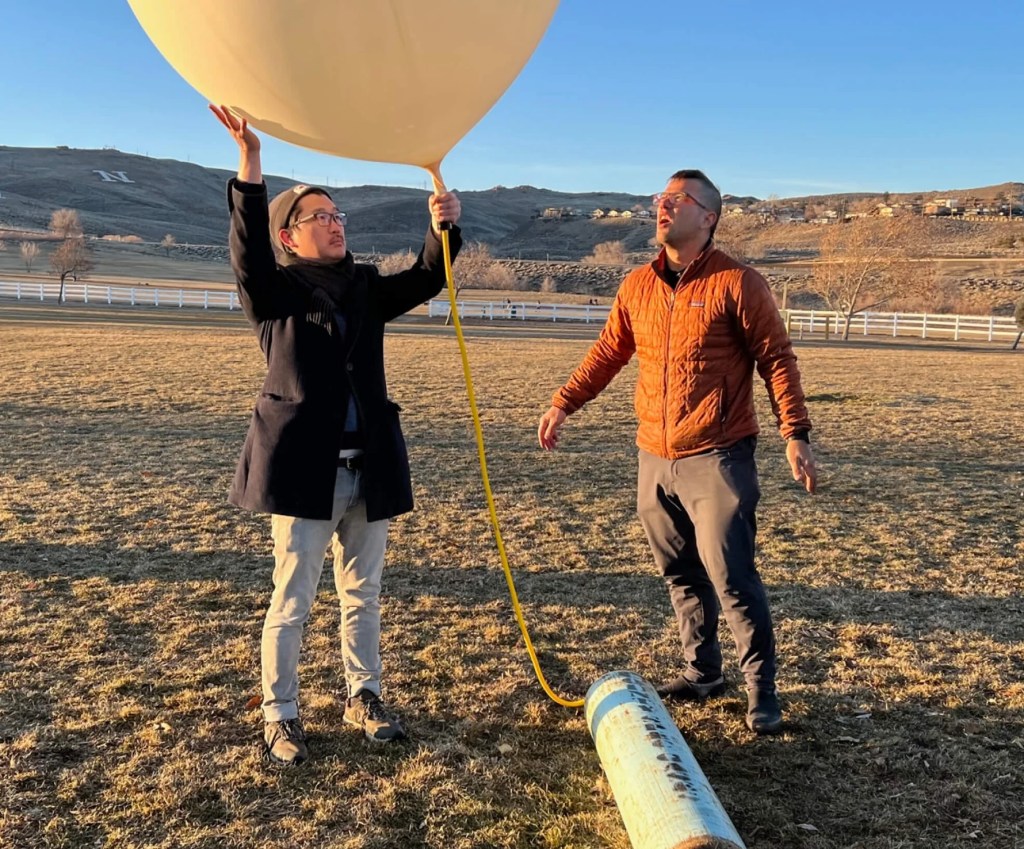


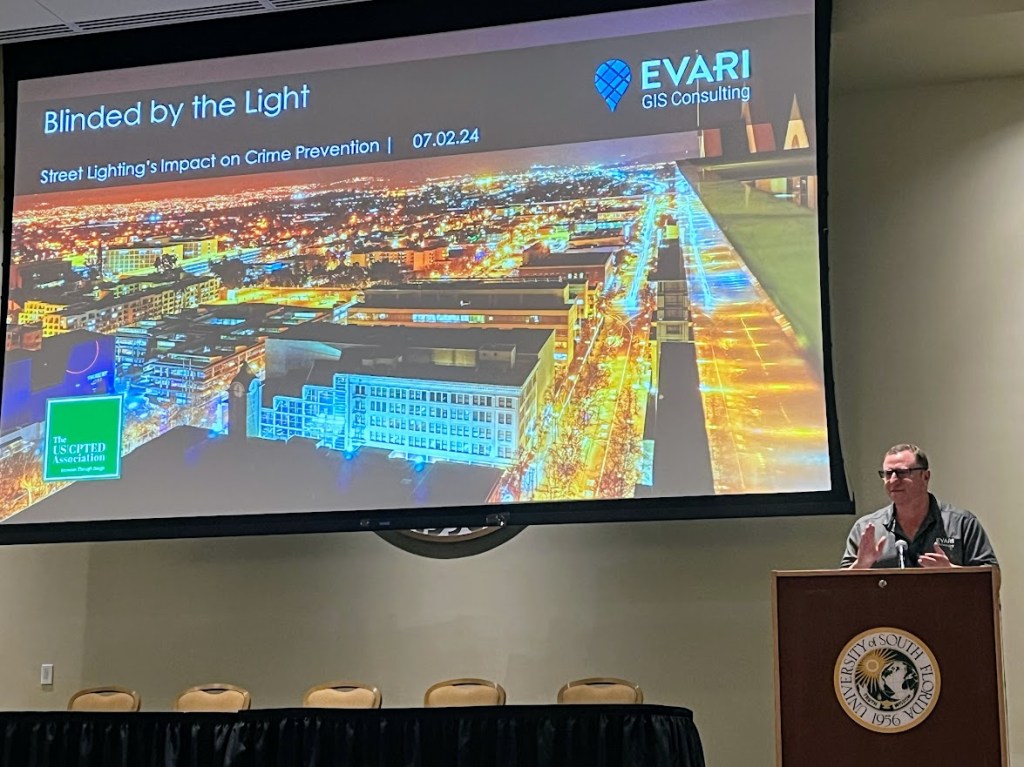
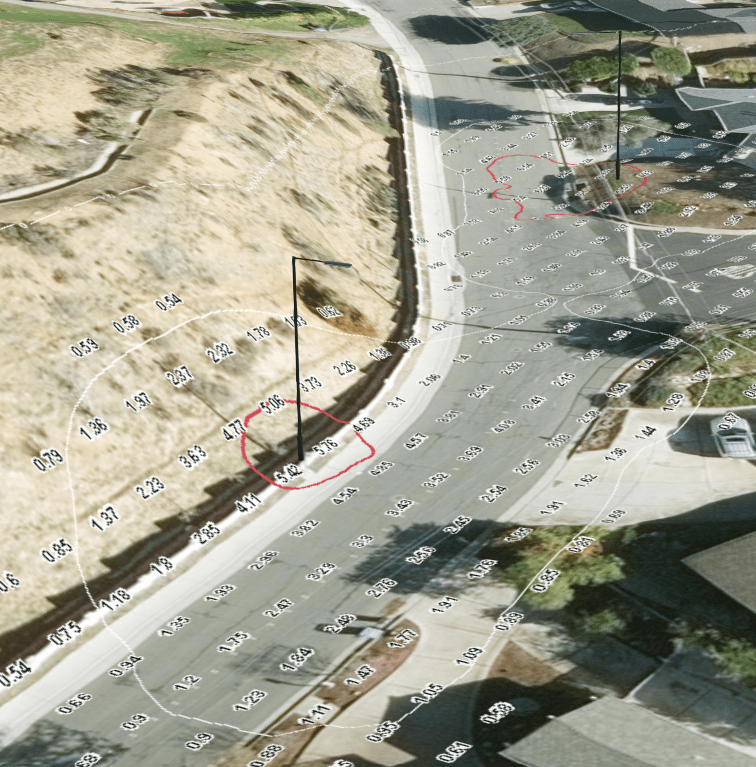
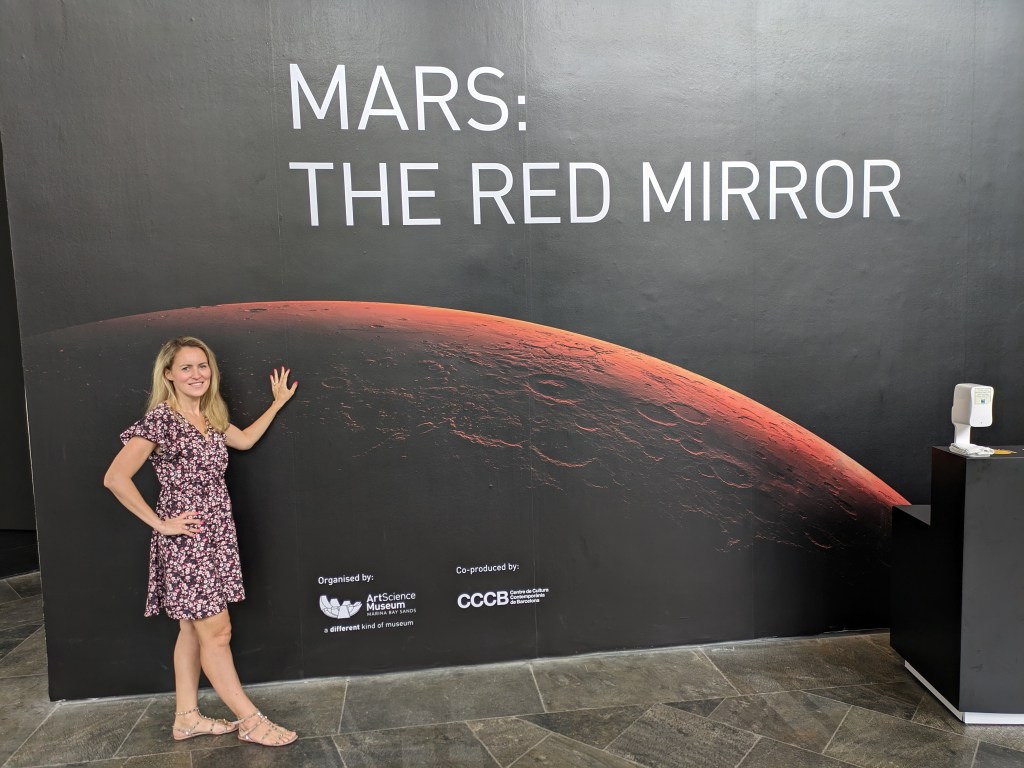




 Mick Hammock